

In Oregon, you can admire all eight hummingbird species, such as the vibrant Rufous Hummingbird and the metallic Black-chinned Hummingbird. Spot the tiny Calliope Hummingbird with its long magenta throat feathers. Keep an eye out for the year-round resident Anna’s Hummingbird with its pinkish-red throat. Along the coast, the Allen’s Hummingbird displays elaborate courtship dances. Rare sightings include the Costa’s and Broad-tailed Hummingbirds. Participate in citizen science to report sightings and enhance understanding. Every species offers intriguing characteristics waiting to be explored further.
1. Rufous Hummingbird

Rufous Hummingbirds, known for their vibrant copper-orange backs and aggressive nature, are a prominent species in Oregon’s hummingbird population. To attract these feisty birds to your garden, consider setting up nectar feeders filled with homemade nectar. These feeders should be regularly cleaned to prevent fermentation or mold growth. Additionally, planting native flora with long, tubular flowers such as penstemons, columbines, and salvias can provide natural food sources for these hummingbirds.
Males of the Rufous Hummingbird species exhibit a striking appearance with their bright copper-orange backs and sides, complemented by a reddish-orange throat. On the other hand, females sport a green crown, white belly, and occasionally a red throat spot. Their aggressive behavior is particularly noticeable during the breeding season when they fiercely defend their territory from intruders.
Rufous Hummingbirds embark on an impressive migration journey, traveling one of the longest bird migrations globally. During this journey, they rely on their remarkable flying abilities to cover extensive distances. These tiny birds meticulously construct their nests using soft plant down held together by spider webs, showcasing their resourcefulness and adaptability in nature. Rufous Hummingbirds also exhibit a unique feeding behavior by hunting gnats, midges, and flies mid-air, demonstrating their agility and precision in capturing prey.
2. Black-chinned Hummingbird
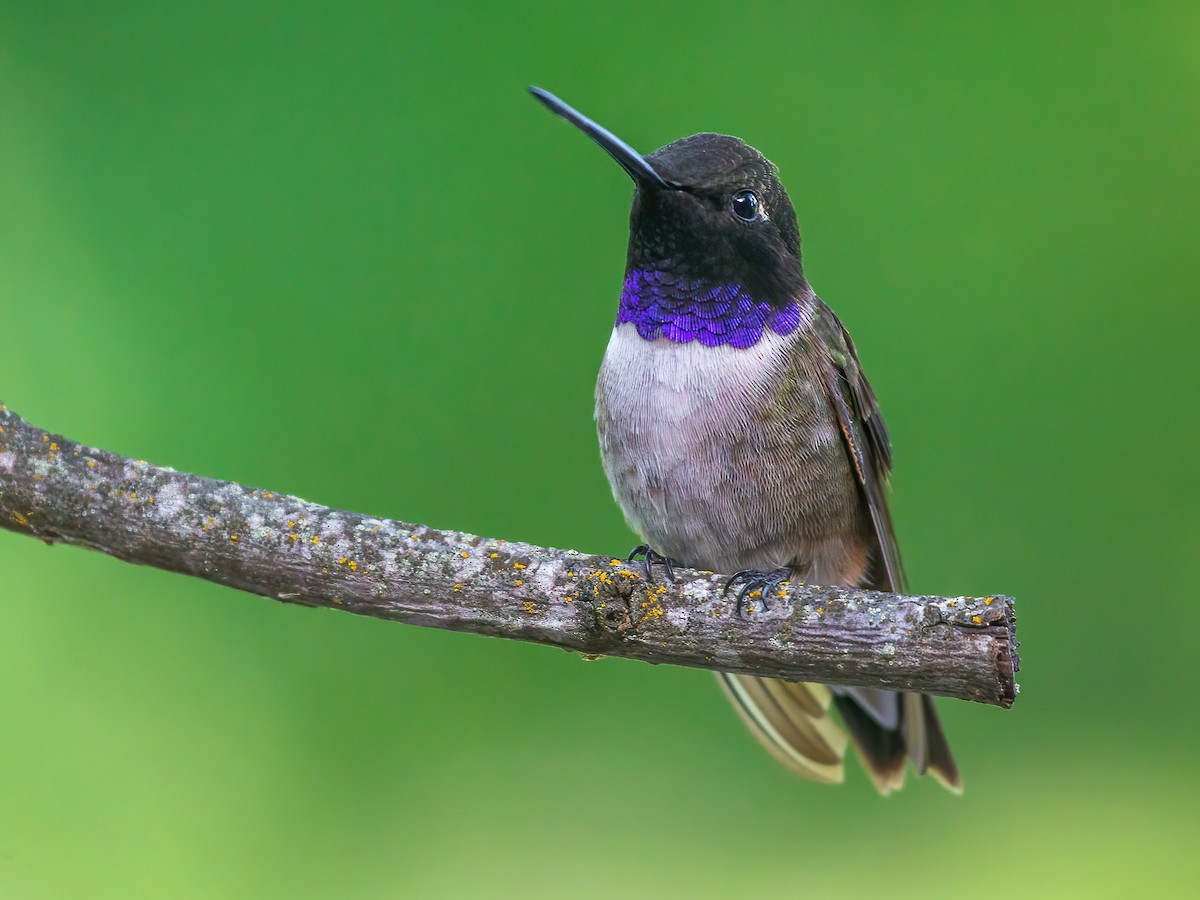
The Black-chinned Hummingbird, a species with a metallic green body and distinctive iridescent violet throat in males, is another notable addition to Oregon’s diverse hummingbird population. These hummingbirds are often seen darting around, visiting a variety of habitats, from forests to suburban gardens. Males display their shimmering violet throats during courtship displays, attracting females with their iridescent charm. Females, on the other hand, exhibit a more subtle greenish-grey cap and dark-spotted grey throat.
Black-chinned Hummingbirds play a crucial role in pollination as they feed on nectar from a range of flowers, including red flowers which are particularly attractive to them. Their ability to drink up to three times their body weight in nectar showcases their remarkable energy levels. The sound of their wings beating rapidly creates a soothing hum as they hover near these flowers, a distinctive feature that adds to their allure. These tiny birds lay eggs the size of a coffee bean, highlighting their remarkable reproductive capabilities in the wild.
3. Calliope Hummingbird
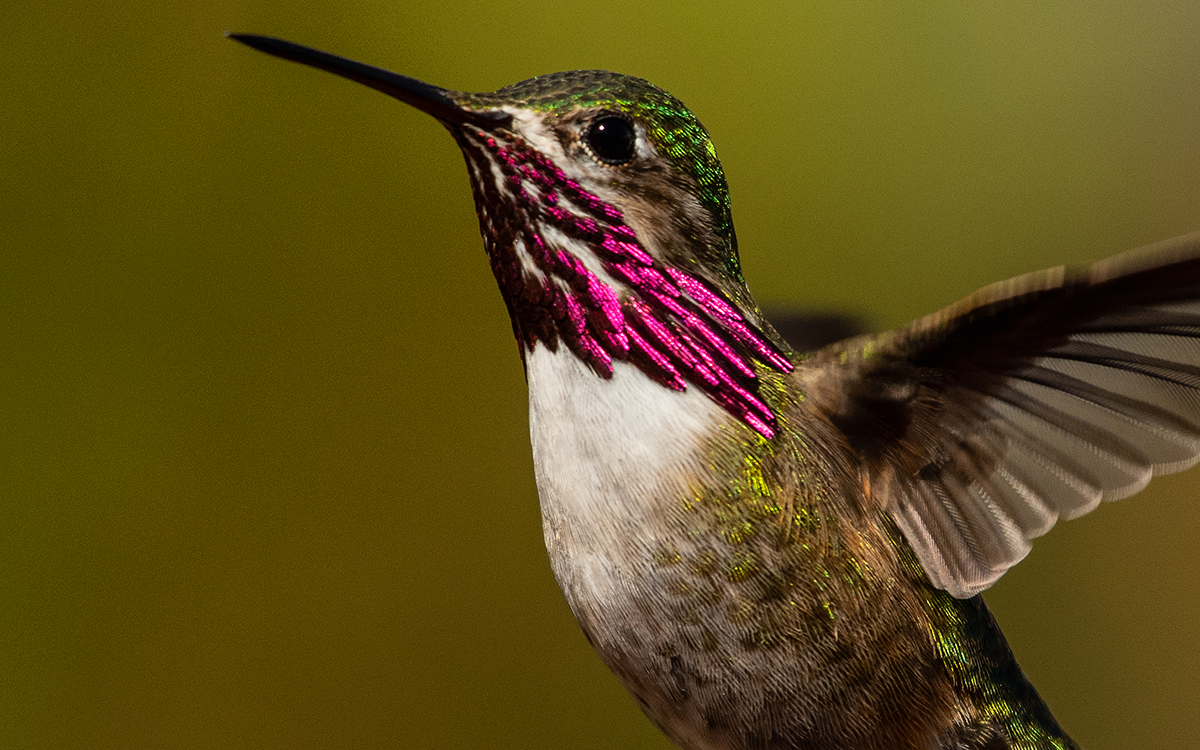
Calliope Hummingbirds, the smallest birds in Oregon, are known for their distinctive appearance and unique behaviors. These tiny creatures can be identified by the long magenta throat feathers on males and small dark spots on females’ white throats. During courtship, Calliope Hummingbirds showcase their agility with a U-shaped dive, impressing potential mates. Despite their size, these birds undertake remarkable migrations, traveling to Mexico for the winter months.
In Oregon, spotting a Calliope Hummingbird is a rare and delightful experience. These birds are not commonly seen due to their small size and specific habitat preferences. Calliope Hummingbirds often breed in mountainous regions with dense vegetation, where they build intricate nests using plant fibers, moss, and spider silk. These mountainous areas serve as vital breeding grounds for these unique hummingbirds, providing the necessary shelter and food sources for successful reproduction. Spotting a Calliope Hummingbird in its breeding habitat is a true testament to the resilience and beauty of these remarkable birds.
4. Anna’s Hummingbird

Among the diverse hummingbird species found in Oregon, one stands out as the most prevalent and recognizable – the Anna’s Hummingbird. These tiny creatures are a common sight in the state, with males boasting vibrant iridescent pinkish-red throats and crowns, while females exhibit green backs and white-tipped tails. One fascinating behavior of Anna’s Hummingbirds is their ‘song flight’ display, where males soar high into the air before diving while producing a distinct loud sound with their tail feathers. To survive the colder climates of Oregon, these hummingbirds enter a state of torpor at night, lowering their metabolic rate to conserve energy. Year-round residents in Oregon, Anna’s Hummingbirds are frequently spotted in gardens, parks, and wooded areas. If you are interested in learning more about hummingbirds, observing the behaviors and characteristics of Anna’s Hummingbirds in Oregon can provide valuable insights into these remarkable creatures.
5. Allen’s Hummingbird

Allen’s Hummingbirds typically inhabit areas along the Pacific Coast from Oregon to California. Males of this species boast a striking orange-red throat, which shines vibrantly in the sunlight, contrasting with their shimmering green backs. Females, on the other hand, display a more subtle appearance with a green crown and a white throat adorned with delicate speckles.
These hummingbirds prefer breeding grounds that encompass coastal scrub, oak woodlands, and chaparral areas, where they can find ample nectar sources for sustenance. Known for their elaborate courtship displays, Allen’s Hummingbirds engage in mesmerizing aerial dances, including high dives and rapid zigzagging flights that showcase their agility and grace.
During the winter months, these birds embark on a remarkable journey, migrating south to Mexico and Central America to escape the colder climate. While Allen’s Hummingbirds are not commonly sighted in Oregon, their presence along the Pacific Coast adds a touch of vibrant red to the diverse hummingbird population in the region.
6. Costa’s Hummingbird

Costa’s Hummingbird, with its iridescent purple crown and throat on males, is primarily found in the southwestern United States, including parts of Oregon.
Here are some key characteristics of Costa’s Hummingbird:
- Distinctive Appearance: Males of Costa’s Hummingbird boast vibrant iridescent purple crowns and throats, while females exhibit green backs and white underparts.
- Habitat Preference: These hummingbirds thrive in desert landscapes, particularly those adorned with ocotillo, saguaro, and cholla cacti, which provide ideal nesting and feeding opportunities.
- Unique Flight Sound: One notable feature of Costa’s Hummingbirds is the buzzing sound they emit while in flight, setting them apart from other hummingbird species.
- Courtship Behavior: Costa’s Hummingbirds are known for their elaborate courtship displays, which involve intricate aerial maneuvers like diving and chattering to attract potential mates.
Observing these fascinating creatures in the southwestern United States, including parts of Oregon, provides a glimpse into the intricate lives of Costa’s Hummingbirds.
7. Broad-tailed Hummingbird

Broad-tailed Hummingbirds, known for their green backs and crowns, are a common sight in the mountainous regions of Oregon. These tiny birds primarily feed on flower nectar, which provides them with the necessary energy for their fast-paced lifestyle. They are particularly attracted to red tubular flowers such as penstemons, columbines, and scarlet gilias. In addition to nectar, Broad-tailed Hummingbirds also consume small insects and spiders, which are a crucial source of protein in their diet.
During the breeding season in Oregon, these hummingbirds can be observed darting between the coniferous forests and meadows in search of food. Their migration pattern takes them south to Mexico and Central America for the winter months, where they can find more abundant food sources to sustain them during the colder season. To attract Broad-tailed Hummingbirds to your garden, consider planting a variety of nectar-rich flowers and providing a reliable food source through nectar feeders.
8. Rare Hummingbird Sightings
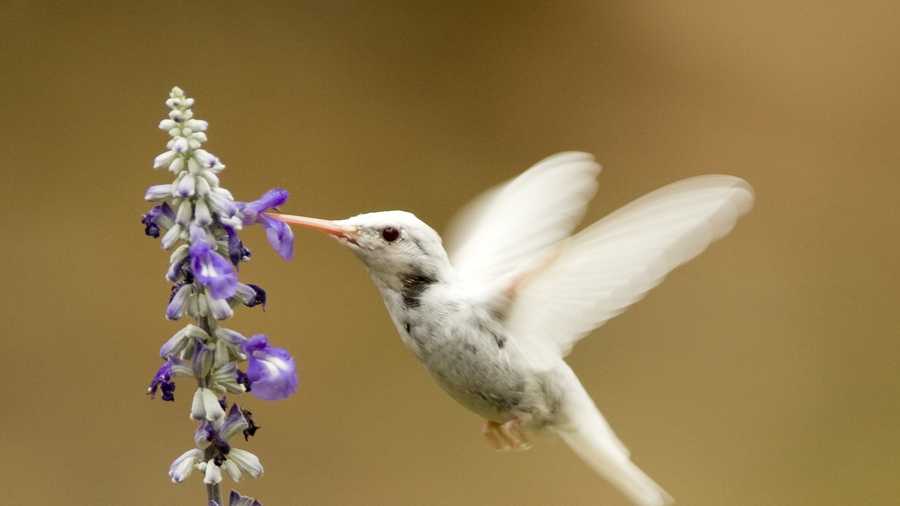
Rare hummingbird sightings in Oregon present exciting opportunities for birdwatchers and researchers to document unique species in the region. These rare sightings are not only thrilling for enthusiasts but also crucial for expanding our knowledge of hummingbirds in Oregon. Here are some key points to consider:
- Species: Rare hummingbird sightings in Oregon include the Anna’s Hummingbird, Costa’s Hummingbird, and Broad-tailed Hummingbird.
- Documentation: Birdwatchers and researchers often document these rare sightings through photographs and detailed observations to contribute valuable data.
- Citizen Science: Hummingbird enthusiasts can actively participate in citizen science projects to report and track rare hummingbird species in Oregon, further aiding in research efforts.
- Habitat and Food: Some rare hummingbirds may be attracted to specific habitats or food sources not commonly found in the region, highlighting the importance of preserving diverse ecosystems for these species.
Documenting these rare sightings plays a significant role in enhancing our understanding of hummingbird distribution and behavior in Oregon.