

Discover the seven woodpecker species of Maryland. From the Northern Flicker’s vibrant red mark to the Downy Woodpecker’s small size and distinct black and white plumage. The Hairy Woodpecker, similar in size to a chipmunk, sports a red patch on its head. Red-Bellied Woodpeckers flaunt a prominent red cap and striking striped pattern. Pileated Woodpeckers, the largest in Maryland, boast a distinctive red crest. The rare Red-Headed Woodpecker showcases a vibrant all-red head. Lastly, the Yellow-Bellied Sapsucker’s red throat stands out. Each species uniquely contributes to Maryland’s woodlands.
1. Northern Flicker
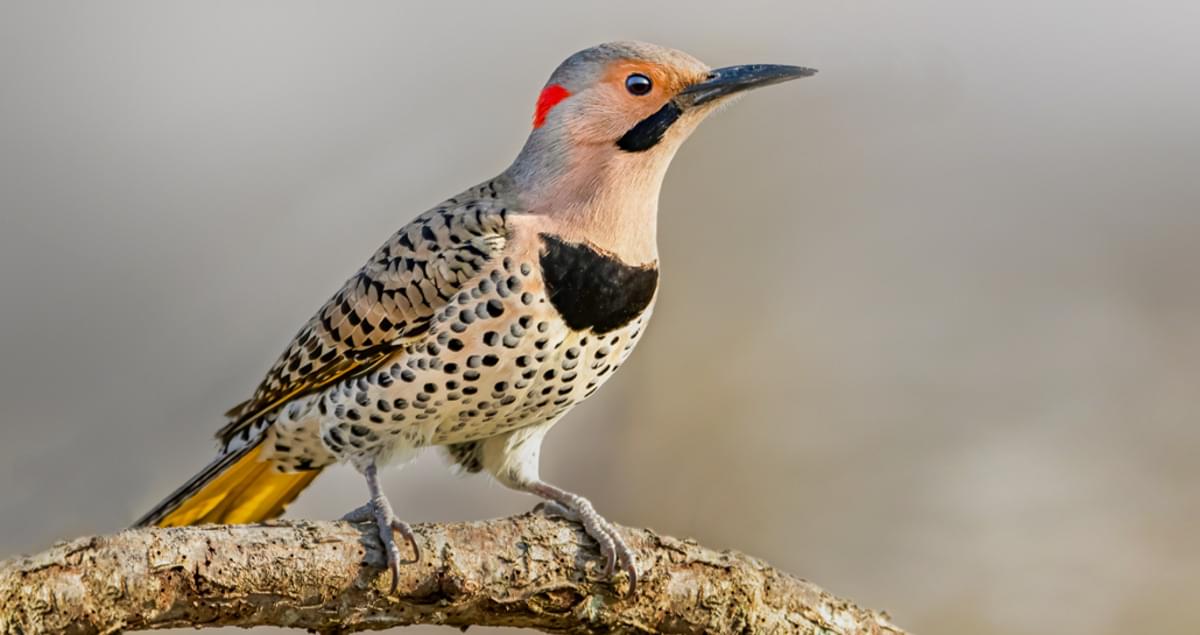
The Northern Flicker, a woodpecker species found in Maryland, is classified under the Yellow-shafted subspecies group. Males of this species exhibit a distinguishing red mark on the nape of their neck, aiding in individual identification. Their drumming behavior, a rapid series of strikes on resonant surfaces like trees, is a vital form of communication within the species. Northern Flickers display a tannish gray coloration with prominent black barring on their backside, which serves as effective camouflage in their natural habitat. Interestingly, in the DMV region, there exists a range overlap between the Yellow-shafted and Red-shafted subspecies, contributing to the fascinating diversity within the woodpecker population. Understanding these unique characteristics and behaviors of Northern Flickers is crucial for bird enthusiasts and researchers alike, as it provides insight into the intricate dynamics of this woodpecker species in Maryland.
2. Downy Woodpecker
A small and distinct woodpecker species found in Maryland, the Downy Woodpecker measures approximately 6.75 inches in length with a wingspan of 12 inches. Here are some key facts about the Downy Woodpecker:
- Size: The Downy Woodpecker is the smallest woodpecker species in Maryland, making it a unique and easily recognizable bird.
- Coloration: Identified by its black and white plumage, the Downy Woodpecker sports black wings with striking white spots and a white underside.
- Sexual Dimorphism: Male Downy Woodpeckers can be distinguished from females by the presence of a small red spot on the back of their heads.
- Habitat and Feeding: These woodpeckers are commonly found in wooded habitats where they forage for insects, seeds, and berries at lower levels compared to other woodpecker species.
Observing the Downy Woodpecker in Maryland provides a fascinating insight into the diverse avian species that inhabit the state’s woodlands.
3. Hairy Woodpecker

Observing the Hairy Woodpecker in Maryland offers insight into a larger woodpecker species distinguished by its striking features. The Hairy Woodpecker boasts a size akin to that of an eastern chipmunk, showcasing entirely black wings, a white underside, and distinctive black stripes on its head. Males of this species can be identified by the red patch adorning the back of their heads. These woodpeckers predominantly inhabit forests and areas abundant in sizable trees, where they diligently forage for insects and larvae to sustain themselves.
One of the most fascinating behaviors displayed by the Hairy Woodpecker is its drumming behavior. Through rhythmic tapping on trees, these woodpeckers communicate with one another and assert their territories within the forest habitat. This territorial communication is crucial for maintaining boundaries and ensuring access to essential resources. The Hairy Woodpecker’s large size, coupled with its unique physical characteristics and drumming behavior, make it a captivating subject for observation in the woodlands of Maryland.
4. Red-Bellied Woodpecker
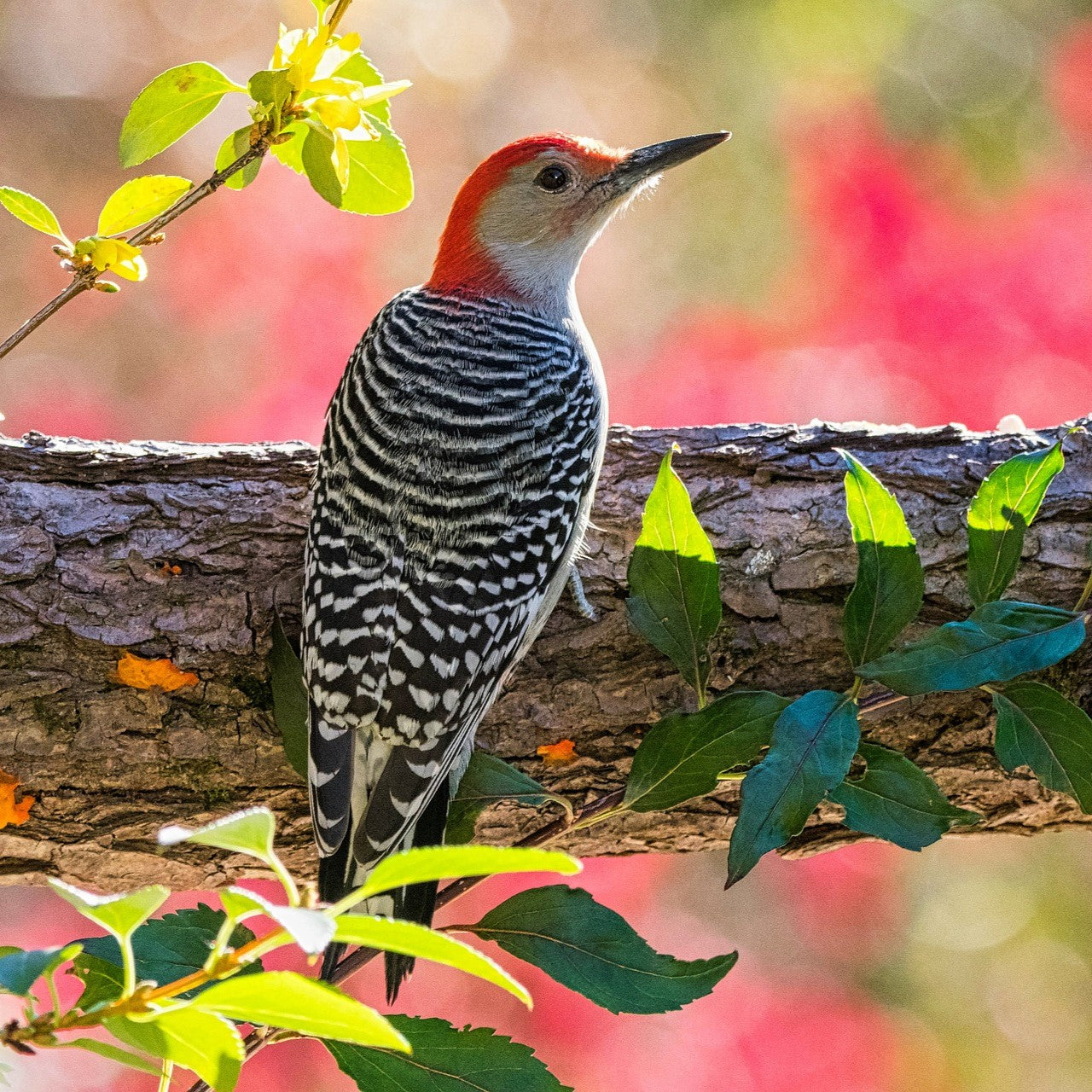
Easily identified by its bold red cap, the Red-bellied Woodpecker is a common sight in Maryland’s woodlands and urban areas. Here are some interesting facts about this striking bird:
- Distinctive Appearance: The Red-bellied Woodpecker’s name can be misleading as its belly is usually pale with just a hint of red. Instead, its most prominent feature is the vibrant red cap on its head.
- Habitat: These woodpeckers are adaptable and can thrive in various environments, from dense forests to suburban neighborhoods, making them a familiar presence to many Maryland residents.
- Foraging Behavior: Equipped with long, chisel-like beaks, Red-bellied Woodpeckers are skilled at drilling into trees to find insects or extract sap. They are also frequent visitors to bird feeders, where they assert dominance in securing food.
- Coloration: In addition to their red cap, Red-bellied Woodpeckers sport a striking black and white striped pattern on their back, adding to their visually appealing appearance.
5. Pileated Woodpecker
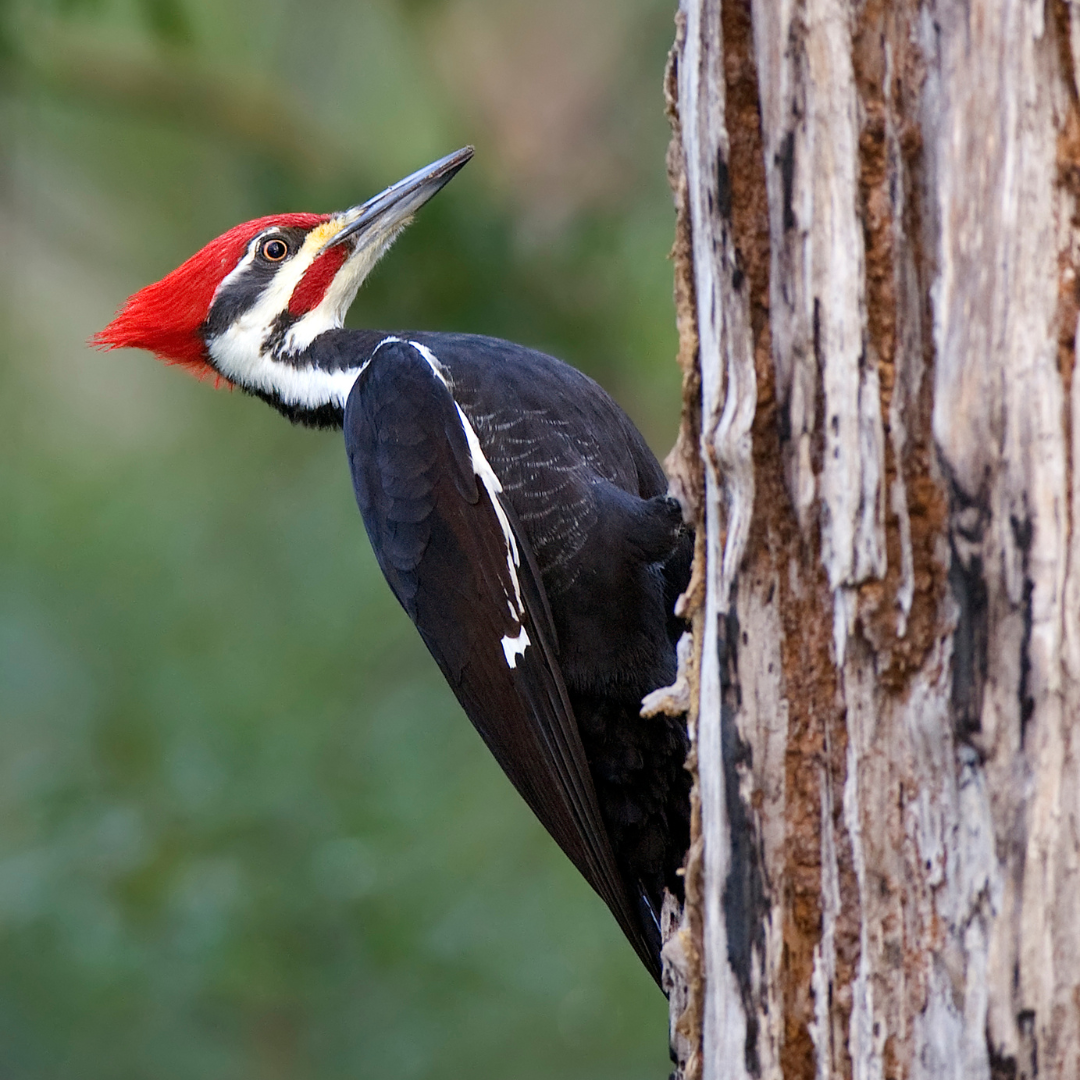
The Pileated Woodpecker, Maryland’s largest woodpecker species, boasts a distinctive red crest and black back. With an impressive wingspan of up to 29 inches, these birds are a majestic sight in the forests of Maryland. Known for their loud drumming behavior, the Pileated Woodpeckers create resonating sounds that often precede their visual sighting. They have a preference for mature forests that offer ample dead trees for both foraging and nesting. Male Pileated Woodpeckers exhibit a unique red whisker marking on their face, adding to their already striking appearance. Their foraging habits involve searching for insects and larvae in the bark of trees using their powerful beaks. When it comes to nesting, these woodpeckers excavate large cavities in tree trunks where they raise their young. The Pileated Woodpecker’s presence in Maryland’s forests contributes to the rich biodiversity of the region.
6. Red-Headed Woodpecker
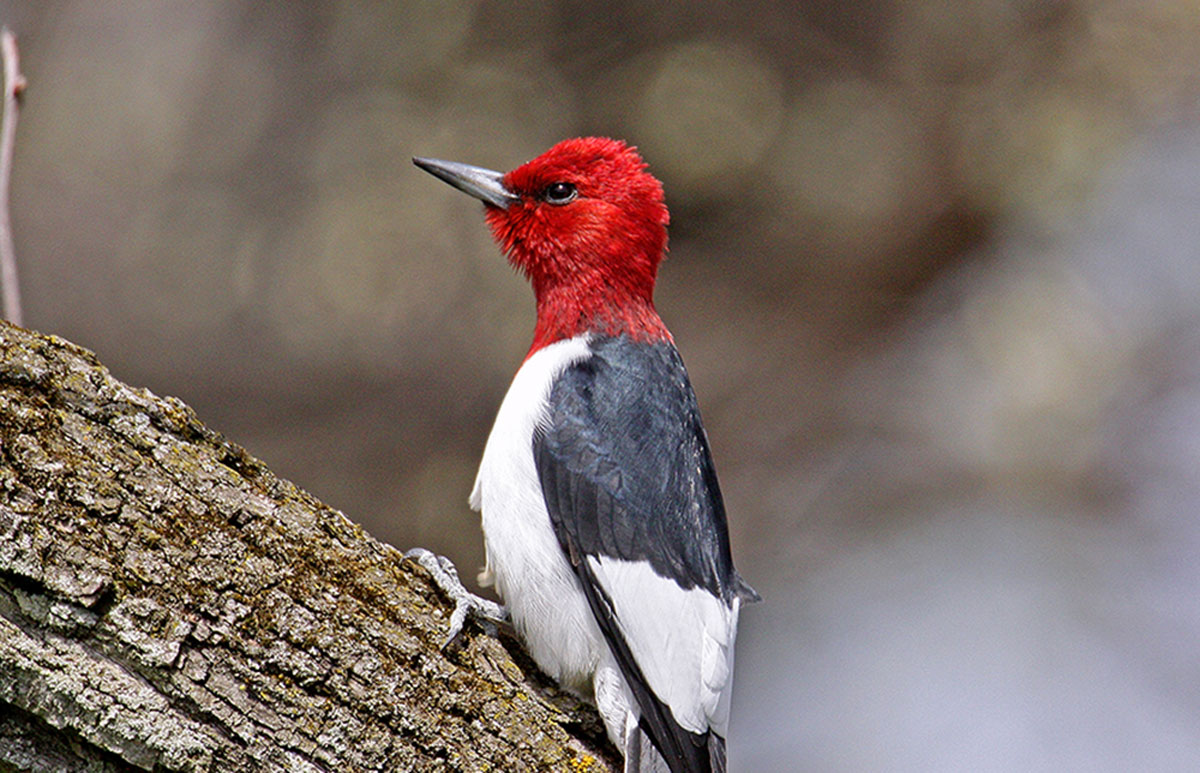
Red-Headed Woodpeckers in Maryland display a distinctively vibrant entirely red head, setting them apart in the avian landscape of the region. These striking birds are considered rare in urban areas within the DMV region, making sightings even more special for bird enthusiasts. Juveniles lack the red head coloration seen in adults, a feature that develops as they mature. Both male and female Red-Headed Woodpeckers exhibit the striking red head, contributing to their unique appearance. Additionally, these woodpeckers are easily recognizable by their split back, where contrasting white and black colors create a visually appealing pattern. Observing these birds in their natural habitat can provide a fascinating insight into the diversity of bird species present in Maryland.
7. Yellow-Bellied Sapsucker

Yellow-Bellied Sapsuckers, with their distinctive color pattern and sap-extracting behavior, play a crucial role in forest ecosystems. These woodpeckers are known for creating sap wells by drilling rows of small holes in trees to extract sap, which they primarily feed on. Male Yellow-bellied Sapsuckers can be identified by their striking red throat, a feature absent in females. Their unique color pattern includes black wings, a white face with stripes, and notable white markings on each wing.
Yellow-bellied Sapsuckers have specific foraging habits and are pivotal for the ecology of deciduous forests. They contribute significantly to the balance of their habitats, although they face challenges due to habitat loss. During winter, these woodpeckers migrate to the Southeastern US, Mexico, and Central America, returning to the Northeastern US and Southern Canada during spring. Understanding their range maps and behaviors aids in conservation efforts to preserve these essential members of forest ecosystems.