

Explore Georgia’s full owl repertoire, including the secretive Saw-whet Owl and the formidable Great Horned Owl. From the haunting calls of the Barred Owl to the trills of the Eastern Screech Owl, each species brings a unique element to the state’s biodiversity. Witness the Barn Owl’s silent swoop or the Short-eared Owl’s dawn hunts. Encounter the Long-eared Owl’s impressive lifespan or the dance of the Northern Saw-whet Owl in the moonlight. Each owl tells a story of adaptation and survival in Georgia’s varied landscapes. Engage with these fascinating creatures and unravel the mysteries they hold.
1. Barred Owl

Barred Owls in Georgia, ranging in size from 40 to 63cm, are a captivating medium-sized owl species found in various habitats across the state. These owls exhibit specific habitat preferences, favoring dense forests near rivers or wetlands. Their hunting behavior is primarily focused on preying on small mammals like mice and voles. Due to their adaptability, Barred Owls can also thrive in suburban areas, making them a common sight for birdwatchers in Georgia.
In terms of hunting behavior, Barred Owls are known for their stealthy approach. Under the cover of darkness, they rely on their exceptional night vision and keen hearing to locate their prey. Once spotted, these owls swoop down silently with their powerful talons to catch their unsuspecting meal. Their success in hunting can be attributed to their ability to blend seamlessly with their surroundings, making them efficient predators in the ecosystem.
2. Eastern Screech Owl

The Eastern Screech Owl, a diminutive yet significant avian predator in Georgia, is a small owl species known scientifically as Megascops asio. These fascinating creatures have distinct nesting habits and vocalizations that set them apart in the avian world.
- Nesting Habits:
- Eastern Screech Owls typically nest in large trees with hollow trunks, making use of natural cavities or abandoned woodpecker holes.
- They line their nests with soft materials like feathers, fur, and leaves to provide a cozy spot for their eggs and young.
- Vocalizations:
- Eastern Screech Owls are known for their distinctive trilling and whinnying calls, often heard during the night in their territories.
- Their calls, resembling a horse’s whinny, are used for communication between mates and to establish territory boundaries.
Observing these owls in mature deciduous forests, parks, or suburban areas provides a glimpse into their intricate nesting behaviors and enchanting vocalizations.
3. Great Horned Owl

In Georgia, the Great Horned Owl, scientifically known as Bubo virginianus, stands as a formidable avian predator with a notable lifespan ranging from 25 to 50 years. These owls, measuring between 43 to 64 cm and weighing from 1200 to 1600 g, exhibit remarkable adaptability to various habitats. Great Horned Owls can be found in forested areas, wetlands, urban, suburban, and agricultural landscapes. They are early breeders, utilizing abandoned nests for breeding and sustaining themselves on a diet that includes small mammals, birds, reptiles, and insects.
Conservation efforts for the Great Horned Owl are crucial due to population declines attributed to human activities. Protecting their diverse habitat preferences is key to ensuring their survival. To catch a glimpse of these majestic creatures in Georgia, consider visiting locations like Chattahoochee River National Recreation Area, Okefenokee National Wildlife Refuge, Piedmont National Wildlife Refuge, and Pine Mountain Trail. Observing these owls in their natural habitat can be a rewarding and educational experience.
4. Barn Owl

With its ghostly appearance and unique hunting habits, the American Barn Owl (Tyto furcata) is a fascinating nocturnal predator found in various habitats across Georgia. These owls have a life span of around 10 years and measure between 34 to 38 cm (13 to 15 in) with a weight of 400 to 600 g (0.9 to 1.3 lbs). Here are some interesting facts about the Barn Owl:
- Barn Owls are known for their ghostly appearance and form monogamous pair bonds during the nesting season.
- They primarily feed on small mammals and hunt primarily at night using exceptional hearing.
- Habitat-wise, Barn Owls can be found in open fields, woods, and actively farmed areas, nesting in well-hidden tree cavities, nesting boxes, or cliffs.
- Conservation efforts are crucial for Barn Owls due to habitat loss and pesticide use impacting their populations.
- Barn Owls exhibit unique hunting techniques such as hovering silently before swooping down on their prey with precision.
5. Northern Saw-whet Owl

Easily identifiable by their endearing appearance and small size, the Northern Saw-whet Owl (Aegolius acadicus) is a fascinating species commonly found in dense foliage areas. Measuring between 17 to 22cm (6.7 to 8.7in) and weighing 54 to 151g (1.9 to 5.3oz), these owls have a wingspan of 42 to 56.3cm (16.5 to 22.2in). Their lifespan ranges from 7 to 17 years, and they exhibit unique behaviors such as perching low to the ground while hunting.
Conservation status for the Northern Saw-whet Owl is of concern, as they face threats from habitat loss due to deforestation and urbanization. Efforts are being made to protect their wooded habitats and raise awareness about the importance of preserving these areas for the survival of this charming species. To help in conservation efforts, it is crucial to support initiatives that promote sustainable forestry practices and protect the ecosystems where these owls reside. By understanding and appreciating the unique behaviors of the Northern Saw-whet Owl, we can contribute to the conservation of this enchanting bird.
6. Short-eared Owl

The Short-eared Owl, known for its distinctive facial disc and short ear tufts, is a skilled hunter of small mammals, contrasting the Northern Saw-whet Owl’s preference for dense foliage areas. These owls, scientifically named Asio flammeus, exhibit fascinating habits that contribute to their survival and ecosystem balance:
- Short-eared Owls have a relatively long life span of up to 12 years in the wild.
- Their wingspan ranges from 85 to 110cm (33 to 43in), making them well-suited for open habitats like grasslands and meadows.
- Weighing between 200 to 475g (7.3 to 16.8oz), they are agile hunters that primarily hunt at dawn and dusk.
- Short-eared Owls can be spotted in various locations, including the Okefenokee National Wildlife Refuge and Savannah National Wildlife Refuge.
- Conservation efforts for Short-eared Owls focus on protecting their grassland habitats, controlling rodenticide use, and minimizing disturbance in their nesting areas to ensure their populations thrive.
7. Long-eared Owl
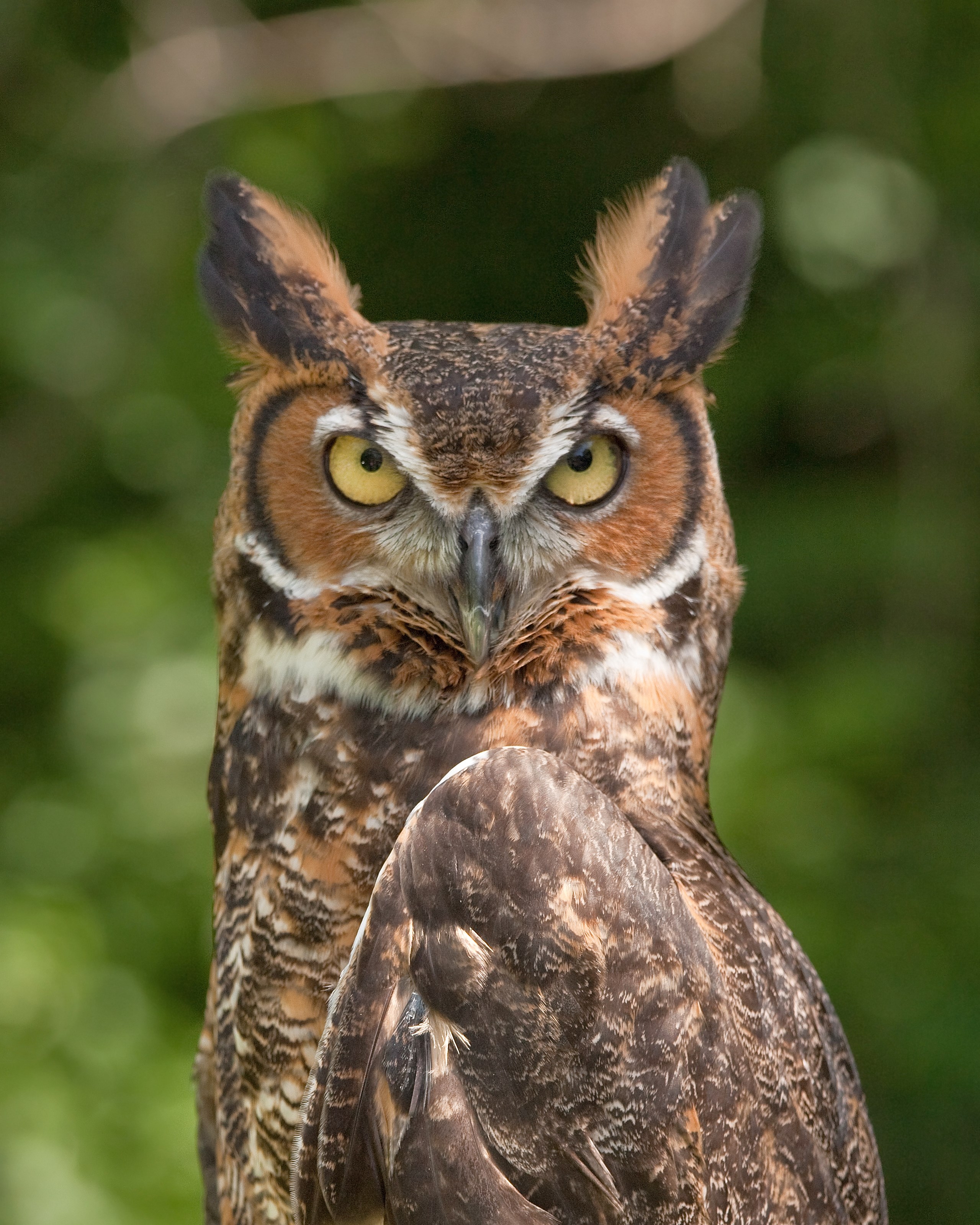
Navigating through dense foliage with stealth and precision, the Long-eared Owl (Asio otus) is a medium-sized owl known for its remarkable hunting skills and vital role in controlling small mammal populations. These owls, with a wingspan of 86 to 102cm (2ft 10in to 3ft 4in), are perfectly adapted for hunting in wooded areas where they primarily feed on mice and voles. Long-eared Owls have a distinctive appearance with prominent ear tufts, orange facial disks, and mottled brown plumage, blending seamlessly with their forested habitats.
| Long-eared Owl Facts | Description |
|---|---|
| Lifespan | 10 to 27 years |
| Size | 31 to 40cm (12 to 16in) |
| Weight | 160 to 435g (5.6 to 15.3 oz) |
| Wingspan | 86 to 102cm (2ft 10in to 3ft 4in) |
| Habitat | Dense foliage areas |
Long-eared Owls are known for their unique vocalizations, including hoots, barks, and whines, especially during the breeding season. They nest in trees using abandoned crow or raptor nests, laying up to 4 eggs per clutch. These owls are fascinating creatures that contribute significantly to the balance of their ecosystems through their hunting prowess and population control of small mammals.