

Discover the 6 hummingbirds in New Jersey! From the fiery Ruby-throated with its feisty nature to the glossy Rufous migrating thousands of miles. The rare Anna’s, with rose-red crowns, gracefully adapt to urban habitats. Witness the Black-chinned’s shimmering throat and fierce territorial displays. Catch a rare glimpse of the tiny Calliope with its distinct pink throat in locations like Cape May. And don’t miss the Broad-tailed’s iridescent green back and rose-red throat patch. Each species offers a unique window into the diverse hummingbird world of New Jersey.
Ruby-throated Hummingbird

Arriving in mid to late April, the Ruby-throated Hummingbird, with its vibrant ruby-red throat and emerald green back, is the most common hummingbird species found in New Jersey. These tiny birds, measuring only about 3 to 3.5 inches in length, are a sight to behold as they flit gracefully from flower to flower. Despite their small size, Ruby-throated Hummingbirds are known for their feisty nature, often chasing away larger birds that dare to encroach upon their feeding territories.
In addition to their striking appearance, male Ruby-throated Hummingbirds are known for their elaborate courtship displays. During the breeding season, males perform impressive aerial acrobatics to attract females, showcasing their agility and speed. These birds are not just beautiful to observe; they also play a crucial role in pollination. By feeding on nectar from a variety of flowers, Ruby-throated Hummingbirds inadvertently transfer pollen between plants, aiding in the reproduction of many plant species. It’s truly fascinating to witness these tiny creatures contribute so significantly to the ecosystem.
Rufous Hummingbird
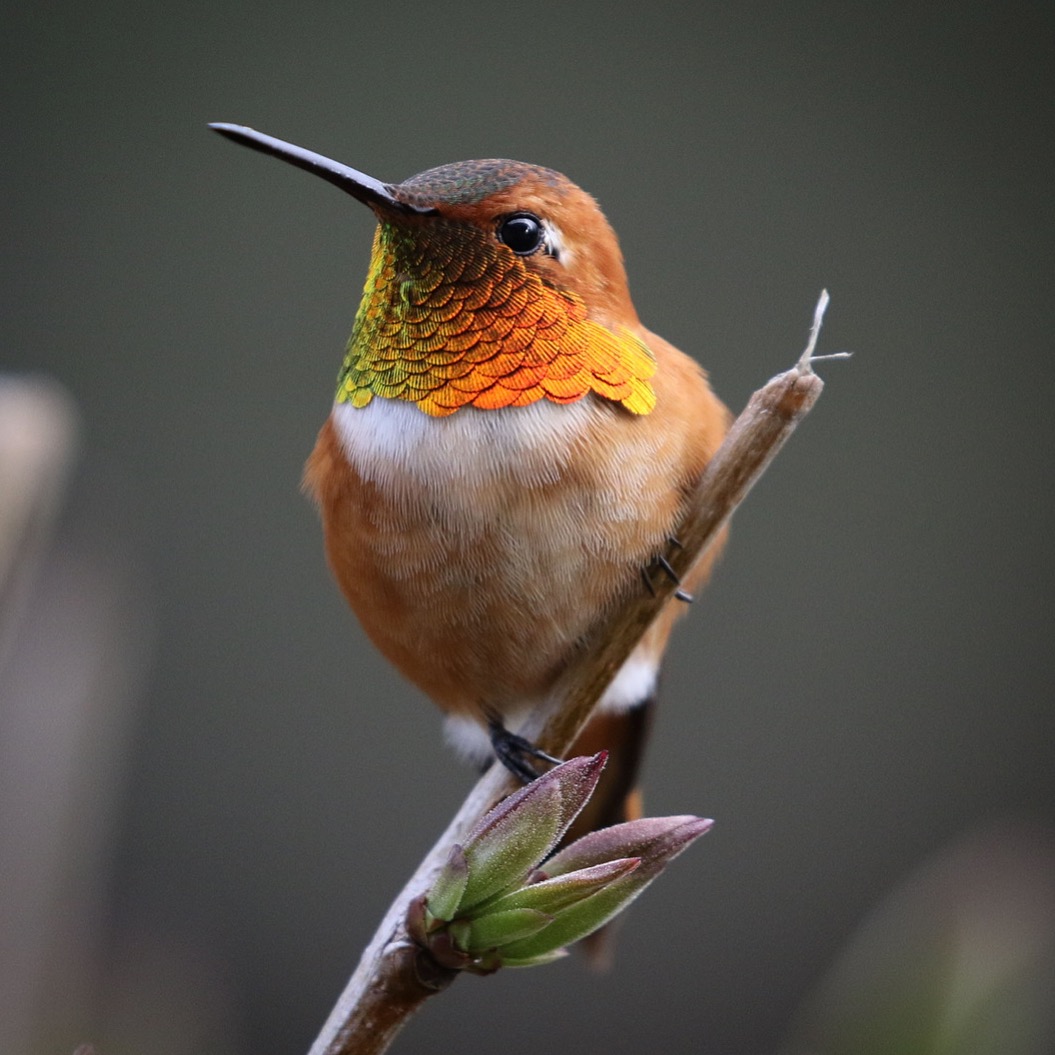
Rufous Hummingbirds, with their striking glossy orange-red throats and distinctive white breast markings, are easily recognizable among hummingbird species. These tiny birds are renowned for their aggressive nature and territorial behavior, often asserting dominance over larger hummingbirds. Rufous Hummingbirds undertake an impressive migration, traveling from the Pacific Northwest all the way to Mexico, making them a fascinating subject of study for researchers and bird enthusiasts alike.
Rufous Hummingbird Migration
During their long migrations, Rufous Hummingbirds travel up to 4,000 miles from their breeding grounds in the Pacific Northwest to wintering areas in Mexico and Central America. These tiny birds undertake this remarkable journey to escape the harsh winters and find suitable food sources. Rufous Hummingbirds are known for their exceptional flying abilities, covering vast distances with impressive speed and agility.
Upon reaching Mexico and Central America, these hummingbirds can be spotted in a variety of habitats, including tropical forests, gardens, and even mountainous regions. They rely heavily on the abundance of nectar-producing flowers in these areas to fuel their energy-intensive flight.
Rufous Hummingbirds play a crucial role in the ecosystem by pollinating numerous plant species during their migration. Their presence in different regions contributes to the genetic diversity of plant populations and ensures the continued survival of various flora. This demonstrates the intricate relationship between these migratory birds and the environments they traverse.
Rufous Hummingbird Habitat
As Rufous Hummingbirds display territorial behavior towards other hummingbirds in their preferred habitats, their presence is often a defining factor in the ecosystem dynamics of these areas. Rufous Hummingbirds exhibit specific nesting behavior by constructing small, compact cup-shaped nests using materials like plant down, moss, and lichens, typically placing them on branches or twigs for camouflage and protection. Their feeding habits are characterized by a high energy consumption rate, requiring frequent visits to nectar-rich flowers. Rufous Hummingbirds play a crucial role in pollination as they move from flower to flower in search of nectar, aiding in plant reproduction and biodiversity within their habitat. During the mating season, male Rufous Hummingbirds perform elaborate aerial displays to attract females, showcasing their vibrant orange-red plumage. Mating rituals involve intricate courtship dances and vocalizations, with successful pairs engaging in cooperative behaviors to ensure reproductive success. The habitat preferences of Rufous Hummingbirds, spanning open woodlands, meadows, and mountainous regions, contribute significantly to the overall ecological balance in these diverse environments.
Anna’s Hummingbird

You can easily recognize Anna’s Hummingbirds by their striking glossy dark rose-red throats and crowns, which set them apart from other species. These rare visitors to New Jersey have been sporadically spotted in the state, adding a touch of vibrant color to the local hummingbird population. Anna’s Hummingbirds are known for their vocal nature, making them a fascinating sight and sound in various habitats across the U.S.
Unique Anna’s Plumage
Anna’s Hummingbirds exhibit a strikingly unique plumage with glossy dark rose-red throats and crowns that easily distinguish them from other hummingbird species. Their iridescent feathers gleam in the sunlight, showcasing stunning colors that set them apart. Anna’s Hummingbirds are not only visually striking but also known for their graceful movements and unique behavior. These hummingbirds are the most vocal in the U.S., filling the air with their distinct vocal calls. Their glossy plumage adds to their charm, making them a delightful sight for birdwatchers. Despite being rare visitors to New Jersey, spotting an Anna’s Hummingbird is a treat due to their vibrant and distinctive features. Their presence in gardens brings beauty and excitement, attracting attention with their dazzling appearance. Observing these hummingbirds allows for a glimpse into the fascinating world of these tiny, yet captivating creatures.
Anna’s Preferred Habitats
The habitat preference of Anna’s Hummingbirds typically includes a blend of open spaces and areas with trees or shrubs for nesting and perching. These urban habitats along the Pacific Coast provide ample opportunities for Anna’s nesting and perching sites, making gardens, parks, and yards ideal locations for these hummingbirds. Their affinity for nectar-producing flowers further attracts them to urban and suburban areas, where they can easily find food sources to sustain themselves.
In regions with mild winters, Anna’s Hummingbirds showcase their resilience to cold temperatures, thriving even in cooler climates. Their adaptability to human presence is evident as they frequent backyard feeders, demonstrating a unique ability to coexist with human settlements. Observing Anna’s Hummingbirds in these settings provides insight into their survival strategies and their successful integration into urban environments. As they flit gracefully between blooming flowers and artificial feeders, these hummingbirds showcase their remarkable adaptability and resourcefulness in navigating human-altered landscapes.
Black-chinned Hummingbird
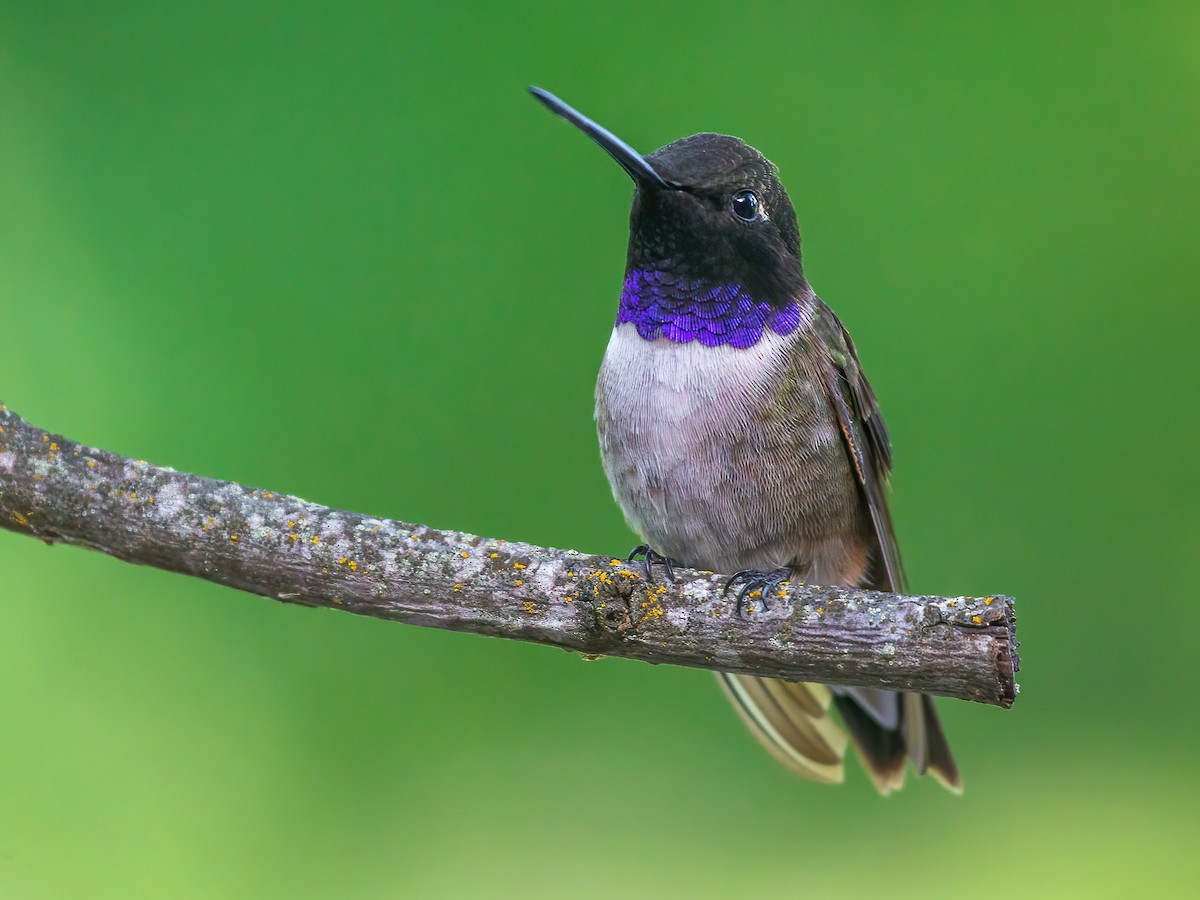
Rarely spotted in New Jersey, the Black-chinned Hummingbird is known for its distinctive black shimmering throat with a purple edge. These hummingbirds exhibit aggressive territorial behavior, often competing with other species for food sources like nectar from flowers and sugar water from feeders. They prefer open areas with an abundance of flowering plants for feeding.
In terms of breeding patterns, Black-chinned Hummingbirds typically build cup-shaped nests using plant fibers, down, and spider silk, often selecting tree branches or shrubs for nesting sites. Females are responsible for nest construction and incubating the two white eggs.
During migration, Black-chinned Hummingbirds travel from their breeding grounds in the western United States down to Mexico and Central America. They are known to winter in regions with milder climates, where food sources are more readily available. These migratory journeys are crucial for their survival and reproductive success.
Calliope Hummingbird
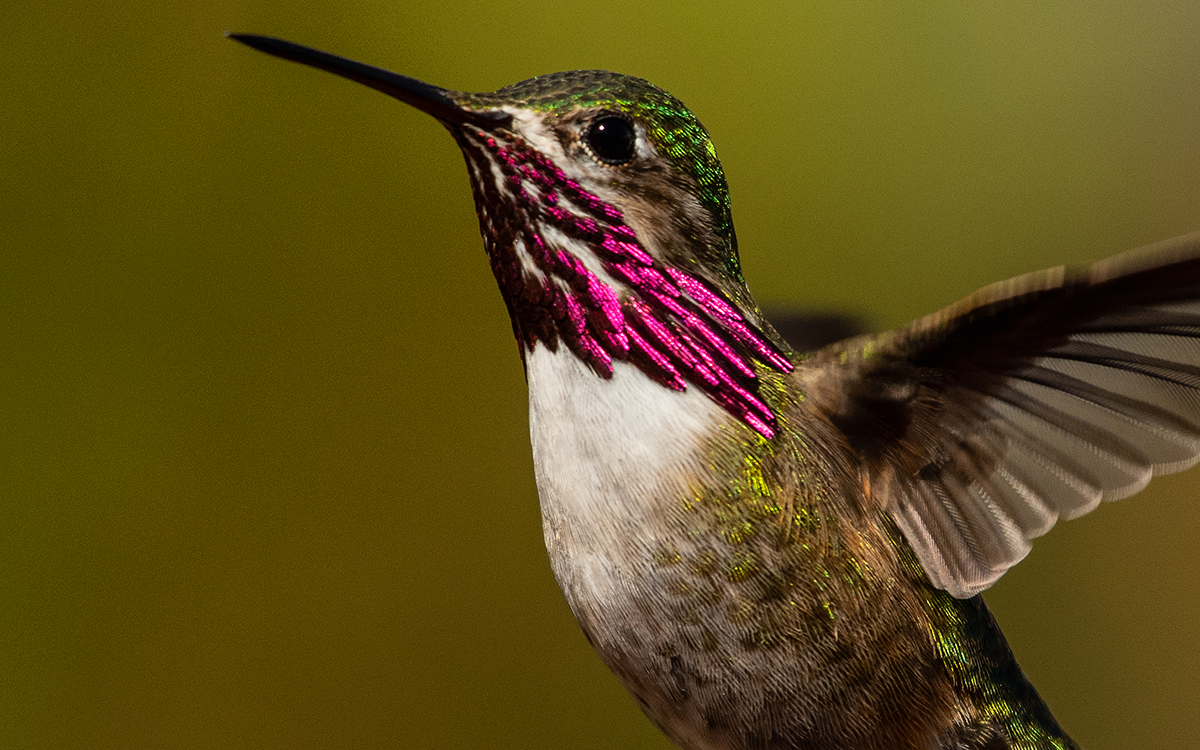
Distinct from the Black-chinned Hummingbird, the Calliope Hummingbird is recognized as the smallest hummingbird species found in New Jersey. Rare sightings of these diminutive birds have been reported in locations such as Cape May, Linwood, and Denville. Identified by their vibrant green and white plumage and a unique pink throat, Calliope Hummingbirds are known for their high-pitched, insect-like buzzing vocalizations.
During migration, these tiny birds travel long distances from their breeding grounds in the Pacific Northwest to their wintering grounds in Mexico. Their breeding behavior involves selecting high-altitude coniferous forests for nesting sites. Conservation efforts are crucial to protecting these fragile habitats and ensuring the survival of the Calliope Hummingbird population.
To spot a Calliope Hummingbird, keep an eye out for their small size, distinctive coloring, and listen for their characteristic vocalizations. By supporting conservation initiatives that safeguard their breeding grounds, we can contribute to the preservation of these enchanting hummingbirds in New Jersey.
Broad-tailed Hummingbird

Among the various hummingbird species found in New Jersey, the Broad-tailed Hummingbird stands out with its iridescent green back and striking rose-red throat patch on males. Here are some fascinating insights about this remarkable species:
- Nesting habits: Broad-tailed Hummingbirds construct delicate cup-shaped nests using plant fibers, moss, and spider silk, camouflaging them with lichen and moss to blend into their surroundings.
- Migration patterns: These hummingbirds embark on incredible migrations, traveling from their breeding grounds in the western United States to their wintering grounds in Mexico, covering vast distances to find suitable habitats and food sources.
- Feeding preferences: Broad-tailed Hummingbirds primarily feed on nectar from tubular flowers, using their long, slender bills to reach deep into blooms. They also consume insects and spiders for protein, supplementing their diet with small arthropods.
Observing the Broad-tailed Hummingbird in New Jersey is a rare and enchanting experience, offering a glimpse into the fascinating world of these tiny, yet resilient, avian marvels.