

Discover Colorado’s 11 woodpecker species, like the Northern Flicker with its vibrant variations. The Downy Woodpecker’s small size and diverse habitats make it crucial. Larger, the Hairy Woodpecker frequents parks for suet. Unique Lewiss Woodpecker catches insects in the air. The striking Red-headed Woodpecker faces worries of decline. American Three-toed Woodpecker, found in coniferous forests, needs conservation. Ladder-backed Woodpecker thrives in sparse desert areas. Red-bellied Woodpecker’s red plumage is easily spotted. Acorn Woodpecker’s social acorn-storing behavior aids ecosystems. Red-naped Sapsucker carves sap wells, needing montane habitats. Williamson’s Sapsucker with unique males and females resides in montane forests.
1. Northern Flicker

The Northern Flicker, the most prevalent woodpecker species in Colorado, is distinguished by its large size and unique gray and tan plumage with a white rump. In Colorado, you may encounter two variations of the Northern Flicker: the Yellow-shafted and Red-shafted. These two variations can interbreed where their ranges overlap. Northern Flickers in Colorado are known for their ground foraging behavior, actively seeking ants and beetles. Their distinct loud ringing call serves to communicate and locate food efficiently.
Approximately the size of an American Robin, Northern Flickers feature a black bib and a spotted belly, making them easily recognizable in their habitat. These common woodpeckers play a crucial role in Colorado’s ecosystem by controlling insect populations. By preying on ants, beetles, and other insects, Northern Flickers contribute significantly to maintaining the health of forests and semi-open areas. Their foraging habits and insect control efforts make them valuable members of Colorado’s avian community.
2. Downy Woodpecker

Frequently found across diverse habitats in Colorado, Downy Woodpeckers are relatively small birds with distinctive black-and-white plumage. Here are some key characteristics of these charming woodpeckers:
- Distinct Appearance: Downy Woodpeckers have white bellies that contrast with their mostly black backs adorned with streaks and spots of white, making them easily recognizable in the wild.
- Small Red Patch: Male Downy Woodpeckers sport a small red patch on the back of their heads, adding a pop of color to their striking monochromatic appearance.
- Habitat Diversity: These woodpeckers can be found in various environments, including deciduous woods, suburban backyards, parks, orchards, and even cemeteries throughout Colorado. Their adaptability to different settings makes them a familiar and delightful sight for bird enthusiasts statewide.
3. Hairy Woodpecker
Downy Woodpeckers being a common sight in various habitats in Colorado, a similar but larger species often encountered is the Hairy Woodpecker. Hairy Woodpeckers, distinguishable by their black and white plumage and long chisel-like beaks, are prevalent in mature forests and suburban areas across Colorado. One key feature to differentiate male Hairy Woodpeckers from females is the presence of a red patch at the back of their heads. These birds can be easily attracted to your surroundings by offering suet and sunflower seeds in bird feeders. While Hairy Woodpeckers share a resemblance with Downy Woodpeckers, they are notably larger in size with longer beaks. Observing these striking woodpeckers in parks, swamps, orchards, and even cemeteries is a common occurrence in the Colorado landscape. To invite these beautiful creatures into your outdoor space, consider setting up suitable feeders and enjoy the visits of these wonderful woodpeckers.
4. Lewiss Woodpecker

Catching insects in mid-air with their unique hunting behavior, Lewis’s Woodpeckers in Colorado boast distinctive pink bellies and greenish-black backs. Here are some key facts about these fascinating woodpeckers:
- Distinctive Appearance: Lewis’s Woodpeckers stand out with their pink bellies and greenish-black backs, making them easily identifiable among other woodpecker species.
- Specialized Feeding Behavior: These woodpeckers are often seen catching insects in flight, showcasing their impressive hunting skills and agility.
- Nesting Habits: Lewis’s Woodpeckers build their nests in tree cavities and even utilize utility poles. However, habitat loss and competition for nesting sites have led to declining populations of these birds in Colorado.
Observing Lewis’s Woodpeckers in action is a treat for nature enthusiasts, as they exhibit a combination of beauty and remarkable aerial prowess. Efforts to conserve their habitats are crucial to ensure the continued presence of these captivating birds in the wild.
5. Red-headed Woodpecker

With its striking large red head and bill contrasting against a black back and white wing patches, the Red-headed Woodpecker in Colorado is a visually captivating species. Known as the ‘flying checkerboard’ due to its bold and distinctive patterning, the Red-headed Woodpecker’s population has declined by over 70% in the last 50 years. This decline is primarily attributed to habitat loss and nesting cavity destruction, driven by human activities impacting its environment. Despite being one of the most attractive woodpeckers in Colorado, the species faces significant threats that endanger its survival.
Conservation efforts play a crucial role in protecting the Red-headed Woodpecker and ensuring its presence in Colorado’s diverse landscapes. Preserving suitable habitats and addressing the factors contributing to its decline are essential steps towards safeguarding this species. By raising awareness about the importance of maintaining healthy ecosystems and addressing the issues of habitat loss and nesting cavity destruction, we can work towards reversing the population decline of the Red-headed Woodpecker in Colorado.
6. American Three-toed Woodpecker

The American Three-toed Woodpecker, distinguished by its black and white barred back and a striking yellow cap on the males’ heads, is a specialized species known for feeding on wood-boring insects under tree bark in Colorado’s coniferous forests.
- Distinctive Appearance: These woodpeckers have a black and white barred back with a white belly, making them easily recognizable among other species.
- Habitat Preference: Primarily found in coniferous forests, the American Three-toed Woodpecker is well-adapted to this environment, where they can forage for their preferred food sources.
- Population Challenges: Unfortunately, the population of these woodpeckers is declining due to habitat loss and forest management practices. Conservation efforts are crucial to ensure the survival of this specialized feeder.
The American Three-toed Woodpecker’s unique feeding habits and habitat requirements make it a species vulnerable to changes in its environment. Protecting the coniferous forests where they reside is essential to safeguarding their population for future generations.
7. Ladder-backed Woodpecker
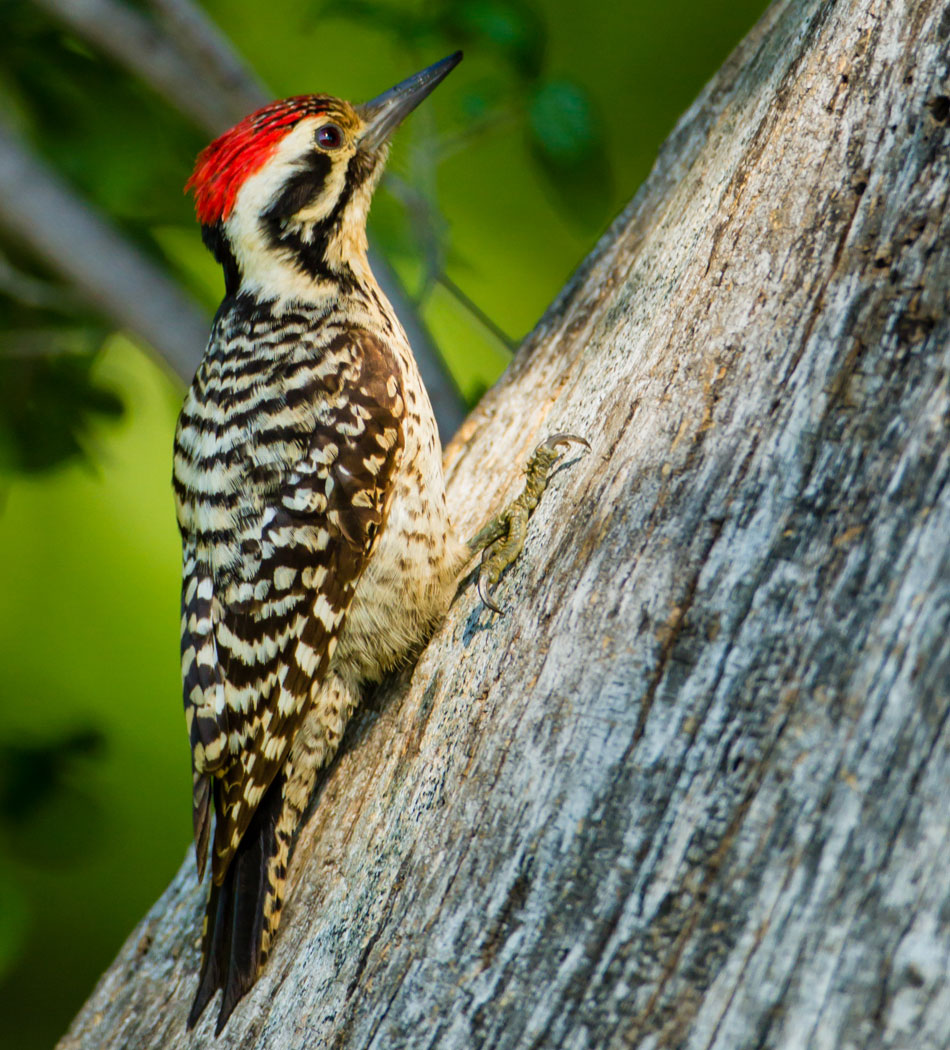
You will find the Ladder-backed Woodpecker, a species distinguished by its black and white zebra pattern, thriving in the deserts and arid habitats of Colorado. This woodpecker, measuring 7.25 inches in length with a wingspan of 13 inches, stands out with its unique appearance. It is well-adapted to the sparse vegetation and arid conditions of its habitat, making it a common sight in Colorado’s desert landscapes. The black and white coloration not only aids in camouflage but also adds to its striking beauty.
| Ladder-backed Woodpecker | |
|---|---|
| Physical Description | Black and white zebra pattern on back and wings |
| Habitat | Thrives in desert habitats with sparse vegetation |
| Location | Commonly found in the arid landscapes of Colorado |
Observing the Ladder-backed Woodpecker in its natural habitat provides a glimpse into how this species has evolved to survive in harsh environments, showcasing its remarkable adaptations to thrive in the unique ecosystems of Colorado.
8. Red-bellied Woodpecker

In Colorado, you can easily spot the Red-bellied Woodpecker with its distinctive red plumage extending from its bill to its neck. These woodpeckers are known for their aggressive behavior at feeders, where they dominate over other birds. Their undersides feature a combination of white and tan, while their backs display striking black and white barring patterns.
Red-bellied Woodpeckers possess a unique adaptation in the form of a long tongue that can extend nearly two inches past their bill. This specialized tongue allows them to reach deep into crevices to extract insects and larvae, making them highly efficient foragers.
When out in the wild, you can identify the presence of Red-bellied Woodpeckers by their distinctive rolling churr-churr-churr call, a sound that echoes through the trees as they communicate with one another.
9. Acorn Woodpecker
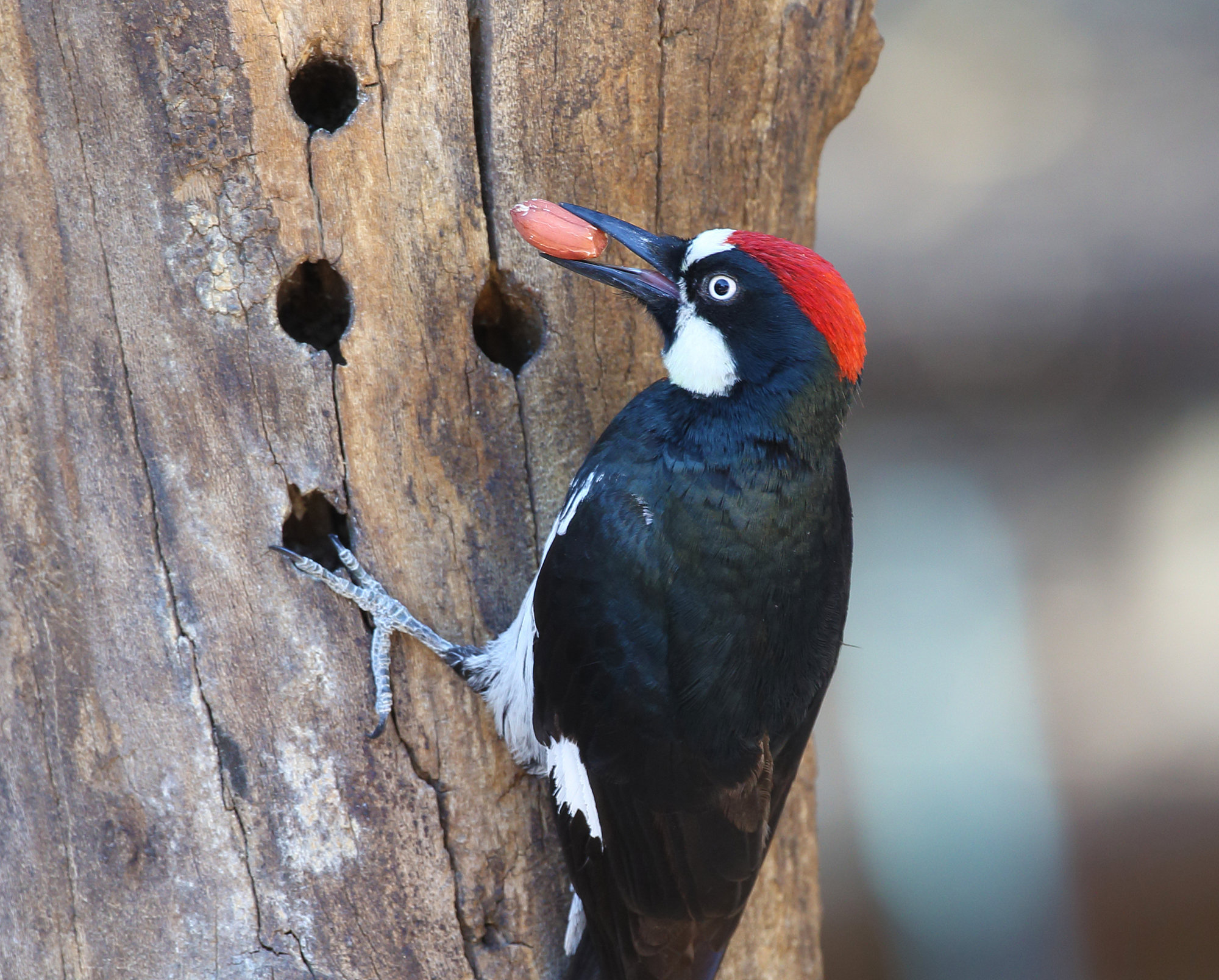
Spotting an Acorn Woodpecker in Colorado’s oak woodlands and pine-oak forests reveals a bird with a distinctive red cap, white forehead, and black body, resembling a clown-like appearance. These woodpeckers are known for their unique behaviors, such as storing acorns in granary trees, living in social groups, and defending their granaries from other woodpeckers. The Acorn Woodpecker’s presence in Colorado signifies a healthy ecosystem, as they play a crucial role in dispersing seeds and creating cavities that benefit other wildlife.
| Acorn Woodpecker | |
|---|---|
| Color | Red, white, black |
| Habitat | Oak woodlands, pine-oak forests |
| Behavior | Stores acorns, lives in social groups |
| Threats | Habitat loss, disease |
Despite their stable populations in Colorado, Acorn Woodpeckers face threats from habitat loss and disease, emphasizing the need for ongoing conservation efforts to protect these charismatic birds and their vital role in the ecosystem.
10. Red-naped Sapsucker

The Red-naped Sapsucker, a medium-sized woodpecker distinguished by its red crown and nape, is a notable avian resident of Colorado’s montane forests.
- Distinctive Features
The Red-naped Sapsucker is easily recognized by its striking red crown and nape, contrasting with its black and white face and barred black and white back.
- Feeding Habits
This woodpecker species creates neat rows of sap wells in trees by drilling small holes. They feed on the sap that flows out, along with insects attracted to the sweet liquid.
- Conservation Efforts
Efforts towards the conservation of Red-naped Sapsuckers focus on preserving their montane forest habitats, especially areas rich in aspen trees. Protecting nesting sites and ensuring the availability of suitable trees are crucial for maintaining stable populations of this woodpecker species in Colorado.
11. Williamsons Sapsucker
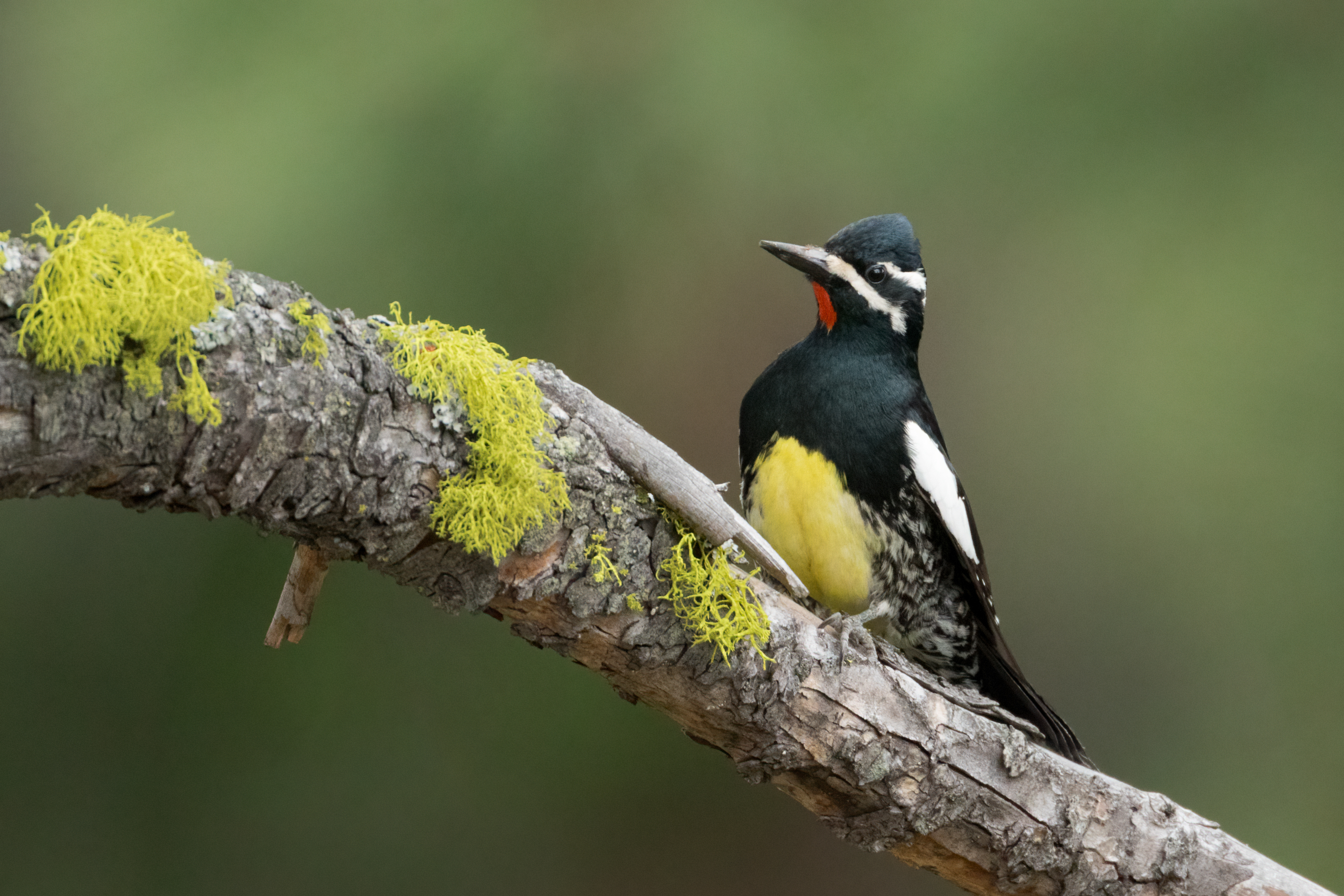
Williamsons Sapsuckers, known for their distinctive markings and habitat preferences, are a species of woodpeckers found in Colorado’s montane forests. Males of the Williamson’s Sapsucker species sport black heads, white faces, red throats, and yellow bellies, while females exhibit gray heads, white faces, and yellow bellies. These woodpeckers are recognized for their behavior of drilling sap wells in trees to feed. They thrive in montane forests characterized by a blend of aspen and conifer trees. However, the conservation status of Williamson’s Sapsuckers is a concern due to habitat loss and competition with other woodpecker species. Preserving the diverse forest habitats that provide both food and nesting sites is crucial for ensuring the continued presence of Williamsons Sapsuckers in Colorado. Efforts to mitigate habitat loss and manage competition with other woodpecker species are essential for the long-term survival of these unique birds in the montane ecosystems of Colorado.