
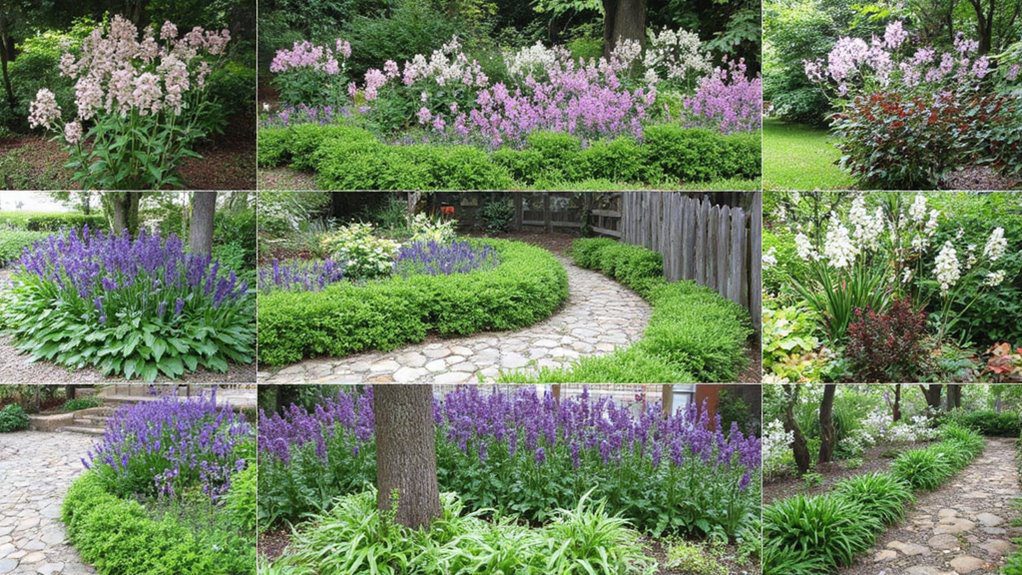
When I plan landscapes, I often rely on Liriope for its versatility and evergreen appeal. Its ability to function as a border, ground cover, or striking contrast in rock gardens makes it indispensable. But how you integrate this plant can dramatically influence a garden’s texture and seasonal interest. I’ve found that subtle design choices with Liriope can elevate a space far beyond simple greenery. Let’s explore some practical ways to make the most of it.
Use Liriope as a Border Plant

Although many gardeners consider Liriope for edging, I must clarify that it’s not ideal as a border plant due to its growth habits and spacing requirements.
Liriope tends to form dense clumps that need ample room, which can disrupt uniform borders. Its spreading nature demands strategic placement, making it less suitable for crisp, defined edges in formal landscape designs.
Combine Liriope With Flowering Perennials
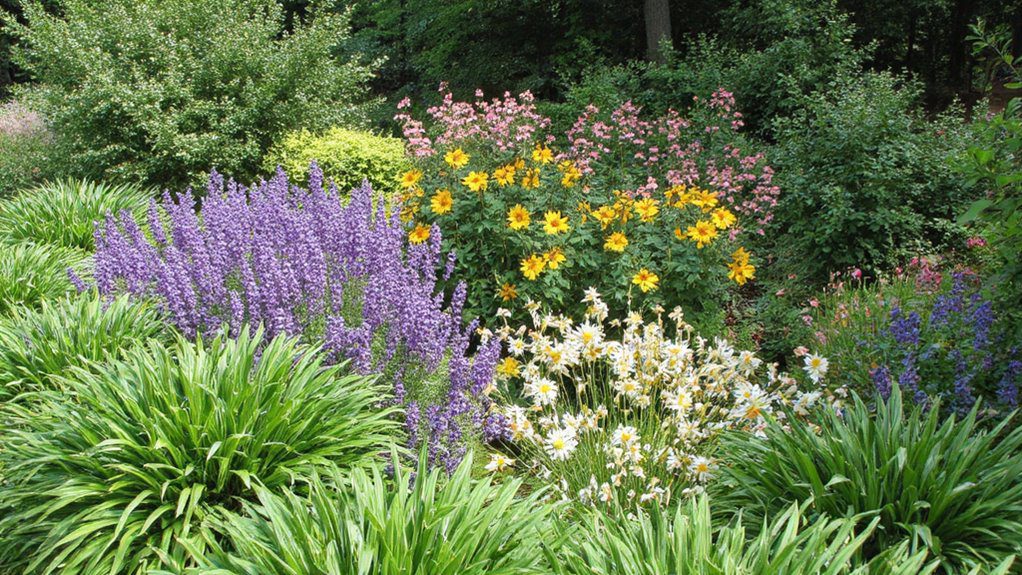
When you combine Liriope with flowering perennials, you create a textured, dynamic landscape that balances foliage and blooms.
I carefully select perennials with complementary colors and staggered bloom times to ensure continuous visual interest.
Liriope’s dense, grassy leaves provide structural contrast, anchoring vibrant flowers while enhancing depth and rhythm.
This pairing optimizes both form and function in garden design.
Create a Lush Ground Cover
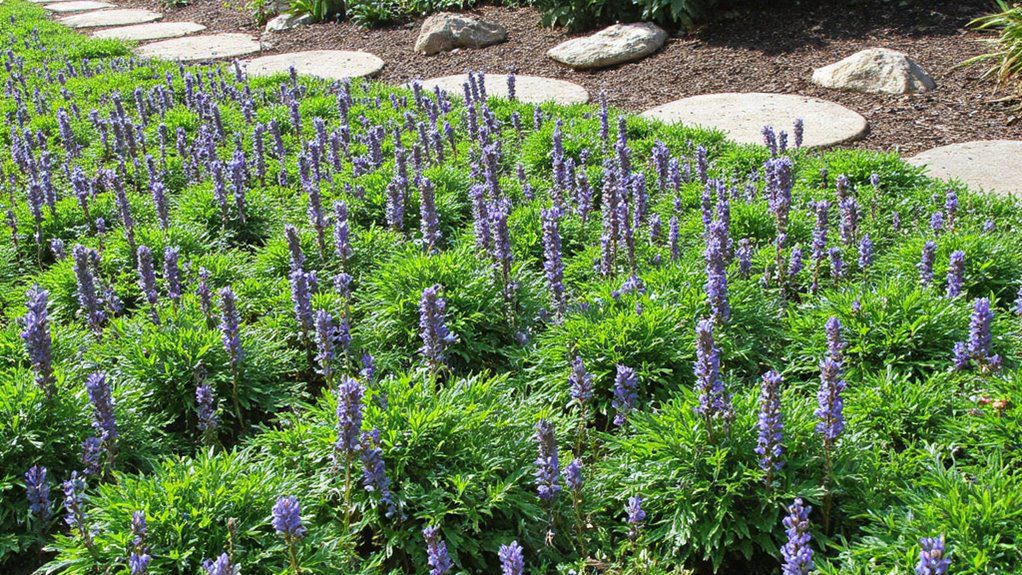
Because Liriope thrives in various light conditions and forms dense clumps, I use it extensively to create a lush ground cover that suppresses weeds and stabilizes soil.
Its fibrous root system anchors the substrate effectively. I plant it in staggered patterns to ensure even coverage, enhancing both texture and visual uniformity in landscape beds without compromising drainage or airflow.
Plant Liriope Along Pathways
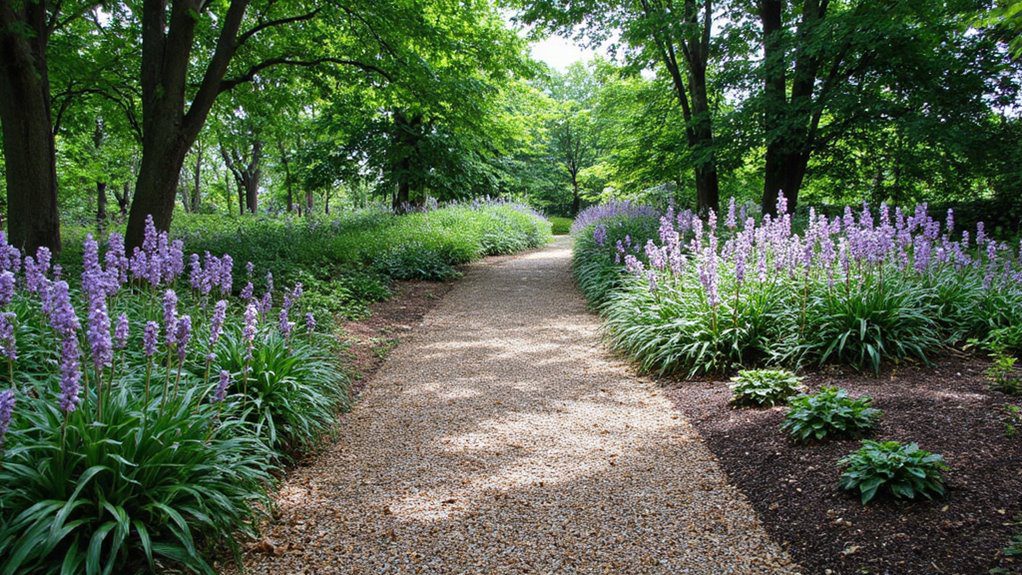
Since pathways guide movement and define garden spaces, I plant Liriope along them to create clear, elegant borders that enhance both safety and visual appeal.
Its dense, tufted foliage withstands foot traffic and suppresses weeds effectively.
I space plants evenly, ensuring uniform growth and easy maintenance, while selecting varieties with contrasting leaf colors to subtly accentuate pathway edges without overwhelming the design.
Incorporate Liriope in Rock Gardens
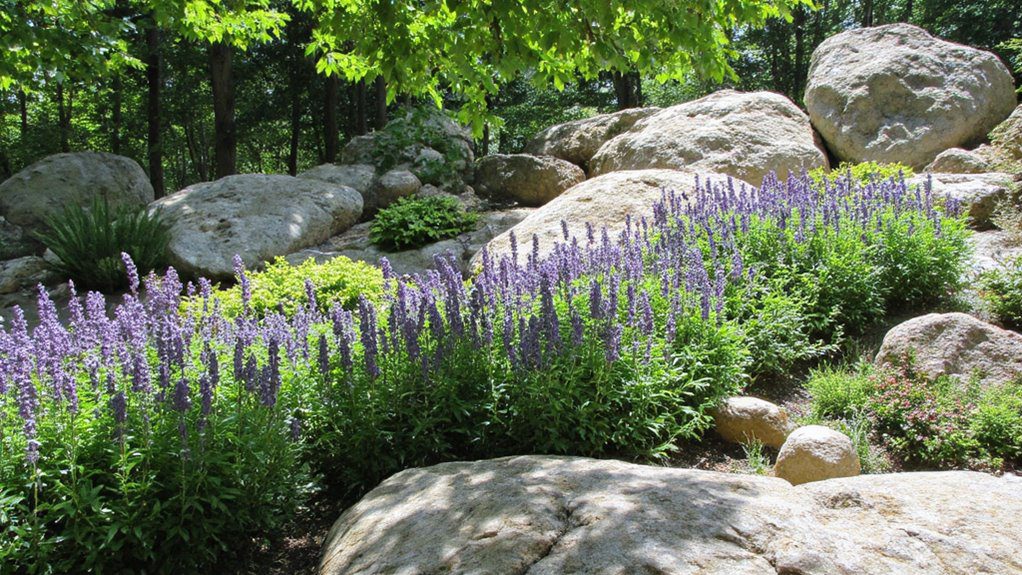
Although rock gardens demand plants that tolerate well-drained, often challenging conditions, I find Liriope excels in these settings by adding texture and structure.
Its dense, grass-like foliage contrasts sharply with rugged stones, while its tolerance for drought and poor soil ensures longevity.
Strategically placing Liriope amidst rocks creates visually appealing clusters, enhancing both depth and rhythm in the landscape’s composition.
Use Liriope to Soften Hardscape Edges
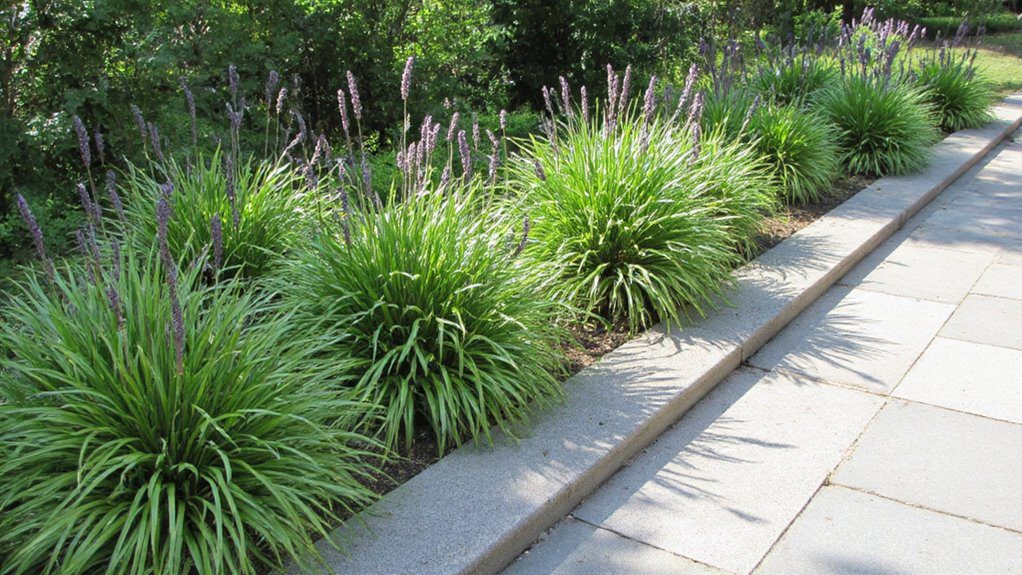
When you place Liriope along hardscape edges, it immediately softens sharp lines with its arching, grass-like leaves. This creates a smooth transition between rigid surfaces and natural elements.
Its dense clumps visually buffer concrete or stone, reducing harshness. Liriope’s texture contrasts yet complements hardscape materials, enhancing overall landscape cohesion while maintaining clean, defined boundaries without overwhelming the design.
Mix Different Liriope Varieties for Color Contrast
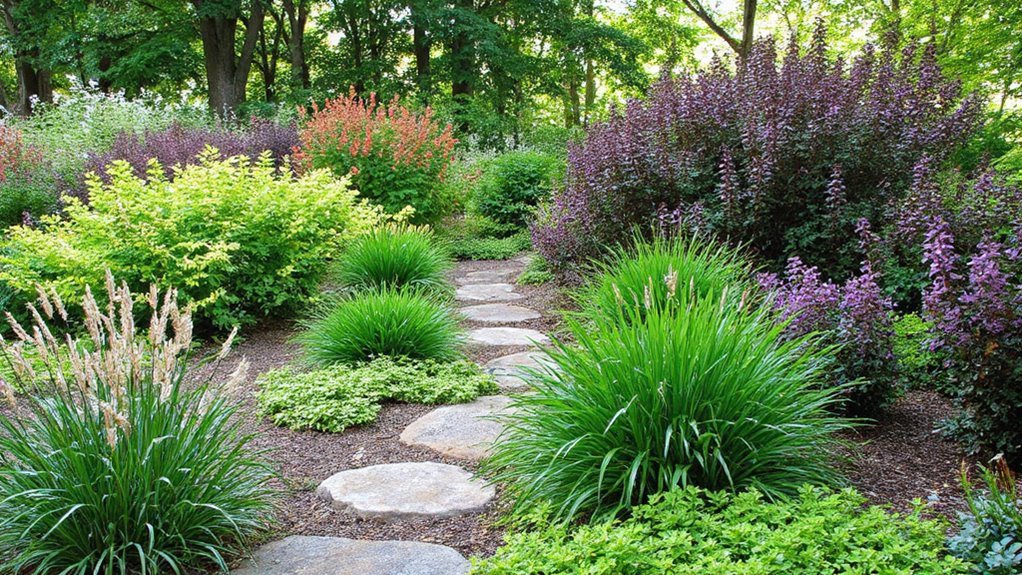
If you want to add visual interest to your landscape, mixing different Liriope varieties can create striking color contrasts.
Combining variegated leaves with solid green foliage enhances depth and texture. Selecting cultivars with varying blade widths and growth habits emphasizes form while maintaining cohesion.
Thoughtful arrangement highlights each variety’s unique hues, elevating your garden’s overall aesthetic with precision and balance.
Plant Liriope Under Trees for Shade Tolerance
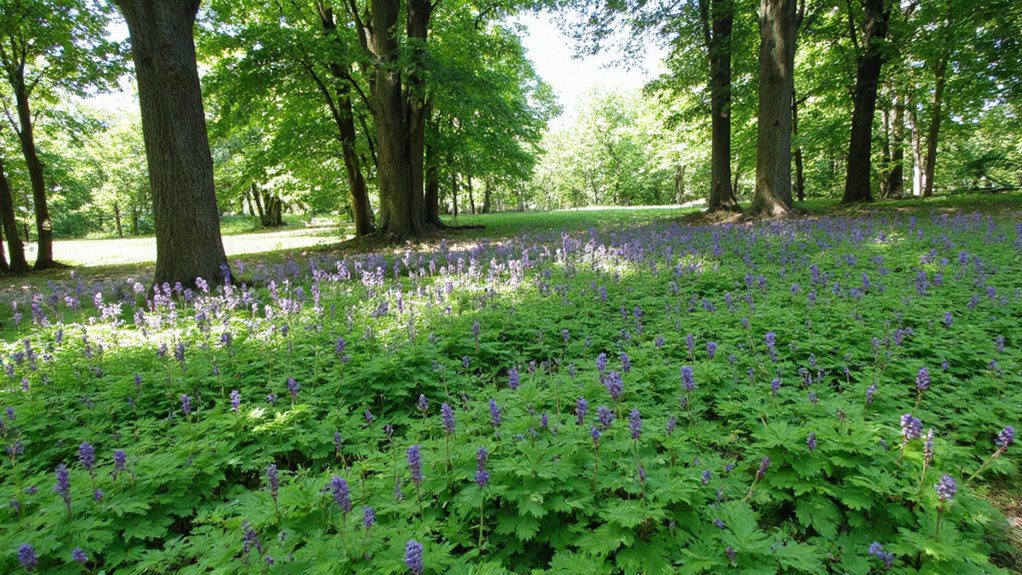
Since Liriope doesn’t truly thrive in deep shade, I recommend avoiding planting it directly under dense tree canopies.
Instead, choose locations with filtered light or partial shade to ensure healthy growth.
Liriope’s adaptability suits areas with dappled sunlight, but insufficient light hampers its vigor and aesthetic appeal.
Proper site selection under trees optimizes its shade tolerance and landscape performance.
Design a Seasonal Interest Garden With Liriope
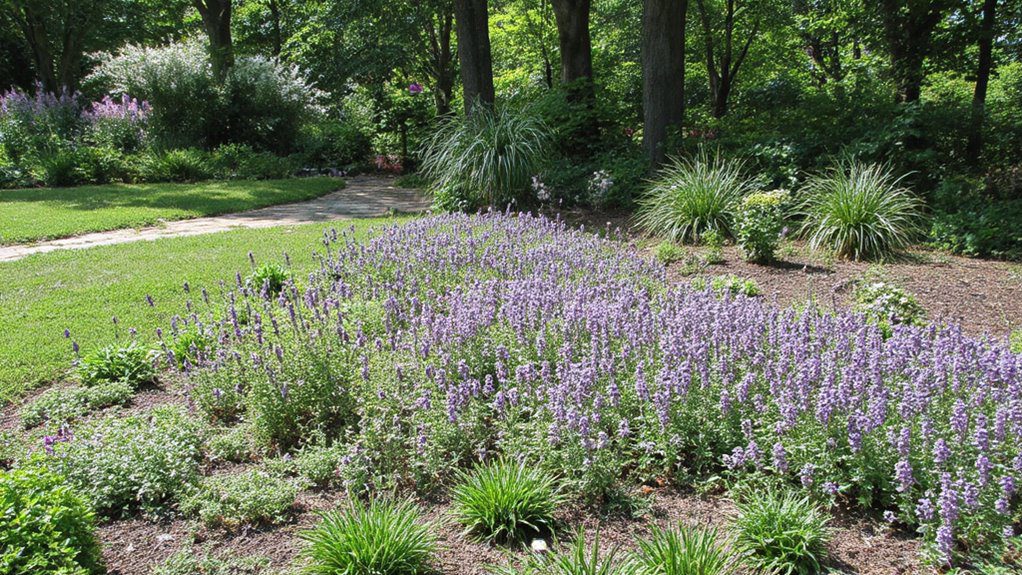
Although Liriope may not dramatically change with the seasons, I find it invaluable for anchoring a garden designed around seasonal interest.
Its evergreen foliage provides consistent structure and texture, allowing vibrant seasonal blooms and foliage changes from companion plants to stand out.
Strategically placing Liriope offers year-round rhythm and balance, enhancing overall garden composition with subtle, reliable greenery.
Use Liriope in Container Gardens
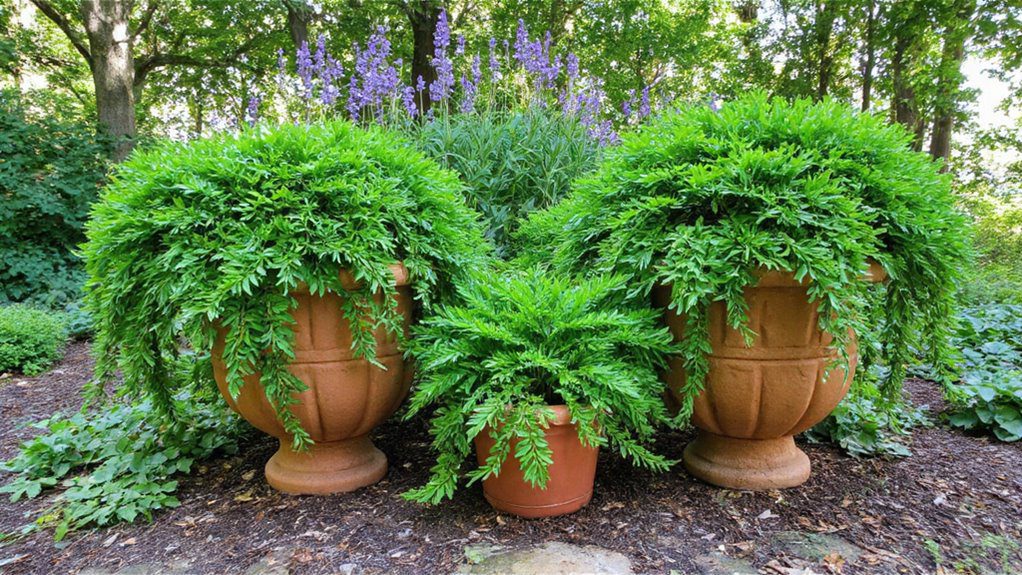
When incorporating Liriope into container gardens, you’ll appreciate its adaptability and low maintenance needs.
Its dense, grass-like foliage provides striking texture and year-round structure. Choose well-draining soil and partial shade for optimal growth.
Liriope’s compact root system suits confined spaces, making it ideal for patios or balconies. Regular watering ensures lush green growth without demanding excessive care or frequent repotting.
Highlight Liriope With Decorative Mulch
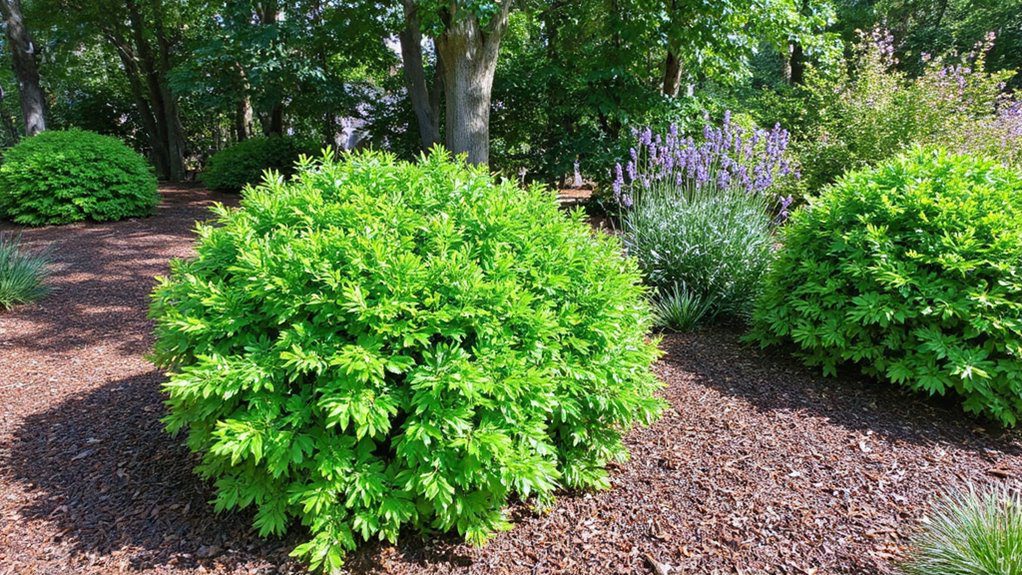
To truly make Liriope stand out in your garden, I recommend using decorative mulch around its base.
Mulch enhances soil moisture retention and temperature regulation while providing a clean, contrasting backdrop that highlights Liriope’s foliage.
Choose materials like dark bark or colored stones to create visual depth.
This method elevates both plant health and overall landscape aesthetics efficiently.