
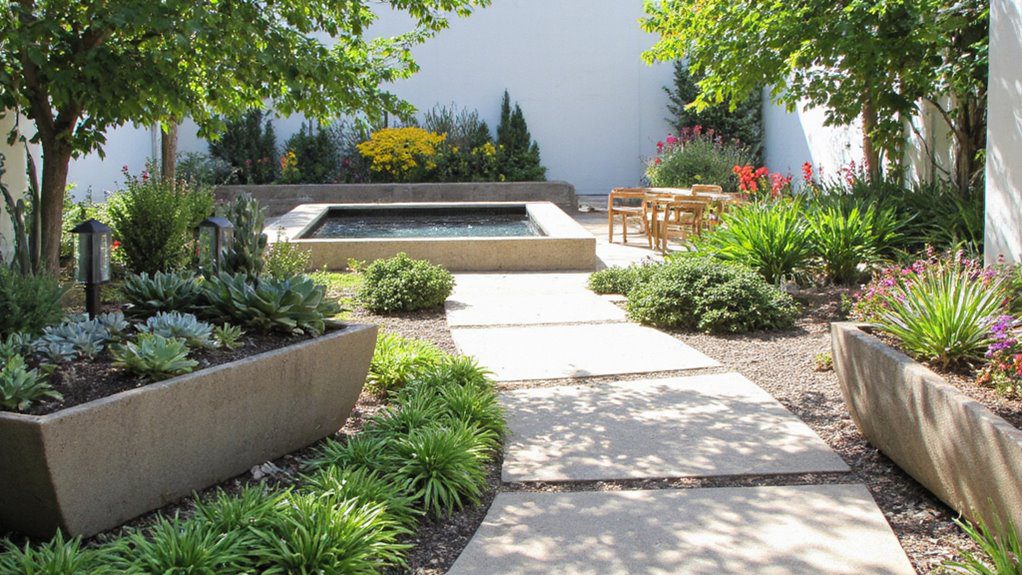
When I rethink outdoor spaces, I focus on blending form, function, and sustainability. From vertical gardens that optimize limited areas to smart irrigation systems that conserve water, modern garden design is about more than just beauty—it’s about creating ecosystems that work efficiently and thoughtfully. If you’re interested in how sleek planters, native plants, and integrated lighting can transform your garden into a sustainable retreat, there are some innovative ideas worth considering…
Vertical Gardens for Small Spaces
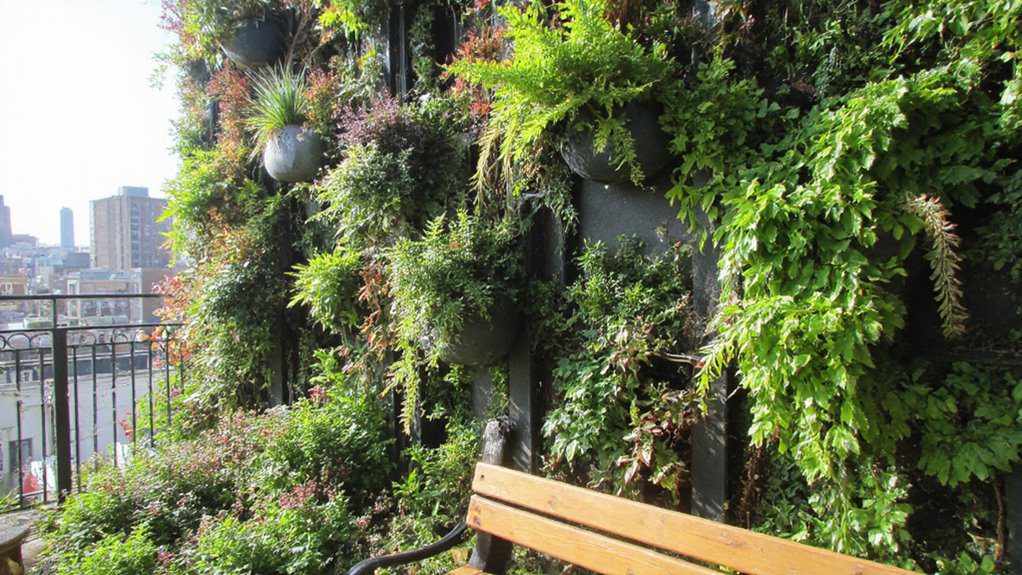
Although vertical gardens are often touted as the perfect solution for small spaces, I’ve found that they’re not always practical or effective in every setting.
Structural support, light availability, and plant selection critically impact success. Without proper design, vertical systems can suffer from water runoff and uneven growth.
Sustainable implementation demands careful planning to balance aesthetics with functional limitations.
Smart Irrigation Systems

Smart irrigation systems transform garden maintenance by optimizing water use through technology and data.
I rely on sensors and automated controls to deliver precise moisture levels, reducing waste and enhancing plant health.
These systems adapt to weather changes, ensuring sustainability without sacrificing aesthetics.
Incorporating smart irrigation means blending efficiency with elegance, making my garden both eco-friendly and visually appealing.
Sleek and Minimalist Planters
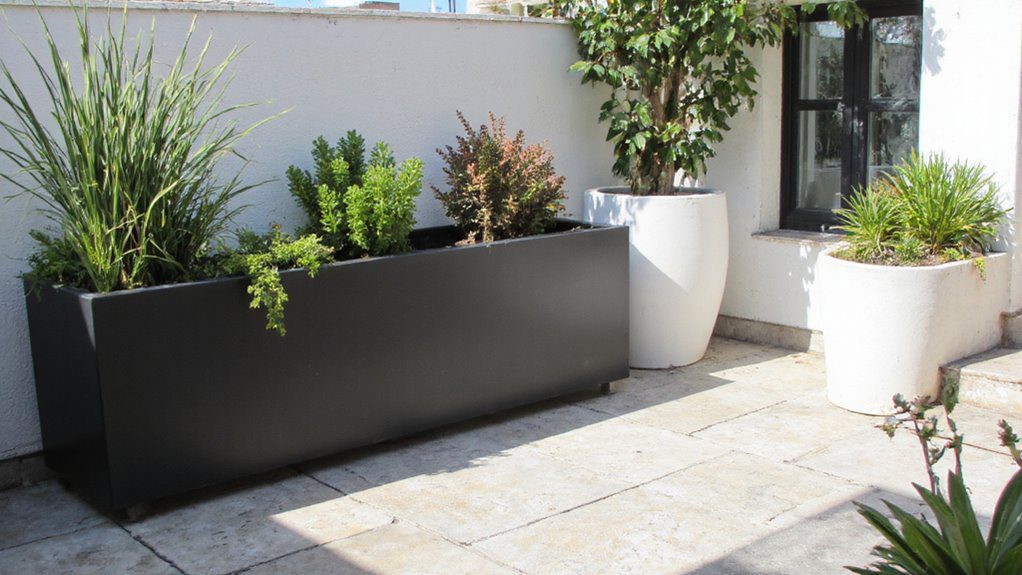
When choosing planters, I focus on sleek and minimalist designs that complement my garden’s clean lines while supporting sustainability.
I select materials like recycled metals or biodegradable composites that reduce environmental impact. Their simple forms enhance plant visibility and airflow, promoting healthy growth.
This approach balances technical efficiency with aesthetic appeal, creating a modern, eco-conscious outdoor space that feels both refined and purposeful.
Outdoor Lighting Innovations

Complementing sleek planters with innovative outdoor lighting elevates both functionality and ambiance in a modern garden.
I focus on adjustable LED fixtures with smart controls, enhancing energy efficiency while highlighting architectural lines.
These solutions blend aesthetics with technology, providing customizable illumination that adapts to different settings.
This approach ensures a refined, sustainable outdoor space without compromising design integrity.
Sustainable Garden Practices
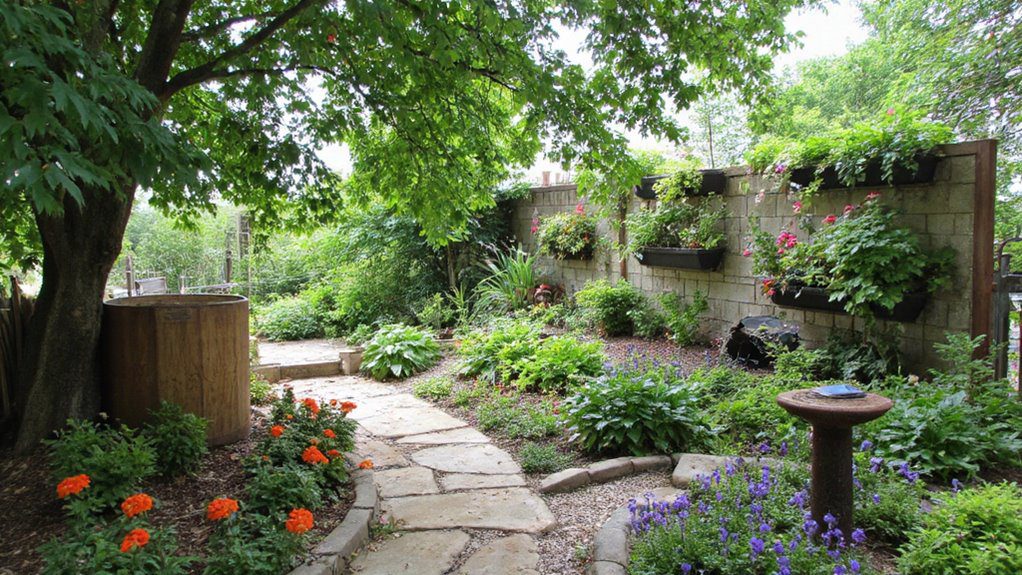
Although modern garden designs often prioritize aesthetics, I believe integrating sustainable practices is essential for a truly responsible outdoor space.
Using native plants reduces water consumption and supports local ecosystems. Composting organic waste enriches soil naturally, eliminating chemical fertilizers. Incorporating permeable materials prevents runoff, promoting groundwater recharge.
These strategies blend technical efficiency with environmental stewardship, creating gardens that are both beautiful and sustainable.
Incorporating Water Features
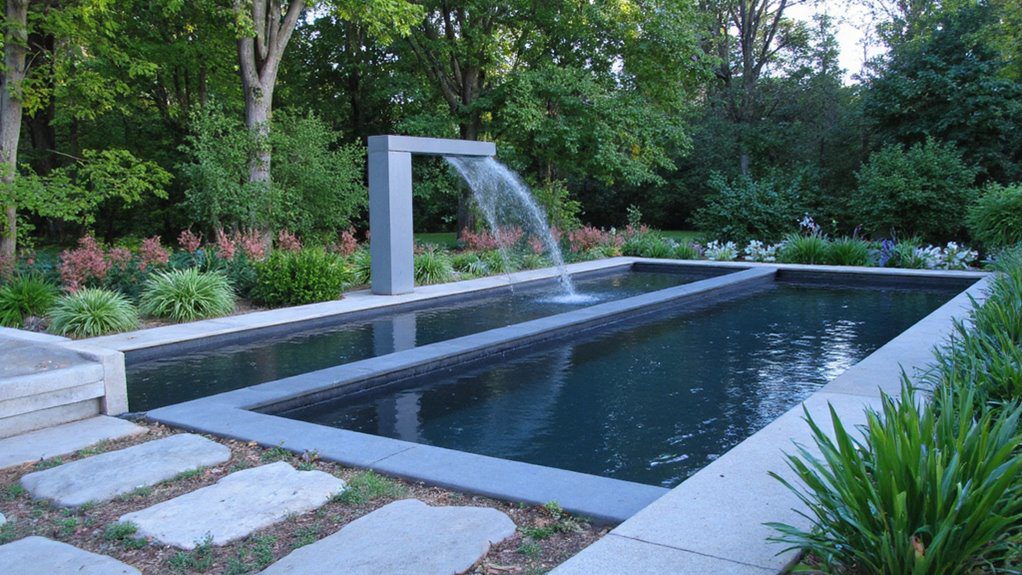
How can water features elevate a modern garden’s appeal while maintaining sustainability?
I focus on integrating recirculating systems that minimize water waste and selecting native aquatic plants to support local ecosystems.
Sleek designs with solar-powered pumps blend aesthetics with eco-efficiency, creating tranquil focal points without compromising environmental responsibility.
This approach balances technical innovation and natural beauty effectively.
Edible Garden Designs

Edible garden designs transform green spaces into productive landscapes that marry functionality with modern aesthetics.
I focus on integrating compact raised beds and vertical planters to maximize yield while conserving space.
Using sustainable soil mixes and drip irrigation enhances plant health efficiently.
This approach not only beautifies but also supports local ecosystems, offering fresh, homegrown produce with minimal environmental impact.
Multi-functional Garden Furniture
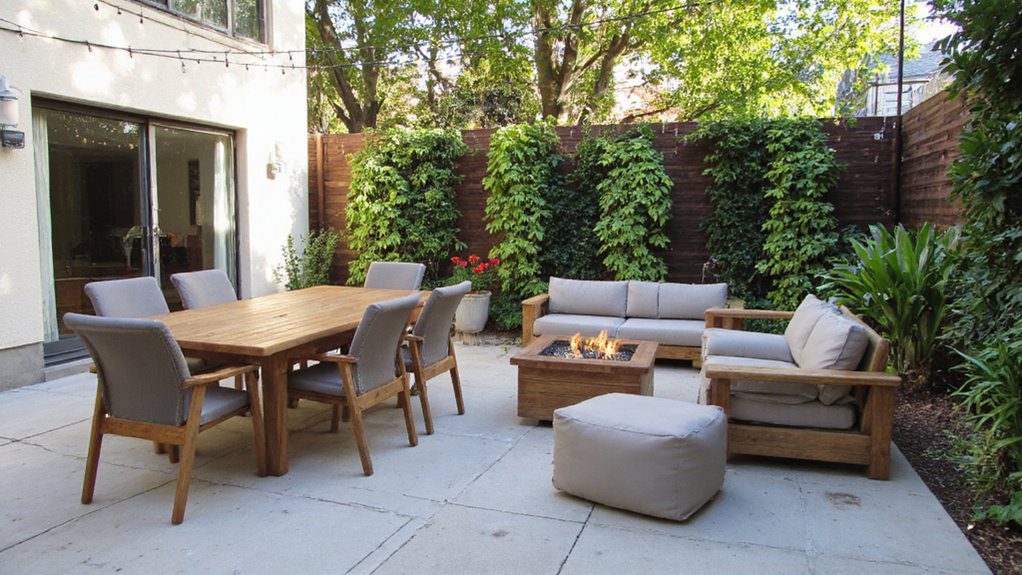
When designing outdoor spaces, I prioritize multi-functional garden furniture because it optimizes usability without sacrificing style.
Pieces that combine seating, storage, and planters enhance functionality while minimizing footprint.
I choose sustainable materials like reclaimed wood or recycled metal to reduce environmental impact.
This approach ensures durable, adaptable furnishings that complement modern aesthetics and support eco-friendly living in compact garden designs.
Native Plant Landscaping
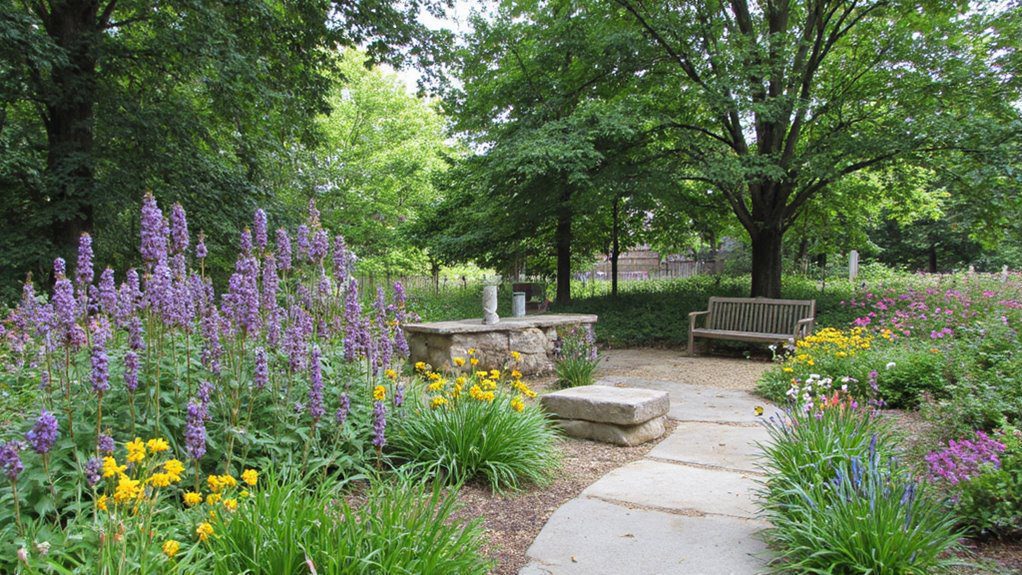
Although native plant landscaping requires careful selection, it offers unmatched benefits for sustainability and garden resilience.
By choosing species adapted to local conditions, I reduce water use and support native wildlife. This strategic approach enhances soil health and minimizes maintenance.
Integrating native plants creates a balanced ecosystem, making my garden both visually striking and environmentally responsible, embodying modern, sustainable design principles.
Creative Pathways and Borders
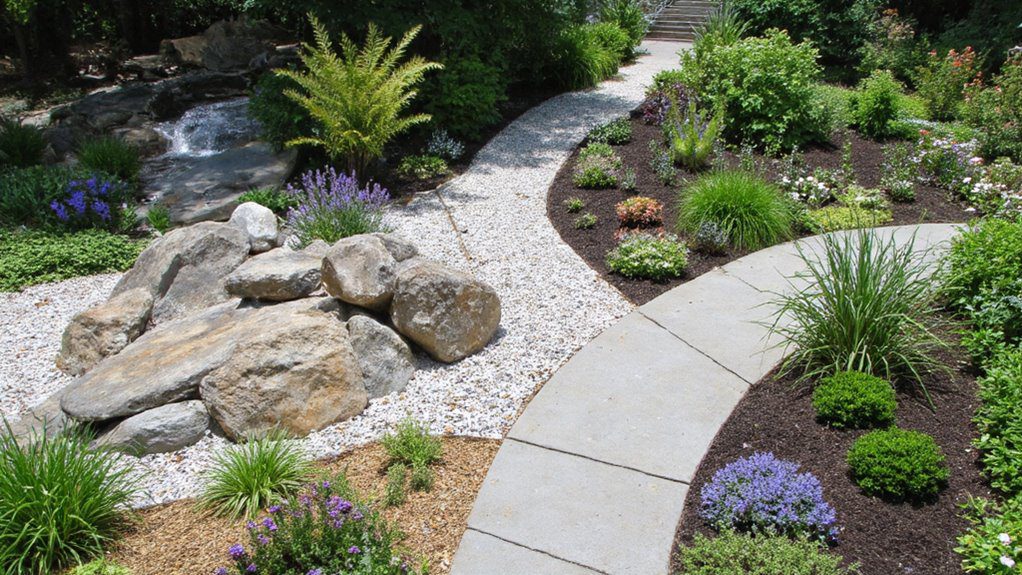
Complementing native plant landscaping with creative pathways and borders brings structure and flow to my garden.
I use permeable materials like gravel and reclaimed wood to maintain sustainability while preventing soil erosion.
Carefully designed borders define spaces, guiding movement and enhancing aesthetics.
This approach balances function with environmental responsibility, creating a cohesive, low-impact landscape that thrives naturally and invites exploration.
Outdoor Art and Sculptures

Integrating outdoor art and sculptures elevates the garden’s visual interest and creates focal points that invite contemplation.
I recommend choosing pieces made from durable, sustainable materials like recycled metal or natural stone to withstand weather while minimizing environmental impact.
Position sculptures thoughtfully to harmonize with plantings and pathways, ensuring they enhance the garden’s structure and promote a balanced, eco-friendly aesthetic.