

When planning a landscape in Utah, I focus on strategies that balance beauty with sustainability. Using native, drought-tolerant plants minimizes water use and maintenance. Incorporating rock gardens and efficient irrigation supports soil health and conserves resources. I also consider outdoor living elements that enhance usability without compromising the environment. These techniques create resilient, functional spaces—yet there’s more to consider if you want a landscape that truly thrives in Utah’s unique climate.
Embrace Native Plants for Low Maintenance

Although many people assume native plants require minimal upkeep, embracing them for low maintenance in Utah landscapes demands careful selection and management.
I focus on species adapted to local soil and climate conditions, ensuring resilience against pests and diseases.
Proper pruning, soil amendments, and strategic placement optimize growth while conserving resources.
This approach sustains ecological balance and reduces long-term maintenance without compromising landscape health.
Design With Drought-Tolerant Landscaping

When designing with drought-tolerant landscaping in Utah, I prioritize plants that thrive with minimal water while maintaining soil health and biodiversity.
I select species with deep root systems to improve soil structure and reduce erosion. Incorporating organic mulch conserves moisture and supports beneficial microorganisms.
This sustainable approach enhances ecosystem resilience, reduces irrigation needs, and fosters a balanced, low-maintenance landscape adapted to Utah’s arid climate.
Incorporate Rock Gardens and Natural Stone
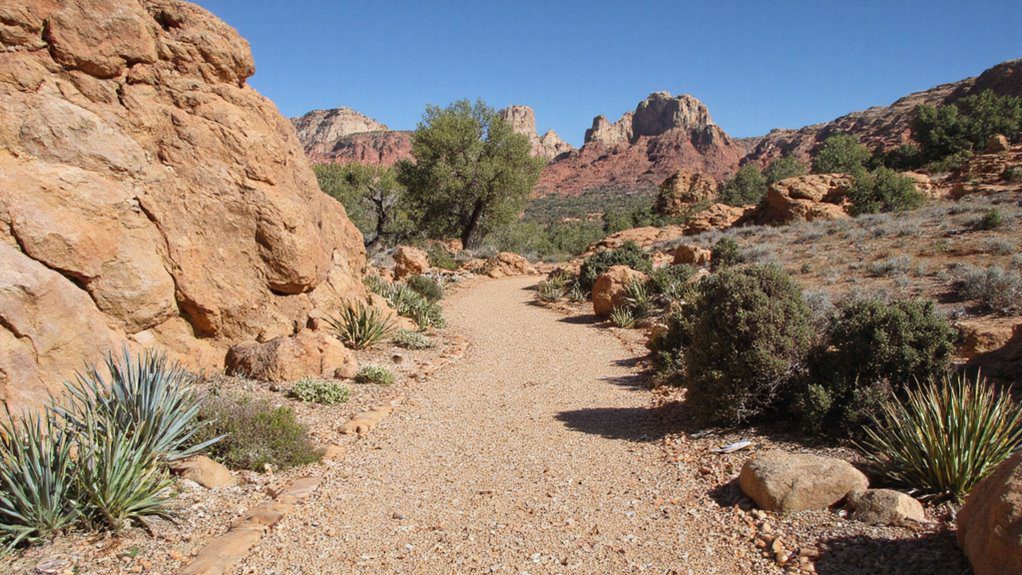
I recommend integrating rock gardens and natural stone into your Utah landscape to create durable, low-maintenance features that conserve water and mimic the region’s rugged terrain.
Select locally sourced stones to enhance sustainability and thermal regulation. Arrange rocks to promote drainage and prevent soil erosion, complementing native drought-tolerant plants.
This approach reduces irrigation needs while providing structural interest and resilience against Utah’s climate extremes.
Use Mulch to Conserve Water and Reduce Weeds
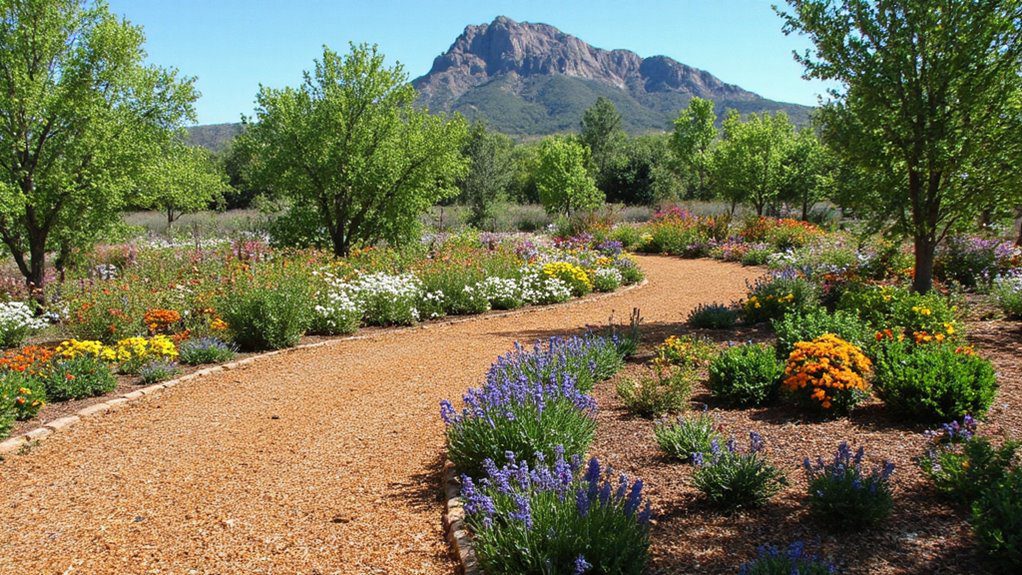
Building on the stability that rock gardens and natural stone provide, mulch plays a vital role in maintaining soil health and moisture levels in Utah landscapes.
Applying organic mulch reduces evaporation, conserves water, and suppresses weed growth by blocking sunlight. It also enhances soil structure through gradual decomposition, improving nutrient retention and promoting sustainable, drought-resistant plant growth essential for Utah’s arid climate.
Create Outdoor Living Spaces With Fire Pits

Although Utah’s climate can be dry and cool in the evenings, creating an outdoor living space with a fire pit extends usability and comfort in your yard.
I recommend choosing efficient, low-emission fire pits fueled by sustainably sourced wood or clean-burning gas.
Proper placement ensures safety and wind protection, while integrating seating with permeable surfaces supports water conservation and reduces heat retention for an eco-friendly design.
Add Colorful Desert Wildflowers
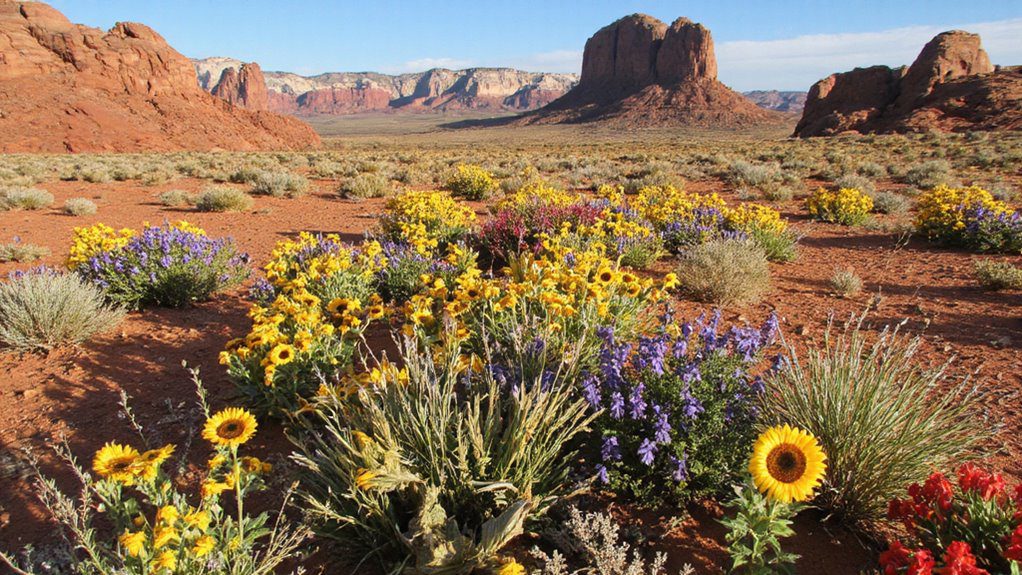
When you incorporate colorful desert wildflowers into your Utah landscape, you not only enhance visual appeal but also support local biodiversity and soil health.
Selecting native species like penstemon or desert marigold ensures drought tolerance and minimal maintenance.
These wildflowers improve soil structure through root systems that reduce erosion, while attracting pollinators, fostering a resilient, sustainable ecosystem tailored to Utah’s arid conditions.
Install Efficient Drip Irrigation Systems
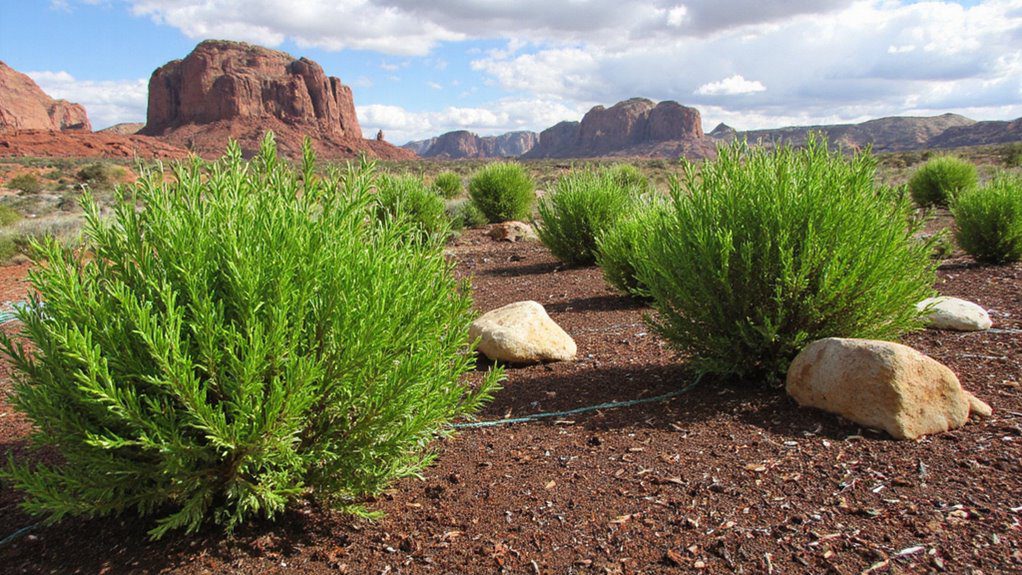
Efficient drip irrigation systems deliver water directly to plant roots, minimizing waste and maximizing absorption—an essential strategy for Utah’s dry climate.
I recommend selecting pressure-compensating emitters to maintain uniform flow despite elevation changes.
Installing a programmable timer optimizes watering schedules, reducing runoff.
Using filtered water prevents clogging, ensuring system longevity.
This method conserves water while promoting healthy, sustainable landscapes.
Build Raised Garden Beds for Vegetables
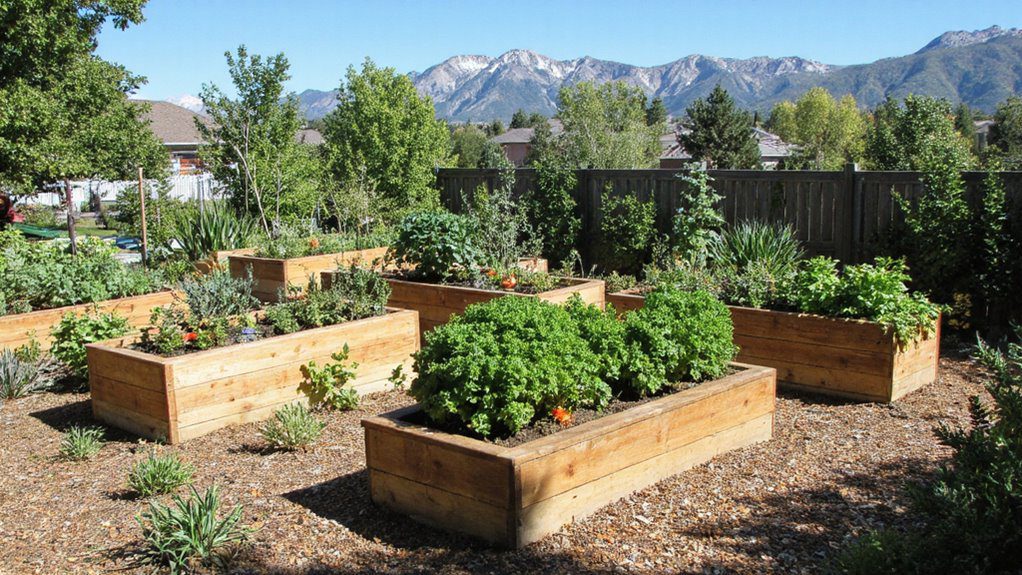
After setting up an efficient drip irrigation system, I recommend building raised garden beds to grow vegetables.
Raised beds improve soil drainage and temperature control, crucial in Utah’s arid climate. Using untreated cedar or recycled materials ensures sustainability.
Fill beds with a balanced mix of compost, sand, and loam to optimize nutrient retention and root development, maximizing yield while conserving water efficiently.
Integrate Shade Trees for Summer Cooling
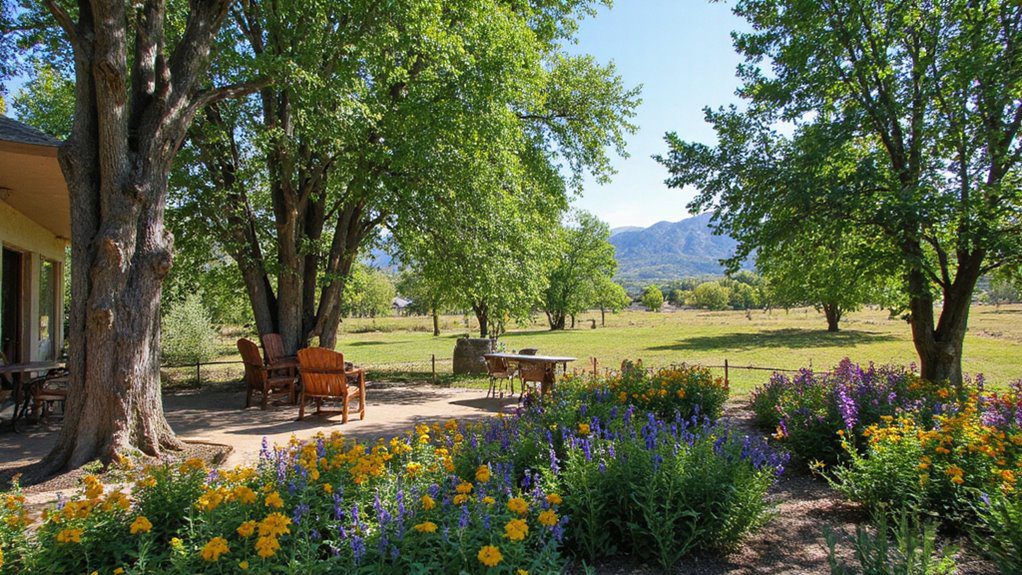
Since Utah experiences intense summer heat, I recommend integrating shade trees strategically to reduce cooling costs and create comfortable outdoor spaces.
Position deciduous trees on the south and west sides of buildings to block solar radiation in summer while allowing sunlight in winter.
Select drought-tolerant species native to Utah to ensure sustainability and minimal water usage, optimizing long-term energy savings and environmental benefits.
Utilize Xeriscaping to Save Water
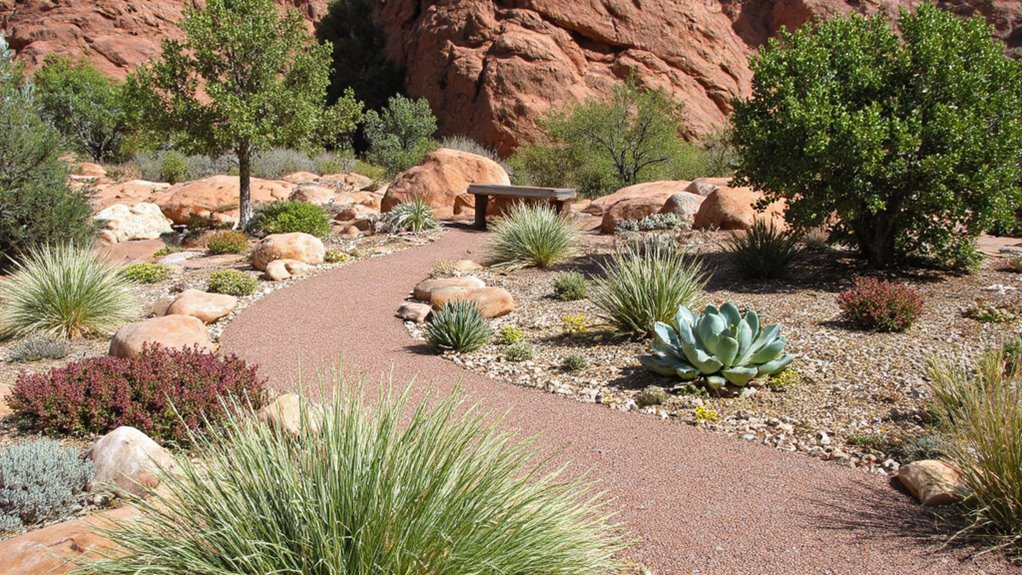
Although water conservation is critical in Utah’s arid climate, I don’t recommend relying solely on xeriscaping to save water.
Xeriscaping involves selecting drought-tolerant plants and minimizing turf areas, but effective water savings require integrating irrigation efficiency, soil amendments, and mulching.
Combining these techniques optimizes moisture retention and reduces runoff, creating a sustainable landscape that balances aesthetics with resource conservation.
Include Pathways With Gravel or Flagstone
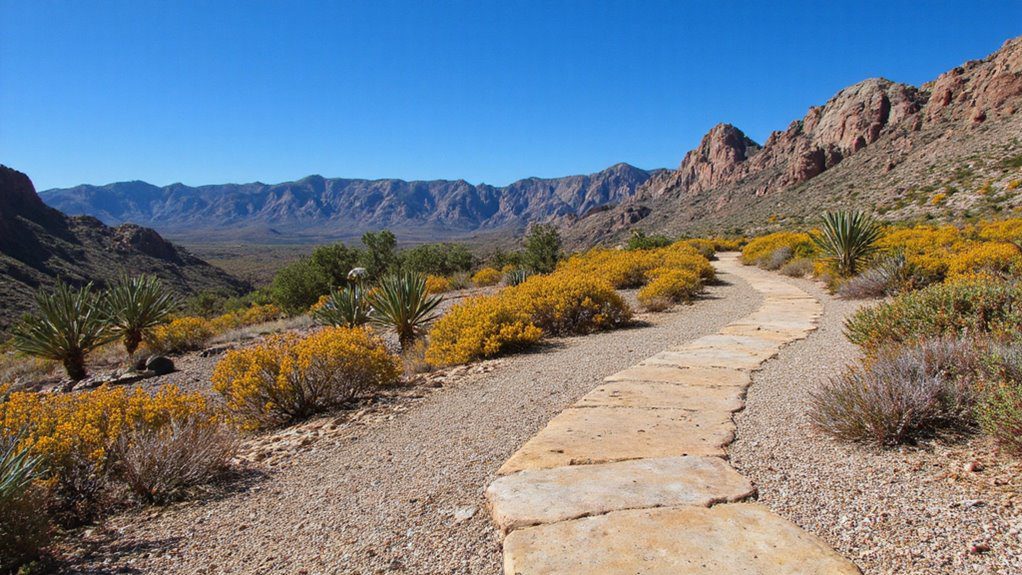
Why choose gravel or flagstone for pathways in your Utah landscape?
These materials offer durability and excellent drainage, crucial in Utah’s dry climate. Gravel reduces runoff and erosion, while flagstone provides natural thermal mass, moderating soil temperature.
Both are sustainable, low-maintenance options that blend seamlessly with xeriscaped gardens, conserving water and enhancing your landscape’s ecological balance effectively.