

If you’re spotting plants similar to dandelion leaves, watch out for chicory with its blue flowers and intense bitterness. Wild lettuce mimics dandelion leaves closely but tastes bitter too. Sow thistle boasts spiny leaf edges and daisy-like blooms for differentiation. Hawkweed, with its hairy stems and vibrant orange flowers, can easily be mistaken for dandelions. Proper identification is key to avoid confusion. Learning the distinctions among these plants will help you accurately identify them in the future.
1. Chicory: Dandelion Leaf Look-alike

Chicory leaves closely resemble dandelion leaves in appearance, exhibiting toothed edges and a lobed structure in their basal rosettes. One can easily mistake chicory for dandelion due to their similar bitter taste and culinary applications. However, distinct features set chicory apart. Chicory plants boast vibrant blue flowers, unlike dandelions, making them stand out in the wild. The bitterness of chicory is also more pronounced than that of dandelions, which can be a key factor in differentiation. Despite these differences, both chicory and dandelion leaves are versatile in the kitchen, finding their way into salads and various cooked dishes. The toothed edges and lobed structure common to both plants make them visually akin, adding to the challenge of distinguishing between them. Next time you come across these leafy greens, pay attention to their subtle but crucial distinguishing features to correctly identify chicory from its dandelion leaf look-alike.
2. Wild Lettuce: Resembling Dandelion Leaves
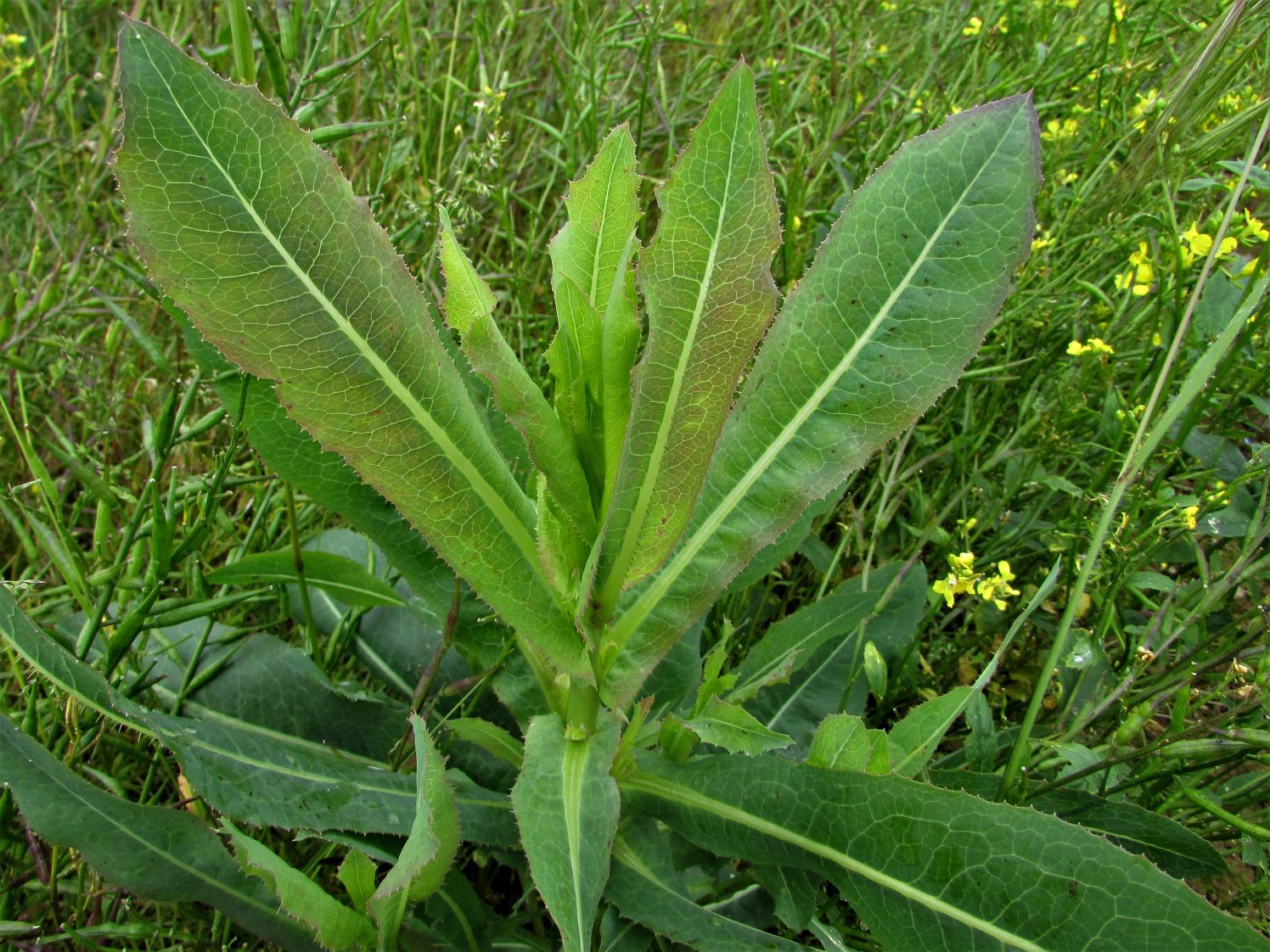
Wild lettuce leaves closely resemble dandelion leaves with their deeply lobed edges and rosette growth pattern near the ground. Despite the similarities, wild lettuce can be distinguished by its taller flowering stalks and the absence of milky sap commonly found in dandelions. The toothed appearance of wild lettuce leaves may lead to confusion with dandelion foliage, but wild lettuce’s bitter taste sets it apart from the milder dandelion leaves. In terms of edibility, both wild lettuce and dandelion leaves are safe to consume, with dandelion leaves being more palatable to most due to their less bitter flavor. When observing these plants in the wild, pay attention to the rosette arrangement, deeply lobed edges, and overall growth habit to differentiate between wild lettuce and dandelions. Remember that wild lettuce’s taller stalks and bitter taste are key distinguishing features from the more familiar dandelion leaves.
3. Sow Thistle: Similar to Dandelion Foliage
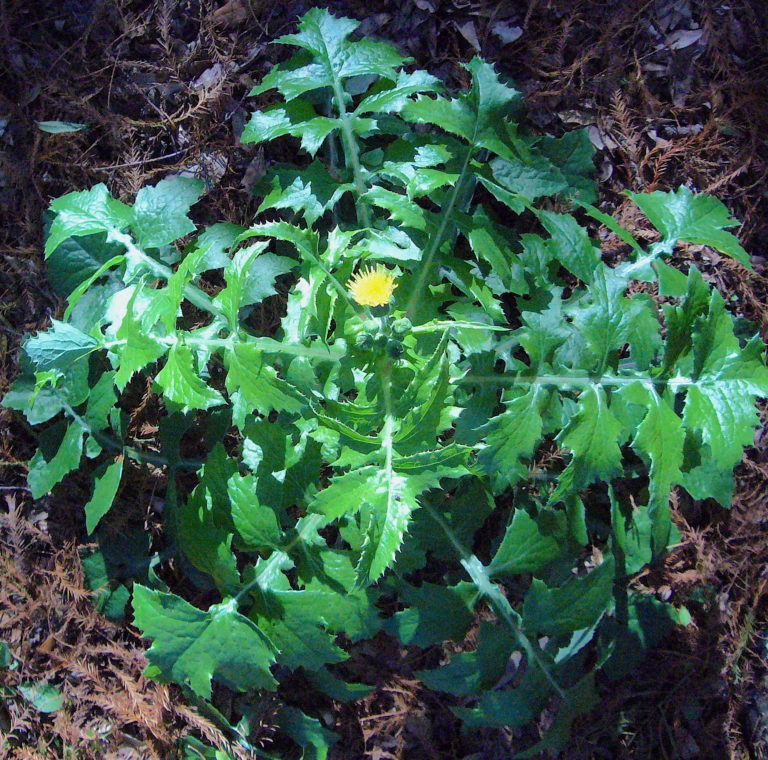
With irregularly lobed edges reminiscent of dandelion leaves, Sow Thistle foliage shares a striking similarity in appearance. Belonging to the Asteraceae family like Dandelions, Sow Thistle leaves exhibit irregular lobes that can be mistaken for those of Dandelions at first glance. One key difference lies in the presence of spines along the edges of Sow Thistle leaves, a feature absent in Dandelion foliage. While Dandelions boast bright yellow flowers, Sow Thistle produces daisy-like blooms, aiding in distinguishing between the two plants when in bloom. Despite these distinguishing features, the similar leaf shapes of Sow Thistle and Dandelion can lead to mistaken identity, especially when the plants are not in bloom. Therefore, careful observation of the leaf edges, presence of spines, and flower characteristics can help differentiate between these two plants with overlapping foliage features.
4. Hawkweed: Plant Mimicking Dandelion Leaves

Hawkweed plants closely resemble dandelion leaves, displaying similar lobed edges and a basal rosette growth pattern. While their appearance may trick the untrained eye, hawkweeds can be differentiated by their hairy stems and vibrant orange or yellow flowers. One distinct feature of hawkweed leaves is their purple undersides, adding to their unique characteristics. However, it is essential to note that some species of hawkweed are classified as invasive, posing a threat to native flora by outcompeting them for resources. Proper identification is crucial, especially for foraging purposes, to avoid mistaking hawkweed for dandelions. By paying attention to the hairy stems, colorful flowers, and purple undersides, individuals can successfully distinguish hawkweed from its dandelion look-alike. Understanding these key differences aids in preserving the ecosystem’s balance and preventing the spread of invasive species like hawkweed.