

If you're gardening in Zone 6, I recommend 11 fantastic fruit trees that can thrive despite the cold. Start with apple trees like Granny Smith and Liberty, and consider pears, particularly for cross-pollination benefits. Dabble in cherries and plums; Santa Rosa is a great choice. Peaches, such as Saturn and Reliance, are excellent too, especially the self-pollinating varieties. Dwarf options are perfect for smaller spaces. Pay attention to your soil's pH and drainage for healthy trees. Proper watering and seasonal care are essential. You'll find that understanding these factors can significantly enhance your harvest as you explore the diverse selections available.
Apple Trees
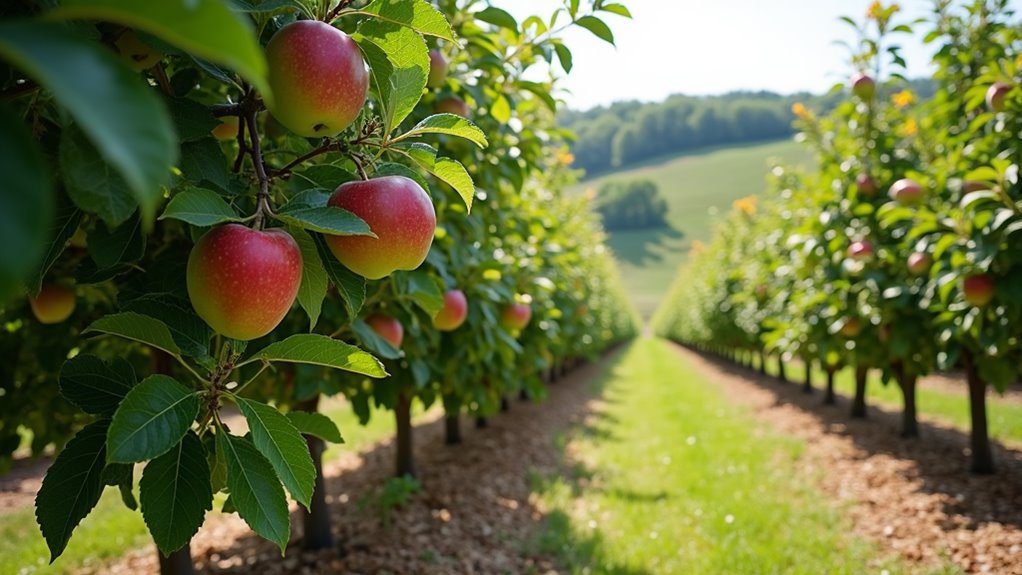
When it comes to growing apple trees in Zone 6B, selecting the right varieties is crucial for a successful harvest. I recommend hardy options like Granny Smith and Liberty, as they resist apple tree diseases. Proper apple tree pruning is essential to enhance air circulation and light penetration, ensuring healthy growth. Deep, well-drained soils are also essential for apple tree growth, contributing to their overall health and productivity. Pairing these varieties for cross-pollination will also maximize your fruit yield.
Pear Trees
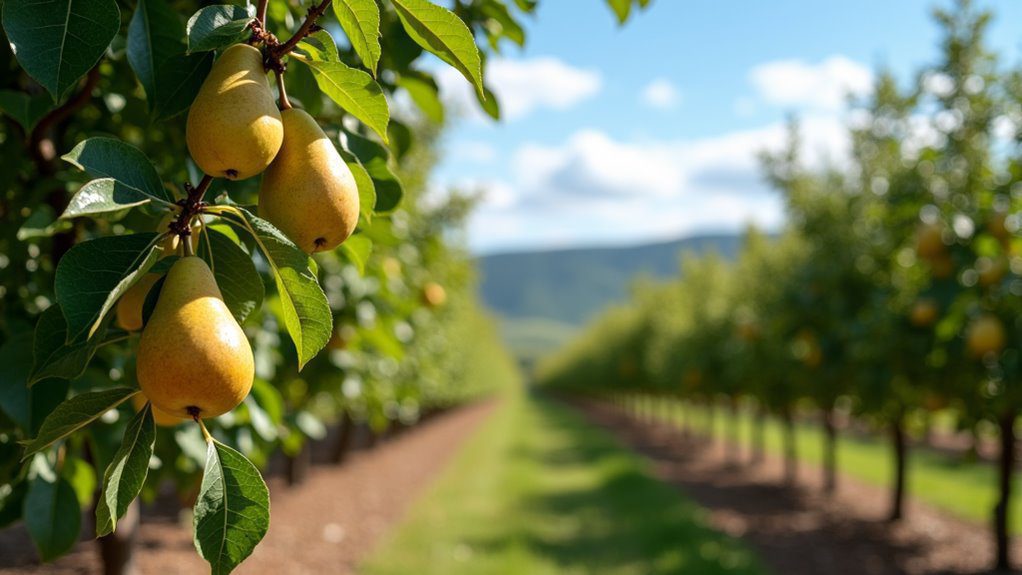
In Zone 6B, growing pear trees can be a rewarding endeavor, offering a variety of delicious fruits. With numerous pear varieties available, I've learned that most require cross-pollination, enhancing fruit yield. Implementing proper pruning techniques annually ensures healthy growth and shape. These trees thrive in full sun, and I've found them generally resistant to pests, making maintenance manageable. Additionally, many pear varieties, such as the 4-in-1 Pear Combo Tree, are compatible with cross-pollination, which boosts fruit set and quality.
Cherry Trees
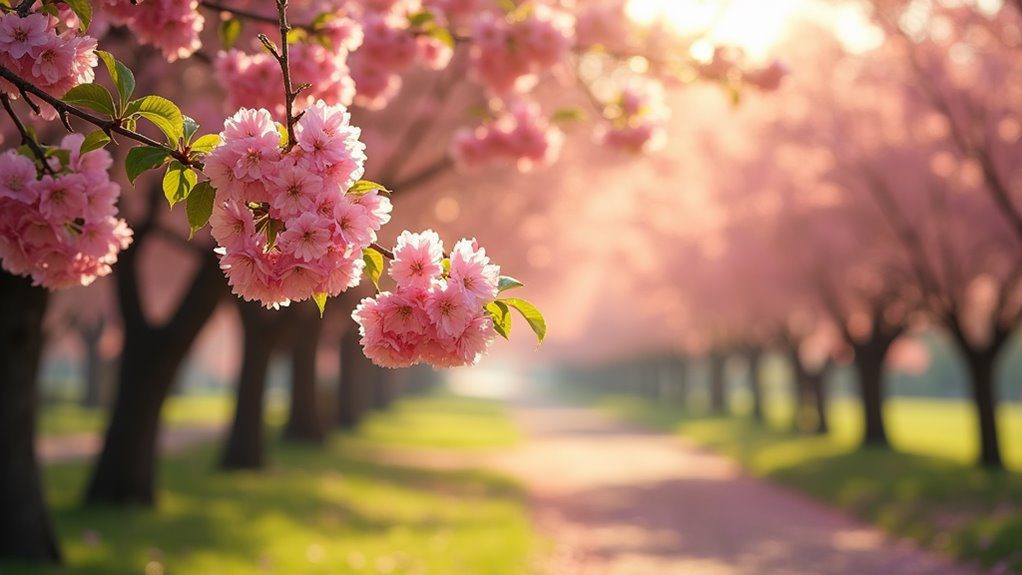
Cherry trees, with their vibrant blossoms and delectable fruits, are an excellent addition to any Zone 6 garden. They offer numerous benefits, such as enhanced aesthetics and delicious harvests. Popular cherry tree varieties include sweet and sour types, each requiring specific care. Ensure they receive ample sunlight, well-draining soil, and appropriate spacing to thrive, maximizing your fruit production and enjoyment. Bing needs Black Tartarian for pollination, making it essential to plant compatible varieties for a successful yield.
Plum Trees
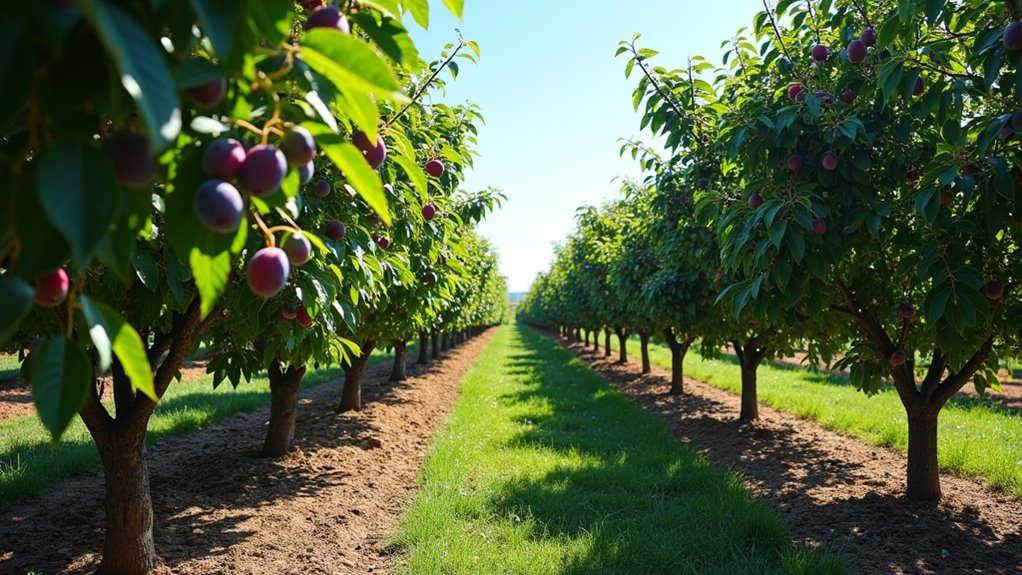
Plum trees present a fantastic opportunity for gardeners in Zone 6, combining beauty with a bountiful harvest. With varieties like AU Rubrum and Santa Rosa, I find plum harvesting rewarding. However, I must be vigilant about plum diseases that can affect yield. Ensuring well-drained soil and proper pruning helps maintain their health, leading to juicy, sweet fruits ready for picking from June to October. Additionally, many plum varieties, such as Dapple Dandy Pluot, thrive in Zone 6, offering a unique flavor profile for those seeking diversity in their orchard.
Peach Trees

Selecting the right peach trees for Zone 6 can significantly enhance your garden's productivity and aesthetic appeal. I recommend disease-resistant varieties like Saturn and Reliance to combat peach diseases and pests. Ensure your trees get full sun and well-draining soil, while regular watering and mulching will keep them healthy. Additionally, consider planting self-pollinating varieties to increase your yield and fruit quality. Don't forget to prune annually to maintain vigor and productivity.
Apricot Trees
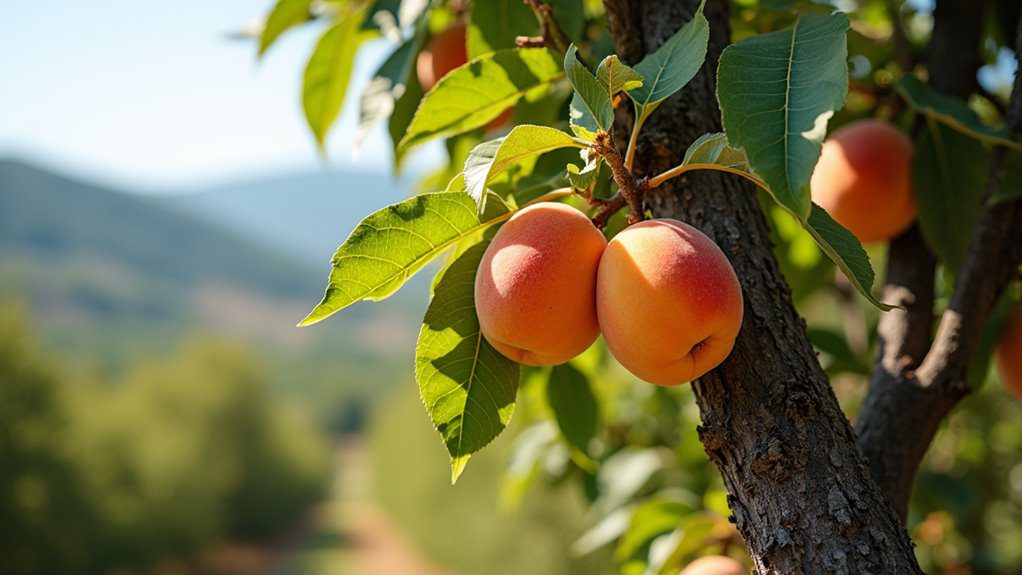
After considering the benefits of peach trees, it's time to explore another delightful option for your Zone 6 garden: apricot trees.
They thrive in well-drained, rich soil and need full sun. Be cautious of apricot pests and diseases; proper care and spacing can minimize these issues. Chill hours are necessary for bud development, so be sure to select varieties that match your local climate.
Choosing self-fertile varieties can enhance your harvest, especially when planted near pollination partners.
Dwarf Fruit Trees
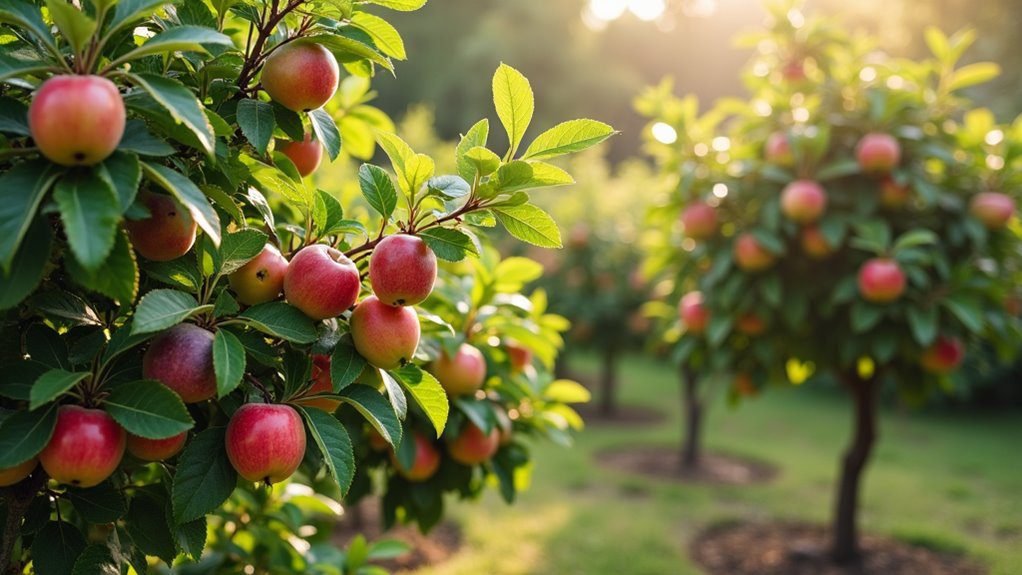
When it comes to maximizing space and yield in a Zone 6 garden, dwarf fruit trees present an excellent option. They offer numerous dwarf tree benefits, such as smaller size and easier maintenance, making them perfect for container gardening. Varieties like dwarf apple and peach trees thrive well in this zone, requiring full sun and well-drained soil for optimal growth and fruit production. Additionally, dwarf trees can be grown in containers for space efficiency, allowing gardeners with limited space to enjoy fresh fruit right at home.
Pollination Needs
Dwarf fruit trees can be a fantastic addition to a Zone 6 garden, but understanding their pollination needs is key to ensuring a fruitful harvest.
Many self-pollinating varieties like peaches thrive alone, while others, like apples, require effective pollination strategies through bloom synchronization with compatible varieties. This is especially important for apple trees as they often need a second variety for cross-pollination to achieve optimal yields.
Planting multiple types within proximity enhances cross-pollination, improving fruit quality and yield in your garden.
Soil Requirements

To achieve a thriving orchard in Zone 6, understanding soil requirements is essential for the success of your fruit trees.
Aim for a soil pH of 6.5 to 7.0 for optimal growth. Incorporating organic amendments like well-aged compost and peat moss enhances soil fertility and moisture retention. Regular soil testing will help you make necessary adjustments, ensuring your trees flourish. Regular pruning is also beneficial as it enhances fruit production while maintaining a healthy tree structure.
Watering and Care
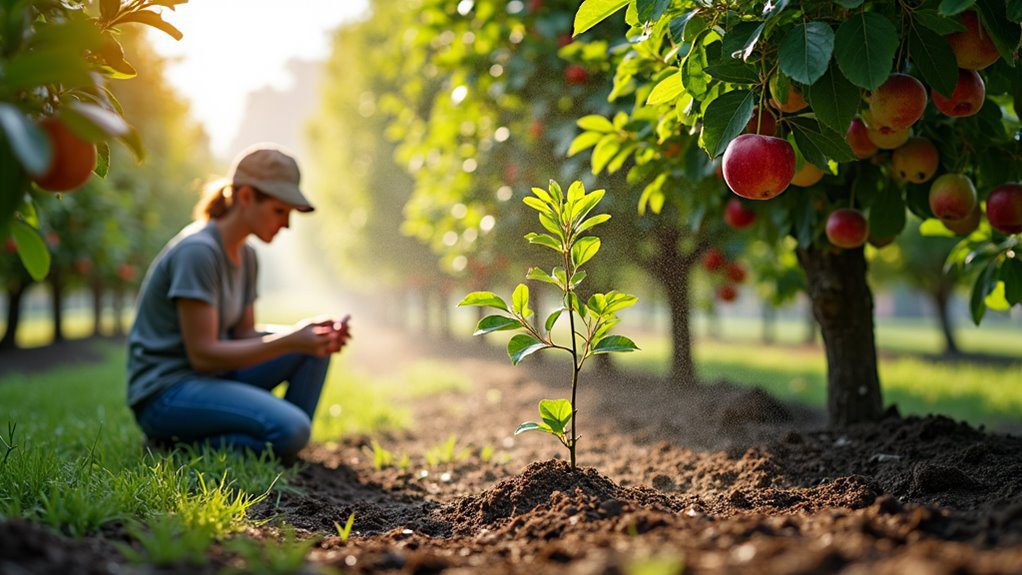
After establishing a solid foundation with the right soil conditions, the next step in nurturing fruit trees in Zone 6 involves understanding their watering and care needs. I recommend using effective watering techniques, like deep watering at the base, to enhance moisture retention. Regular monitoring of soil moisture also plays a crucial role, preventing evaporation and reducing weed competition, ensuring your trees thrive throughout the growing season.
Choosing the Right Variety
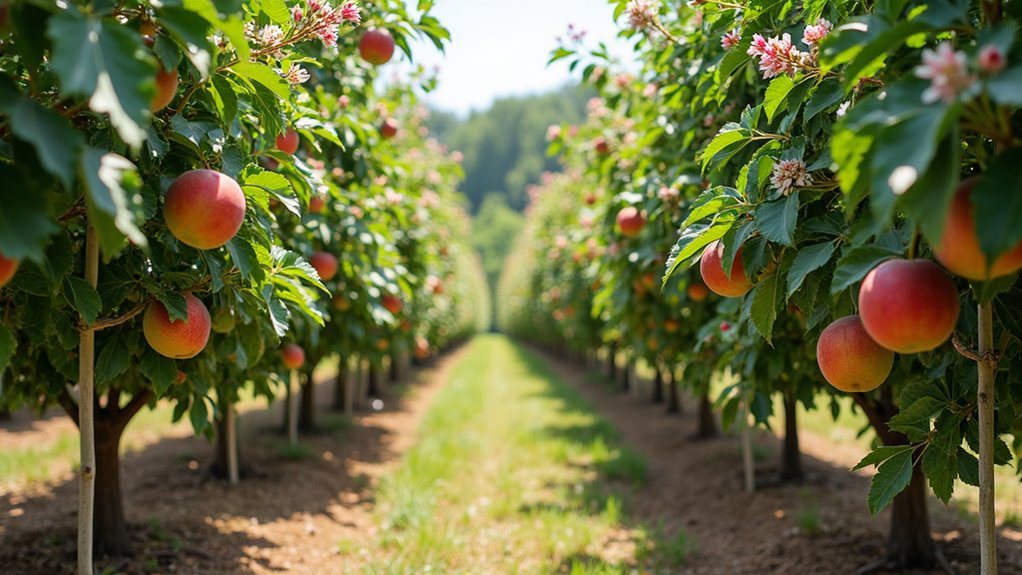
When selecting the right fruit tree varieties for Zone 6, it's essential to consider both climate compatibility and specific growth requirements.
I focus on variety characteristics, ensuring they're cold-hardy and suited to my microclimate.
Seasonal considerations also play a role; for instance, some trees need extra winter protection while others thrive without cross-pollination, making the choice crucial for successful fruit production.