

If you're looking to grow fruit trees in Florida, I've got some excellent options to consider. I recommend starting with apples like Anna and Dorsett, and low-chill peaches such as Florida Glo. You'll also find success with plum varieties like the Gulf series and the adaptable Barbados cherry. Don't overlook tropical fruits; mangoes and avocados thrive here, too. Citrus trees, including Navel oranges, are essential, and figs prefer the humidity. Lastly, pomegranates require well-drained soil. Each variety has specific needs, so keep an eye on those details to ensure a fruitful outcome. There's so much more to explore on this topic.
Apples
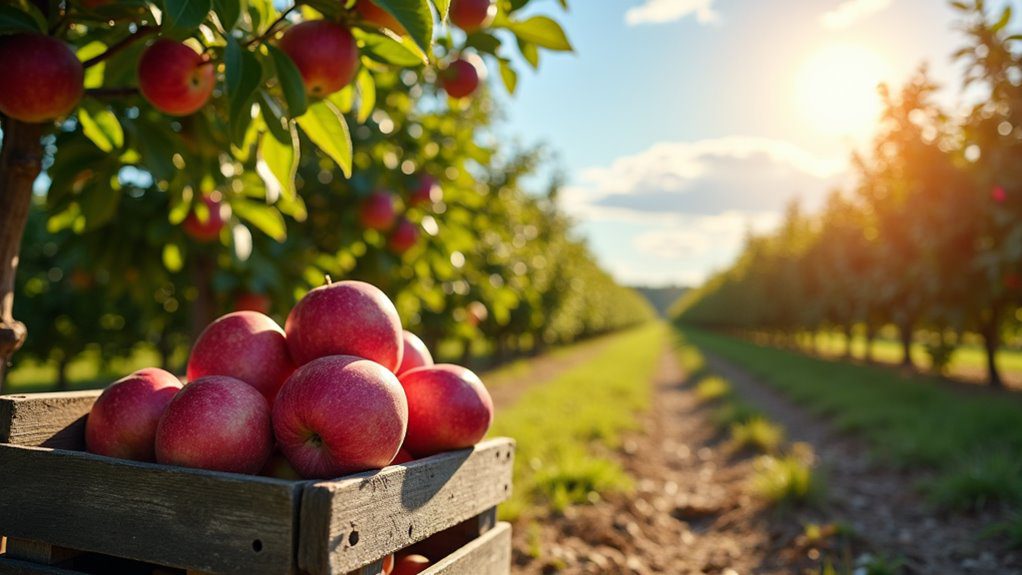
When considering the feasibility of growing apples in Florida, it's essential to recognize that the state's tropical climate presents unique challenges and opportunities. I've found that specific apple varieties, like Anna, Dorsett, and Tropic Sweet, thrive here. Utilizing tropical cultivation methods can help manage chilling hour requirements, making successful apple cultivation possible with careful variety selection and proper cultural practices. Additionally, research has shown that apple cultivation in hot tropics is indeed feasible, challenging the notion that apples can only thrive in cooler climates.
Peaches
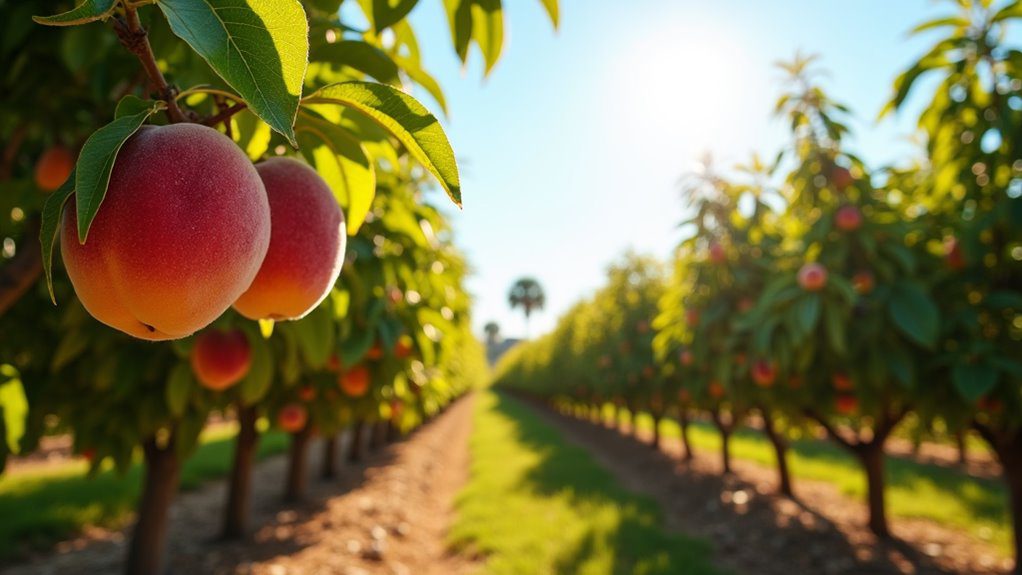
Peaches can be a rewarding fruit to grow in Florida, but successful cultivation hinges on understanding the specific chill hour requirements of different varieties. Low-chill peach varieties like Florida Glo and Florida Prince thrive with only 150 chill hours, while others like UF2000 require 300. Selecting the right peach varieties ensures you maximize fruit production in Florida's unique climate. However, it's important to note that Florida's subtropical climate presents challenges for traditional peach tree growth.
Nectarines

Although nectarines may not be as commonly grown as peaches, they can be an excellent addition to your Florida garden if you choose the right varieties and care for them properly. I recommend low chill nectarine varieties like Double Delight and Snow Queen. Use proper pruning techniques during winter to maintain an open center, ensuring sunlight exposure and optimal fruit production. Additionally, Central Florida's tropical climate provides ideal conditions for growing nectarines, making them a viable choice for local gardeners.
Plums

Plums thrive in Florida's warm climate, making them an excellent choice for homeowners looking to diversify their fruit tree gardens. I recommend planting low-chill plum varieties, like the 'Gulf' series, which require minimal chilling hours. To ensure quality fruit, practice fruit thinning about a month post-bloom. Proper site selection with well-drained soil is essential for healthy, productive plum trees. Additionally, full sun exposure is required for optimal growth and should be considered when selecting a planting site.
Cherries

When considering fruit trees for your Florida garden, cherries stand out as a unique and rewarding option.
Barbados cherries thrive in our warm, humid climate without needing chilling hours. They adapt well to various soil types, requiring good drainage. These trees typically grow to 10-15 feet tall, making them suitable for smaller gardens as well.
For optimal growth, ensure proper cherry maintenance through regular watering and pruning, and enjoy the delightful fruits starting as early as the third year.
Mangoes

Mangoes really shine in Florida's tropical climate, offering a delectable fruit that's both sweet and juicy.
For successful mango cultivation, choose well-draining sandy loam soil and plant in full sun. Frequent watering is essential for newly planted trees to establish roots.
Popular mango varieties include Tommy Atkins and Kent, thriving from May to October.
Regular pruning, proper watering, and fertilization are crucial for maintaining healthy trees and maximizing fruit production.
Avocados
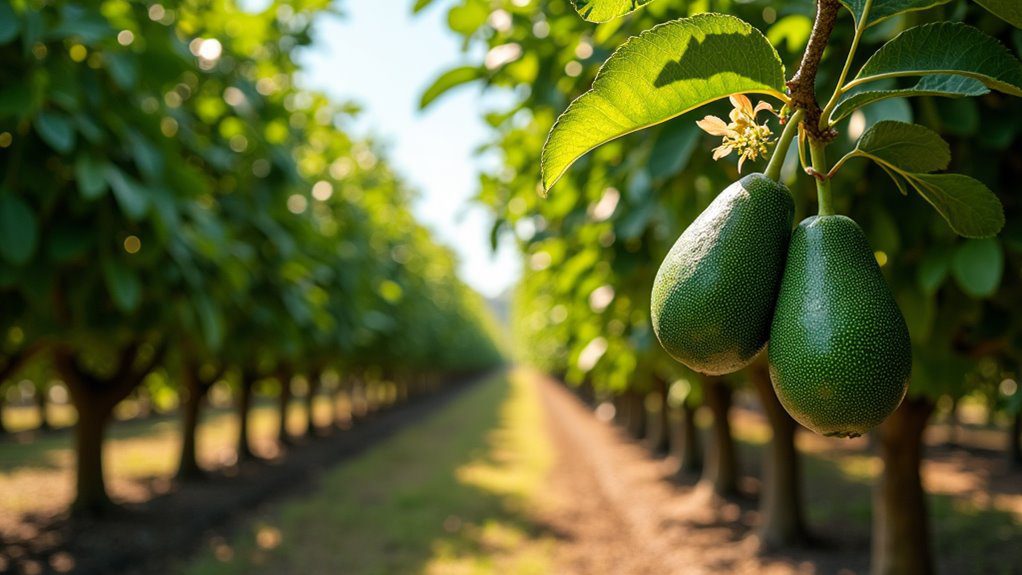
Avocados are an exceptional choice for Florida gardeners looking to enjoy a delicious and nutritious fruit.
With various avocado varieties like Hass, Simmonds, and cold-tolerant options, you can thrive in our climate. Varietal choice impacts yield and adaptability, so selecting the right type for your location is crucial.
Proper avocado maintenance, including planting in well-draining soil, regular fertilization, and protection from sunburn, ensures healthy growth and fruitful yields.
Start your avocado journey this spring!
Papayas
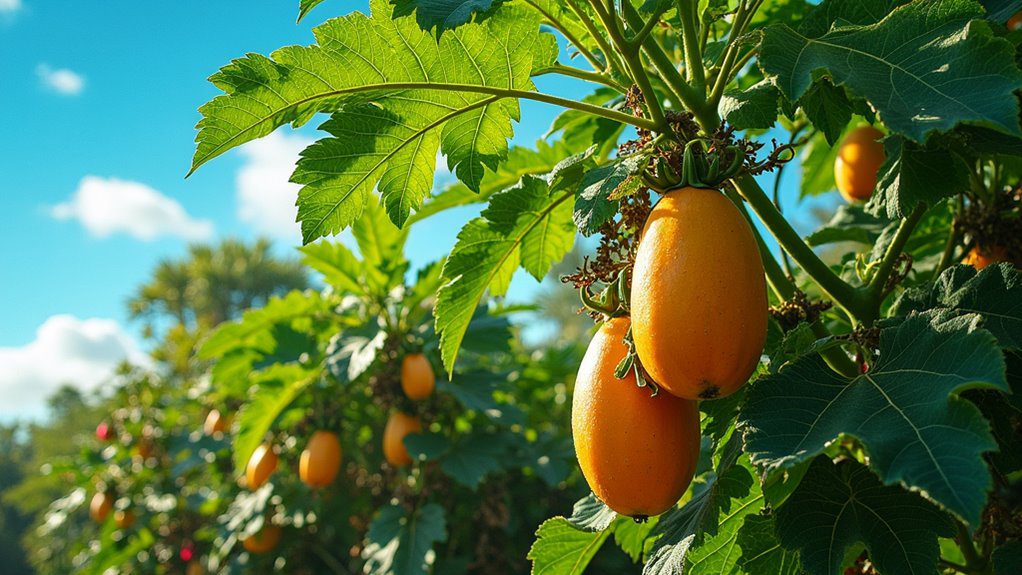
Papayas are a fantastic addition to any Florida garden, offering a unique tropical flavor and numerous health benefits. For successful papaya cultivation, I ensure well-drained soil and monitor temperatures closely, as they're sensitive to frost and extreme heat. Additionally, I take into account their optimal growth temperatures of 70°F–90°F to create the best environment for my trees. I stay vigilant against papaya diseases like the ringspot virus and anthracnose, promptly removing infected plants to protect my healthy crops and maximize yield.
Citrus Fruits

Citrus fruits are a cornerstone of Florida's agricultural landscape, and I find their vibrant flavors and nutritional benefits irresistible. The state boasts diverse citrus varieties, including Navel oranges and Ruby Red grapefruits. However, challenges like citrus greening disease threaten production, which saw a 60% decline last season. Thankfully, ongoing recovery efforts aim to restore our beloved citrus groves to health and vitality. Florida produces multiple citrus varieties that contribute to both the economy and the state's unique identity.
Figs
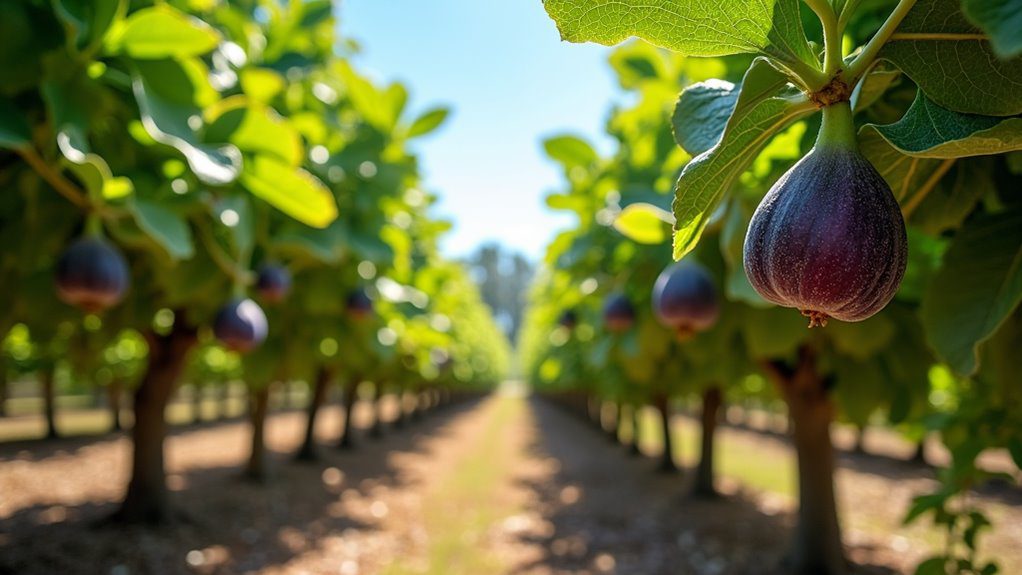
While citrus fruits dominate Florida's agricultural scene, figs are gaining attention for their unique qualities and adaptability to the state's climate.
When exploring fig cultivation, I recommend parthenocarpic fig varieties like 'Celeste' and 'White Marseilles'. These thrive without pollination, resist humidity-related issues, and require minimal cold exposure. Figs are particularly well-suited for Florida due to their adaptation to humid conditions.
Proper spacing and care can significantly enhance their growth and fruit production in Florida's environment.
Pomegranates
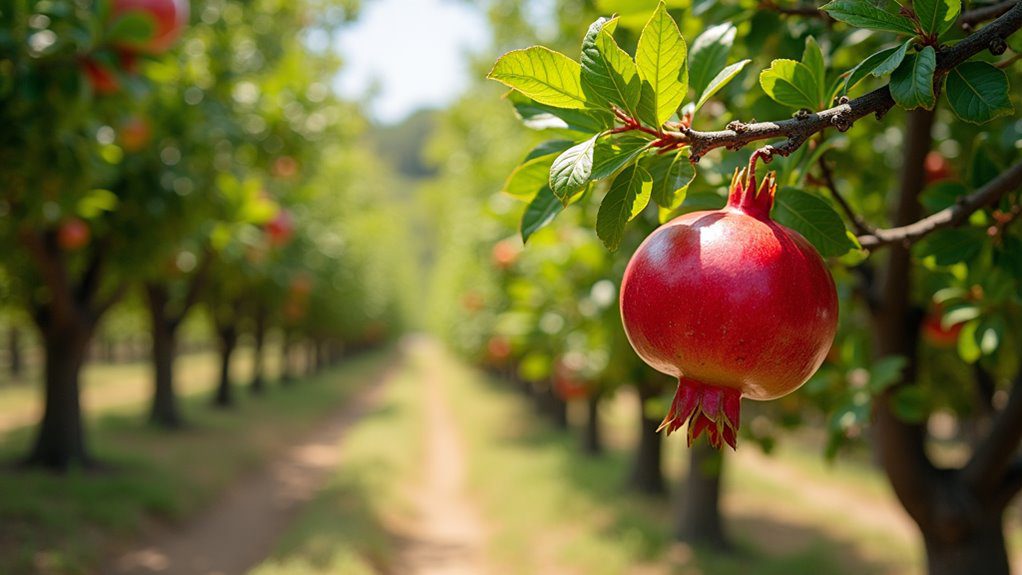
In Florida, growing pomegranates presents unique challenges due to the state's climate, which features hot, humid summers and mild winters.
Successful pomegranate cultivation requires well-drained, rocky soils with a pH of 5.5 to 7.2.
I recommend selecting suitable pomegranate varieties like Wonderful or Kazake.
Regular pruning and proper irrigation management are crucial to prevent issues like fruit splitting and fungal diseases.