

To care for 10 types of orange lilies, understand their unique needs. For Tiger Lilies, provide well-draining soil, full sun, and mid to late summer blooming. Fire Lilies thrive in full sun, grow up to 4 feet, and are deer-resistant. Orange Daylilies need deep watering, well-draining soil, and deadheading. Blackberry Lilies attract pollinators, require sunlight, and are low-maintenance. Turk’s Cap Lilies need regular maintenance, grow 3-4 feet tall, and are resilient. Royal Sunset Lilies should be pruned post-bloom for healthy growth. African Queen Lilies need full sun, watering, and pruning for their 4-6 feet of height.
1. Tiger Lily (Lilium Lancifolium)

Tiger Lily (Lilium lancifolium) showcases distinctive orange, spotted petals with recurved tips, making it a visually striking addition to any garden. These vibrant orange flowers, with their characteristic dark spots and elegantly curved petals, bloom from mid to late summer, reaching heights of 3-4 feet. Tiger Lilies are favored not only for their beauty but also for their hardiness and ease of cultivation.
To ensure optimal growth, plant Tiger Lilies in areas that receive full sun to partial shade, and ensure the soil is well-drained. These lilies are adaptable to various garden conditions and can thrive even in less than ideal settings. With their naturalizing tendency, Tiger Lilies can gradually spread, forming lovely clusters that enhance the visual appeal of any garden space. By providing the right conditions and minimal care, you can enjoy the beauty of Tiger Lilies year after year as they grace your garden with their stunning orange blooms.
2. Fire Lily (Lilium Bulbiferum)

With its fiery orange petals adorned with dark spots, the Fire Lily, scientifically known as Lilium bulbiferum, stands out as a captivating orange lily variety native to Europe and Asia. This striking lily can grow up to 3-4 feet tall and thrives in full sun to partial shade conditions with well-draining soil. Fire Lilies are not only visually appealing but also easy to care for, making them a popular choice for gardeners. They can be propagated by dividing bulbs or growing bulbils produced in leaf axils, allowing for easy expansion of your lily collection. Moreover, these lilies are deer-resistant, adding to their appeal for landscaping purposes.
| Fire Lily Facts | |
|---|---|
| Scientific Name | Lilium bulbiferum |
| Native To | Europe, Asia |
| Height | 3-4 feet |
| Sun Exposure | Full sun to partial shade |
| Propagation Methods | Division of bulbs, growing bulbils |
Fire Lilies are a fantastic choice for adding a bold pop of color to your garden while requiring minimal maintenance.
3. Orange Daylily (Hemerocallis Fulva)

Thriving in both full sun and partial shade, Orange Daylilies, scientifically known as Hemerocallis Fulva, are resilient perennial plants prized for their striking orange blooms. These Lily Varieties require well-draining soil to prevent waterlogging, making them suitable for various garden settings. Ensure deep watering once a week, especially during dry spells, and consider mulching to maintain soil moisture. To encourage new growth, promptly prune spent flowers and trim back stems after blooming. Watch out for common pests like aphids and red lily beetles, which can damage the foliage and blooms. Additionally, keep an eye out for diseases such as gray mold and lily mosaic virus, as early detection is key to preventing their spread. By providing adequate care and monitoring for potential issues, you can enjoy the vibrant beauty of Orange Daylilies in your garden year after year.
4. Blackberry Lily (Belamcanda Chinensis)

Belamcanda chinensis, also known as Blackberry Lily, is a distinctive orange lily variety characterized by its blackberry-like seeds and vibrant orange flowers with unique black spots. This hardy perennial thrives in full sun to partial shade and requires well-draining soil to flourish. Blooming during the summer months, the Blackberry Lily attracts pollinators like bees and butterflies, enhancing the biodiversity of your garden.
Caring for the Blackberry Lily is relatively straightforward, making it an excellent choice for both experienced gardeners and beginners. Ensure the plant receives adequate sunlight and water regularly, especially during dry periods. Deadheading spent flowers can prolong the blooming period and encourage new growth. Additionally, dividing the Blackberry Lily every few years can help maintain its vigor and prevent overcrowding.
With its exotic appearance and low-maintenance nature, Belamcanda chinensis is a popular option for gardeners seeking to add a touch of unique beauty to their outdoor spaces. Consider incorporating the Blackberry Lily into your garden for a splash of vibrant orange hues and striking black spots.
5. Turk’s Cap Lily (Lilium Martagon)

The Turk’s Cap Lily, scientifically known as Lilium Martagon, showcases unique characteristics with its nodding, recurved petals resembling a Turk’s cap hat. These Orange Lilies can reach heights of 3-4 feet and typically bloom in mid to late summer, adding a vibrant touch to your garden. For optimal growth, Turk’s Cap Lilies prefer locations with full sun to partial shade and well-draining soil. Hardy in zones 3-8, they are renowned for their resilience against deer and rabbits, making them a low-maintenance yet striking addition to your landscape. To ensure continuous blooms and healthy plants, regular maintenance practices include deadheading spent flowers and dividing clumps every few years. By following these care tips, you can enjoy the beauty of Turk’s Cap Lilies and their charming Turk’s cap hat-like petals throughout the summer months.
6. Wood Lily (Lilium Philadelphicum)

Wood Lily, scientifically known as Lilium philadelphicum, is a native North American species characterized by its bright orange, recurved petals. To cultivate Wood Lilies successfully, ensure they are planted in well-drained, sandy soil and positioned in an area that receives full sun to partial shade. These vibrant lilies typically bloom in the middle to late summer, serving as a magnet for butterflies and hummingbirds due to their alluring appearance. With a potential height ranging from 1 to 3 feet, Wood Lilies are not only visually appealing but also resistant to deer. Propagation of these lilies can be achieved through division in the autumn or by planting seeds in a cold frame. By following these guidelines, you can enjoy the beauty and resilience of Lilium philadelphicum in your garden while providing a welcoming environment for pollinators.
7. Coral Lily (Lilium Pumilum)

Coral Lily, scientifically named Lilium pumilum, is a vibrant dwarf lily variety known for its striking orange-red flowers. This orange lily type is popular for its compact size, making it suitable for smaller gardens or containers. To care for your Coral Lily effectively, consider the following:
- Light and Soil: Plant your Coral Lily in an area that receives full sun to partial shade, ensuring the soil is well-draining to prevent waterlogging.
- Watering: Coral Lilies require consistent watering to maintain moist soil, especially during hot weather. Avoid overwatering, as this can lead to root rot.
- Pruning: After the flowering season, trim back the stems of your Coral Lily to encourage growth and maintain a tidy appearance in your garden.
- Pest Control: Keep an eye out for common pests such as aphids or red lily beetles, and take necessary measures to protect your Coral Lily from infestations.
8. Apricot Fudge (Lilium ‘Apricot Fudge’)
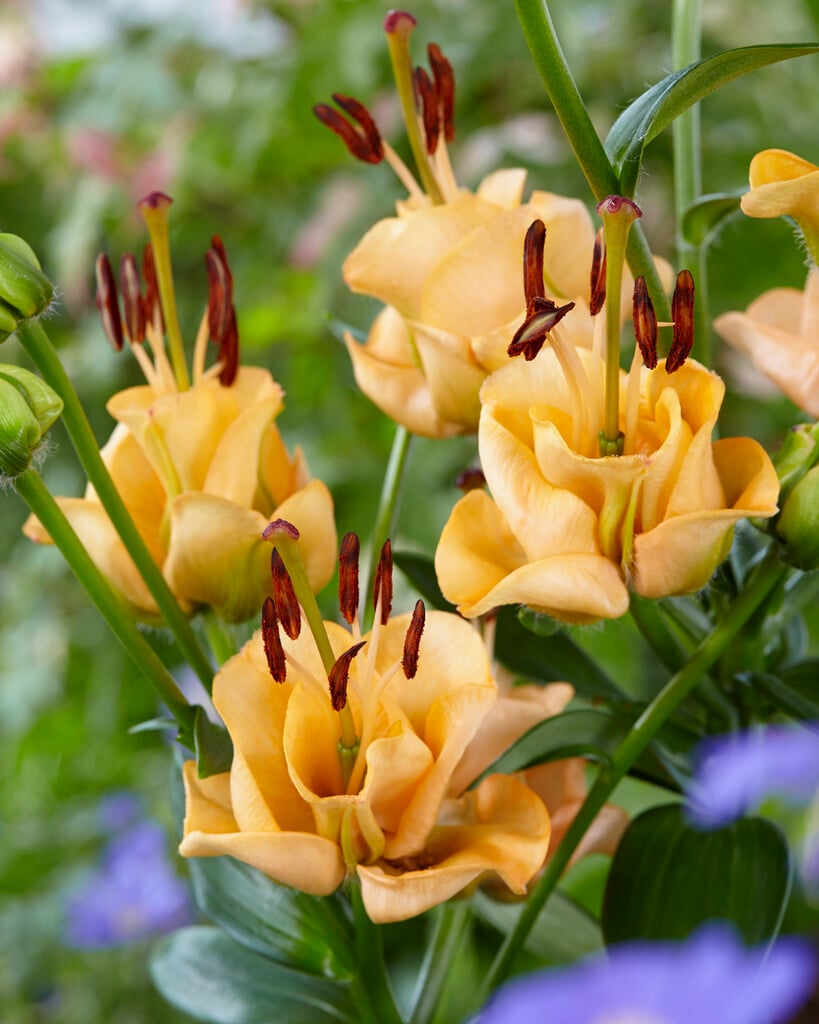
One of the captivating Longiflorum/Asiatic hybrid lilies, Apricot Fudge, showcases stunning apricot-colored flowers. Belonging to the Lilium genus, this bulbous perennial plant is a delightful addition to any garden. Apricot Fudge lilies prefer full sun to part shade conditions to thrive. They typically grow to heights ranging from 2-3 feet to 3-4 feet, making them versatile for various garden settings. Hardy in zones 4-8, these lilies are known for adding an elegant touch with their graceful blooms. To care for Apricot Fudge lilies, ensure they are planted in well-draining soil and water them regularly, especially during dry spells. Mulching around the plants can help retain moisture and regulate soil temperature. Deadheading faded flowers and removing any yellowing leaves can promote continuous blooming and maintain the plant’s health. With proper care, Apricot Fudge lilies will reward you with their beautiful apricot-colored flowers year after year.
9. Royal Sunset (Lilium ‘Royal Sunset’)

When cultivating Royal Sunset (Lilium ‘Royal Sunset’), ensure to plant the bulbs 6 inches deep in well-draining, humus-rich soil to promote optimal growth. This Longiflorum/Asiatic orange lily variety can reach heights ranging from 2-3 feet to 3-4 feet, thriving best in full sun to part shade conditions within hardiness zones 4-8. Known for its vibrant orange blooms, Royal Sunset adds a striking pop of color to any garden landscape. To care for your Royal Sunset lilies efficiently, follow these practical tips:
- Provide well-draining soil rich in humus for optimal growth.
- Place the bulbs at least 6 inches deep in the soil.
- Ensure the lilies receive full sun to part shade conditions.
- Prune old leaves post-blooming to stimulate healthy growth and future blossoms.
10. African Queen (Lilium ‘African Queen’)

Cultivating African Queen (Lilium ‘African Queen’) requires providing full sun to part shade conditions and regular pruning, watering, and soil maintenance for optimal growth and health. This stunning Trumpet Lily variety, reaching heights of 4-6 feet, belongs to the Lilium (Trumpet) species and is a perennial bulb plant. African Queen thrives best in zones 4-8, enhancing garden landscapes with its elegant presence.
To ensure the vibrancy of your African Queen lilies, place them in locations that receive adequate sunlight while allowing for some shade during the hottest parts of the day. Regular pruning is essential to remove spent blooms and encourage new growth. Adequate watering, ensuring the soil is moist but well-drained, is crucial for healthy root development. Additionally, maintaining the soil with organic matter and fertilizer will provide necessary nutrients for robust flowering.