

The Bell Bomber Plant served crucial functions during WWII, significantly impacting U.S. armament and societal structures. You’ll see it was integral in strategic aircraft production, delivering over 600 B-29s critical to ending the war. It empowered a large workforce, including 11,200 women, challenging gender norms and bolstering economic growth in Georgia. As a hub of technological innovation and military collaboration, it advanced assembly processes and ensured bombers met combat needs. Additionally, it optimized supply chains and stimulated local economies. It also educated and engaged the community, strengthening the war effort. Exploring further, you’ll uncover layers of its transformative impacts.
1. Strategic Aircraft Production
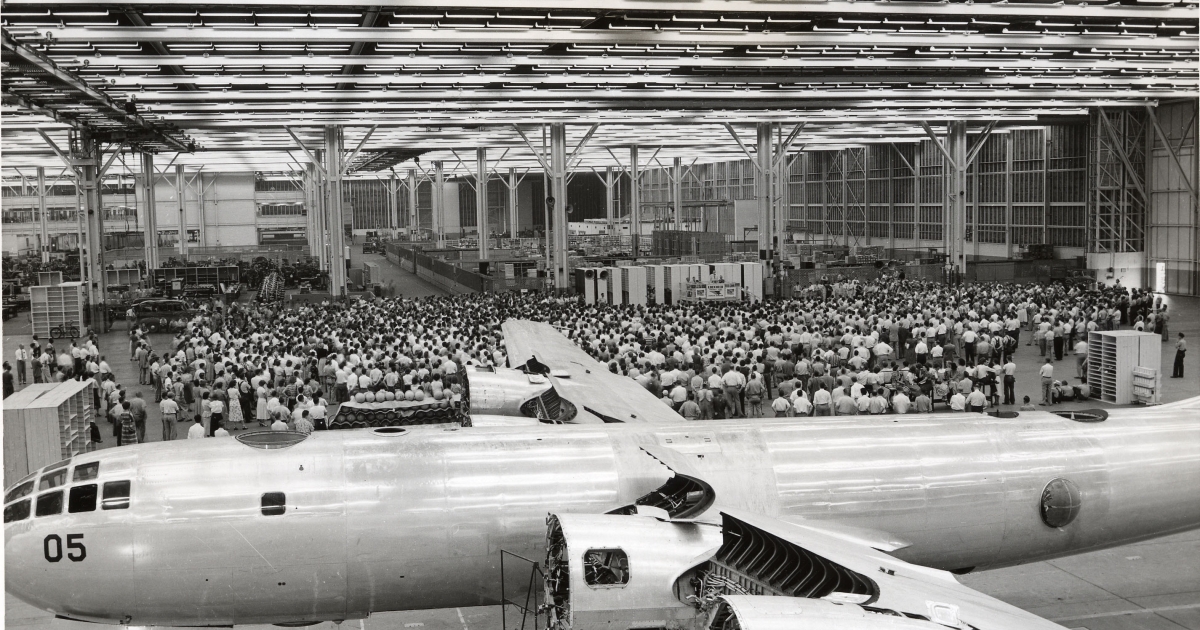
The Bell Bomber Plant in Marietta, Georgia, played a pivotal role during WWII by producing over 600 B-29 Superfortress bombers, significantly impacting the Allied success in the Pacific theater.
You’ll find that the strategic partnerships formed during this era were crucial. The collaboration between the U.S. government and private sectors, including Bell Aircraft Corporation, exemplified effective wartime strategies, harnessing collective strengths for a common goal.
Analyzing this, the plant’s output wasn’t merely a feat of manufacturing prowess but also a direct result of strategic planning and execution. It was these bombers, capable of long-range missions and delivering large payloads, that put considerable pressure on Japan, hastening the end of the war.
This outcome can be attributed to the foresight in ramping up production capacities and the strategic location of the plant, which provided logistical advantages.
Moreover, the plant’s success story is a testament to the power of industrial mobilization in wartime. By understanding the strategic imperatives, the U.S. was able to convert a peacetime economy to a wartime powerhouse rapidly.
Thus, the Bell Bomber Plant serves as a prime example of how strategic foresight and robust partnerships can achieve overwhelming results in critical times.
2. Workforce Empowerment
During its peak production period, Bell Bomber Plant empowered its workforce, comprising significantly of women, by implementing specialized training programs in aircraft manufacturing. This strategic initiative not only equipped over 11,200 women with essential skills but also played a pivotal role in fostering gender equality within the industry. By actively involving women in such critical roles, the plant not only expanded its labor pool but also challenged the prevailing gender norms of the era.
The training provided at the Bell Bomber Plant was comprehensive, focusing on areas critical to the production of B-29 Superfortress bombers. These programs were instrumental in ensuring that both men and women could perform complex tasks with precision, thereby maintaining high production standards essential for the war effort. The emphasis on skill development among female workers not only enhanced their technical proficiencies but also elevated their roles from traditional domestic spheres to integral components of the national defense machinery.
Furthermore, workforce empowerment at the Bell Bomber Plant had a broader socioeconomic impact, contributing significantly to Georgia’s economic uplift during World War II. By leveraging the potential of its female workforce, the plant not only met its production targets but also advanced the cause of gender equality, setting a precedent for post-war industrial practices. This strategic empowerment of its workforce underlines the plant’s role in both enhancing war production capabilities and promoting societal shifts towards gender inclusivity.
3. Technological Innovation Hub
As you examine the Bell Bomber Plant, it’s evident that its role as a technological innovation hub was cemented by its adoption of cutting-edge manufacturing techniques.
These methods not only streamlined production but also introduced pioneering developments in aerospace technology.
The strategic implementation of these innovations significantly enhanced the efficiency and output of B-29 bombers, crucial to the U.S. war effort during WWII.
Cutting-Edge Manufacturing Techniques
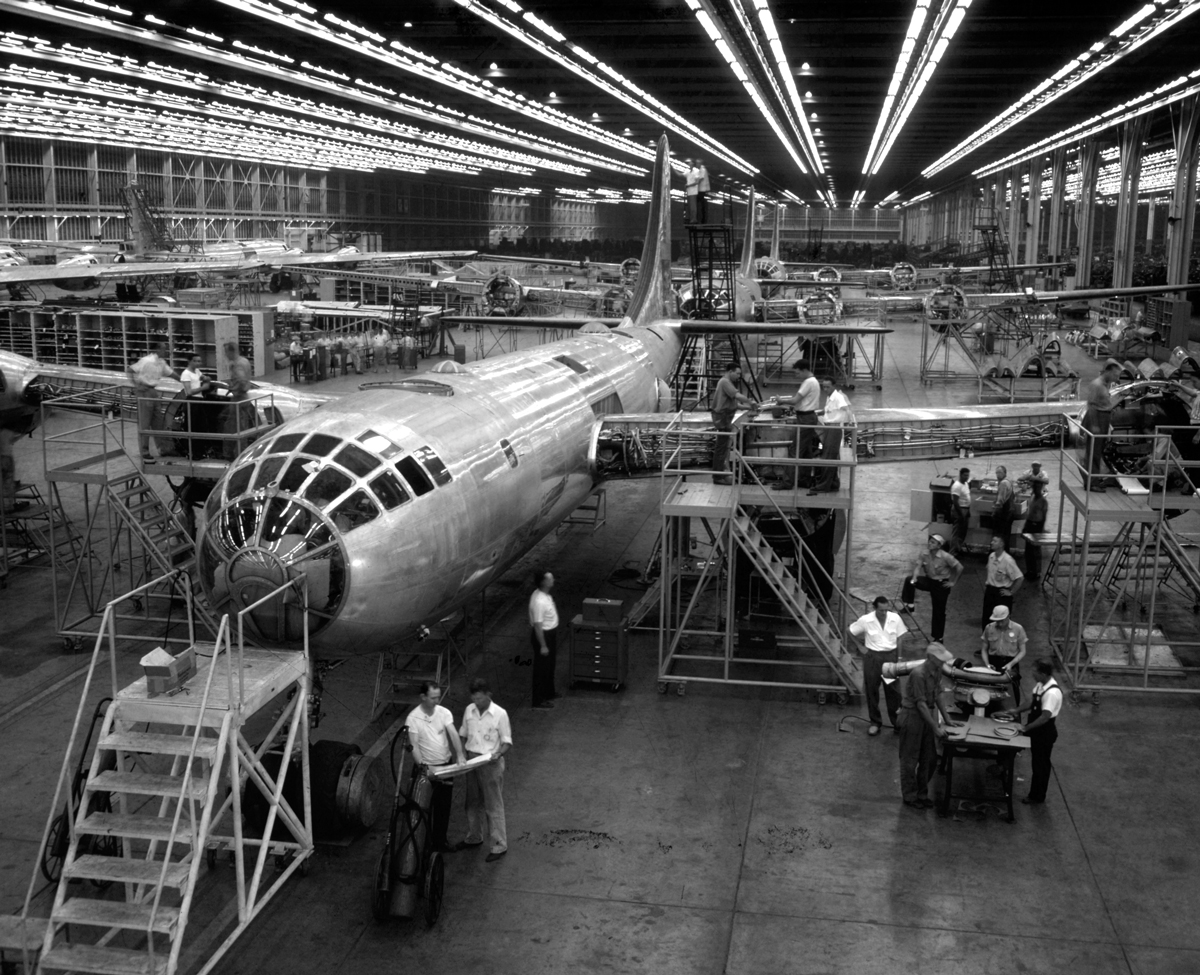
At the heart of the Bell Bomber Plant’s operations, cutting-edge manufacturing techniques significantly enhanced production capabilities and efficiency. You’d find this hub of technological innovation constantly buzzing with the activity of advanced assembly lines that not only accelerated manufacturing efficiency but also substantially boosted production output. The introduction of state-of-the-art machinery allowed for the precise assembly of B-29 Superfortress bombers, a critical asset during WWII.
You would observe the strategic implementation of precision engineering across the plant, ensuring that each bomber met rigorous quality standards. These high standards were maintained through meticulous quality control measures, integral to sustaining the reliability of the bombers produced. The plant’s environment thrived on a culture of continuous improvement and innovation, directly contributing to the enhanced performance and durability of the aircraft.
Moreover, the skilled workforce at the Bell Bomber Plant was adept in specialized manufacturing techniques. Their training was focused on maximizing the potential of both human and technological resources. This synergy between skilled labor and advanced technology epitomized the cutting-edge manufacturing practices that weren’t only ahead of their time but also pivotal in meeting the exigent demands of wartime production.
Pioneering Aerospace Developments
The Bell Bomber Plant emerged as a critical hub for aerospace technological innovation, significantly shaping advancements in aircraft production during WWII. You’re delving into a world where aerospace engineering wasn’t just a field of study, but a groundbreaking pursuit that directly impacted defense technology. At this facility, the concerted effort to enhance aircraft capability and production efficiency was palpable.
Situated in Marietta, Georgia, the plant became instrumental in the assembly of the B-29 Superfortress, an aircraft that you recognize not only for its role in the war but also for its technological sophistication. The introduction of such advanced aircraft was a direct result of the innovative work happening at the plant, where tens of thousands of workers, including many women, were employed. This wasn’t just a manufacturing hub; it was the breeding ground for aerospace advancements that would set the stage for future innovations.
Your understanding of the strategic importance of the Bell Bomber Plant is crucial. It wasn’t merely about producing volumes but rather about pushing the boundaries of what was technologically possible in aviation during a critical period. Here, the nexus of expert skills and visionary engineering fostered developments that you now see as pivotal in the historical trajectory of aerospace technology.
4. Military Collaboration Center
Facilitating coordination among various departments, the Military Collaboration Center at the Bell Bomber Plant became crucial for integrating efforts between engineers, designers, and military officials to enhance bomber designs.
This integration wasn’t merely procedural but a dynamic enabler of collaborative innovation, which was paramount in the intricate process of aircraft manufacturing. By centralizing the strategic decision-making, the Center not only streamlined communication but also significantly augmented production efficiency.
In your role at the plant, you’d observe that the Center’s influence permeated every aspect of the operation. It wasn’t just a physical space but a nexus where theoretical designs transformed into tangible, superior warfare machines.
This transformation was largely due to the seamless interaction between the diverse expertise housed in the Center. Engineers and designers could directly receive feedback from military officials, ensuring that the bombers met specific combat requirements and operational standards.
Moreover, the strategic location within the plant underscored its importance, enabling quick adaptability to emerging challenges or necessary modifications. This setup ensured that innovations didn’t stagnate at the conceptual stage but were promptly executed, keeping the production lines agile and responsive to the fast-evolving demands of wartime aviation technology.
5. Supply Chain Optimization
Efficiently coordinating the delivery of raw materials, components, and equipment, the Bell Bomber Plant significantly enhanced its production capabilities of B-29 bombers through meticulous supply chain optimization. By focusing on supply chain efficiency and production optimization, you were able to adapt quickly to the fluctuating demands of wartime production. This strategic approach not only streamlined operations but also maximized output, ensuring that production targets were met and often exceeded.
Through logistics coordination, you ensured that each part of the supply chain was synchronized with the needs of the production line, leading to enhanced demand fulfillment. The Bell Bomber Plant became a model of how effective supply chain management could accelerate production without compromising quality.
| Aspect | Impact on Plant | Contribution to War Effort |
|---|---|---|
| Material Delivery | Reduced downtime | Increased bomber availability |
| Component Supply | Enhanced production continuity | Improved operational readiness |
| Equipment Handling | Optimized assembly processes | Boosted manufacturing efficiency |
Your dedication to refining these logistical processes was instrumental in maintaining a steady flow of bombers, crucial for achieving strategic advantages during the war. This optimization didn’t just support the military effectively; it also set standards in wartime manufacturing logistics.
6. Economic Growth Stimulus
You’ll find that the Bell Bomber Plant not only sparked a surge in local investment but also significantly impacted job creation throughout Georgia.
By studying the economic dynamics during WWII, you can observe how this plant’s activity catalyzed substantial economic growth and helped stabilize the local economy in a post-Depression era.
The dual impact of bolstering the workforce and enhancing local investments underpinned the broader economic prosperity that followed.
Job Creation Impact
The Bell Bomber Plant significantly stimulated economic growth by creating tens of thousands of jobs during World War II, injecting substantial capital into Georgia’s economy. This massive job creation isn’t just a historical footnote but a pivotal moment for economic impact analysis. You can’t overlook the profound implications of this workforce expansion, which not only alleviated the lingering effects of the Great Depression but also set a robust foundation for sustained economic vigor.
Analyzing the scale and scope of job opportunities provided by the Bell Bomber Plant reveals a strategic deployment of human resources. The inclusion of women in the workforce was particularly noteworthy, as it not only challenged the existing societal norms but also diversified the skill sets within the labor pool. This expansion was essential, not merely for meeting wartime production demands but for enhancing the economic resilience of the community.
The employment surge at the Bell Bomber Plant epitomized a significant economic stimulus, with a ripple effect that extended beyond the immediate wartime needs. The influx of wages from these jobs into the local economy catalyzed further economic activities, underscoring the intertwined relationship between job creation and economic development.
Thus, the Bell Bomber Plant’s role in shaping Georgia’s economic landscape was monumental, illustrating the critical connection between industrial activity and economic prosperity.
Local Investment Surge
As Bell Bomber Plant funneled millions into Marietta’s economy, a marked surge in local investment catalyzed significant job growth and housing developments, setting the stage for robust economic recovery from the Great Depression.
This infusion of capital didn’t just stabilize the area; it transformed it. You can see the ripple effects in the rapid expansion of local infrastructure and the upsurge in employment opportunities that followed. The plant itself became a nucleus of activity, drawing not only labor but also fostering ancillary businesses that supported its operations and workforce.
Your examination of this period reveals a strategic deployment of industrial might that extended beyond mere production metrics. The Bell Bomber Plant’s influence on local development was profound. Housing complexes sprang up, designed to accommodate the influx of workers. These developments weren’t just a response to immediate needs but were part of a broader strategy to sustain long-term economic growth.
Indeed, the economic stimuli provided by the plant’s operations offered a dual benefit: supporting the war effort and simultaneously fortifying the local economy against the ravages of the Depression.
In your analysis, it’s clear that the surge in local investment from the Bell Bomber Plant not only met wartime demands but also laid the groundwork for post-war prosperity in Marietta.
7. Community Engagement Initiatives
Bell Bomber Plant’s community engagement initiatives, from war bond drives to Victory Gardens, not only bolstered the war effort but also deepened local involvement and fostered a strong sense of unity. Through these activities, you’re seeing firsthand how strategic community partnerships and robust volunteer programs can significantly enhance both public relations and engagement strategies.
Here’s how these initiatives played out:
- Community Partnerships and Volunteer Programs:
The plant’s collaboration with local businesses and civic groups expanded its volunteer base, involving community members in blood donation drives and scrap metal collections. This multi-faceted approach ensured a steady stream of resources critical to the war effort, while also embedding the plant’s operations within the fabric of community life.
2. Public Relations Tactics:
By organizing employee picnics and sports leagues, the Bell Bomber Plant crafted a public image that resonated with family values and community spirit. These events served dual purposes: they boosted morale among workers and portrayed the plant as a community-centric entity.
3. Engagement Strategies:
Victory parades and recognition ceremonies not only celebrated achievements but also kept the community engaged and informed about the plant’s contributions to national security, reinforcing a collective identity centered around patriotic duty.
These strategic initiatives exemplify how you can leverage community engagement to foster unity and drive collective efforts.
8. War Effort Education
Educating the workforce and the broader community about the strategic importance of their roles, Bell Bomber Plant significantly enhanced both morale and productivity during WWII. By integrating comprehensive war effort education programs, the plant not only amplified its production capabilities but also instilled a profound sense of purpose among its employees. You’d find that management meticulously designed these educational initiatives to align with overarching military goals, thereby fostering a well-informed workforce.
The education extended beyond simple job training. It encompassed detailed explanations of how the B-29 bombers, which you helped build, were pivotal in the Allied strategy. This knowledge made every rivet you drove and every wire you connected feel directly tied to the success of the Allied forces. The effect of this educational approach was palpable; as you gained a clearer understanding of the impact of your work, your commitment to precision and efficiency deepened.
Furthermore, the inclusion of women in these educational programs was particularly noteworthy. They weren’t only taught the skills needed for production but were also educated about the critical role they played in the broader war effort, challenging and reshaping traditional gender roles within the workforce. This strategic focus on education thus proved essential in maximizing both the output and the morale at the Bell Bomber Plant.
9. Security Measures Enhancement
As you explore the Bell Bomber Plant’s commitment to security, you’ll find that the implementation of advanced surveillance systems was pivotal.
These systems were intricately linked with access control protocols, ensuring that only authorized personnel could navigate the plant’s critical areas.
Together, these measures not only enhanced the security infrastructure but also fortified the plant against potential threats of espionage and sabotage.
Advanced Surveillance Systems
To enhance security measures, the Bell Bomber Plant implemented advanced surveillance systems, including perimeter fencing, closed-circuit cameras, and sophisticated alarm systems. These systems were integral to maintaining the integrity and secrecy necessary for military production. By incorporating such high-level security, the plant not only deterred potential intrusions but also ensured a continuous, unbreached production line of bombers, critical to wartime efforts.
Here’s a deeper dive into the significance of these systems:
- Deterrence of Unauthorized Entry: The visible presence of perimeter fencing and surveillance cameras acted as a psychological barrier, discouraging potential intruders. This first line of defense was crucial in creating a secure environment.
- Real-Time Monitoring and Response: The use of closed-circuit cameras enabled real-time surveillance of the entire facility. Security personnel could monitor all areas, thus rapidly responding to any suspicious activity, thereby reducing the risk of espionage or sabotage.
- Alarms as Immediate Alerts: Sophisticated alarm systems were configured to trigger automatically at the slightest breach. This instant notification allowed for swift mobilization of security forces, ensuring that any threat could be quickly contained and assessed.
Through these surveillance innovations and security advancements, the Bell Bomber Plant maintained a fortress-like security posture, pivotal in safeguarding national security interests during a critical period.
Access Control Protocols
The Bell Bomber Plant enforced rigorous access control protocols to ensure the security and confidentiality of its critical military productions. Each element of their system was designed to fortify the plant against potential breaches. Background checks were thorough, delving deep into the personal and professional histories of employees before granting them clearance. This preemptive scrutiny was vital in maintaining a workforce committed to security and aligned with the goals of enhanced security.
Furthermore, restricted access areas were clearly demarcated, ensuring that only personnel with the necessary authorization could enter sensitive zones. This segregation of spaces wasn’t just physical but also strategic, serving to compartmentalize information and minimize the risk of extensive data leakage.
Employee compliance wasn’t left to chance. Identification badges were mandatory, serving both as a deterrent to unauthorized access and a tool for quick verification of clearance levels. Monitoring of all activities was relentless, providing a continuous overview of the plant’s operational integrity.
These measures collectively safeguarded the secretive production process of the B-29 bombers, ensuring that the plant contributed effectively to the war effort while protecting its internal assets and the safety of its workforce.
10. Post-War Transition Planning
Many industrial facilities faced uncertainties with the end of WWII, but the Bell Bomber Plant adeptly planned its post-war transition to manufacture commercial aircraft, including the renowned B-29 Superfortress. This strategic pivot not only exemplified post-war resilience but also marked a significant phase of industrial transformation. By shifting focus from military to commercial production, the plant secured its operational future and continued to bolster Georgia’s economy.
Here are three key aspects of the Bell Bomber Plant’s successful transition:
- Economic Stability: The shift to commercial aircraft production helped maintain employment levels and economic activity in the region. This move mitigated the potential post-war economic downturn that could have resulted from the cessation of wartime production.
- Technological Advancement: By continuing to produce the sophisticated B-29 Superfortress for civilian use, the plant sustained its technological edge. This adaptation showcased an ability to leverage wartime innovations for peacetime applications, thus driving further industrial growth.
- Sustained Industrial Impact: The plant’s successful transition ensured its ongoing contribution to Georgia’s industrial landscape. It became a model of how wartime facilities could adapt to peacetime demands, thereby maintaining their relevance and operational viability.
Through these strategic initiatives, the Bell Bomber Plant not only navigated the post-war period effectively but also set a benchmark for others in the industry.