

As a homeowner looking to transform your lawn quickly, have you ever wondered which grass seeds sprout the fastest for rapid results? Imagine the satisfaction of seeing your lawn lush and green in no time. Today, I’ll unveil the top ten fastest germinating grass seeds that can help you achieve a vibrant lawn in a matter of days. Stay tuned to discover these speedy seeds that will have your neighbors green with envy.
1. Perennial Ryegrass

Perennial ryegrass, also known by its scientific name Lolium perenne, is a rapid germinator, typically sprouting within a short span of 5 to 10 days. This makes it one of the fastest germinating grass varieties, ideal for quick lawn establishment.
With its slender leaf blades, perennial ryegrass offers a lush, green appearance that blends seamlessly with other grass types like Kentucky bluegrass. Thriving in well-drained, fertile soils and preferring sunny locations, it’s a popular choice.
However, caution is needed in high heat and drought conditions due to its lower tolerance. Used globally as a forage crop and for erosion control, perennial ryegrass requires careful management in colder climates to ensure continued growth.
Effective fertilizer application can enhance its growth and density, making the grass more vigorous and resilient under various environmental conditions.
2. Fine Fescue(s)

Within a range of 5 to 14 days, the fine fescue grasses, encompassing varieties like creeping red fescue and chewings fescue, exhibit remarkable shade tolerance, making them an excellent choice for lawns with limited sunlight exposure.
Fine fescue is one of the fastest-growing grasses, germinating in as little as five days and reaching full establishment within 5 to 8 weeks. Notably, fine fescue requires balanced watering to maintain its health and prevent the risk of fungal diseases, similar to the needs of St. Augustine grass.
Here are some key points about fine fescue grass:
- Requires lower nutritional input, making it cost-effective for low-maintenance lawns.
- Sensitive to mechanical stress and foot traffic, best suited for low traffic areas.
- Prefers partial sun to shade environments, able to withstand varying climatic conditions.
Consider fine fescue grasses for your lawn if you’re looking for a low-maintenance, shade-tolerant option.
3. Tall Fescue

Fine fescue grasses, known for their rapid germination and shade tolerance, offer a compelling choice for homeowners seeking a low-maintenance and visually pleasing lawn option.
However, when looking for a fast-growing grass that can quickly establish a lush green carpet, tall fescue stands out. Tall fescue seeds typically germinate within 7 to 21 days, with full establishment achieved in about 3 to 4 weeks. This cool-season grass thrives in a variety of climates, showing resilience to both heat and drought stress.
With its fine blades and dense turf, tall fescue creates an attractive lawn when properly cared for. It prefers well-drained clay soils and benefits from mowing heights between 2.5 to 3.5 inches to encourage healthy growth and root development.
Additionally, its durability makes tall fescue an excellent choice for high-traffic areas like sports fields and lawns regularly traversed. To ensure optimal growth and a vibrant green appearance, proper fertilization practices are essential, particularly the balanced application of nitrogen, phosphorus, and potassium.
4. Bermudagrass
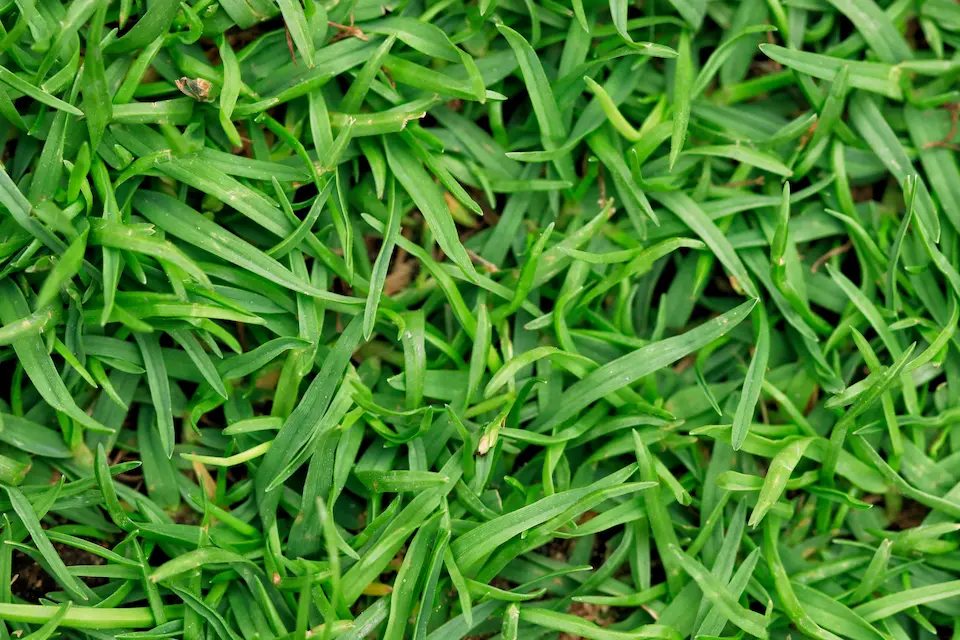
Bermudagrass, a resilient and fast-growing warm-season grass variety, presents an excellent choice for those seeking a lush and durable lawn option. This grass type germinates in 10 to 30 days and establishes fully within 6 to 11 weeks, ranking among the fastest-growing warm-season grasses available.
Here are some key points to consider:
- Thrives in full sun and well-drained soils, making it ideal for warm climates and high-traffic areas like sports fields.
- Aggressive growth enables quick filling of thin or bare spots, providing rapid coverage and a lush green appearance.
- Requires ample nitrogen fertilization for optimal maintenance and growth, especially during the growing season.
When aiming for a fast-growing and resilient lawn, Bermudagrass stands out as a top contender due to its rapid establishment and durability.
5. Annual Ryegrass

As one explores options for rapidly establishing a resilient and versatile lawn, the consideration of Annual Ryegrass emerges as a compelling choice.
This fast-growing grass seed germinates within just 5 to 10 days, making it ideal for quick lawn repairs and erosion control. Annual ryegrass thrives in full sun, is drought-tolerant, and improves soil structure while suppressing weeds.
It’s often used as a cover crop to enhance soil health. However, it’s a temporary solution lasting only one growing season, best used in mixes with longer-lasting grasses.
Maintaining an optimal mowing height between 3 to 4 inches encourages healthier growth, denser turf, and reduces weed competition.
For those seeking a quick and effective lawn solution, annual ryegrass proves to be a valuable and efficient choice.
6. Creeping Red Fescue

Exploring the realm of fast-germinating grass seeds, our focus now shifts to Creeping Red Fescue, a resilient and efficient option for establishing lush lawns in shaded areas.
Creeping Red Fescue offers numerous advantages for those looking to create a healthy and vibrant lawn quickly. Here are some key points to consider:
- Germinates within 2 to 3 weeks, ideal for rapid lawn establishment.
- Thrives in partial sun to shade, displaying excellent shade tolerance.
- Forms a dense turf that suppresses weeds and enhances overall lawn resilience.
This fast-growing grass seed requires minimal maintenance and is particularly well-suited for cooler, moist environments.
Remember to maintain a mowing height of 2 to 3 inches to ensure healthy growth and density.
7. Fast Grow Grass Seed
Fast Grow Grass Seed, a blend of annual ryegrass, tall fescue, and fine fescue, stands out as a rapid solution for enhancing bare patches and worn areas in your lawn.
This seed germinates within 7 to 10 days, providing quick coverage for your lawn. Thriving in full sun to medium shade, Fast Grow Grass Seed suits various lawn conditions.
Package sizes vary in coverage, with a 3 lb. bag covering up to 1,500 sq. ft. for overseeding and 750 sq. ft. for new lawns. Ideal for fast results, this seed can establish a lush lawn in 7 to 14 days, reducing soil erosion significantly.
For optimal results, sow Fast Grow Grass Seed during cool-season growth phases, such as early spring or fall, when soil temperatures reach at least 55°F for germination.
8. Seeding Process
To initiate the seeding process, the first step involves preparing the existing lawn by mowing it at the lowest setting and collecting the clippings to ensure optimal soil contact for the newly sown seeds.
Once this is done, the next steps are crucial for successful seed germination:
- Rake the area to remove debris and create grooves in the soil for improved seed-to-soil contact.
- Conduct a soil pH test to ensure it falls within the ideal range of 6.2 to 7.0 for optimal grass seed growth.
- Use a suitable spreader to evenly distribute the chosen grass seed variety, such as ryegrass, in a crisscross pattern for thorough coverage and minimal bare spots.
Following these steps will set the foundation for a healthy lawn and effective lawn care routine.
9. Soil Preparation
In preparing the soil for optimal grass seed germination, it’s essential to create a conducive environment that promotes healthy growth and establishment. Proper soil preparation involves tilling the soil to a depth of 2-3 inches, ensuring a loose and aerated environment.
Remove debris, rocks, and thatch from the soil surface to enhance seed-to-soil contact, crucial for successful germination. Test the soil pH aiming for an optimal range of 6.2 to 7.0 for cool-season grasses to support healthy growth.
Incorporate organic matter like compost to improve nutrient availability and moisture retention. After seeding, lightly rake the soil to create grooves for seeds, ensuring they’re covered with no more than a quarter-inch of soil for effective germination.
10. Watering and Maintenance
For optimal growth and successful establishment of fast-germinating grass seeds, proper watering and maintenance practices are crucial.
Fast-growing grass seeds require consistent moisture immediately after seeding, with light watering several times daily to maintain soil dampness until germination occurs.
Once established, watering should be adjusted to provide about 1-2 inches of water per week, allowing deeper root development and resilience.
Mowing should commence when grass reaches a height of 3-4 inches, with sharp blades used to prevent damage and avoid scalping, which can stress the grass.
Regular maintenance, including fertilization with a balanced fertilizer, supports the growth of fast-germinating grasses and helps them establish a strong root system.
Monitoring for pests and diseases is crucial to maintaining grass health, especially for fast-growing varieties that may be more susceptible to stressors.
- Water consistently after seeding
- Adjust watering to 1-2 inches per week
- Mow at 3-4 inches to prevent stress