

As I explore the concept of Zen gardens, I realize their design embodies tranquility and mindfulness. Each element, from rock arrangements to water features, serves a purpose. I find it fascinating how thoughtful choices can create a serene space that encourages reflection. The interplay of natural materials and meaningful plants speaks volumes about balance. If you're intrigued by how to harmonize these components, there's much more to uncover.
Embrace Minimalism With Rock and Sand
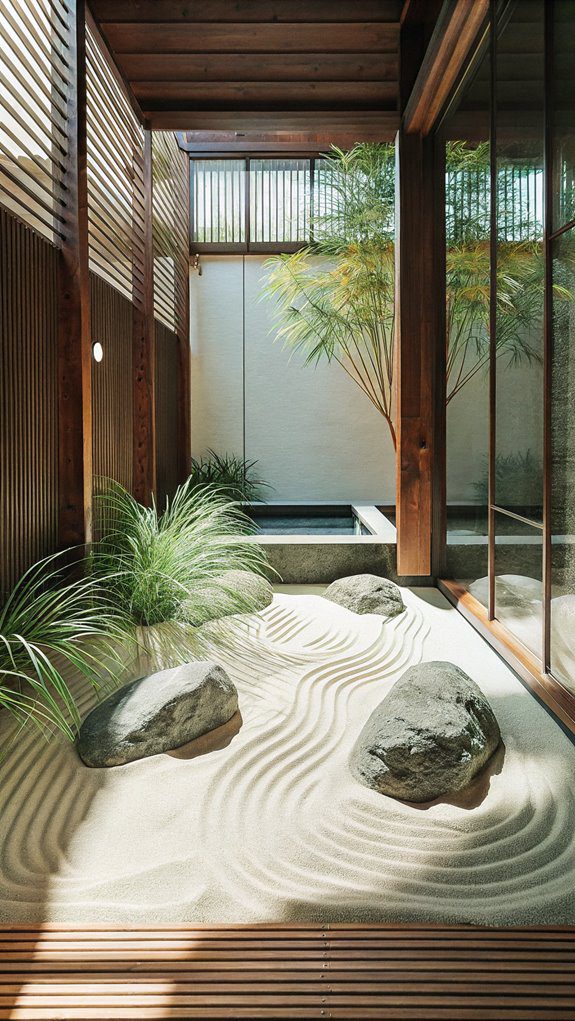
When I think about embracing minimalism in a Zen garden, rock and sand immediately come to mind as essential elements.
The beauty of rock arrangements lies in their simplicity; each stone's placement creates harmony.
Meanwhile, sand patterns evoke tranquility, inviting me to rake them into gentle ripples.
Together, these elements foster a serene space, encouraging mindfulness and reflection in our busy lives.
Incorporate Water Features for Serenity

To create a truly serene Zen garden, I find that incorporating water features can elevate the overall atmosphere.
The gentle water flow provides a soothing soundtrack, while reflective surfaces amplify the garden's tranquility.
A small pond or a bamboo fountain not only enhances visual appeal but also invites contemplation, creating a harmonious space where one can unwind and reconnect with nature.
Use Pathways to Guide the Mind
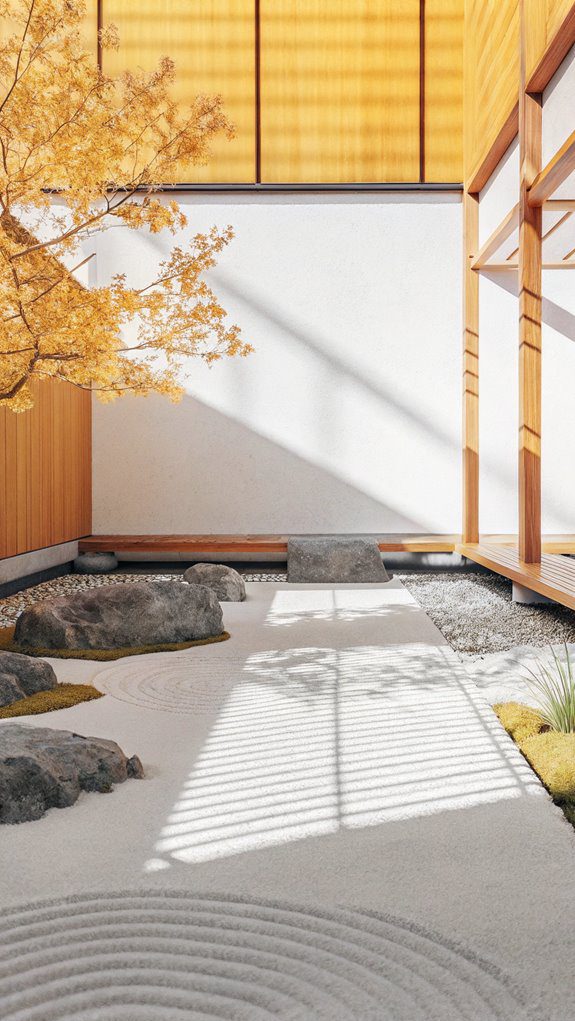
In a Zen garden, pathways serve more than just a functional purpose; they guide the mind toward tranquility and reflection.
I often choose smooth stones or wooden planks as pathway materials, allowing the feet to connect with nature. Each curve and turn can embody guiding symbols, encouraging mindfulness.
These thoughtfully designed walkways create a serene journey, fostering deeper contemplation and inner peace.
Select Meaningful Plants for Balance

After creating pathways that guide the mind toward tranquility, the next step in crafting a Zen garden involves selecting meaningful plants that enhance balance and harmony.
I focus on plant symbolism, choosing flora that represents peace and resilience, like bamboo or cherry blossoms.
Incorporating seasonal variety not only adds visual interest but also allows for a dynamic experience, reflecting nature's ever-changing beauty.
Create a Meditation Corner
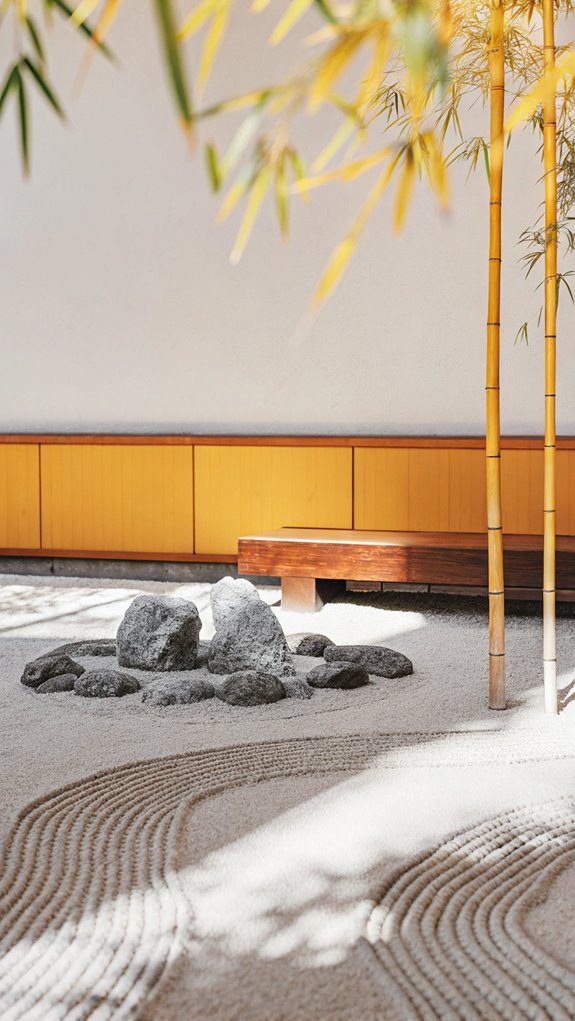
While crafting a serene atmosphere within my Zen garden, establishing a dedicated meditation corner becomes essential for fostering mindfulness and reflection.
I focus on comfortable seating, like a plush cushion or a low bench, surrounded by nature. Ambient lighting, perhaps soft lanterns or subtle fairy lights, enhances the tranquility, inviting peaceful moments of introspection that rejuvenate my spirit and deepen my connection with the environment.
Design With Natural Materials
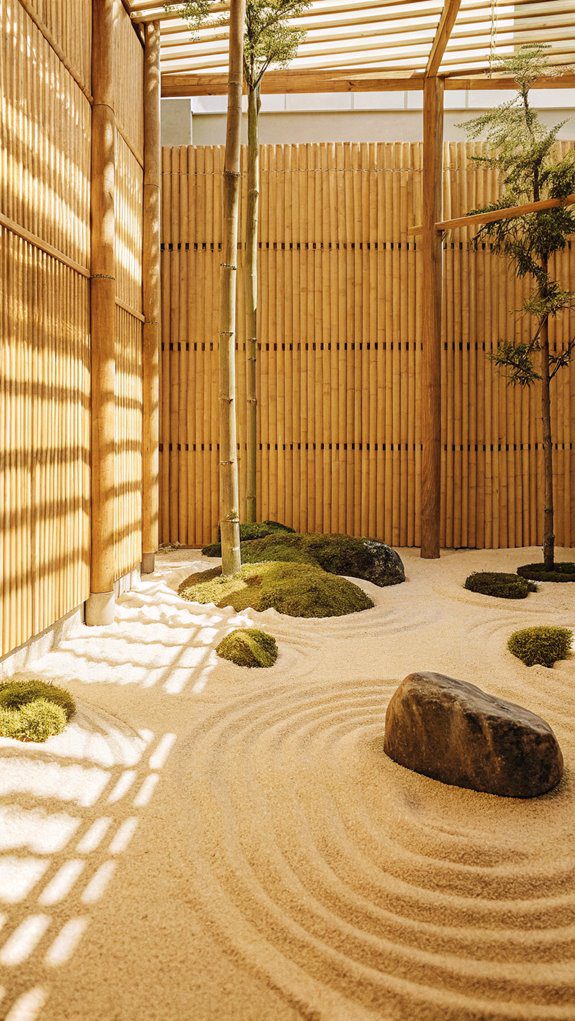
Natural materials play a pivotal role in creating a harmonious Zen garden.
I love incorporating stones, wood, and gravel to enhance natural textures and convey a sense of authenticity.
By using organic shapes in pathways and plant arrangements, I can evoke a tranquil atmosphere.
Each element works together, inviting mindfulness and connection with nature, ultimately fostering a serene environment perfect for reflection.
Add Sculptural Elements for Focus

Incorporating sculptural elements into a Zen garden can create focal points that draw the eye and enhance the overall design.
I love how a carefully placed statue or stone arrangement can introduce sculptural balance, guiding the viewer's gaze and creating harmony.
These elements not only add interest but also help convey a deeper sense of peace, making the garden a true sanctuary.