

Hummingbirds primarily feed on nectar from flowers, getting essential sugars for energy. They consume their weight in nectar daily to fuel their high metabolism. Additionally, arthropods like insects and spiders are vital protein sources for hummingbirds. Some species rely heavily on arthropods for their diet. Research suggests a close relationship between hummingbirds, flowers for nectar, and arthropods for protein. These tiny birds showcase diverse foraging techniques and adjust based on habitat and season. Their diet is crucial for their health and energy levels, especially for young hummingbirds.
Nectar as Primary Energy Source
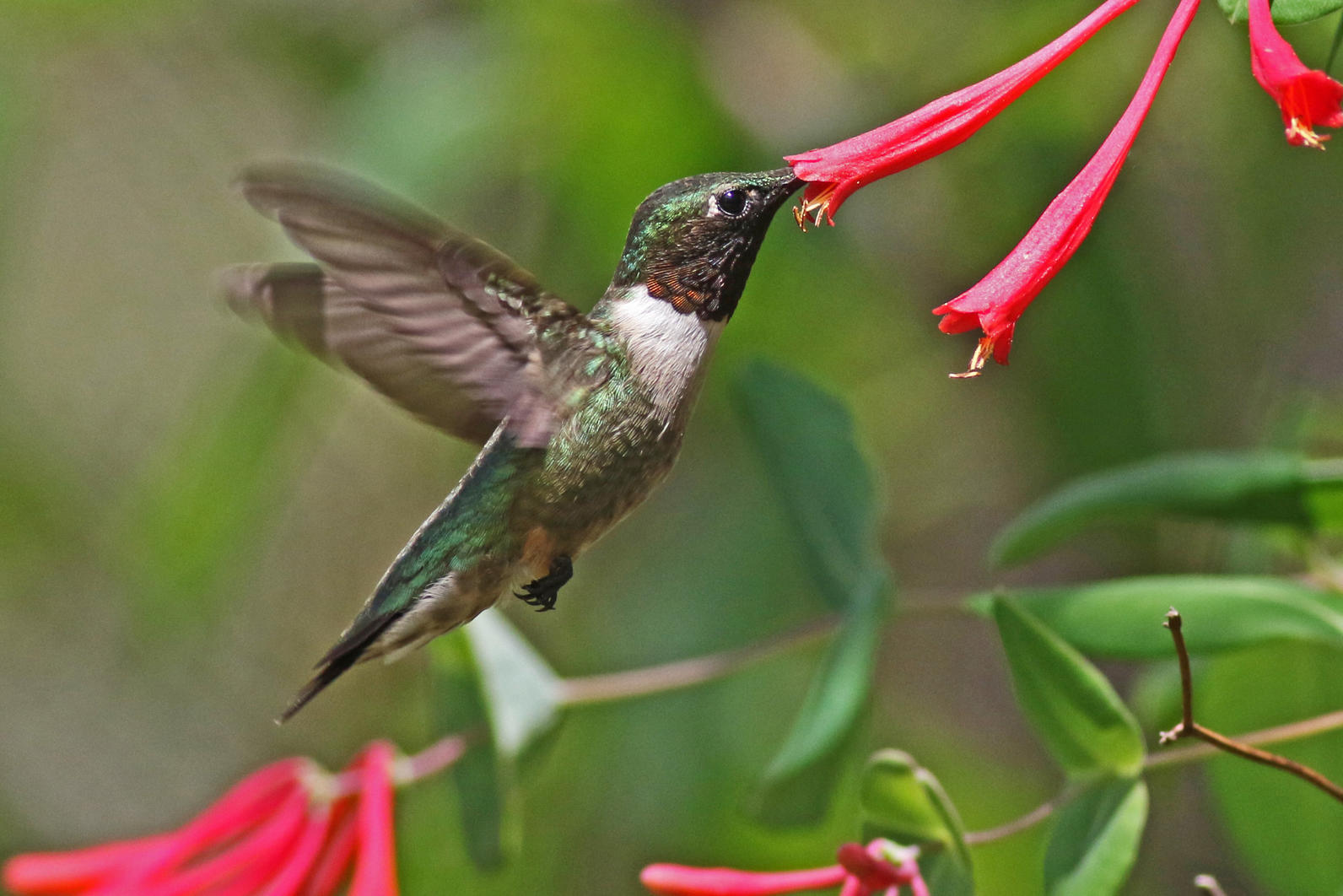
Hummingbirds primarily rely on nectar from flowers as their main energy source, providing essential sugars for their high metabolic rates. Nectar, a sugary fluid found in flowers, is a vital component of a hummingbird’s diet due to its high energy content. These tiny birds have incredibly fast metabolisms, requiring them to consume their body weight in nectar daily to fuel their energetic lifestyles. Their long, specialized beaks and unique tongue structure are perfectly adapted for extracting nectar from deep within flowers efficiently.
The nectar serves as a quick source of energy for hummingbirds, allowing them to sustain their rapid wingbeats, hovering capabilities, and quick movements. Due to their high metabolic rates, hummingbirds must constantly replenish their energy reserves, making nectar-rich flowers essential for their survival. Without access to these sugar-rich sources, hummingbirds would struggle to meet their daily energy requirements and may not be able to maintain their active lifestyles. Thus, nectar plays a crucial role in supporting the unique and demanding energy needs of these remarkable birds.
Importance of Arthropods
The significance of arthropods in the diet of hummingbirds is underscored by their adeptness at capturing these small creatures using various foraging methods. Arthropods, including insects and spiders, are crucial for hummingbirds as they provide essential protein necessary for their survival and reproduction. Research indicates that arthropods make up a substantial portion of a hummingbird’s diet, with studies showing that 79% of tropical hummingbirds had arthropod remains in their stomachs. Hummingbirds exhibit remarkable skills in capturing arthropods, often relying on their agility and precision to catch these elusive prey. Observations reveal that hummingbirds may prioritize feeding on arthropods over nectar, highlighting the importance of these small creatures in their nutrition. Additionally, some hummingbird species have been observed subsisting solely on arthropods for extended periods, demonstrating their ability to adapt their diets based on the availability of food sources. This emphasis on arthropods in their diet showcases the vital role these tiny creatures play in the hummingbirds’ overall health and well-being.
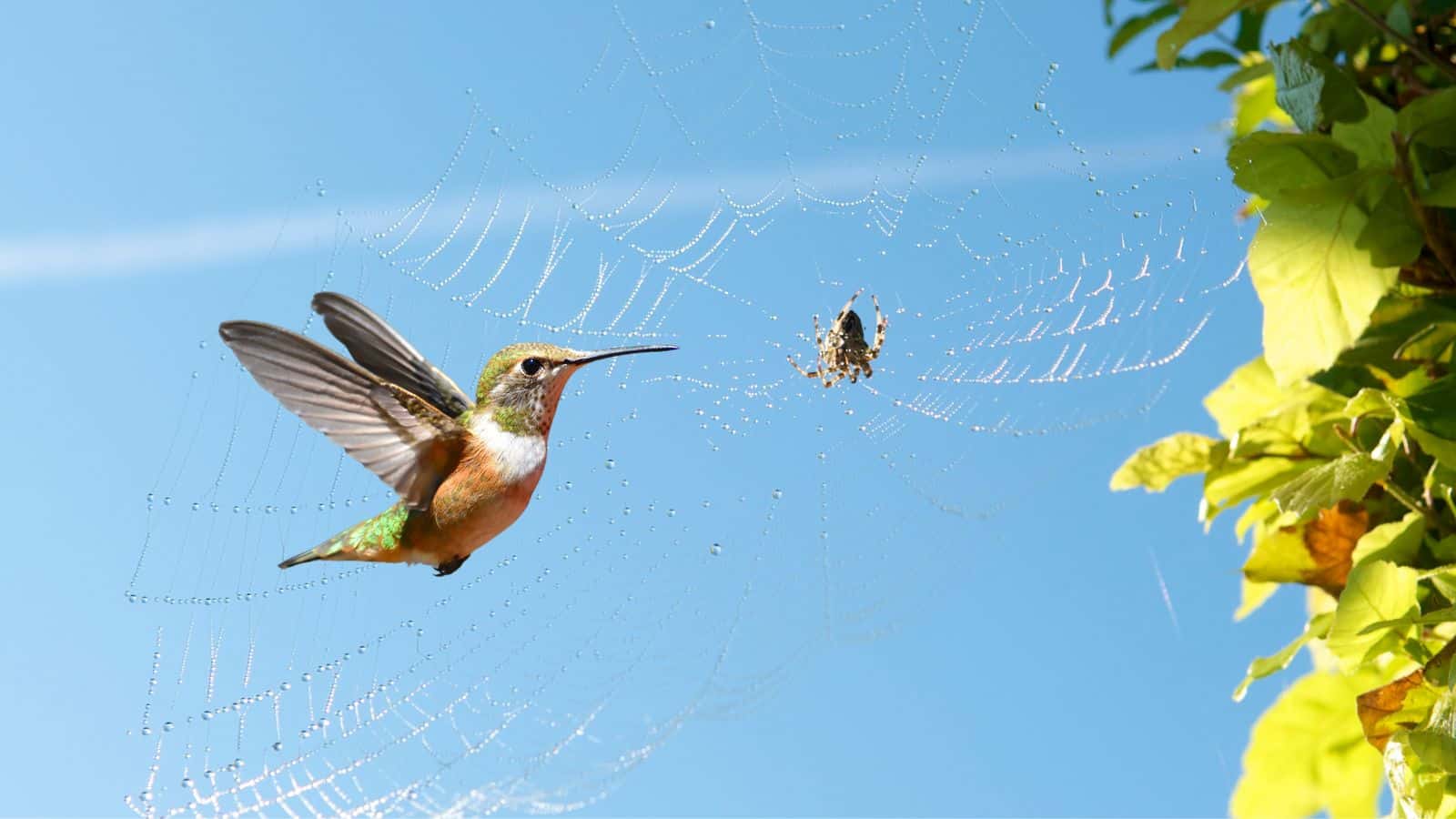
Protein From Insects and Spiders
Obtaining essential protein, hummingbirds source small insects like mosquitoes, fruit flies, gnats, and spiders. These insects provide vital nutrients that are crucial for the hummingbirds’ energy levels and overall health. Hummingbirds exhibit resourceful hunting behaviors, often targeting insects found in sap wells drilled by sapsuckers in trees. Some species, such as Annas and Allens, include insects like midges and leaf hoppers in their diet, showcasing a diverse protein intake. For baby hummingbirds, a diet rich in insects is essential for proper nutrition and growth. By offering a variety of food sources including sugar water, flowers, and bugs, hummingbirds can thrive and maintain their high metabolic rates. Insects play a significant role in providing the necessary protein that fuels the rapid wing beats and agile movements characteristic of these tiny, vibrant birds. Their ability to efficiently extract protein from insects highlights the adaptability and specialized nature of hummingbirds’ dietary habits.
Research on Hummingbird Diets
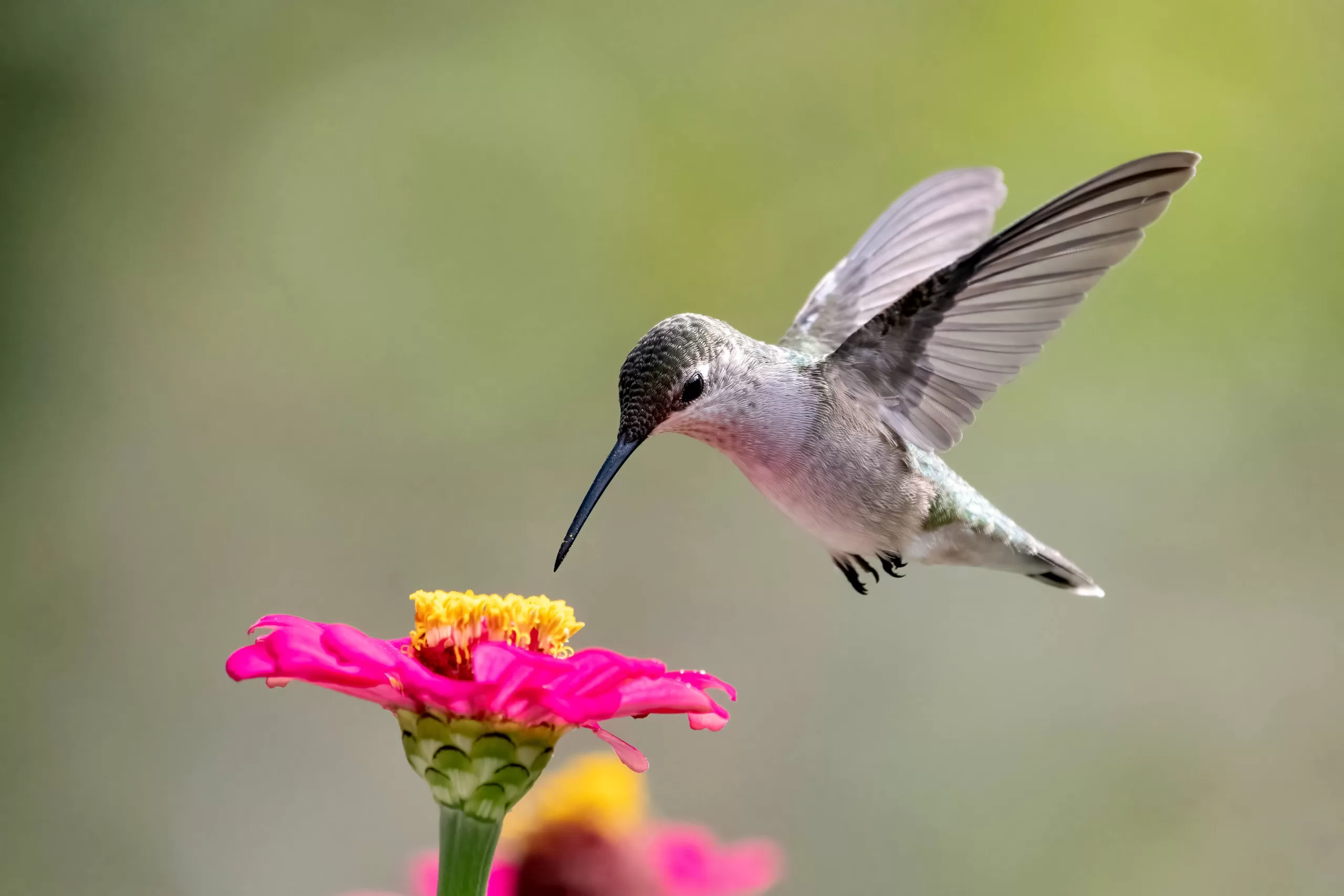
In the realm of hummingbird dietary studies, an intriguing correlation emerges between their foraging behavior and the prevalence of arthropods in their diets. Research indicates that hummingbirds have a symbiotic relationship with wildflowers for nectar but also rely on small arthropods to supplement their sugar diets. A study focusing on tropical hummingbirds revealed that 79% of them had arthropod remains in their stomachs, underscoring the significance of arthropods in their overall diets. These tiny birds showcase remarkable adaptability in their feeding habits, adjusting their foraging behavior based on habitat and season. Observations suggest that hummingbirds may consume arthropods more frequently than nectar, shedding light on their diverse dietary preferences.
Further studies have shown that hummingbirds exhibit adeptness in capturing arthropods through various foraging techniques such as hover-gleaning, hover-hawking, sally-hawking, and sally-gleaning. These findings highlight the complexity of hummingbirds’ feeding habits and their ability to thrive on a diet that includes both nectar and protein-rich arthropods.
Foraging Techniques

Utilizing a blend of precision and agility, hummingbirds employ four distinct foraging techniques to capture arthropods for their dietary needs. These techniques include:
- Hover-gleaning: Hummingbirds hover near foliage to pick off small insects like spiders from leaves and flowers.
- Hover-hawking: They hover in mid-air and catch flying insects on the wing, swiftly snatching them with their beaks.
- Sally-hawking: Hummingbirds perform aerial acrobatics, known as a sally, to catch flying insects by darting out to grab them.
- Sally-gleaning: This technique involves brief flights to capture insects from surfaces like tree trunks or branches.
During the early morning, hummingbirds are most active in their foraging activities, especially when hunting for insects. While they may not be as conspicuous during insect foraging compared to nectaring, their diverse foraging techniques showcase their adaptability and efficiency in securing a varied diet rich in arthropods.
Diverse Habitat Adaptations

Hummingbirds have evolved remarkable adaptations to thrive in a wide array of habitats, enabling them to efficiently obtain nutrients from various sources. These agile birds feed on a diverse diet that includes nectar-rich flowers and small insects like mosquitoes, fruit flies, and spiders. Their ability to consume tree sap, pollen, and small spiders showcases their versatility in foraging for a variety of food sources. Research indicates that hummingbirds rely on arthropods for protein, with some species consuming insects more frequently than nectar. This dietary flexibility allows them to adapt to different environments and food availability. Hummingbirds have a symbiotic relationship with wildflowers for nectar, while also supplementing their diets with arthropods. Studies have shown that arthropods play a significant role in hummingbird diets, with many species digesting insects throughout the day. These adaptations highlight the sophisticated strategies hummingbirds have developed to thrive in diverse habitats.
Hummingbirds and Wildflowers
Wildflowers play a vital role in the diet of hummingbirds, providing essential nectar rich in carbohydrates that support their high energy demands. Hummingbirds have a symbiotic relationship with wildflowers, relying on them for a primary source of nectar. Research has shown that wildflowers offer crucial nutrients that help meet the hummingbirds’ daily energy needs. These tiny birds showcase their adaptability by visiting a variety of wildflowers to obtain nectar, demonstrating a diverse foraging behavior. The availability of wildflowers can significantly impact the diet and overall health of hummingbirds, making these floral species essential for their survival.
- Hummingbirds have a symbiotic relationship with wildflowers for nectar, which is a crucial part of their diet.
- Research shows that wildflowers provide essential nutrients for hummingbirds, supporting their high energy needs.
- Nectar from wildflowers is a primary source of carbohydrates for hummingbirds, aiding in their daily activities.
- Hummingbirds visit a variety of wildflowers to obtain nectar, showcasing their adaptability to different floral species.
:max_bytes(150000):strip_icc()/gettyimages-900229060-1-0101fd9762cf44b8bc133da168e01580.jpg)
Nutritional Needs
The nutritional requirements of hummingbirds encompass a diet rich in nectar from flowers and sugar water for sustaining their high energy levels. Nectar provides the necessary carbohydrates to fuel their rapid metabolism, while sugar water acts as a quick energy source. Alongside carbohydrates, protein is crucial for hummingbirds, obtained from small insects like mosquitoes, fruit flies, gnats, and spiders. Offering a diverse array of food sources such as flowers, sugar water, and bugs is essential to meet their nutritional needs adequately.
For baby hummingbirds, a varied diet is vital as they require proper nutrition to support their growth and development, especially before migration. Providing multiple food sources like sugar water, flowers, and insects not only aids in meeting their nutritional requirements but also helps them thrive in their environment. By ensuring a balanced diet that includes nectar, sugar water, and insects, you can support the health and vitality of these remarkable tiny birds.
Arthropods in Hummingbird Diets
Incorporating arthropods into their diet plays a crucial role in sustaining the nutritional needs of hummingbirds. These tiny birds have evolved to rely on arthropods as a significant part of their daily diets, ensuring they receive essential nutrients for their survival and energy requirements. Observations have shown that hummingbirds exhibit remarkable foraging skills to capture arthropods, utilizing diverse techniques to secure this food source. Research indicates that arthropods constitute a substantial portion of tropical hummingbirds’ stomach contents, highlighting the importance of this prey in their diet. Additionally, studies have demonstrated the adaptability of hummingbirds, with instances where they solely subsist on arthropods when nectar availability fluctuates seasonally.
- Research shows that 79% of tropical hummingbirds have arthropod remains in their stomachs.
- Hummingbirds rely on arthropods as a significant part of their daily diets.
- Observations indicate that hummingbirds capture arthropods using various foraging methods.
- Hummingbirds may switch to arthropod prey, replacing nectar, depending on seasonal food availability.
Studies on Dietary Habits
Hummingbirds’ dietary habits have been extensively studied, shedding light on their reliance on arthropods as a crucial component of their nutritional intake. Research has shown that hummingbirds exhibit a symbiotic relationship with wildflowers for nectar while also actively seeking out small arthropods to supplement their diets. Arthropods play a significant role in hummingbirds’ nutrition, with many species incorporating these insects into their daily meals. These tiny creatures adapt their foraging techniques depending on the habitat and season, demonstrating the importance of arthropods in their diets. Tropical hummingbirds have been observed utilizing various hunting methods, such as hover-gleaning and sally-hawking, to capture arthropods efficiently.
| Observations on Hummingbirds’ Dietary Habits | |||
|---|---|---|---|
| Research indicates reliance on arthropods | Symbiotic relationship with wildflowers | Adapt foraging behavior based on habitat and season | Utilize various hunting methods for arthropods |

Dietary Balance
Maintaining a balanced diet is essential for hummingbirds to meet their nutritional needs efficiently. Hummingbirds achieve this through a combination of nectar from flowers and small insects like mosquitoes, fruit flies, and spiders. This dietary balance ensures they receive the necessary protein sources alongside the sugar-rich nectar, providing essential nutrients for their energy requirements.
Key Points to Note:
- Nutritional Balance: A mix of nectar and insects is crucial for the overall health and survival of hummingbirds.
- Adaptive Foraging: Hummingbirds adjust their diet based on seasonal availability of food sources like flowers and insects.
- Arthropods Significance: Research highlights the significant role arthropods play in the diets of hummingbirds, emphasizing the importance of a diverse diet for their nutritional balance.
- Protein Sources: Insects serve as vital protein sources in the diet of hummingbirds, supplementing the nectar’s sugars to meet their energy needs effectively.
Role of Protein in Hummingbird Diet
To sustain their high energy demands and ensure optimal growth, hummingbirds heavily rely on protein-rich small insects as a vital supplement to their nectar-based diet. Protein is crucial for hummingbirds, especially during nesting season, supporting their high metabolic rate and the growth of their young. Some species like Annas and Allens actively seek out insects such as midges and leafhoppers to fulfill their protein requirements. Providing a varied diet that includes protein-rich insects alongside nectar and sugar water is essential for the overall health and nutrition of hummingbirds. Particularly, baby hummingbirds depend on protein-rich food sources to meet their nutritional needs and prepare for migration.
| Protein-Rich Insects | Common Choices for Hummingbirds | Seasonal Availability |
|---|---|---|
| Mosquitoes | Annas Hummingbird | Spring and Summer |
| Fruit Flies | Allens Hummingbird | Year-round |
| Gnats | Rufous Hummingbird | Summer and Fall |
| Spiders | Ruby-throated Hummingbird | Summer and Fall |
| Aphids | Black-chinned Hummingbird | Spring and Summer |

Feeding Behavior Adaptations
Adapting their feeding behavior to include small insects rich in protein, hummingbirds have evolved specialized foraging techniques to supplement their nectar-based diet. These adaptations showcase the remarkable flexibility of hummingbirds in seeking out diverse food sources. Here are some key points to understand their feeding behavior adaptations:
- Hummingbirds have adapted to consume small insects like mosquitoes, fruit flies, gnats, and spiders to meet their protein requirements.
- Research has highlighted the significant role of arthropods in the hummingbird diet, showing that they are vital supplements to nectar.
- Different foraging methods such as hover-gleaning, hover-hawking, sally-hawking, and sally-gleaning are employed by hummingbirds to capture arthropods efficiently.
- Observations indicate that hummingbirds actively hunt for arthropods, with spiders being among the favored prey for many hummingbird species.
These adaptations underline the complexity and diversity of hummingbird feeding behaviors, emphasizing their ability to thrive by consuming a varied diet.