

When designing a tropical landscape, I focus on balancing bold foliage with carefully chosen structural elements to create a harmonious outdoor retreat. From selecting vibrant plants with varying textures to integrating water features that enhance tranquility, each choice influences the space’s atmosphere and functionality. There’s a method to layering colors, shapes, and materials that can transform any garden into a lush paradise—something I’ll break down step-by-step so you can envision how to approach your own project.
Incorporate Bold Tropical Plants

When designing a tropical landscape, I focus on selecting bold tropical plants that create striking visual impact.
I prioritize species with large, vibrant foliage and contrasting textures, like elephant ears or bird of paradise.
Strategic placement enhances depth and rhythm, while color saturation intensifies the scene.
This approach ensures a dynamic, immersive environment that captivates and defines tropical aesthetics without relying on subtle or muted elements.
Design With Lush Palm Trees
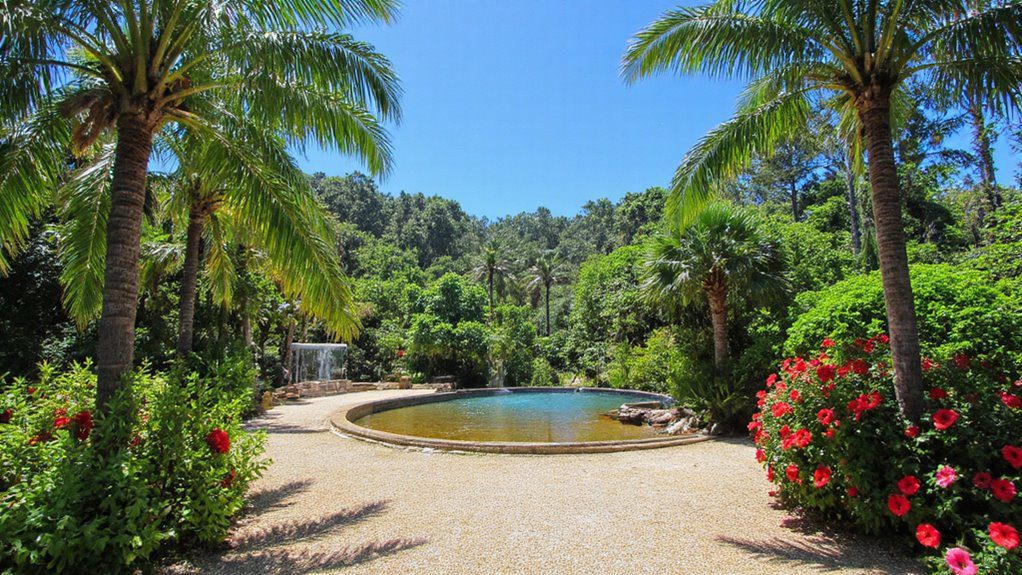
Although lush palm trees often serve as iconic symbols of tropical landscapes, I emphasize their structural elegance and textural variety to elevate a design’s sophistication.
Selecting species with contrasting frond shapes—feathered, fan, or pinnate—adds depth. Proper spacing highlights their verticality, while integrating layered understory plants enhances dimensionality without overcrowding.
This ensures a balanced, dynamic composition that thrives in tropical conditions.
Add Vibrant Flowering Shrubs
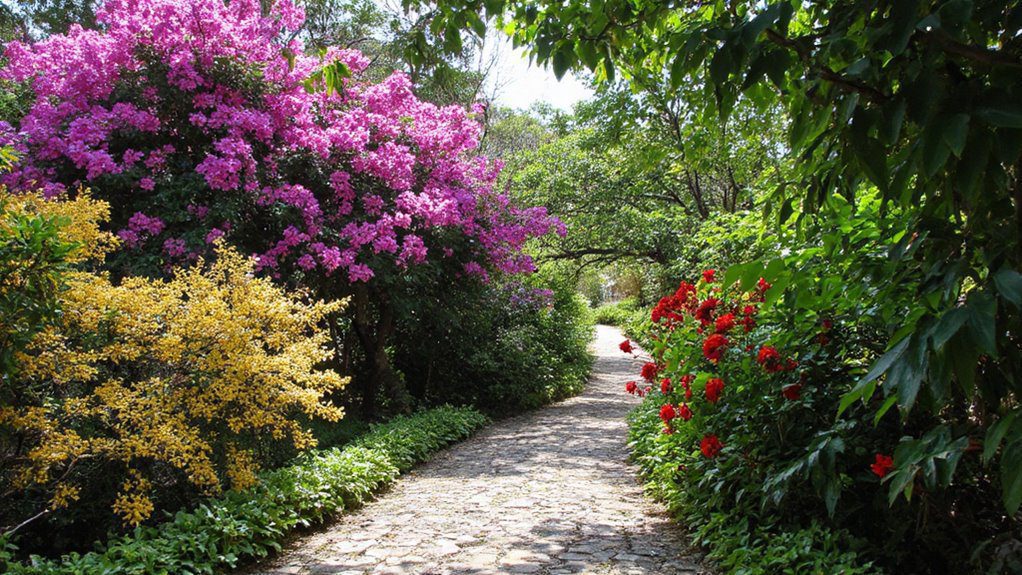
Complementing the architectural form of palm trees with vibrant flowering shrubs brings a dynamic splash of color and texture to tropical landscapes.
Selecting species like hibiscus or bougainvillea ensures continuous blooms and rich hues.
Position shrubs strategically to create depth and contrast, enhancing spatial perception while maintaining balanced foliage density.
This approach emphasizes both visual appeal and ecological harmony in tropical garden design.
Create a Water Feature Oasis
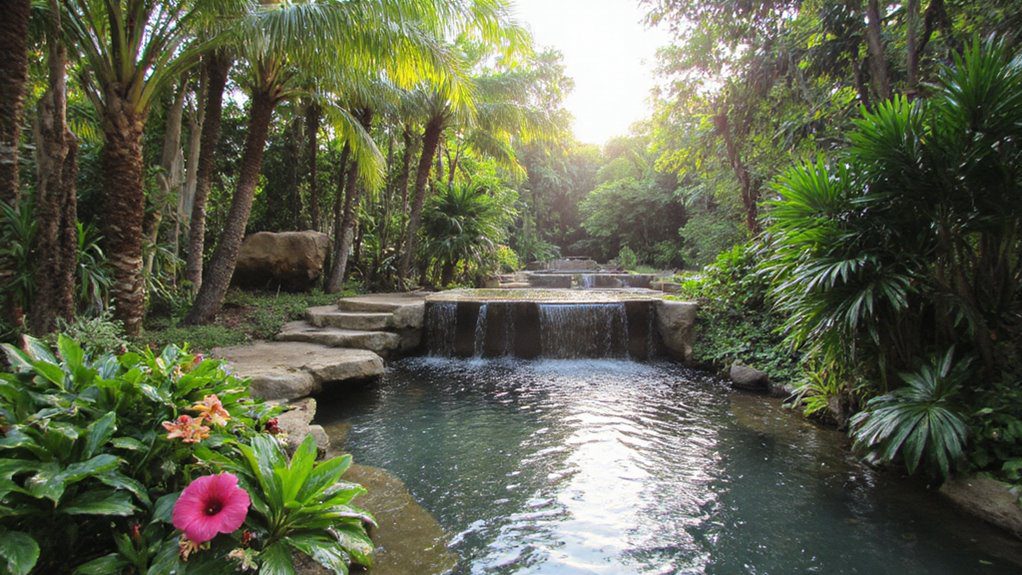
Since water features introduce both movement and tranquility, I recommend integrating them thoughtfully to transform your tropical landscape into a serene oasis.
Consider incorporating cascading waterfalls or reflective ponds with native aquatic plants.
Use recirculating pumps for sustainability and position features to enhance natural light and sound interplay.
This combination creates a dynamic yet calming focal point, enhancing your garden’s tropical essence.
Use Natural Stone Pathways

When you design a tropical landscape, incorporating natural stone pathways adds both structure and organic beauty.
I recommend selecting stones with irregular shapes and varied textures to mimic natural terrain. Properly spacing and embedding them ensures durability and safety while allowing ground cover plants to soften edges.
This technique enhances visual flow without disrupting the surrounding lush greenery’s seamless appearance.
Install Bamboo Fencing or Screens

Although bamboo fencing might seem simple, it offers a sophisticated way to define spaces and add privacy in tropical landscapes.
Its natural texture and warm tones blend seamlessly with lush greenery.
When installing, I recommend selecting mature, treated bamboo to ensure durability and resistance to moisture.
Proper spacing and secure anchoring enhance structural integrity while maintaining an elegant, airy appearance.
Include a Hammock or Lounge Area
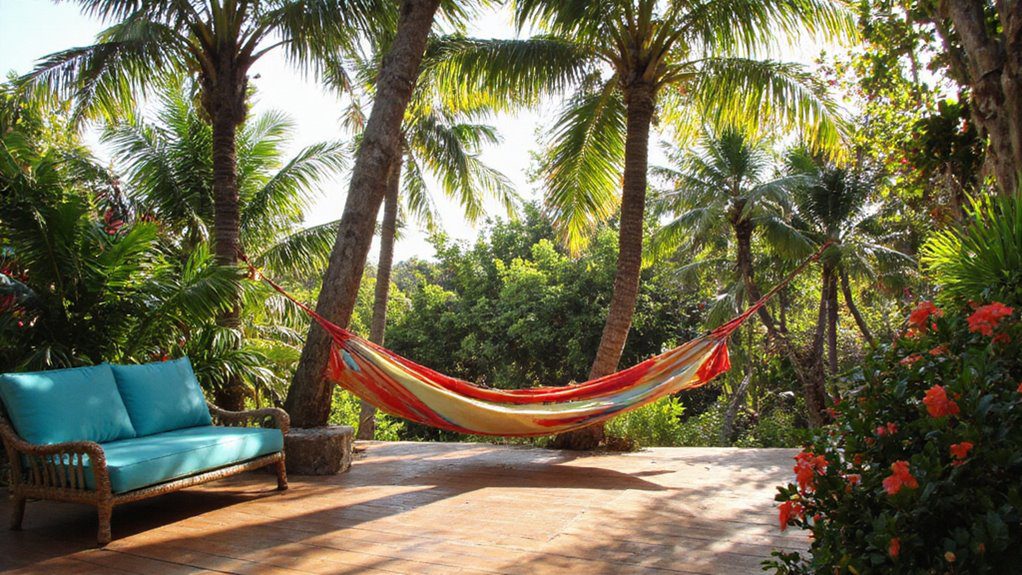
A well-designed hammock or lounge area transforms your tropical landscape into a serene retreat where relaxation becomes an integral experience.
I recommend positioning the hammock between sturdy trees or installing a weather-resistant frame. Choose breathable, quick-dry fabrics and complement the space with ergonomic loungers.
Integrate natural materials like teak or rattan to enhance aesthetics while ensuring durability in humid conditions.
Utilize Colorful Outdoor Planters
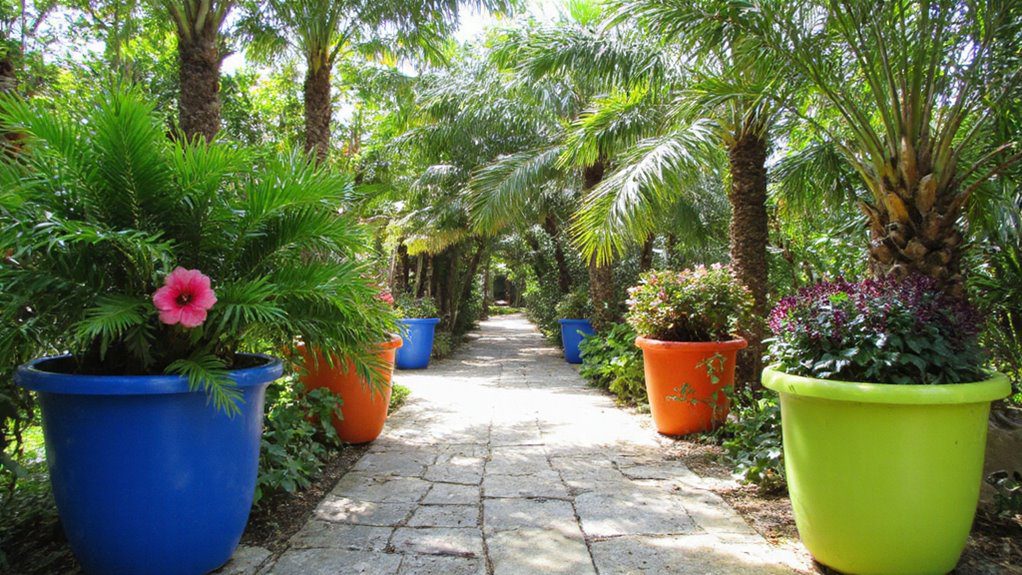
Colorful outdoor planters inject vibrant energy and structure into tropical landscapes, serving both functional and decorative purposes.
I select materials resilient to humidity and intense sunlight, like glazed ceramics or UV-resistant composites.
Strategic placement accentuates architectural lines and plant groupings, while vivid hues complement foliage.
This approach enhances spatial depth and focal points, creating a cohesive, dynamic tropical environment without overwhelming natural textures.
Build a Tropical-Themed Pergola

Complementing vibrant planters with structural elements can elevate your tropical landscape’s appeal.
I recommend building a pergola using weather-resistant hardwood like teak or cedar, finished with a natural stain.
Incorporate broad, slatted roofing for filtered sunlight and support climbing tropical vines.
This creates an inviting, shaded retreat that enhances aesthetics while blending seamlessly with lush greenery and colorful flora.
Integrate Exotic Fruit Trees

While designing a tropical landscape, I find that integrating exotic fruit trees not only enhances visual interest but also introduces unique textures and fragrances.
Selecting species like mango, lychee, or jaboticaba adds layered foliage and vibrant fruit clusters.
Positioning these trees strategically ensures optimal sunlight exposure and airflow, promoting healthy growth while creating dynamic focal points that enrich the garden’s tropical ambiance.
Illuminate With Warm Outdoor Lighting
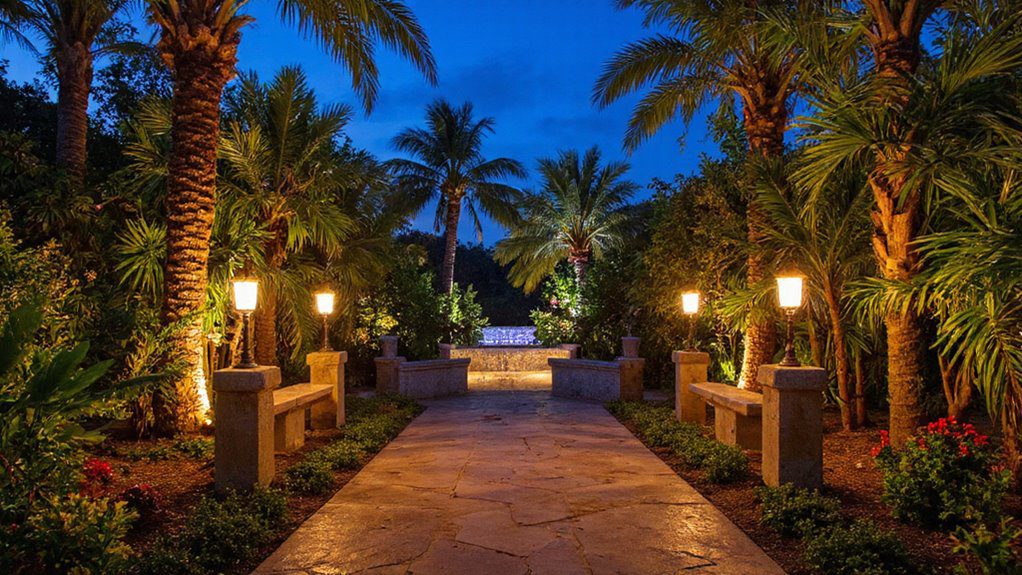
Three key benefits come from illuminating your tropical landscape with warm outdoor lighting: enhanced ambiance, increased safety, and extended usability.
I carefully select fixtures emitting soft, amber hues that highlight lush foliage and textures without harsh glare.
Strategically placed path lights and uplights create depth and guide movement, transforming your outdoor space into a welcoming, functional retreat after sunset.