

When I think about designing a shade garden, I envision a sanctuary filled with lush foliage and tranquil pathways. The interplay of textures and colors can transform a dim corner into a vibrant retreat. Imagine layering plants for depth or incorporating soothing water features. As you explore the possibilities, you’ll discover how to create a space that not only thrives in low light but also captivates the senses in unexpected ways.
Layered Planting for Depth and Texture

When I design a shade garden, I always start with layered planting to create depth and texture that draws the eye.
I mix broad-leafed Hostas with delicate ferns for layered textures and add evergreen shrubs for structure.
Incorporating contrasting foliage, like fine-textured grasses and vibrant seasonal bulbs, ensures visual interest throughout the year, transforming any shaded area into a lush, inviting retreat.
Pathways to Enhance Accessibility and Aesthetics
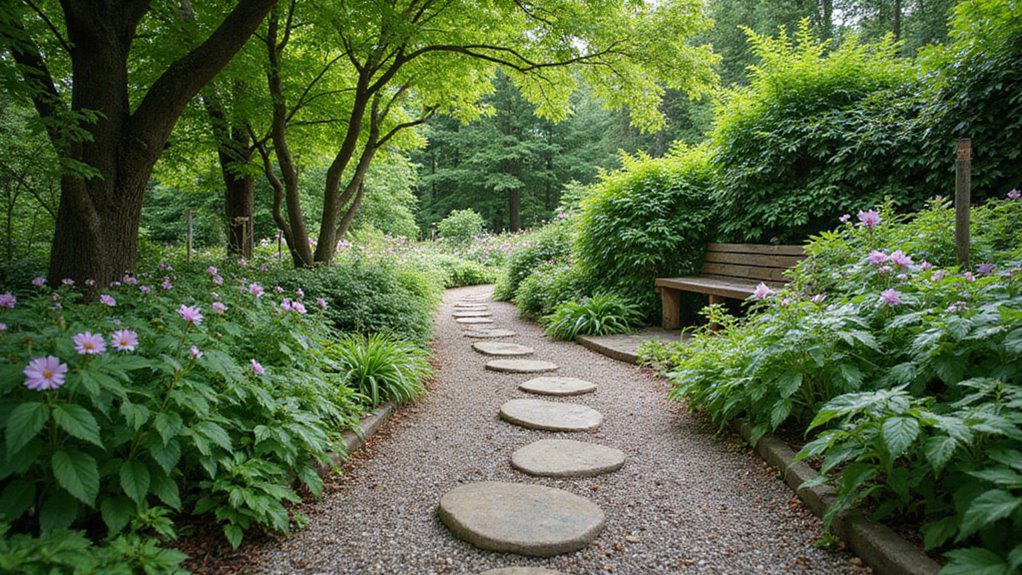
While designing my shade garden, I prioritize pathways that not only enhance accessibility but also elevate the garden’s aesthetic appeal.
I mix pathway materials like smooth river rocks and rustic gravel, creating curvilinear paths that invite exploration.
At night, pathway lighting casts a warm glow, highlighting nearby plants and guiding visitors.
These features make my garden both functional and visually enchanting.
Incorporating Water Features for Serenity

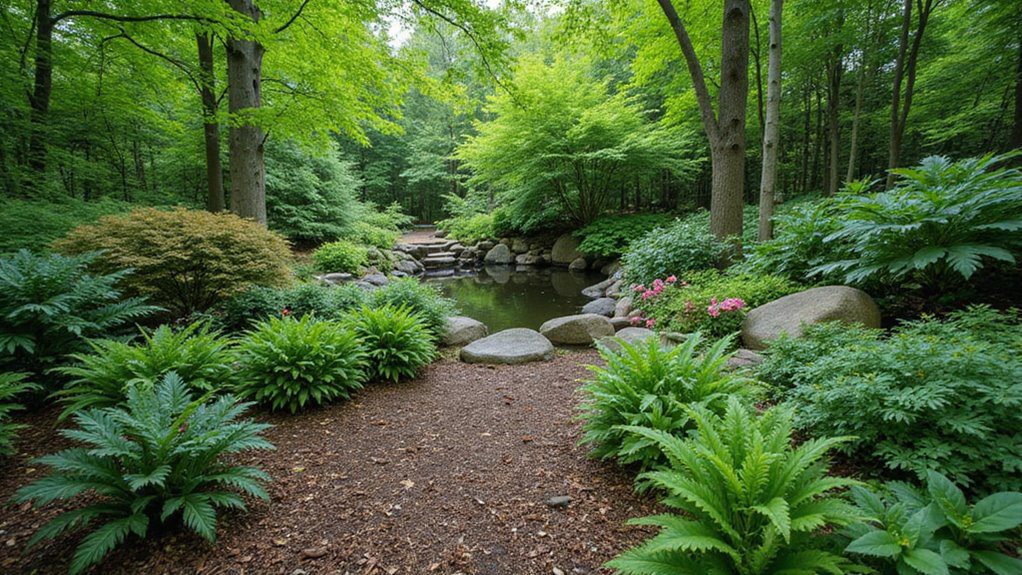
Incorporating water features into my shade garden transforms the space into a tranquil retreat, where the gentle sound of flowing water invites relaxation.
Thoughtful water feature placement creates reflective water surfaces that enhance visual depth.
I love how small fountains serve as focal points, while nearby moisture-loving plants like Gunnera thrive, adding vibrancy and life to my serene outdoor oasis.
The Power of Repetition in Plant Selection

Repetition in plant selection is a powerful design tool that can elevate the beauty of a shade garden.
By thoughtfully choosing plant combinations like Astilbe and Hosta, I create stunning foliage patterns that unify the space.
Repeating textures and varying shades of green enhance visual interest, while the strategic use of ferns and caladiums adds depth, making the garden both cohesive and captivating.
Hardscaping Elements for Low-Maintenance Beauty
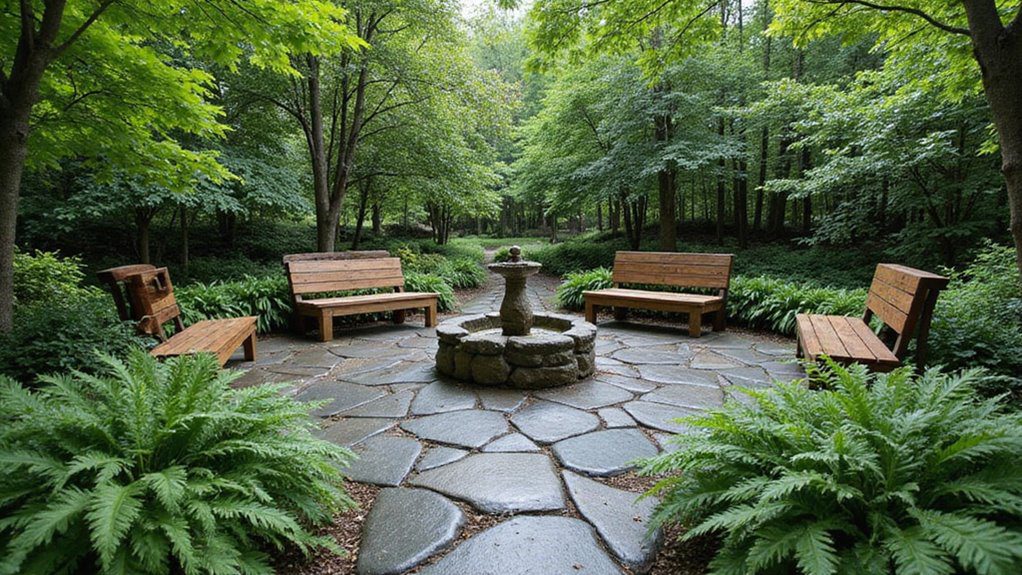
Creating a stunning shade garden goes beyond plant selection; it involves thoughtfully integrating hardscaping elements that enhance the overall aesthetic while minimizing maintenance.
I love using durable surfaces like stone pathways and decorative gravel to guide visitors and improve drainage. Large boulders and retaining walls add structure, while features like benches and lighting create inviting spots, ensuring beauty and functionality in my garden.
Vertical Structures for Height and Interest
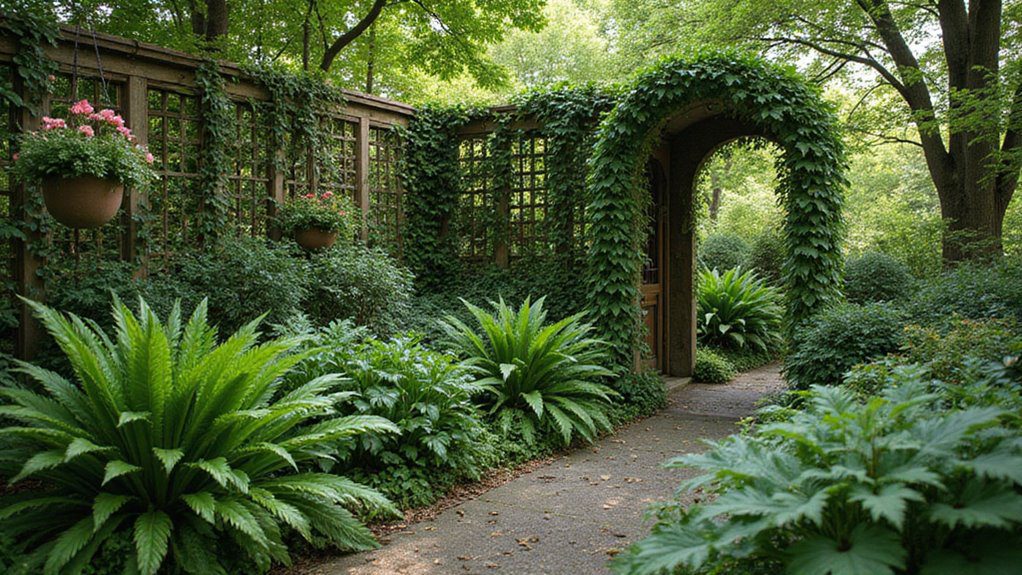
While designing my shade garden, I’ve found that incorporating vertical structures not only draws the eye upward but also transforms the space with depth and character.
Vertical trellises support climbing vines like clematis, while decorative arbors enhance the garden layout.
Unique Garden Sculptures to Captivate

As I explore the enchanting world of shade gardens, I find that unique garden sculptures can truly captivate the senses and elevate the overall design.
Incorporating diverse sculpture themes, like nature or wildlife, adds depth. Interactive designs, such as kinetic sculptures or sound-producing elements, engage visitors while creating visual interest.
Placing these pieces thoughtfully amidst lush foliage creates striking contrasts that enchant every observer.
Seasonal Color With Shade-Tolerant Plants
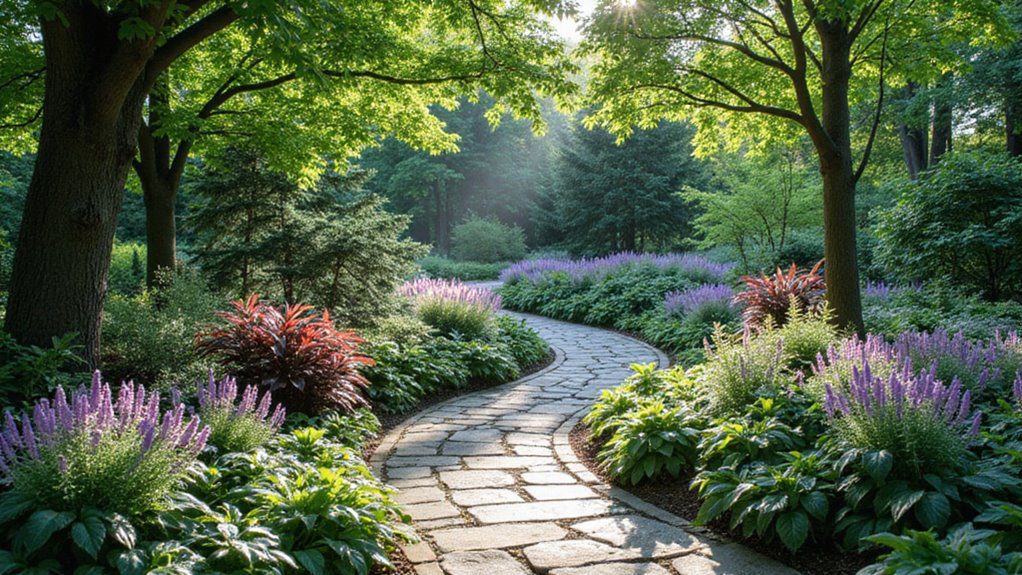
When it comes to designing a shade garden, I often discover that selecting the right shade-tolerant plants is key to achieving seasonal color throughout the year.
I love combining spring blooms like Bleeding Heart with summer hues from vibrant Caladiums.
In fall, Asters add rich foliage, while winter greens, like Variegated Boxwood, create stunning color contrasts and texture variations that keep my garden visually captivating.
Creating Cozy Nooks With Seating Areas
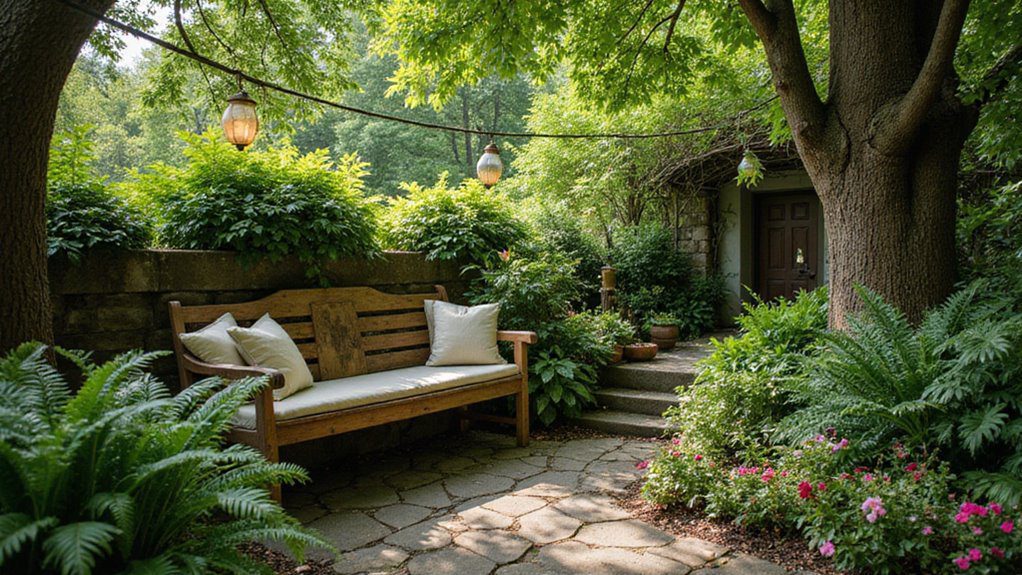
Selecting shade-tolerant plants adds vibrant hues to the garden, but creating cozy nooks enhances the experience by inviting you to linger and enjoy the beauty.
I love incorporating comfortable seating like benches or hammocks, nestled under tree canopies. Winding paths lead to these cozy retreats, surrounded by leafy plants and natural elements, crafting inviting spaces that beckon relaxation amid nature’s tranquility.
Attracting Wildlife With Bird Baths and Feeders
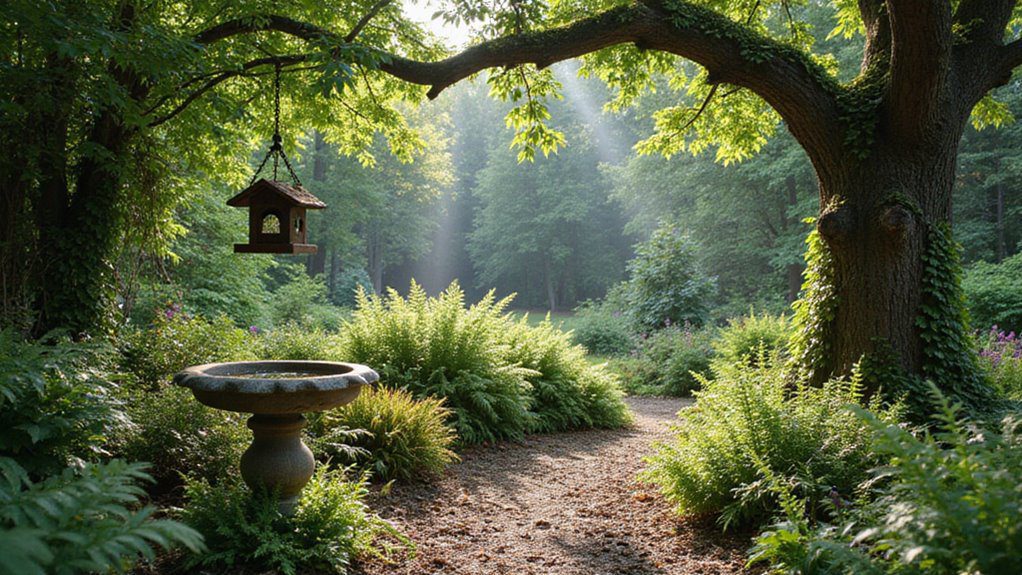
To create a lively sanctuary in your shade garden, adding bird baths and feeders is essential.
The bird bath benefits are immense, providing water for drinking and bathing while attracting diverse species.
For feeder placement, choose spots near native plants to entice birds with food.
Utilizing Lighting for Evening Ambiance
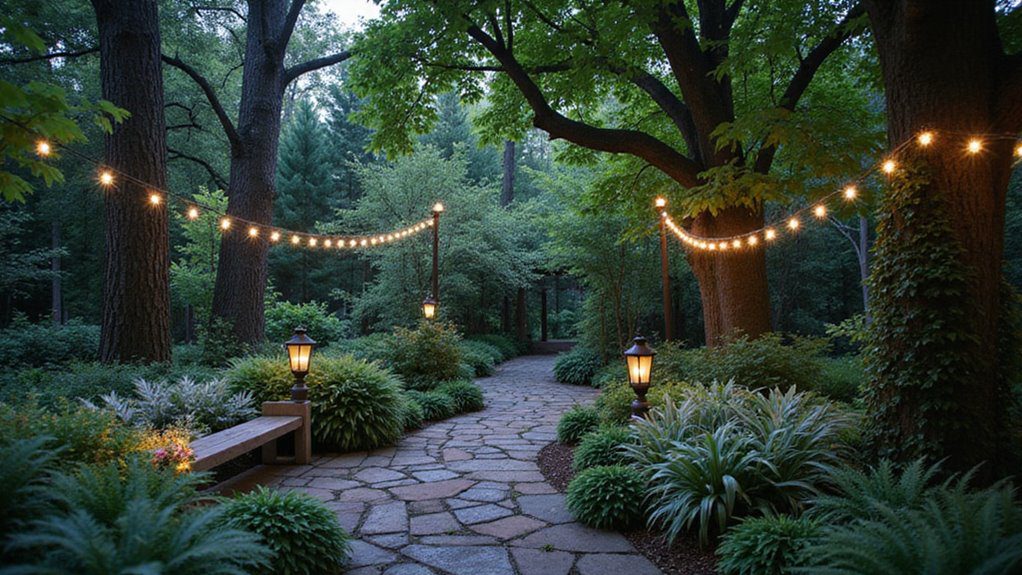
As I watch my garden transform with the setting sun, the right lighting can elevate the evening experience from ordinary to enchanting.
I love using ambient lighting like string lights and down-lighting to set the mood for evening gatherings. Highlighting unique plants and pathways not only guides guests but also creates a magical atmosphere, making every gathering feel special and inviting.
Mixing Bloom Times for Year-Round Interest
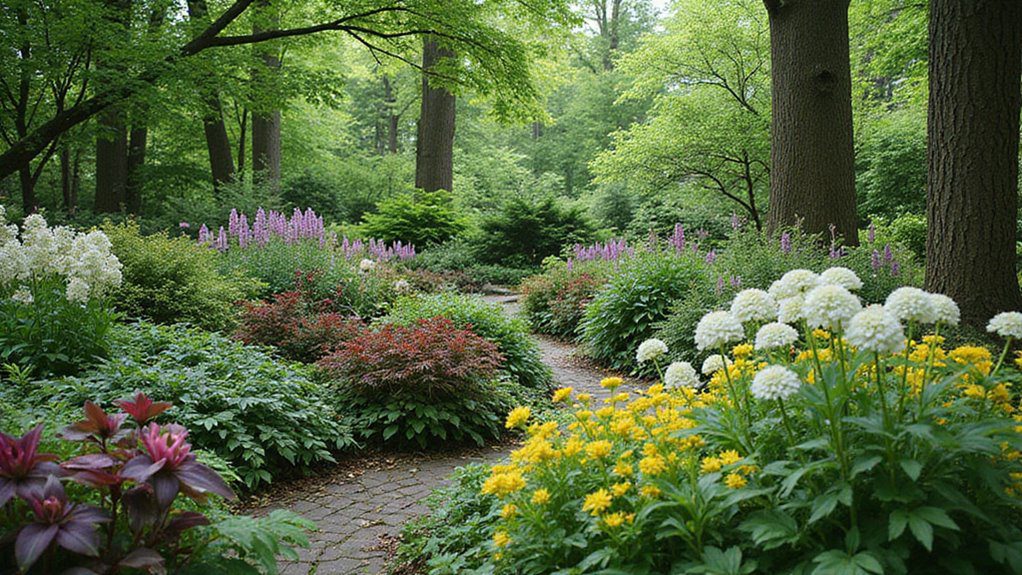
While planning my shade garden, I find mixing bloom times essential for creating year-round interest.
By selecting plant combinations like bleeding hearts, hostas, and astilbe, I ensure vibrant flowers from early spring through late fall.
Including perennials with extended bloom periods, such as Epimedium, enhances seasonal transitions, keeping my garden alive with color and texture, even when some blooms fade.
Maintaining Soil Health for Thriving Gardens
Maintaining soil health is crucial for creating a thriving shade garden, especially since strong roots are the foundation of vibrant, resilient plants.
I focus on soil aeration techniques like mixing compost into the root zone and adding perlite for drainage.
Using organic fertiliser options, such as bone meal and seaweed-based products, ensures my plants receive essential nutrients while promoting sustainable growth.