

As I explore the topic of plants that repel mosquitoes, I find it fascinating how certain species possess natural compounds that deter these pests. For instance, catnip and lemon balm are not just attractive additions to any garden; their essential oils play a significant role in creating a more pleasant outdoor environment. Understanding the properties of these plants can transform how we approach pest control in our own spaces. Curious about which plants make the list?
Catnip (Nepeta Cataria)
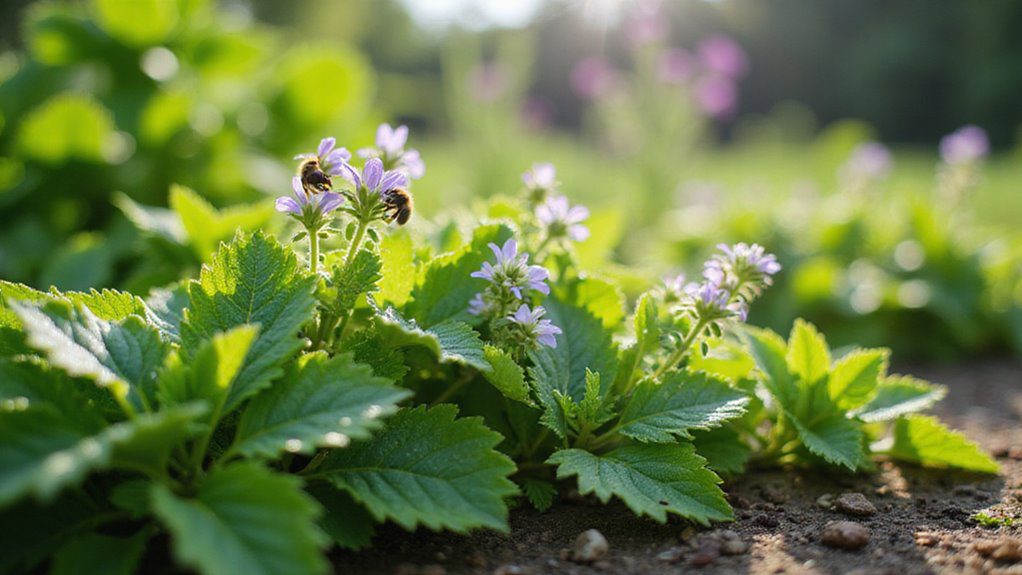
While you might associate catnip (*Nepeta cataria*) with playful cats, it also serves a practical purpose as a mosquito repellent. The active compounds, particularly nepetalactone, repel mosquitoes effectively, comparable to DEET.
I’ve found that cultivating catnip in well-drained soil enhances its benefits. By growing it at home, I enjoy both its insect-repelling properties and its charm in the garden.
Lemon Balm (Melissa Officinalis)

Catnip isn’t the only herb with potential mosquito-repelling properties; lemon balm (*Melissa officinalis*) deserves attention as well.
Its citronellal content suggests possible effectiveness in pest control, though anecdotal evidence is limited.
I enjoy its culinary applications and aroma benefits, but be cautious of its invasive nature.
It thrives in partial to full sun, and propagation is easy through cuttings or seeds.
Basil (Ocimum Basilicum)
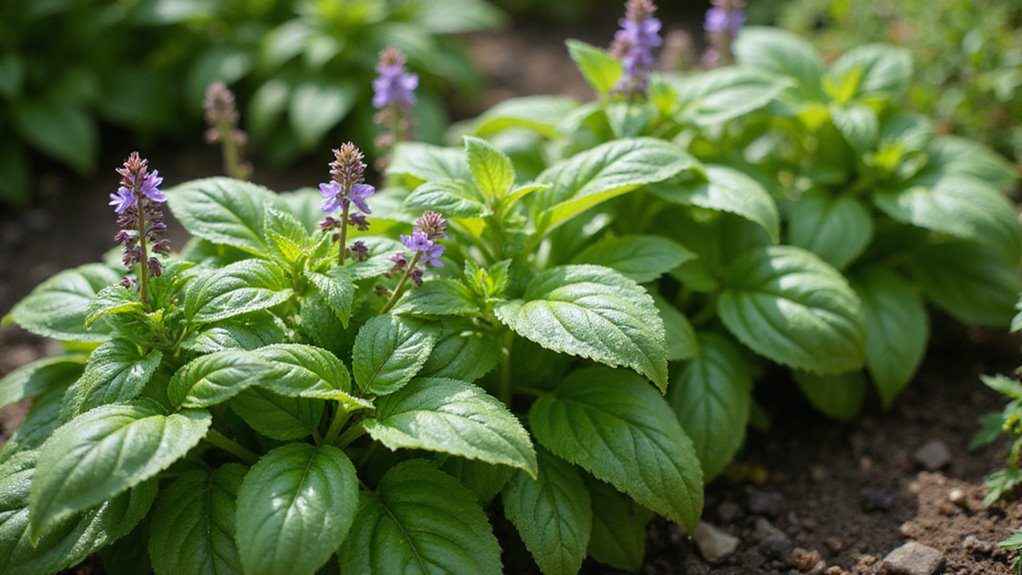
Basil (*Ocimum basilicum*) stands out as a remarkable herb not only for its culinary uses but also for its impressive mosquito-repelling properties.
Through proper basil cultivation, you’ll enhance its essential oil production, rich in eugenol and methylchavicol.
Utilizing basil extracts can significantly reduce mosquito landings, making it an effective natural alternative for repelling these pests while enjoying its delightful aroma in your garden.
Rosemary (Rosmarinus Officinalis)

Rosemary (*Rosmarinus officinalis*) is a perennial herb renowned for its culinary versatility and aromatic qualities, but it also boasts potential as a natural mosquito repellent.
The active compounds in rosemary, like cineole and camphor, deter insects effectively.
I appreciate its easy cultivation, which allows me to enjoy its benefits both in cooking and as a natural pest control method in my garden.
Thyme (Thymus Spp.)

Thyme (*Thymus spp.*) stands out not only for its culinary applications but also for its impressive ability to repel mosquitoes. Its active compounds, like carvacrol and thymol, are effective repellents.
Through thyme cultivation in gardens or pots, I can enjoy its fragrant leaves while deterring pests. I also love incorporating thyme in various recipes, adding both flavor and a natural mosquito barrier.
Lemongrass (Cymbopogon Spp.)
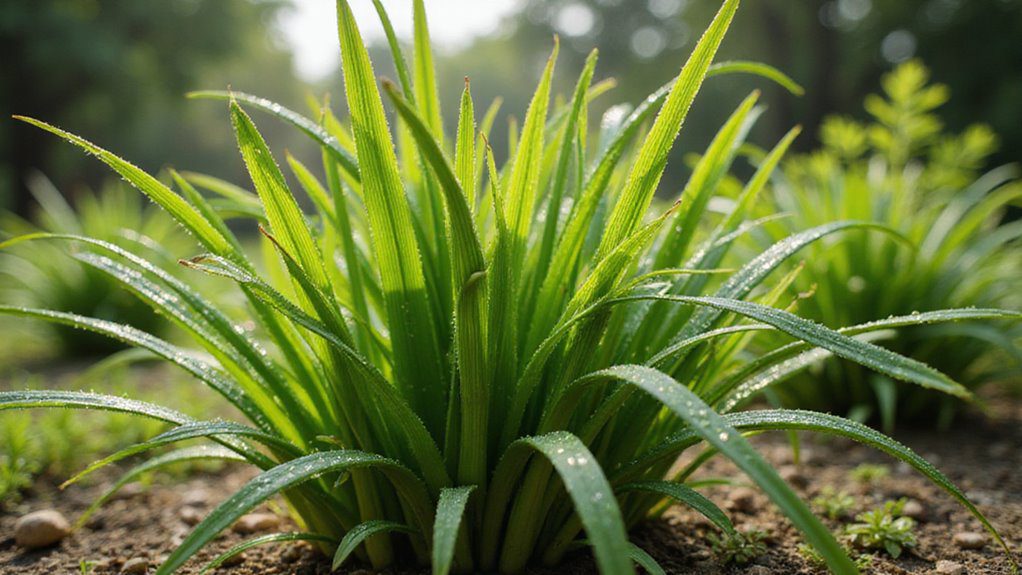
Lemongrass (*Cymbopogon citratus*) offers a remarkable blend of culinary delight and pest deterrence, making it a valuable addition to both gardens and kitchens.
Its essential oil, rich in geranial and citral, acts as a natural repellent, providing 74-95% protection against mosquitoes.
For best results, I recommend applying it diluted with carrier oils or in sprays, ensuring frequent reapplication for sustained effectiveness.
Citronella (Cymbopogon Nardus)
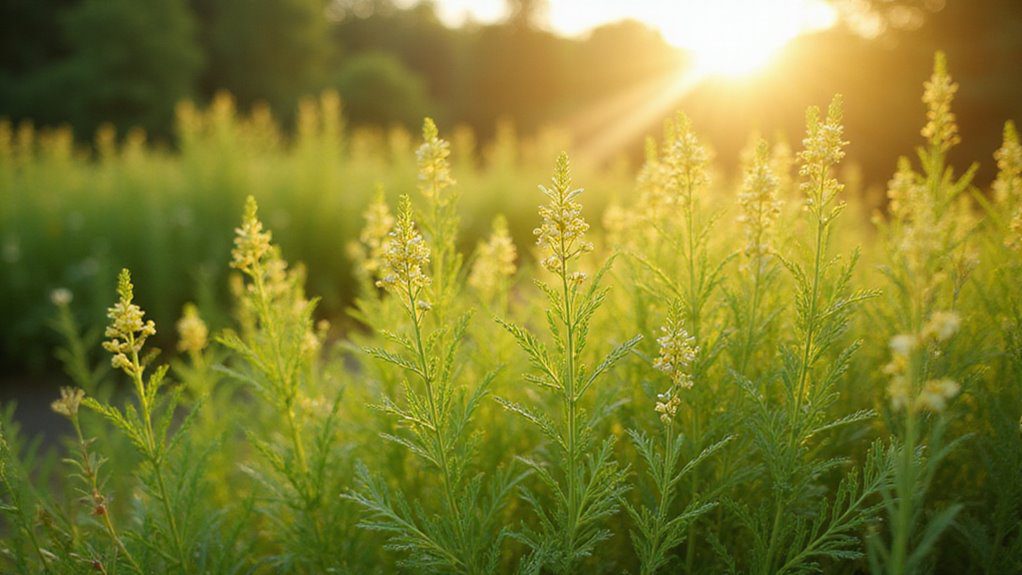
Citronella (*Cymbopogon nardus*) stands out as a popular choice among plants that deter mosquitoes, thanks to its natural properties.
I find that the citronella oil benefits are most pronounced when used in concentrated forms, rather than the plant itself.
For effective citronella plant care, ensure it thrives in warm, sunny conditions, as this enhances its mosquito-repelling abilities, albeit moderately.
Lavender (Lavandula Spp.)
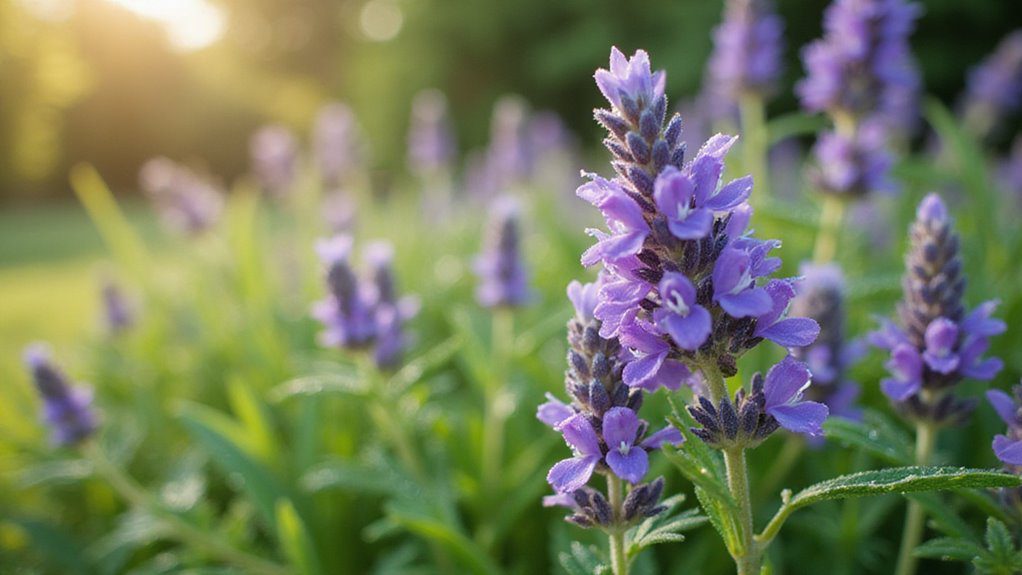
While many plants are known for their mosquito-repelling qualities, lavender (*Lavandula spp.*) stands out for its delightful fragrance and effectiveness.
Planting lavender not only enhances gardens but also emits linalool, a compound that repels mosquitoes. The lavender oil benefits extend beyond repellency, soothing skin irritations.
For optimal results, consider combining lavender oil with other essential oils for enhanced protection.
Scented Geranium (Pelargonium Spp.)
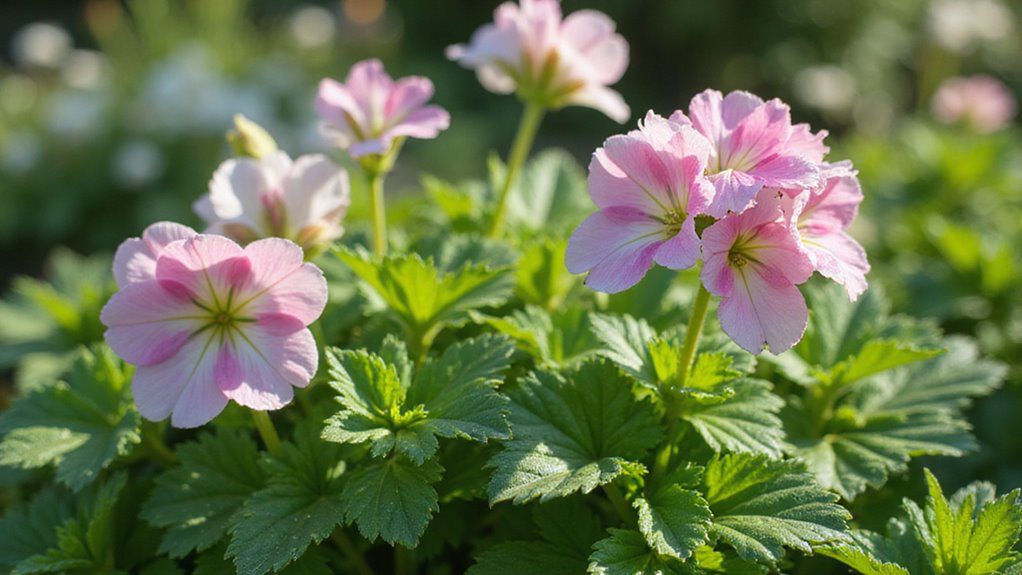
Scented geraniums (*Pelargonium spp.*) offer a unique blend of ornamental beauty and aromatic properties, making them a popular choice for many gardeners.
While their scented geranium uses include enhancing garden aesthetics, their mosquito repellent effectiveness is debated.
Species like *Pelargonium citrosum* are touted for repelling mosquitoes, yet scientific support is limited.
They’re best used for fragrance rather than reliable pest control.
Marigold (Tagetes Spp.)
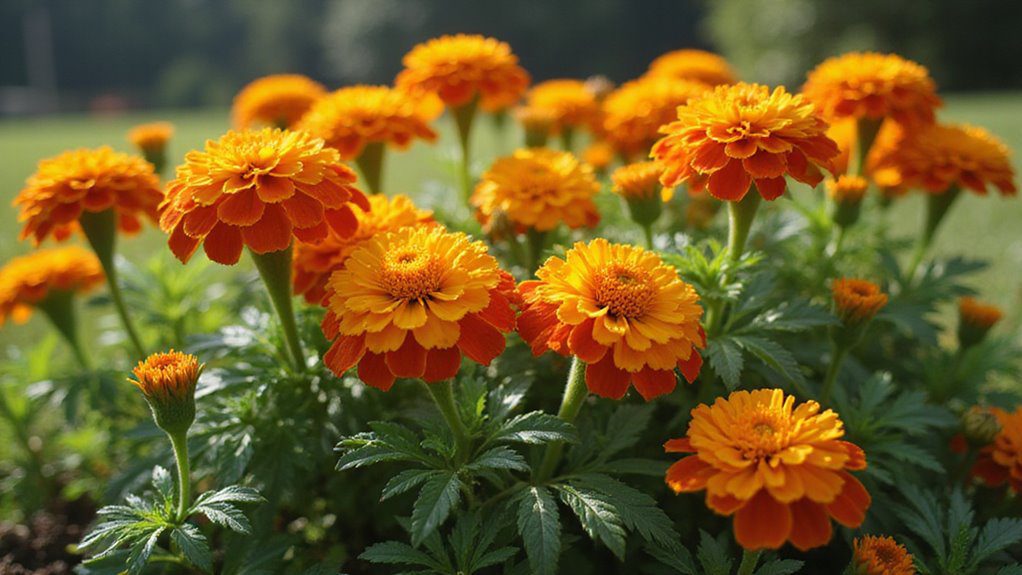
Marigolds (*Tagetes spp.*) are more than just vibrant flowers; they’re effective allies in the battle against mosquitoes.
Through marigold cultivation, I’ve found that their extracts possess powerful insecticidal properties. Essential oils from these plants serve as natural larvicides, offering over 90% repellency against certain mosquito species.
Strategically placing marigolds creates a mosquito-free zone, enhancing both beauty and pest control in gardens.
American Beautyberry (Callicarpa Americana)
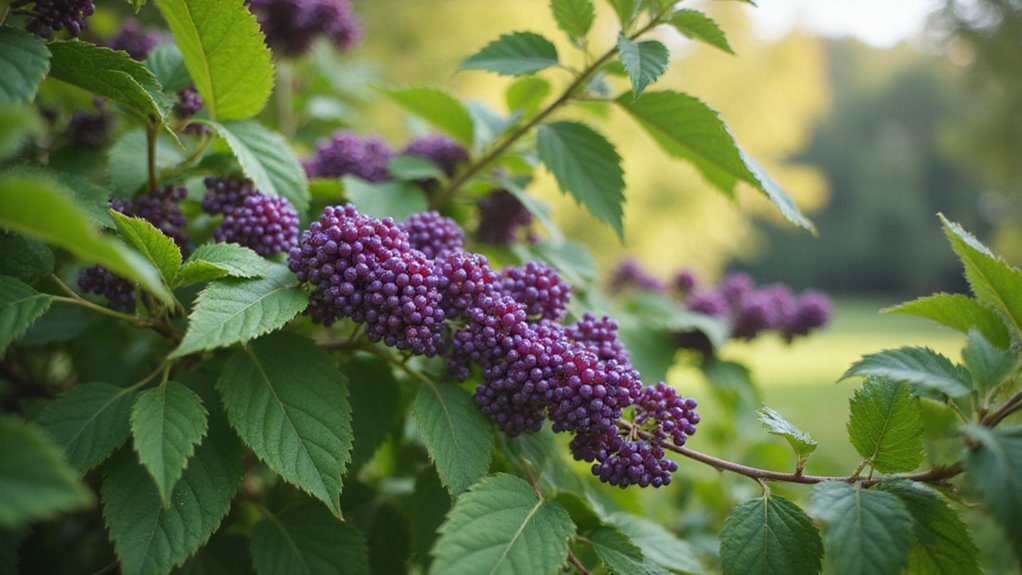
Though often overlooked, American beautyberry (*Callicarpa americana*) offers a unique combination of aesthetic appeal and practical utility in pest management.
Its leaves contain oils with notable insect repellent properties, specifically compounds like callicarpenal, which are effective against mosquitoes.
Beyond beautyberry benefits in repelling pests, the plant’s drought resistance and medicinal uses make it a valuable addition to any garden or landscape.
Bee Balm (Monarda Spp.)

Bee balm (*Monarda spp.*) stands out as a robust ally in the fight against mosquitoes, providing both aesthetic and functional benefits in any garden.
Its strong scent effectively repels mosquitoes without needing to be crushed, making bee balm cultivation a low-maintenance option.
Additionally, its vibrant blooms attract pollinators, enhancing biodiversity while delivering significant bee balm benefits for natural pest control.
Mint (Mentha Spp.)
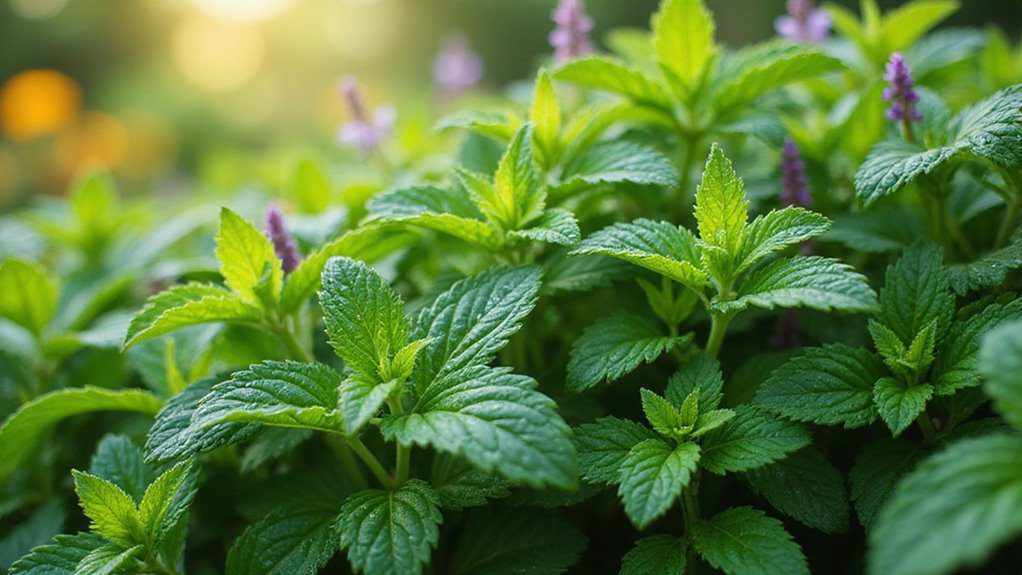
Mint (*Mentha spp.*) serves as an effective and versatile option for repelling mosquitoes in gardens.
Through mint cultivation, I’ve discovered various mint varieties, such as peppermint and Japanese mint, which offer differing levels of repellency.
Peppermint essential oil can provide nearly 100% protection, making it a valuable natural alternative.
It’s easy to grow and can enhance any garden’s pest control efforts.