
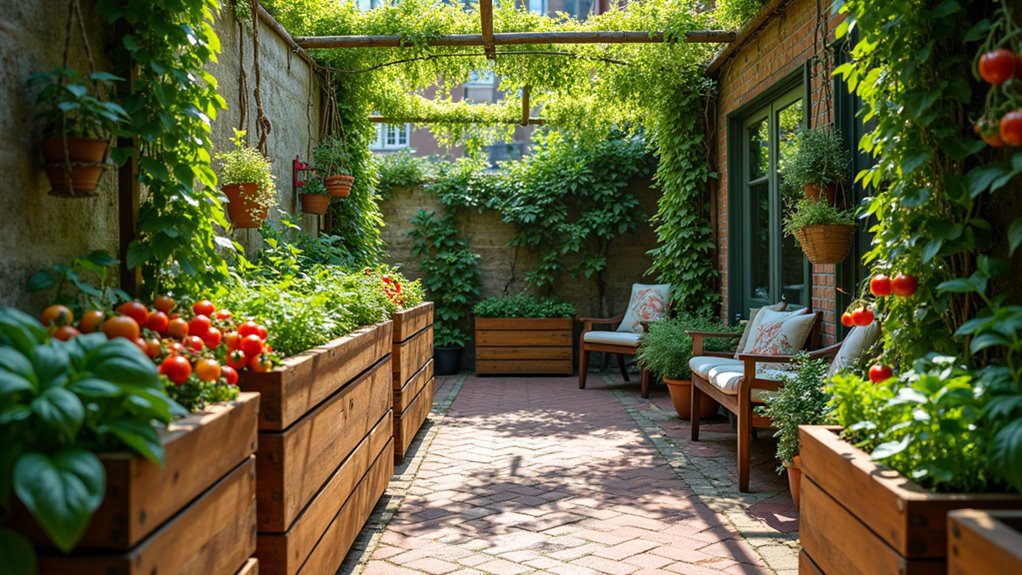
I've found that creating a patio vegetable garden can transform a small space into a productive oasis. With the right strategies, you can grow a variety of vegetables even in limited areas. From selecting the perfect spot to choosing compact plant varieties, there are numerous ways to maximize your garden's potential. Let's explore some practical ideas that will inspire you to make the most of your patio space.
Choosing the Perfect Spot for Your Patio Garden
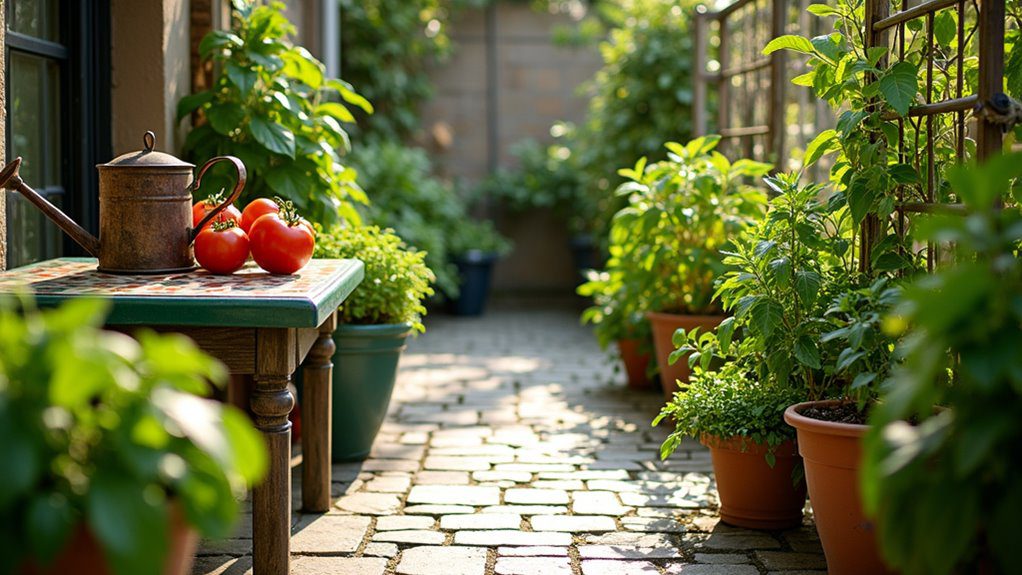
Where should you place your patio garden for the best results?
I recommend a spot with ample sunlight exposure—most veggies need at least six hours daily.
Also, ensure easy water accessibility; a nearby hose or rainwater collection system can make maintenance a breeze.
If you're in a hot climate, consider some shade to prevent scorching and keep your plants thriving.
Essential Container Features for Successful Gardening
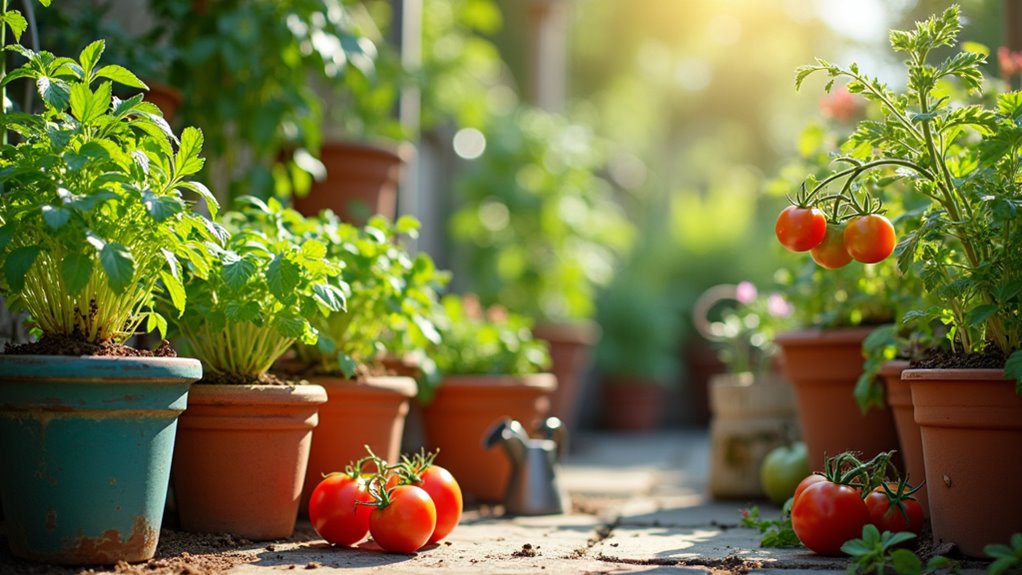
When you start planning your patio vegetable garden, choosing the right containers is crucial for success.
I recommend lightweight plastic or durable glazed ceramic for convenience and aesthetics.
Ensure your containers have proper drainage solutions, like multiple holes and coarse gravel.
Remember, deep-rooted plants need at least 12 inches of depth, while shallow ones can thrive in 4-6 inch containers.
Happy gardening!
Compact Vegetable Varieties for Limited Space
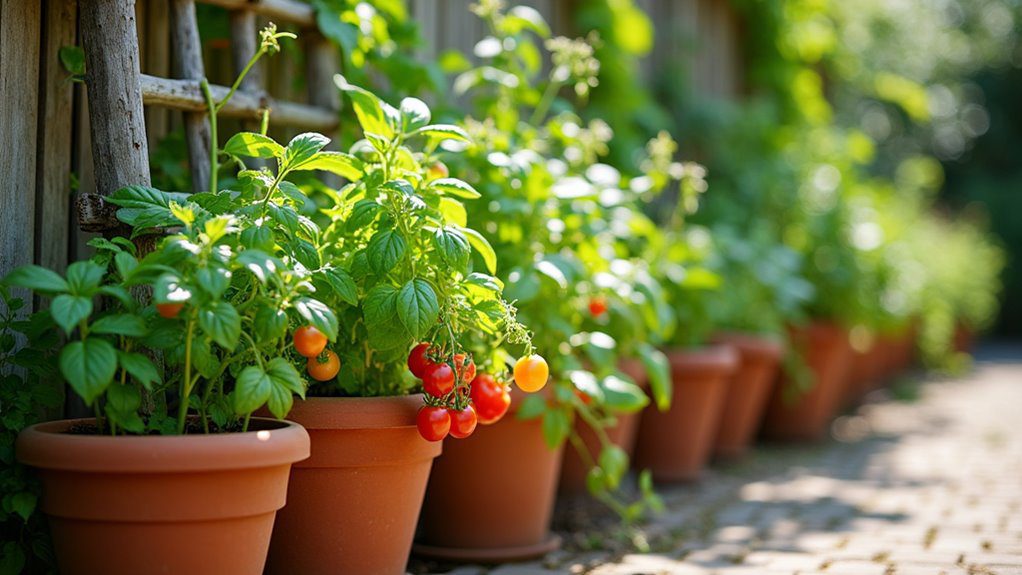
Choosing compact vegetable varieties can be a game changer for those of us working with limited patio space.
Dwarf varieties, like Tiny Tim tomatoes and Jingle Bells peppers, offer compact growth while maximizing yield. These plants aren't only easier to manage but also visually appealing.
Creative Vertical Gardening Solutions

While I love tending to my patio garden, I've found that maximizing space is crucial for a thriving vegetable patch.
That's where vertical gardening comes in! I use creative planters like wall-mounted gutters and pallet gardens to grow herbs and compact vegetables.
These solutions not only save space but also enhance my garden's aesthetics, making it a vibrant urban oasis.
Utilizing Hanging Baskets for Space Efficiency

Five hanging baskets can transform even the smallest patio into a lush vegetable garden.
I love how they maximize space while reducing pest access, keeping my plants healthier. Ideal for cherry tomatoes, peppers, and herbs, these baskets not only add visual appeal but also improve air circulation.
Plus, I can easily move them to adjust for sunlight and temperature. It's a win-win!
Incorporating Window Boxes Into Your Garden Design
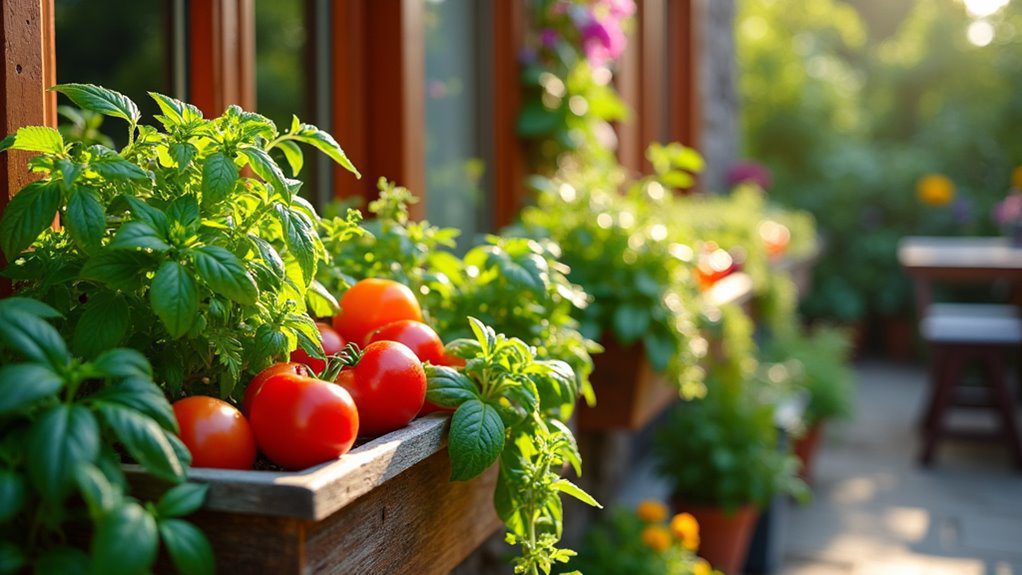
Incorporating window boxes into your garden design can elevate your patio space, transforming it into a vibrant and productive area for growing vegetables and herbs.
Choose a sturdy window box design that suits your space, and consider plant selection carefully. Opt for compact vegetables, herbs, and leafy greens that thrive in the conditions available, ensuring a delightful and accessible harvest right from your kitchen window.
Repurposing Everyday Items as Planters

Repurposing everyday items as planters not only saves money but also adds a unique charm to your patio vegetable garden.
I've found that old shoes, tin cans, and woven baskets make fantastic repurposed containers for herbs and succulents.
Even plastic bottles can serve as mini greenhouses!
Get creative with these planters, and watch your garden thrive with personality.
Rustic Charm With Galvanized Troughs
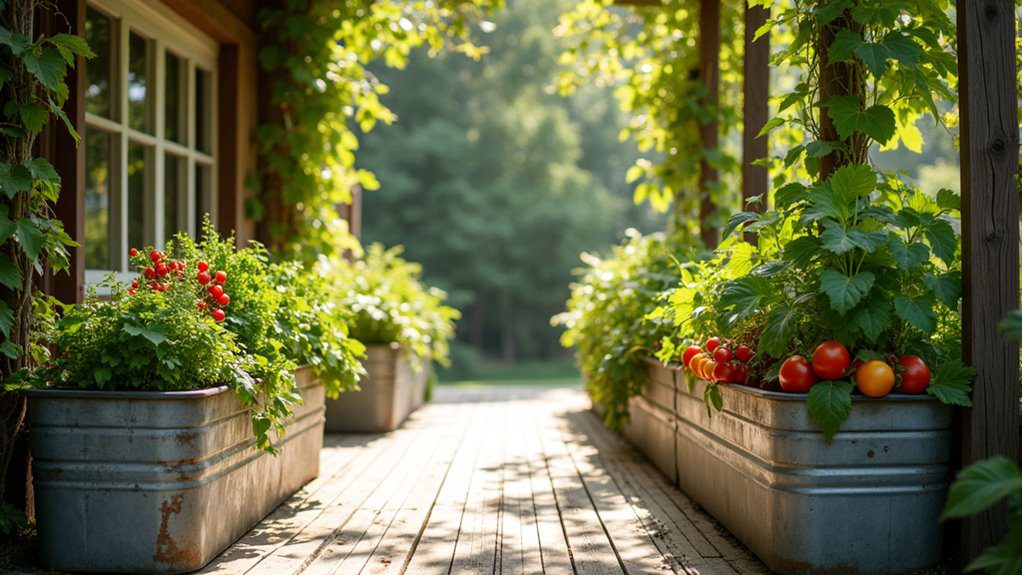
Galvanized troughs bring a unique rustic charm to any patio vegetable garden, and I can't help but admire their blend of style and functionality.
Their durability and space efficiency make them perfect for my vegetable arrangements.
Plus, the industrial look enhances the rustic aesthetics of my garden.
I love how I can grow everything from leafy greens to root vegetables in these charming troughs!
Selecting the Right Potting Mix for Containers
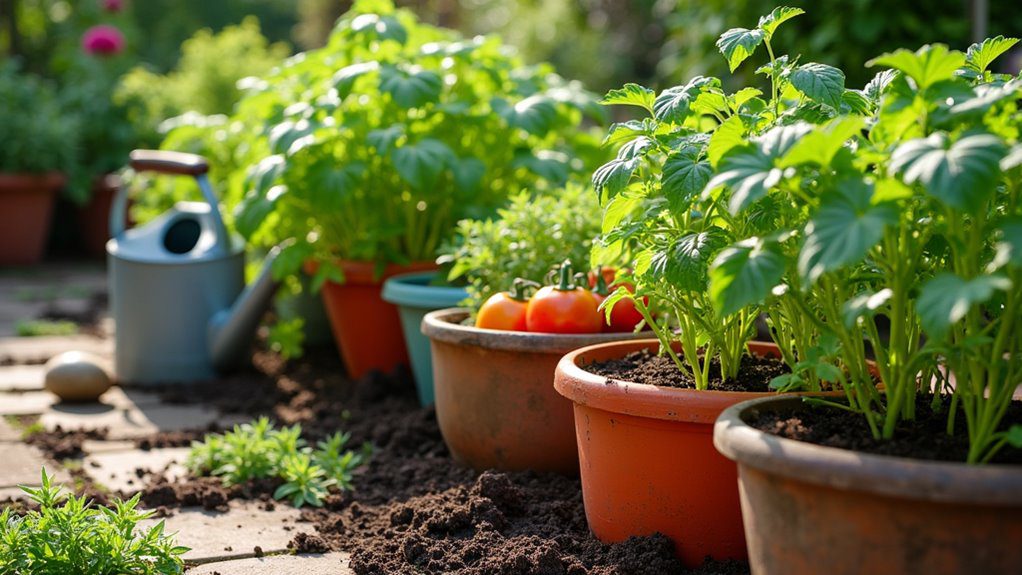
How do you ensure your vegetable plants thrive in containers?
Start with potting mix customization. I recommend blends featuring peat moss for moisture retention, compost for nutrients, and perlite for drainage.
Avoid garden soil; it's too heavy. Tailoring your mix to specific needs not only promotes healthy growth but also prevents overwatering—keeping your veggies happy and flourishing in their cozy container homes!
The Importance of Soil Testing in Container Gardening
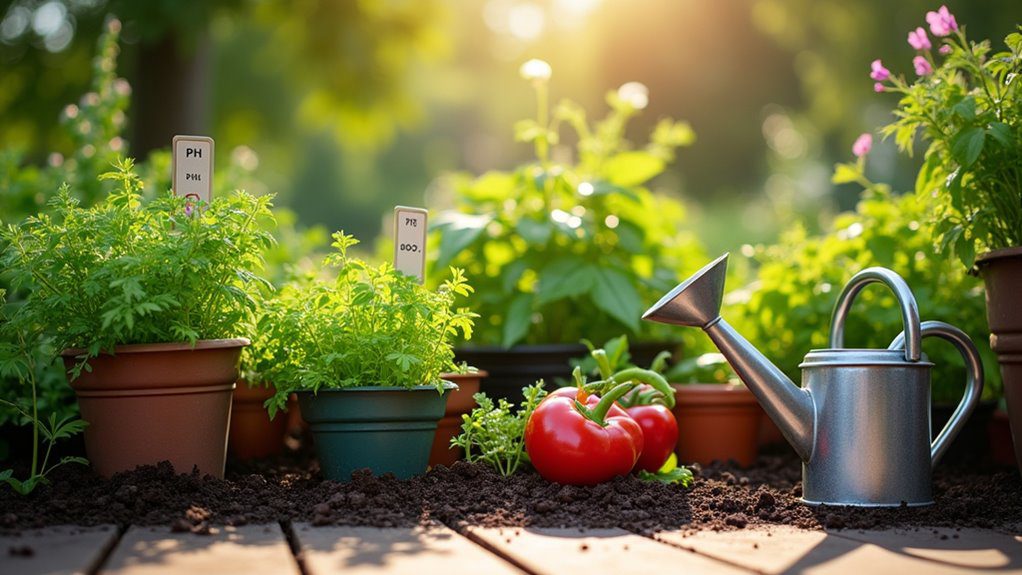
Soil testing might seem like an extra step, but trust me, it's essential for thriving container gardens.
By checking soil nutrients and conducting pH testing, I can identify deficiencies and ensure my plants get what they need. This not only improves growth but also saves money by preventing over-fertilization.
Regular testing keeps my garden healthy while protecting the environment.
Enhancing Your Soil With Organic Fertilizers
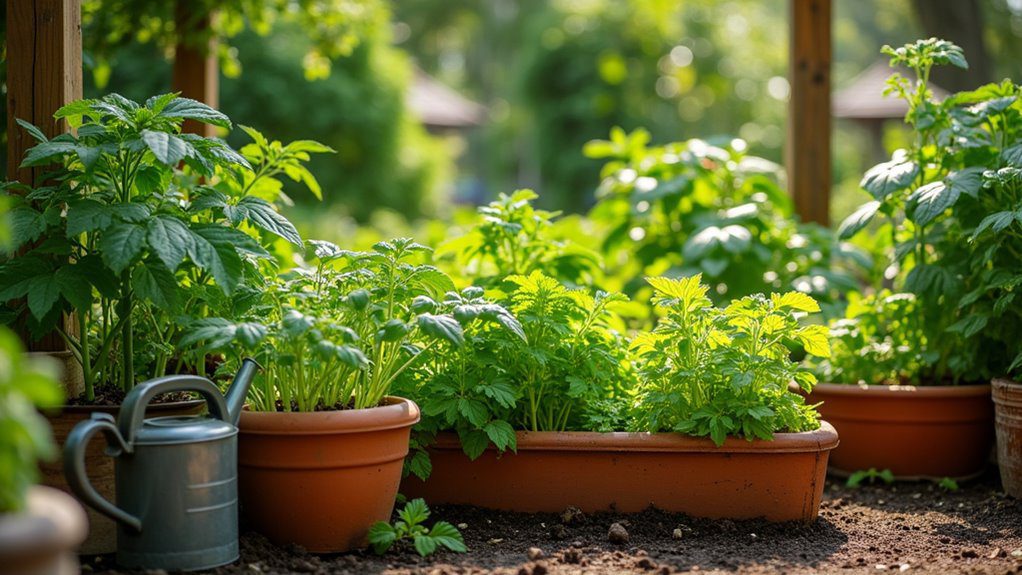
After ensuring my container garden has the right foundation through soil testing, I focus on enhancing it further with organic fertilizers.
I use soil amendments like earthworm castings and kelp meal for balanced nutrient management. Mixing in bone meal promotes root development, while poultry manure adds vital nitrogen.
This approach not only boosts plant health but also enriches my soil for future growth.
Benefits of Composting for Container Plants

While diving into container gardening, I've found that composting offers a wealth of benefits that can significantly elevate my plants' health.
Compost improves soil structure, promotes healthy growth, and attracts beneficial organisms. Plus, it reduces waste and saves money on fertilizers.
Embracing compost benefits not only enhances my garden but also supports sustainable practices, making my container gardening journey even more rewarding.
Effective Watering Techniques for Container Gardens
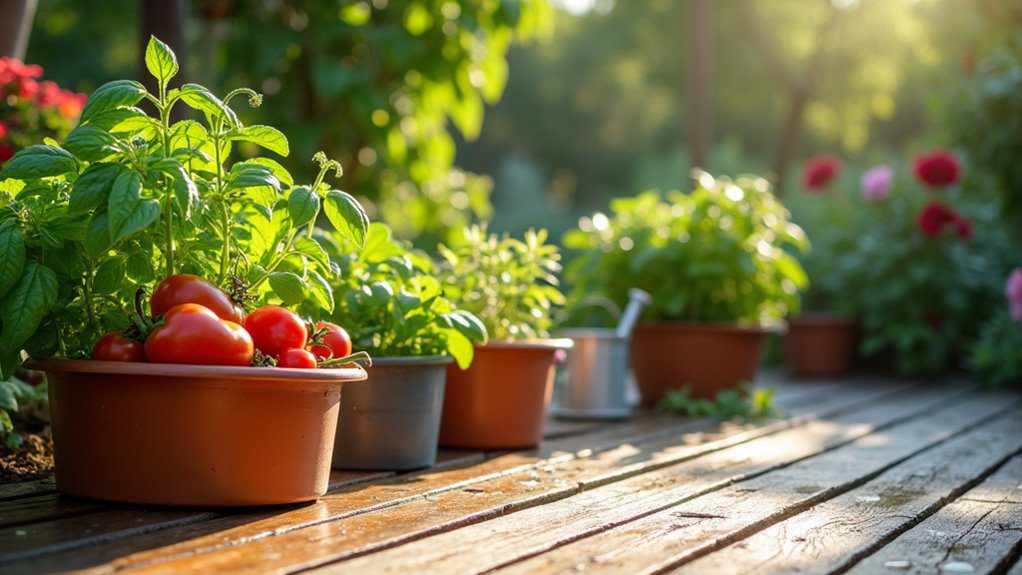
Growing healthy plants in containers requires more than just quality compost; effective watering techniques play a vital role in their success.
I focus on moisture monitoring, checking soil moisture regularly to avoid over or underwatering. Deep watering ensures roots thrive, while mulching aids in water conservation.
Pruning and Training Plants for Optimal Growth

To achieve optimal growth in your vegetable garden, mastering the art of pruning and training plants is essential.
I've found that effective pruning techniques, like removing diseased leaves, boost health and yield.
Additionally, using training methods such as trellising cucumbers saves space and enhances air circulation.
Strategies for Seasonal Crop Rotation in Containers

As I dive into the world of container gardening, I've come to appreciate the importance of seasonal crop rotation for maintaining healthy plants and vibrant yields.
By engaging in seasonal planning, I can categorize crops like legumes and root vegetables to achieve nutrient balance.
Regularly replenishing the soil with compost and keeping records of my rotations ensures my container garden thrives each season.