
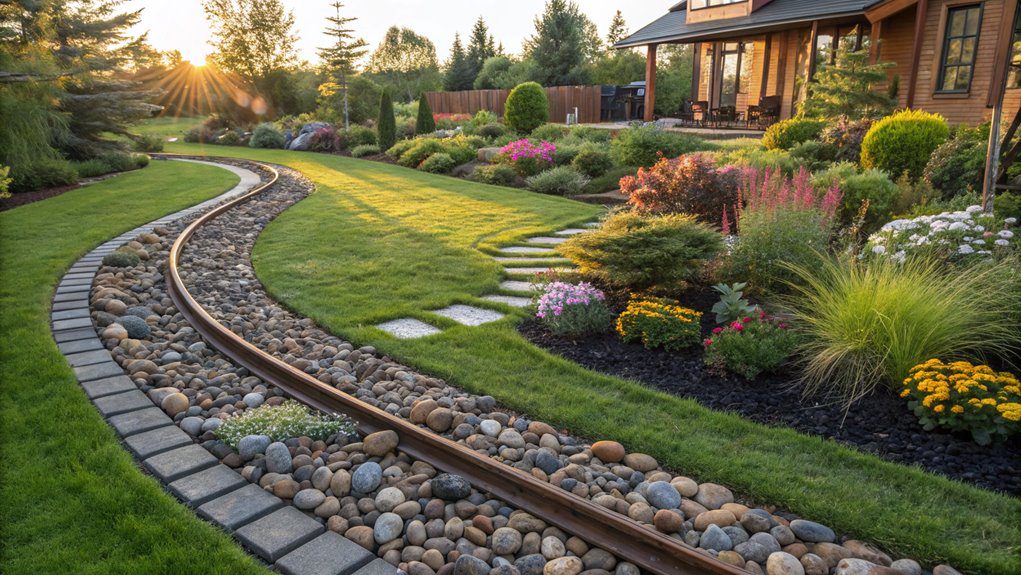
When I think of landscaping edging, I see a canvas of creativity and structure. Metal and plastic edging provide durability and design flexibility, while terracotta and wood edging add rustic charm. I love the whimsy of glass bottle edging and the practicality of paver stone or recycled rubber. Gravel and stone edging not only offer texture but also drainage benefits. Each choice can transform a garden's character, and there's much more to explore beyond these options!
Metal Edging
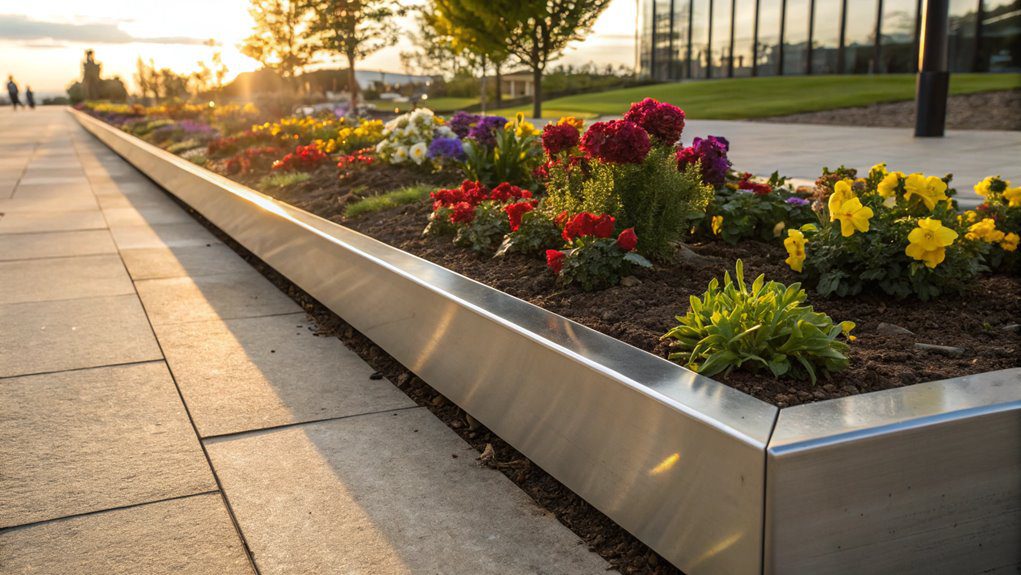
When you're looking to create a clean and defined landscape, metal edging stands out as a top choice.
The metal edging benefits are numerous: it's durable, maintenance-free, and easy to install.
With overlapping connections and the ability to shape it to your design, metal edging installation becomes a breeze.
Plus, its sleek look enhances any garden, separating media like grass, mulch, and gravel beautifully.
Plastic Edging

While metal edging offers a sleek and durable option for landscaping, plastic edging brings its own unique advantages to the table.
When choosing plastic edging, consider design considerations like color and flexibility for curves.
For installation tips, I recommend opting for no-dig methods, ensuring secure connections with snap-and-lock features.
High-density polyethylene (HDPE) provides durability, resisting environmental factors while enhancing your garden's visual appeal.
Terracotta Edging

Terracotta edging brings a timeless elegance to any garden, seamlessly blending functionality with aesthetic appeal.
I love how the warm colors and unique terracotta designs add charm while defining borders.
With terracotta benefits like durability and easy installation, it effectively separates areas and prevents weeds.
Plus, it requires minimal maintenance, ensuring my garden remains neat and organized for years to come.
Wood Edging

Wood Edging
Wood edging transforms garden spaces with its rustic charm and natural beauty.
I love using cedar or redwood for their rot resistance and durability. For installation, I recommend precut sections, which simplify the process.
Don't forget wood maintenance—regular sealing can extend its life.
This edging not only enhances curb appeal but also prevents weeds, keeping your garden looking tidy and inviting. Additionally, healthy soil is essential for maintaining vibrant plant growth around the edges.
Glass Bottle Edging

After exploring the rustic allure of wood edging, I've found that glass bottle edging adds a whimsical twist to garden design.
By using various bottle colors, I can create striking contrasts while defining my garden borders. I dig a trench, place the bottles upside down, and compact the soil around them, ensuring they're stable and visually captivating.
It's an eco-friendly, artistic option!
Grass and Shrub Edging

As I explore the world of landscaping, I've discovered that grass and shrub edging offers a natural elegance that transforms any garden into a vibrant oasis.
By carefully considering plant selection, like flowering bushes and boxwoods, I enhance curb appeal.
Regular maintenance tips, such as pruning and re-edging, keep the borders crisp, ensuring my garden remains a stunning focal point year-round. Additionally, incorporating optimal soil depth in the raised beds helps support healthy plant growth.
Mixed Plant Edging

Building on the elegance of grass and shrub edging, mixed plant edging introduces a dynamic layer to my landscaping.
By experimenting with various plant combinations, I create a vibrant edge that showcases colorful leaves and seasonal blooms.
Incorporating evergreens, perennials, and ground covers not only enhances aesthetic appeal but also supports a mini-ecosystem, attracting pollinators and enriching my garden's diversity. Additionally, including native pollinator attractors can significantly boost the health of local ecosystems.
Living Hedge Edging

Living hedge edging transforms my garden into a lush sanctuary, creating a natural boundary that enhances both privacy and aesthetics.
This sustainable landscaping choice offers biodiversity benefits, providing a wildlife habitat while improving soil health.
With proper hedge maintenance, I gain crop protection and livestock shade, all while controlling erosion.
The aesthetic appeal of my living fence adds charm to my outdoor space.
Natural Rock Edging

While a living hedge offers a lush, organic feel to my garden, natural rock edging brings a classic and timeless charm that complements various styles.
Using natural stone not only defines boundaries between my lawn and garden beds but also enhances the overall garden aesthetics. Its durability and resistance to erosion make it a low-maintenance choice, elevating my outdoor space beautifully. Additionally, incorporating cover crops around the rock edges can further protect the soil and promote healthier plant growth.
Brick Wall Edging

As I explore the world of landscaping, brick wall edging stands out for its versatility and enduring appeal.
Choosing the right brick color selection can enhance your garden's aesthetics.
When installing, ensure proper maintenance by filling gaps with polymeric sand.
Regularly check for shifts and keep the area clean to preserve that beautiful edge.
Brick edging truly combines function and style!
Flagstone Edging

When it comes to enhancing outdoor spaces, flagstone edging is one of my favorite choices due to its natural beauty and robust durability.
The earthy flagstone colors and unique patterns create a stunning border for gardens or pathways.
It's low maintenance and weather-resistant, making it perfect for long-term landscaping.
I love how versatile it is, adding charm and stability to any design.
Paver Stone Edging
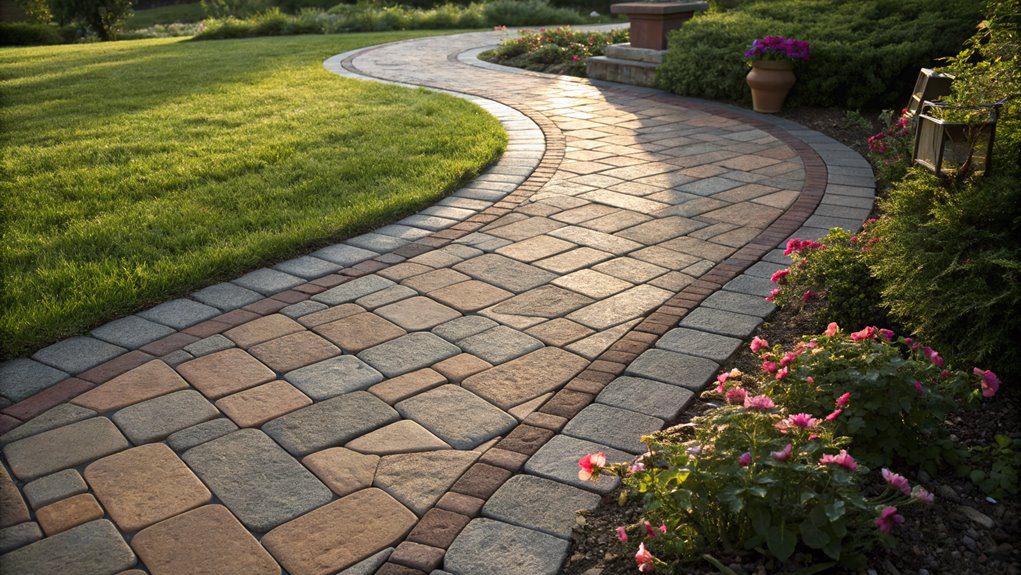
Paver stone edging captivates me with its blend of practicality and aesthetic appeal, offering a structured yet inviting boundary for gardens and pathways.
The paver stone benefits include durability and minimal maintenance, while the variety of paver stone patterns, like running bond and mosaic effects, allow for creativity in design.
It's a beautiful way to define spaces and enhance my landscape.
Recycled Rubber Edging

Recycled rubber edging stands out as a sustainable choice for landscaping, seamlessly blending functionality with environmental consciousness.
With its impressive sustainability benefits, it repurposes waste while resisting rot and rust.
For easy installation, I recommend using its flexible design for curves and opting for no-dig methods.
This low-maintenance option not only enhances aesthetics but also ensures safety for children and pets alike.
Gravel Edging
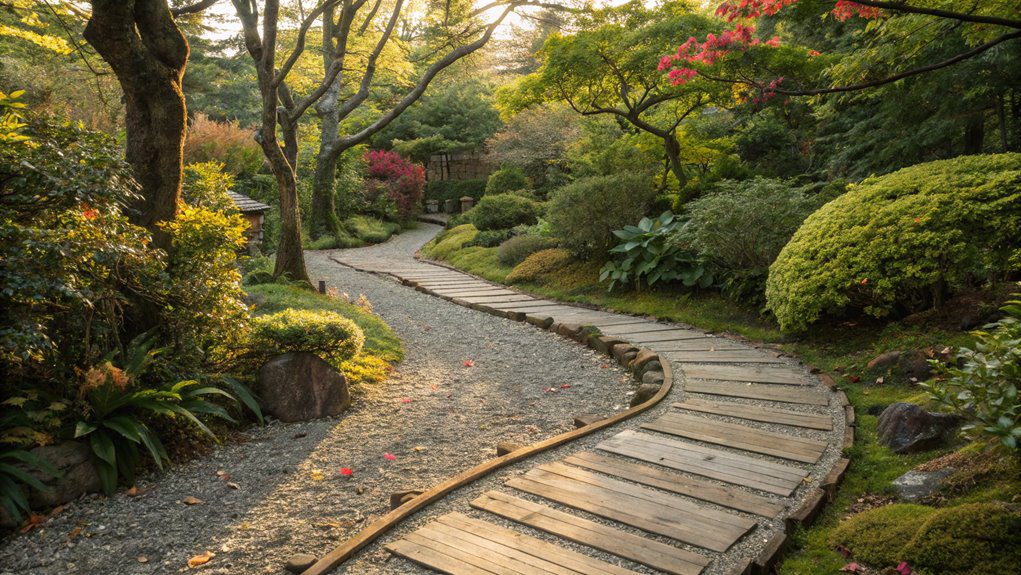
While considering various landscaping options, gravel edging often emerges as a practical choice that combines durability and aesthetic appeal.
I love how the variety in gravel color and texture allows for customization, blending seamlessly with my garden.
The installation's straightforward process and minimal maintenance make it a budget-friendly option, while its effective drainage helps keep my garden looking pristine.
Stone and Gravel Edging

Gravel edging offers a sturdy foundation for any garden, but when I think about elevating that aesthetic even further, stone edging springs to mind.
The combination of varied stone colors with gravel texture creates a stunning contrast.
I love how I can customize the arrangement, from clean lines to rustic shapes, while ensuring durability and low maintenance for my landscape.