

When I approach landscape garden design, I focus on blending structure with natural beauty—think multi-level terraces to control erosion and curved pathways that invite exploration. Defining planting beds adds rhythm, while seating areas create comfort without sacrificing style. Incorporating subtle lighting and water features can transform the space as daylight fades. These elements aren’t just aesthetic; they enhance functionality in ways you might not expect. Let’s explore how to balance these details for a truly cohesive garden.
Incorporate Native Plants for Easy Maintenance
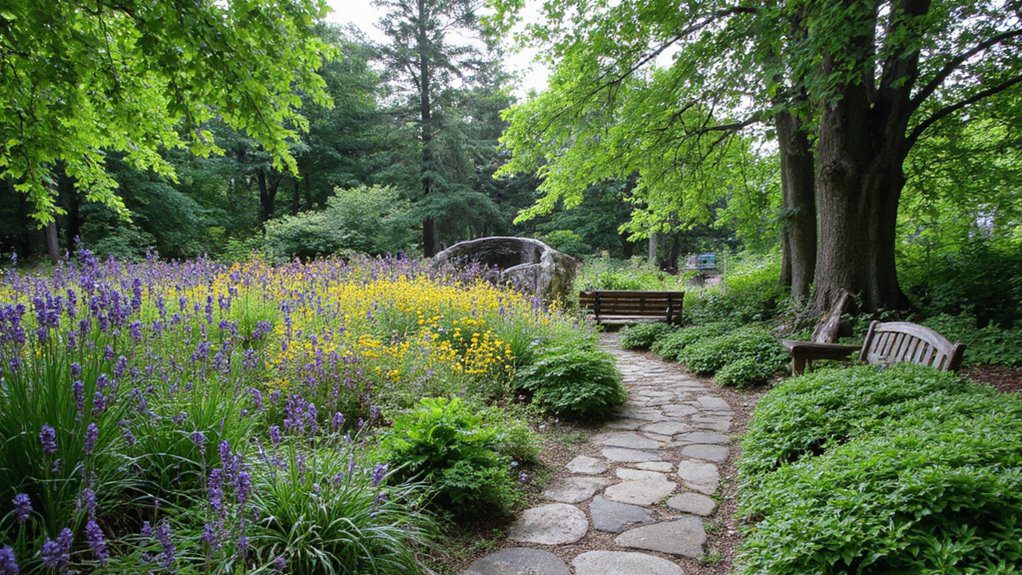
Although many gardeners assume native plants require less upkeep, incorporating them into your landscape doesn’t always guarantee easy maintenance.
Native species adapt to local conditions but still demand site-specific care—soil amendments, pest management, and proper irrigation.
Selecting appropriate natives for your microclimate and understanding their growth patterns ensures balanced aesthetics and sustainable health, preventing overlooked challenges in your garden’s ecosystem.
Design a Multi-Level Garden With Terracing
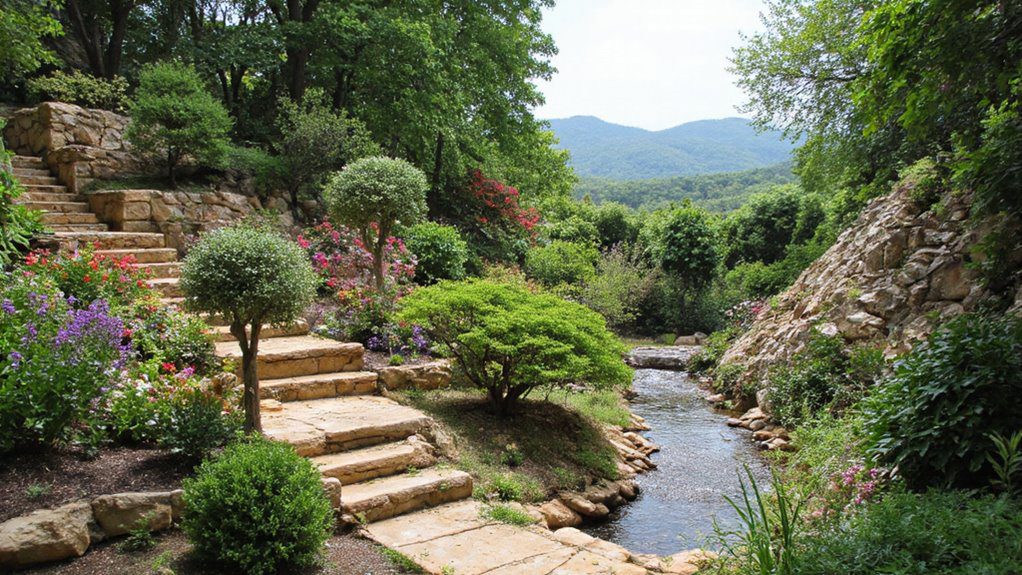
Native plants provide a strong foundation, but shaping the terrain adds another dimension to your garden’s functionality and beauty.
I carefully design multi-level terraces by grading slopes and installing retaining walls, creating defined planting beds. This approach controls erosion, improves drainage, and maximizes usable space, while offering varied visual interest through elevation changes and layered vegetation that enhances both aesthetics and structural integrity.
Create a Cozy Outdoor Seating Area
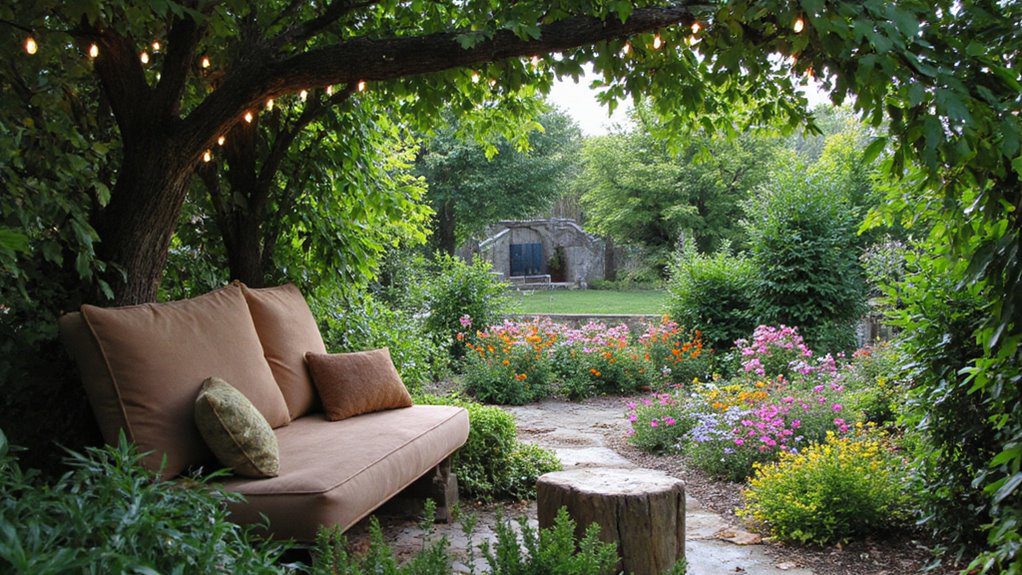
When designing a cozy outdoor seating area, I focus on optimizing both comfort and spatial flow to create an inviting retreat.
I select weather-resistant cushions and arrange seating to encourage conversation while maximizing natural light and shade balance.
Incorporating textured materials and layered lighting enhances ambiance, ensuring the space feels intimate yet functional within the garden’s overall structure.
Use Pathways to Guide Visitors Through the Garden

After establishing a comfortable seating area, I turn my attention to pathways, which serve as the garden’s navigational backbone.
I design them with materials that complement surrounding flora, ensuring clear direction without disrupting natural flow. Curved lines create a sense of discovery, while varying textures underfoot enhance tactile experience, guiding visitors intuitively through distinct garden zones with aesthetic cohesion and functional clarity.
Add Water Features for Tranquility
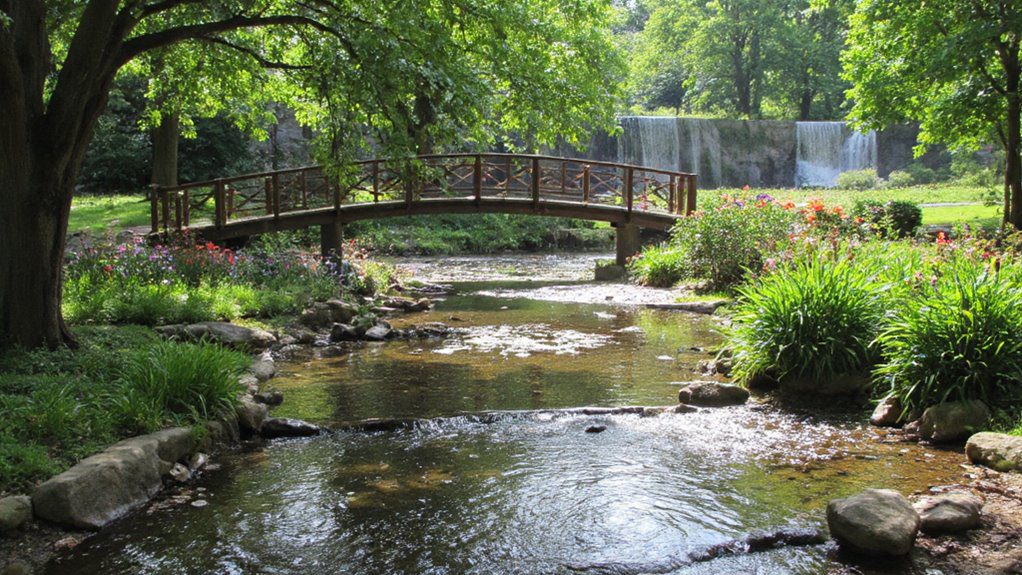
Adding a single water feature can transform your garden into a sanctuary of calm and sensory delight.
I recommend selecting elements like a bubbling fountain or a reflective pond to introduce soothing sound and visual rhythm.
Positioning the feature near seating areas maximizes tranquility, while integrating natural stones and aquatic plants enhances texture and aesthetic harmony within the landscape design.
Integrate Vertical Gardens for Small Spaces
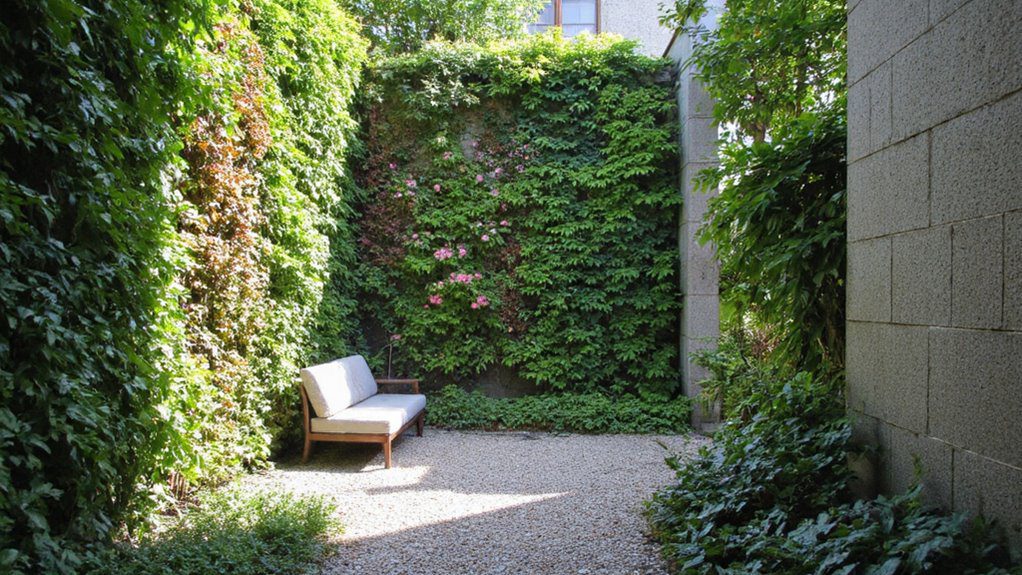
Vertical gardens offer a powerful solution for maximizing greenery in small spaces without sacrificing floor area.
I recommend using modular panels with integrated irrigation for efficient water use and plant health.
Selecting lightweight, drought-tolerant species ensures structural integrity and longevity.
Positioning these gardens on sun-exposed walls enhances photosynthesis, creating visually stunning vertical ecosystems that optimize limited spatial dimensions effectively.
Mix Textures With Diverse Plant Choices
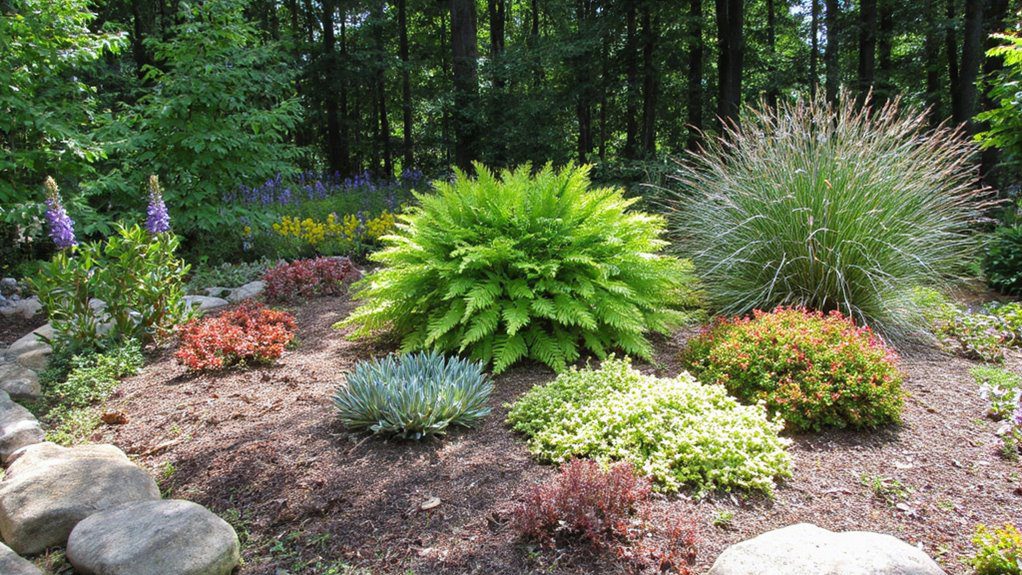
Maximizing greenery on vertical surfaces opens up new possibilities, but to truly elevate your landscape garden design, you’ll want to mix textures through diverse plant selections.
Combining fine, coarse, and medium foliage balances visual weight and depth. Incorporate varied leaf shapes, colors, and growth habits—like spiky grasses, soft ferns, and broad-leafed shrubs—to create an engaging, dynamic composition that enhances spatial perception and tactile interest.
Install Garden Lighting for Evening Ambiance
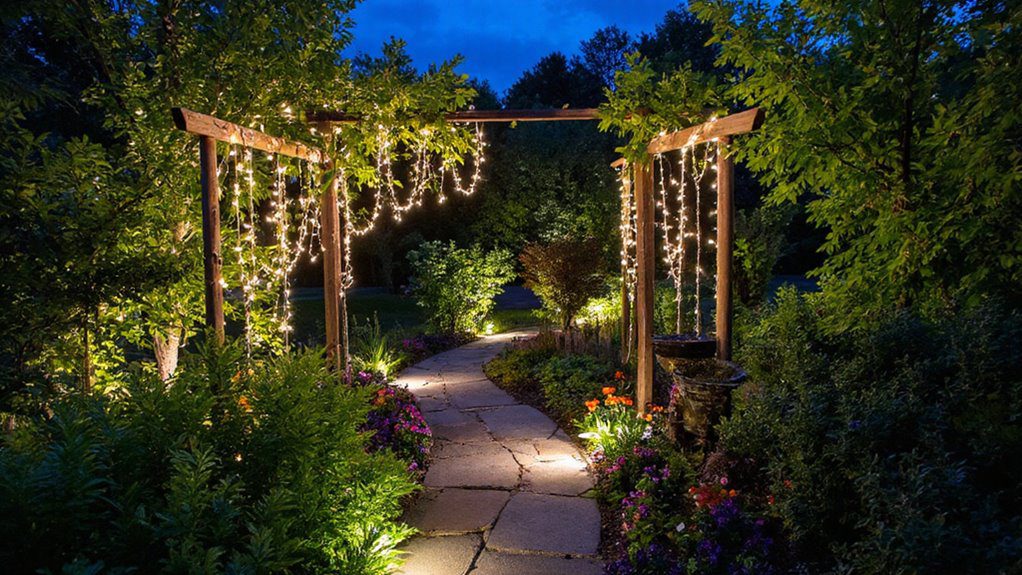
When I design a garden, I always consider how lighting transforms the space after dusk.
Installing low-voltage LED fixtures highlights pathways and textures, creating depth and safety. I strategically place uplights to accentuate trees and shadows, while warm-toned bulbs evoke cozy ambiance.
Proper wiring and waterproofing ensure durability, making evening enjoyment both beautiful and functional.
Build Raised Garden Beds for Better Soil Control

After enhancing your garden’s evening atmosphere with lighting, controlling soil quality becomes the next step to ensure plant health and growth.
Building raised garden beds allows precise soil composition control, improves drainage, and reduces compaction.
I recommend using untreated hardwood or cedar for durability, filling beds with a balanced mix of compost, peat, and vermiculite to optimize aeration and nutrient retention.
Include Edible Plants for a Functional Garden
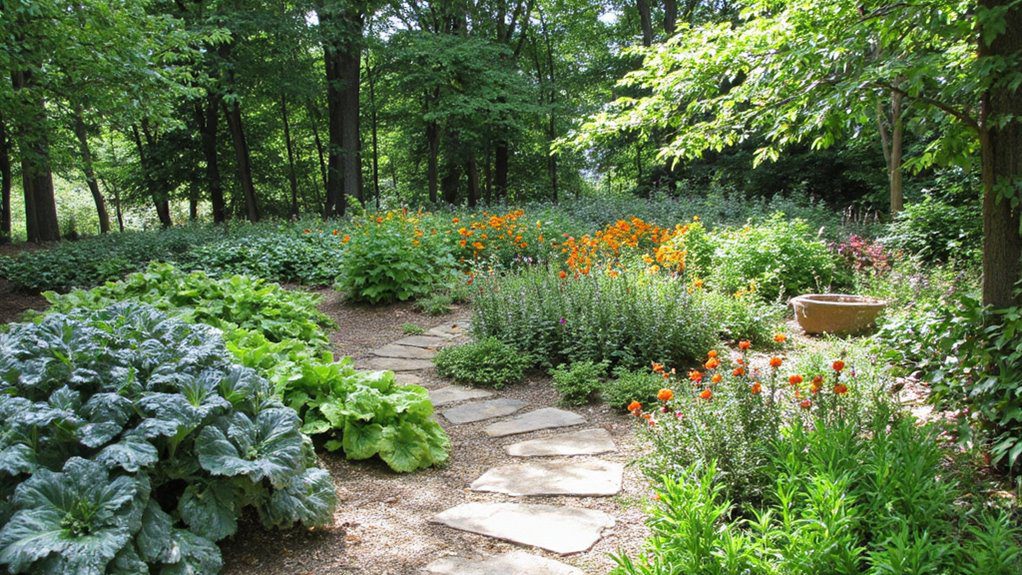
Although many garden designs focus solely on ornamental plants, I find that incorporating edible varieties adds both beauty and practicality to the landscape.
Strategically placing herbs, vegetables, and fruit-bearing plants enhances texture and color while providing fresh produce.
Selecting species with complementary growth habits ensures efficient space use and visual harmony, creating a functional, sustainable garden that thrives aesthetically and nutritionally.
Use Decorative Mulch to Enhance Color and Contrast
Decorative mulch significantly transforms a garden’s visual appeal by adding vibrant color and striking contrast to plant beds.
I recommend selecting mulch types—like dyed wood chips or colored rubber—that complement surrounding foliage. This choice not only enhances aesthetics but improves soil moisture retention and weed suppression, creating a polished, dynamic landscape while supporting plant health efficiently.