

When I approach a landscape design, I start by carefully assessing the space and soil to ensure plant choices thrive. Balancing aesthetics with function means considering layers, textures, and year-round interest, while integrating sustainable practices like drought-tolerant natives. Thoughtful placement of paths and shade elements shapes flow and comfort. But even with these fundamentals, there’s more to creating a landscape that’s both striking and resilient—something I’ll explore next.
Assess Your Space and Soil
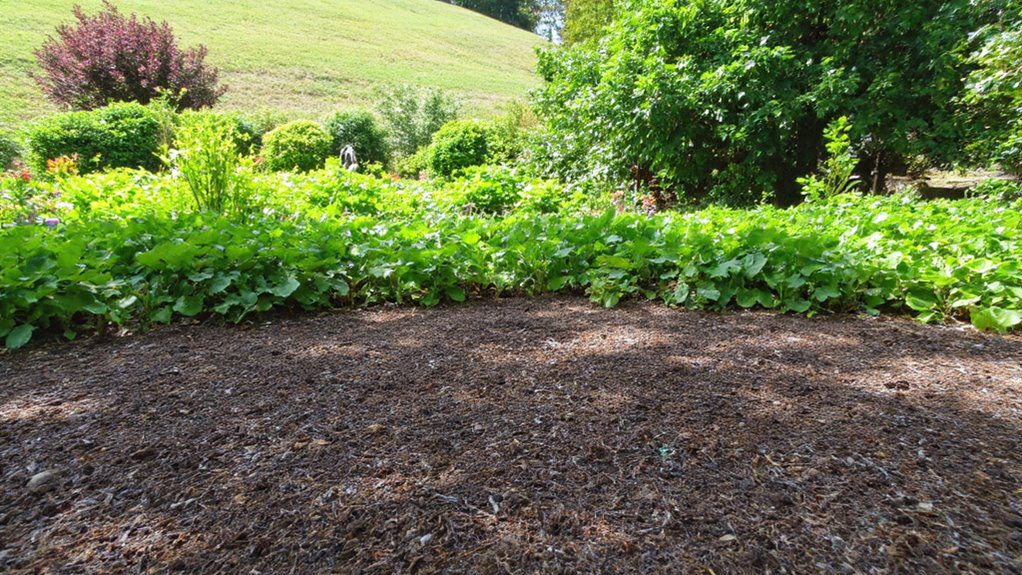
Before you begin planting, I carefully evaluate the dimensions and conditions of my landscape.
I measure sun exposure, soil texture, drainage, and pH levels to determine plant suitability. Understanding these variables ensures healthy growth and aesthetic harmony.
This precise assessment guides my selection of species, placement, and necessary soil amendments, creating a balanced, thriving environment tailored to my space’s unique characteristics.
Plan for Year-Round Interest
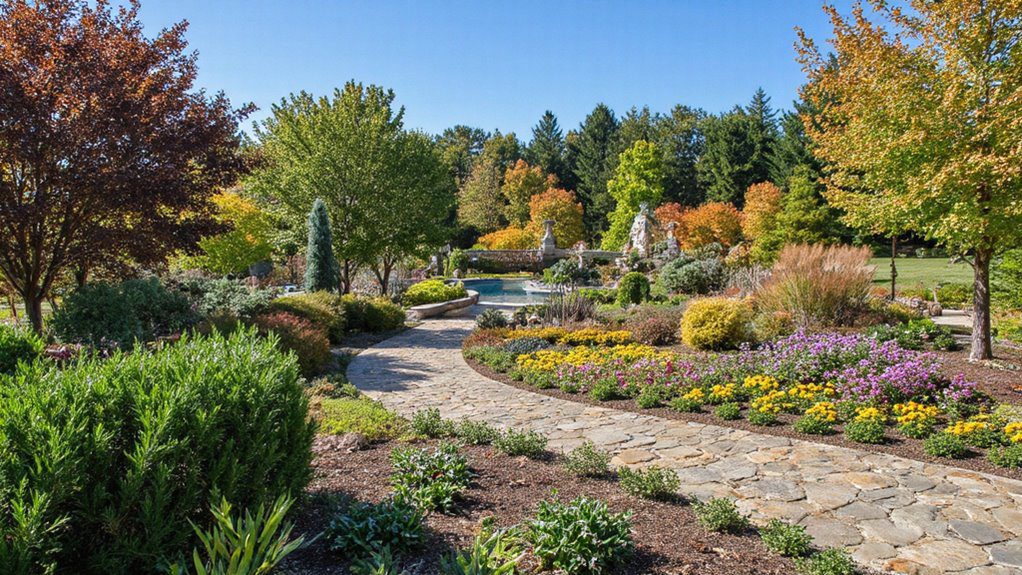
Although designing a landscape for seasonal appeal can be complex, I prioritize selecting plants and features that provide visual interest throughout the year.
I integrate evergreens, textured bark, and structural elements like sculptures or pathways to maintain form and color in dormant months.
Choose Native and Drought-Tolerant Plants
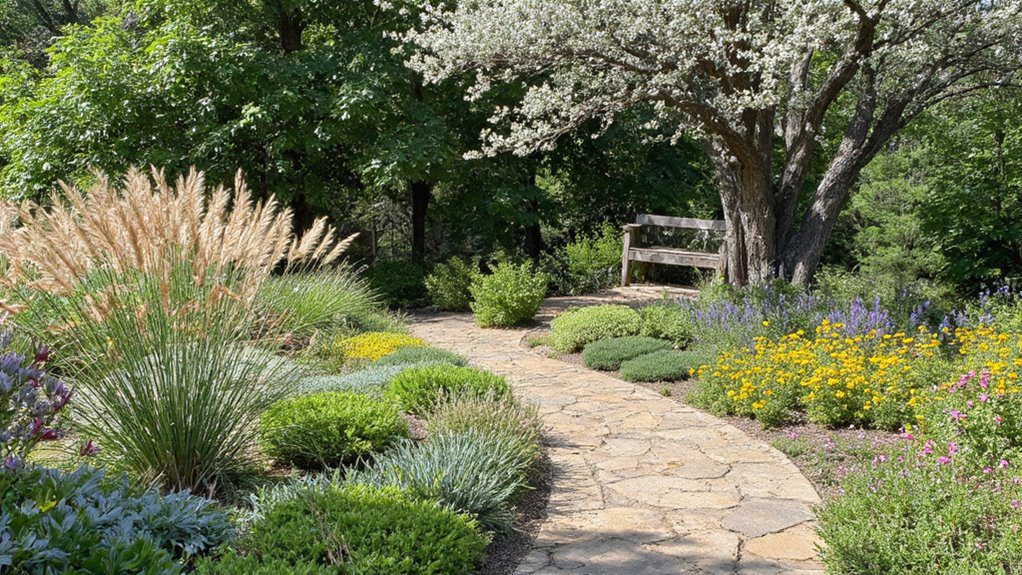
When selecting plants for a sustainable landscape, I focus on native and drought-tolerant species because they thrive with minimal water and maintenance.
These plants adapt to local soil and climate conditions, reducing irrigation needs. Their deep root systems enhance soil stability and water absorption.
Incorporate Paths and Walkways
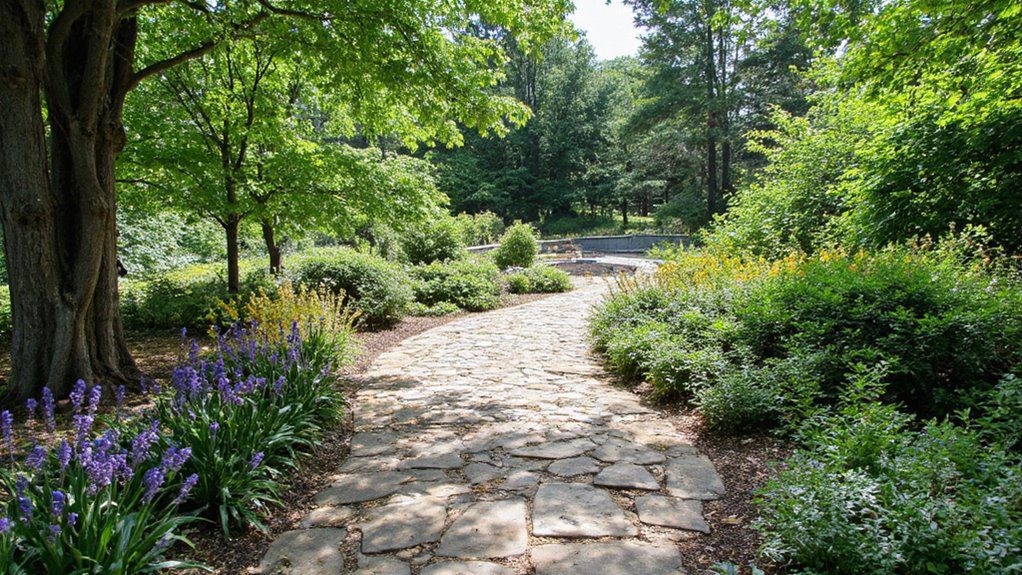
Incorporating paths and walkways strategically defines the flow and structure of a landscape while enhancing its visual appeal.
I recommend selecting materials that complement your surroundings—like natural stone or decomposed granite—and designing curves that lead the eye naturally.
Proper grading ensures drainage, preventing erosion and pooling.
Thoughtful placement connects key areas, improving accessibility and guiding movement seamlessly throughout your outdoor space.
Use Layers and Textures
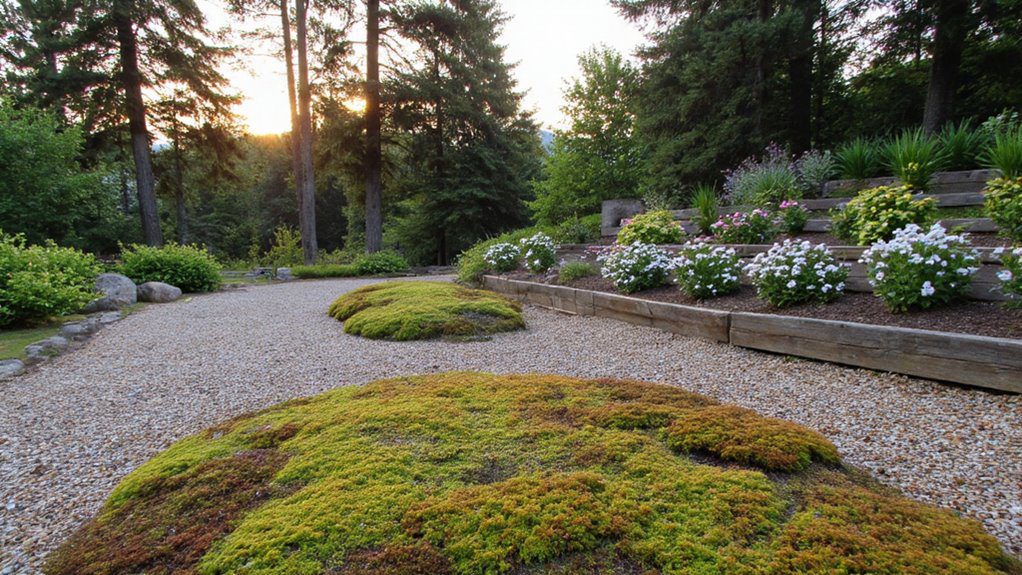
Because layering plants and textures adds depth and dimension, I focus on combining diverse foliage shapes, heights, and colors to create a dynamic landscape.
I select species with contrasting leaf textures—smooth, serrated, and feathery—to enhance tactile interest.
Strategically placing taller plants behind medium shrubs and low groundcovers ensures visual continuity, while varying surface finishes prevent monotony and emphasize spatial hierarchy.
Balance Colors and Shapes

Layering plants with varied textures creates depth, but achieving visual harmony requires careful balancing of colors and shapes.
I focus on combining complementary hues to avoid visual conflict while varying plant forms to maintain rhythmic flow. This balance ensures the landscape feels cohesive, preventing any one element from overwhelming the design, ultimately crafting an inviting, dynamic outdoor space.
Create Focal Points

When I design a landscape, I prioritize creating focal points that draw the eye and anchor the space.
I select distinct elements like a sculptural plant, a water feature, or textured stone to establish visual interest.
These focal points provide structure and guide movement, ensuring the landscape feels cohesive and purposeful without overwhelming the overall design.
Include Functional Elements

Although aesthetics play a vital role, I always incorporate functional elements into my landscape designs to enhance usability and comfort.
Integrating pathways, seating areas, and efficient irrigation systems ensures the space is both beautiful and practical.
Thoughtful placement of these components optimizes flow and accessibility, creating a seamless balance between form and function that elevates the overall outdoor experience.
Maximize Shade and Sunlight

Since light conditions vary throughout the day, I carefully analyze the sun’s path to strategically position plants and structures that optimize both shade and sunlight.
I select shade-tolerant species for darker areas and sun-loving plants for open spaces.
Incorporating pergolas or deciduous trees creates dynamic shade patterns, enhancing comfort and energy efficiency while maintaining aesthetic balance throughout the landscape design.
Implement Sustainable Practices

As I design landscapes, I prioritize sustainable practices to reduce environmental impact and enhance ecosystem health.
I select native plants adapted to local conditions, minimize water use with efficient irrigation, and incorporate organic mulches to improve soil quality.
These strategies create resilient, low-maintenance environments that support biodiversity while maintaining aesthetic harmony and functional balance throughout the landscape.
Maintain Regular Upkeep
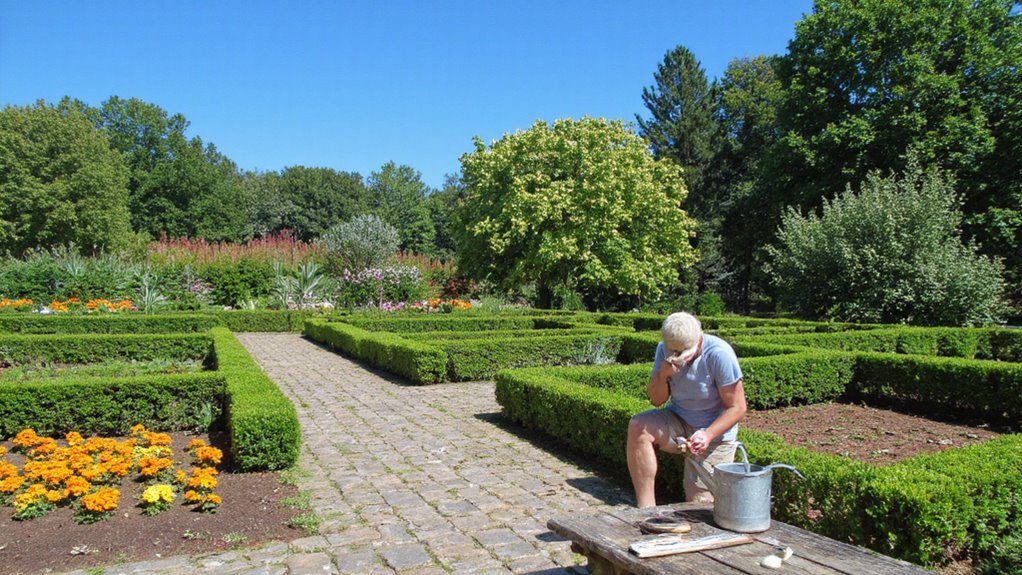
I monitor each element of the landscape closely to ensure it thrives and remains visually balanced.
Regular upkeep involves precise pruning, soil assessment, and irrigation checks to prevent stress and disease.
I adjust maintenance schedules seasonally, addressing pest control and nutrient management meticulously.
This disciplined approach sustains structural integrity and aesthetic harmony, ensuring the landscape’s resilience and long-term vitality.