
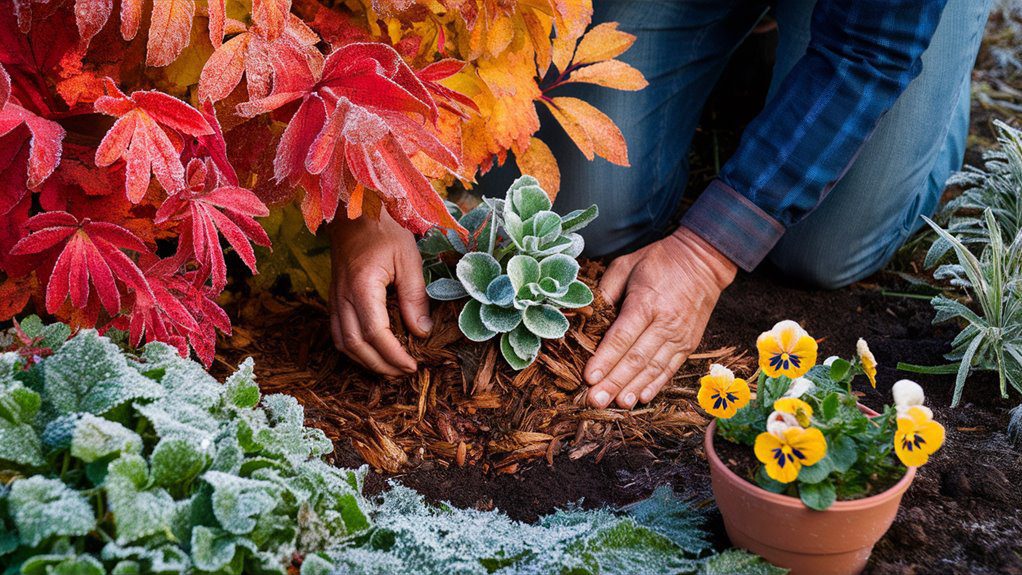
When I prepare my plants for winter, I start by watering them monthly as long as temperatures are above freezing. I apply a slow-release fertilizer rich in potassium and phosphorus before the first frost to strengthen their roots. I also prune any dead branches to promote air circulation and reduce pest habitats. After the first frost, I apply 2-4 inches of organic mulch to regulate soil temperature and retain moisture. Finally, I ensure vulnerable plants are supported against snow and insulate them with burlap for extra protection. Keep going, and you'll discover more tips to enhance your winter garden care.
Watering and Soil Preparation
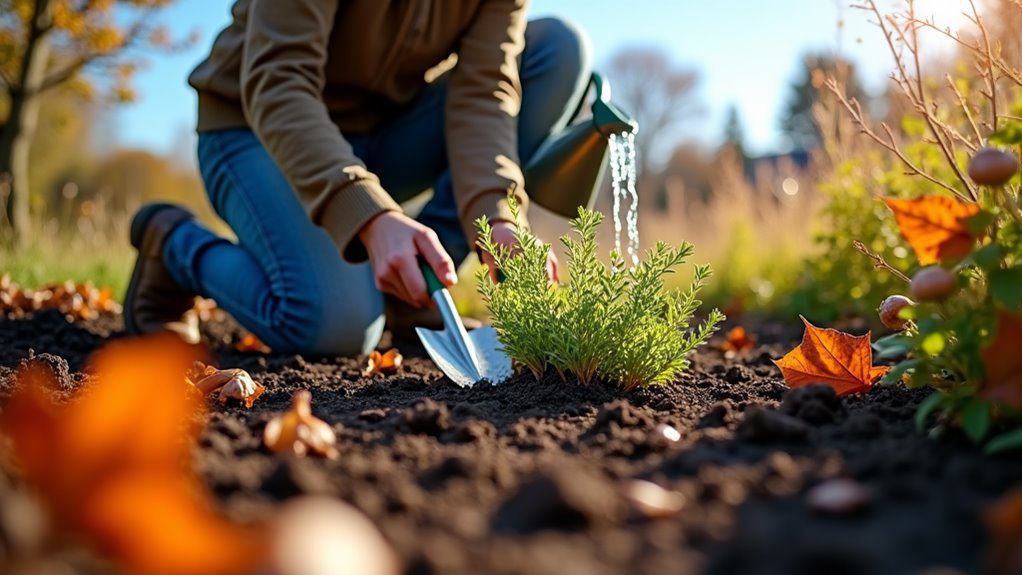
As winter approaches, it's crucial to pay attention to how we water and prepare our soil to ensure our plants survive the colder months.
For effective winter watering, I water once a month when temperatures rise above freezing, focusing on evergreens and newly planted bulbs. Evergreen trees require more water than deciduous varieties to prevent winter damage. Additionally, incorporating organic matter into the soil before winter helps enhance nutrient availability and promotes beneficial microbial activity.
I also apply organic mulch to enhance soil health, retain moisture, and protect against erosion during winter.
Fertilization and Growth Management
Preparing your garden for winter isn't just about tucking plants in; it also involves smart fertilization and growth management strategies.
I apply slow-release fertilizers before the first frost for optimal nutrient timing, focusing on potassium and phosphorus to strengthen roots. Soil fertility is essential for maintaining overall garden health during the winter months. Additionally, using organic fertilizers can enhance soil structure and nutrient availability for your plants.
I also consider organic compost for moisture retention.
This way, I ensure my plants are well-prepared for dormancy and resilient against winter conditions.
Pruning and Cleanup Techniques
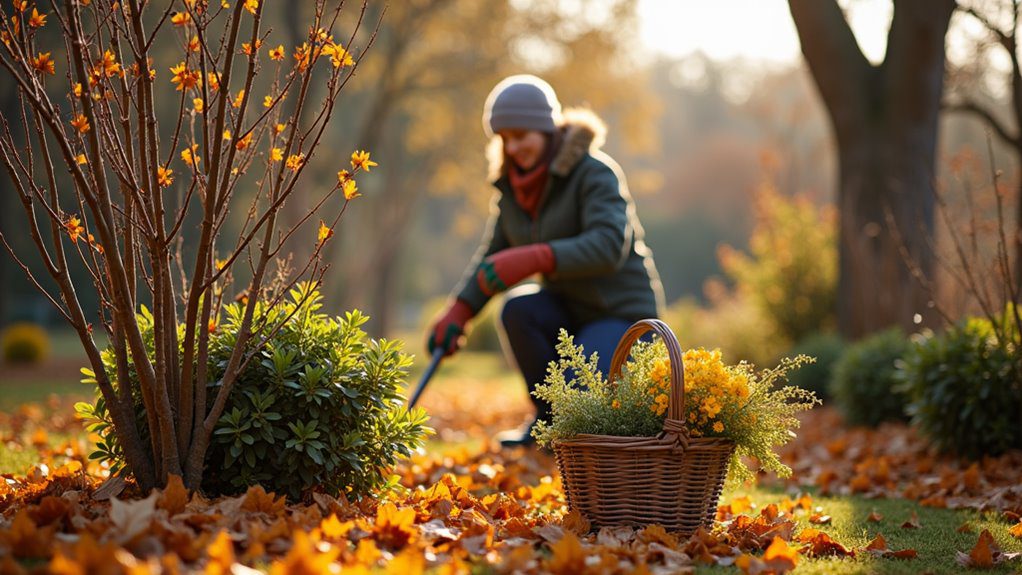
Effective pruning and cleanup techniques are essential for maintaining the health and appearance of your garden as winter approaches.
Here are three key actions I take:
- Remove dead or diseased branches for disease prevention.
- Prune shrubs for shape, enhancing air circulation to promote new growth in spring and improve drainage in the surrounding soil.
- Clear debris to prevent pests.
These branch removal practices not only improve aesthetics but also promote healthy growth come spring.
Mulching and Insulation Strategies
After pruning and cleaning up the garden, I turn my attention to mulching and insulation strategies to protect my plants over the winter months.
I apply 2-4 inches of mulch types like straw or shredded leaves after the first frost. This provides insulation benefits, regulating soil temperature and moisture while suppressing weeds. Proper mulching also helps with moisture retention, ensuring that the soil remains hydrated during the winter dormancy period. Additionally, maintaining optimal soil quality through organic matter can further enhance the health of your garden in spring.
Proper mulching prevents extreme cold exposure and promotes healthy soil for spring.
Protection From Snow and Ice

As winter settles in, I focus on protecting my plants from the heavy snow and ice that can cause significant damage. Effective protection includes:
- Regular snow removal from branches to prevent breakage.
- Allowing ice to melt naturally to avoid branch damage.
- Using supports for fragile plants to bear snow weight.
Additionally, insulating vulnerable plants with materials like burlap or straw can further enhance their resilience against winter's challenges. Taking these steps ensures my plants stay healthy and resilient through winter's challenges.