

I prepare my garden for winter by first cleaning up fading annuals and vegetables, composting healthy material while discarding infected plants. I then prune dead branches to improve airflow and promote healthy growth. Next, I apply a 4-6 inch layer of mulch for insulation and moisture retention, checking for any gaps. I also test my soil and amend it to maintain optimal nutrient levels. Finally, I protect tender plants with burlap and frost cloths. These steps help ensure my garden thrives come spring, and if you want to explore more specific techniques, there's plenty of detailed information ahead.
Garden Cleanup
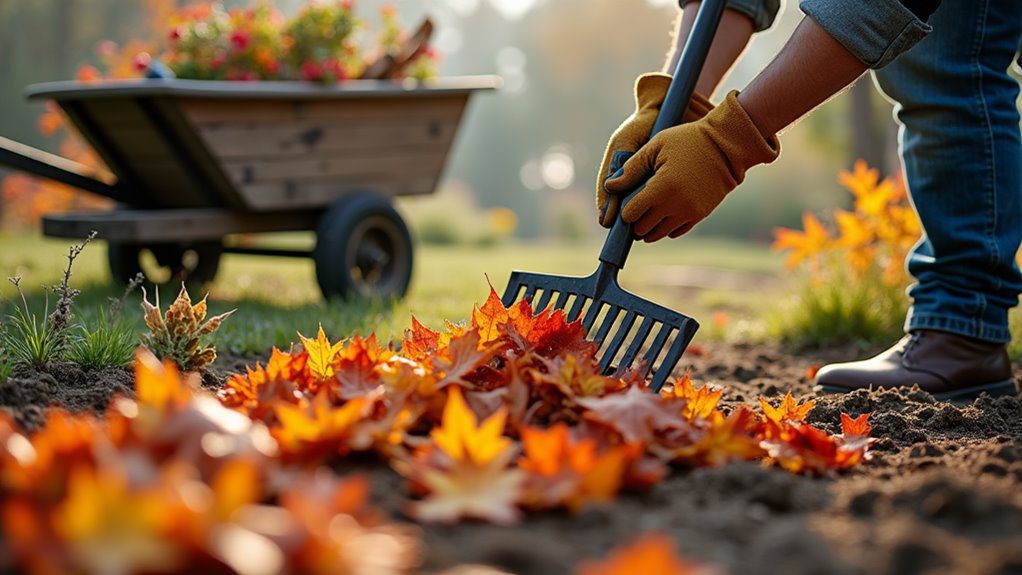
As the season shifts towards winter, the importance of thorough garden cleanup becomes clear. I remove all fading annuals and vegetables, composting healthy material while disposing of any infected plants. Raking leaves prevents fungal spores and pest management issues. I also pull weeds to reduce competition for nutrients and cover weedy areas, ensuring a clean slate for spring's fall harvesting. Additionally, removing debris helps prevent fungal spores and insect eggs from overwintering. Incorporating decomposing leaves into the soil can enhance fertility and promote healthy plant growth in the spring.
Pruning and Cutting Back
Pruning and cutting back plants is essential for maintaining a healthy garden during winter months. I focus on proper pruning techniques to remove dead or damaged branches and encourage airflow, reducing disease risk. For shrubs, I make clean cuts just above buds. With roses, I trim canes to knee height. Additionally, ensuring that well-draining soil is maintained around the plants can help prevent root rot during the winter months.
Mulching and Insulation

After ensuring your plants are properly pruned for winter, mulching and insulation become vital steps in preparing your garden for the colder months.
Here's how I approach it:
- Select mulch types like wood chips or straw.
- Apply 4-6 inches of mulch for insulation, as generous layers enhance insulation and plant protection. This method also helps with soil water capture, improving moisture retention during winter.
- Use a garden blanket to secure mulch.
- Check for gaps to enhance insulation techniques.
These steps keep my garden thriving through winter!
Soil Preparation
During the fall, I consistently prioritize soil preparation to ensure my garden flourishes come spring.
I start with soil testing using kits from local stores, analyzing nutrient levels and pH. Based on results, I adjust pH if necessary and add organic amendments like compost, mixing in green and brown materials. This enriches my soil, enhancing its structure for better growth. Proper preparation also locks in nutrients and prevents erosion, contributing to overall garden productivity. Additionally, maintaining optimal pH levels is crucial for nutrient availability and plant health.
Plant Protection

As I prepare my garden for winter, protecting my plants becomes a top priority to ensure their survival through the cold months.
Here's how I approach plant protection:
- Apply 10-15 cm of mulch after the first frost.
- Use burlap for windbreaks.
- Wrap tender plants with frost cloth.
- Select resistant plants for pest management. Additionally, promote snow accumulation by leaving perennials' stems until spring.
These steps help with effective plant selection and protection.