

To lay a small foundation stone black garden, I start by selecting a level area and clearing any debris for stability. Next, I dig a trench, ensuring it's the right dimensions and depth. After that, I compact the soil and add a mixed gravel layer to promote drainage. When laying the stones, I dig holes slightly deeper than the stone thickness, use a layer of sharp sand beneath, and level each stone with a rubber mallet. I also ensure proper drainage to prevent water buildup and monitor the foundation regularly for any issues. There's more to explore for a thriving garden.
Preparation and Planning
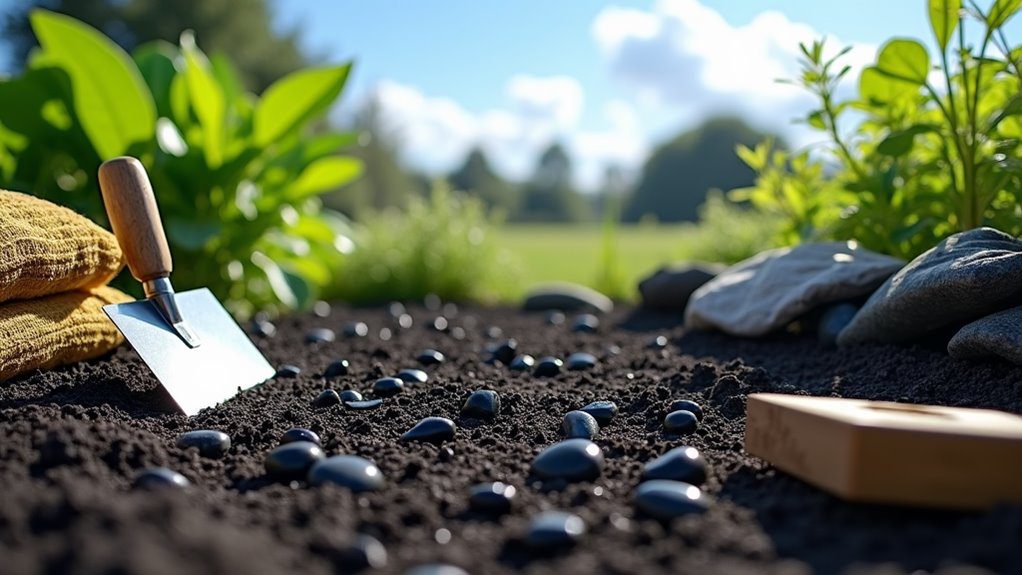
Before diving into laying a foundation stone, it's crucial to focus on preparation and planning.
I start by selecting a level area and clearing it of debris. Soil testing helps me determine pH levels, guiding necessary amendments for optimal growth. A well-prepared base ensures that the stones are placed on a stable foundation, contributing to the longevity of the garden structure. Additionally, understanding soil composition is vital to ensuring the right plants thrive in the garden.
I visualize the garden design, measuring dimensions and ensuring proper drainage.
This groundwork ensures a solid, thriving garden foundation before I lay those stones.
Digging the Foundation Trench
Once I've marked the area for my foundation trench, the next step involves carefully digging it to the required dimensions. I use spades and shovels to maintain vertical sides and a level bottom. While excavating, I manage the soil properly, ensuring it's clear of debris and obstacles. A solid foundation is critical to ensure the long-term stability of my structure. Properly pulverized soil can enhance air circulation and water drainage, which is essential for the foundation's integrity. Double-checking the trench dimensions is crucial to ensure it meets my foundation specifications accurately.
Compacting and Gravel Layer

Compacting the foundation is a critical step in laying a stable base that ensures long-term durability. I use various compaction techniques, like a plate compactor, ensuring moisture levels are just right. After achieving optimal density, I focus on gravel selection, opting for a mix of particle sizes to promote drainage. This combination minimizes settling and cracking, providing a robust support system for the foundation. The use of gravel is essential because it allows for good drainage, which helps prevent moisture buildup and enhances the overall foundation strength. Additionally, incorporating organic matter into the gravel layer can further improve soil structure and aeration.
Laying the Foundation Stones
With the ground prepared and the layout finalized, I'm ready to move on to laying the foundation stones. I dig holes, ensuring each is about 2cm deeper than the stone thickness. I spread sharp sand for foundation stability, tamping it down firmly. Preparing a foundation with a layer of sand ensures the stones remain stable and level over time. Each stone type is carefully placed, checked for levelness, and secured with a rubber mallet, ensuring consistent spacing for a durable path. Proper drainage systems are essential for maintaining plant health by preventing excess water buildup around the foundation.