

To attract woodpeckers to your yard today, understand their chisel-like beaks and preference for insects, fruits, nuts, and suet. Choose bird feeders with tail props, angled perches, and suet accessibility. Provide a mix of nuts, seeds, and fruits at various heights. Keep feeders clean and offer Bark Butter or suet dough for variety. Set up feeders in quiet, shaded areas with suet resembling insects for winter months. A woodpecker-friendly environment includes water sources. Monitor and enjoy woodpecker visits to your yard – a fascinating experience awaits with these extraordinary birds.
Woodpecker Behavior and Characteristics

Woodpeckers exhibit fascinating behaviors and possess unique characteristics that enable them to thrive in various environments. Among the species of birds, woodpeckers stand out due to their specialized adaptations. They have strong chisel-like beaks that aid them in drilling into wood to find insects or create nesting cavities. This feature is crucial for their survival as it provides them with a food source and shelter. Additionally, woodpeckers have developed shock-absorbing skulls that protect their brains from the impact of drumming on trees. This adaptation allows them to engage in communication through drumming without causing harm to themselves. Moreover, their long tongues, often equipped with barbs, are essential for extracting insects from crevices in wood, showcasing their remarkable feeding strategies. Many woodpecker species also display distinctive markings, such as black and white stripes on their heads or colorful patches on their bodies, which aid in species recognition and mate attraction. Woodpeckers’ unique behaviors and characteristics highlight their remarkable evolutionary adaptations for thriving in diverse habitats.
Understanding Woodpecker Diets

To understand the dietary habits of woodpeckers, it is important to explore the variety of foods they consume in their natural habitats. Woodpeckers have a diverse diet that includes:
- Insects: Woodpeckers rely heavily on insects like ants, beetles, and larvae for their protein intake. They can be observed skillfully foraging for these small creatures in tree bark.
- Fruits: Woodpeckers also enjoy feasting on fruits such as berries and apples. These provide them with essential vitamins and sugars.
- Nuts and Seeds: Woodpeckers are attracted to nuts and seeds like sunflower kernels and peanuts. These high-energy foods help sustain them throughout the day.
Choosing the Right Bird Feeders

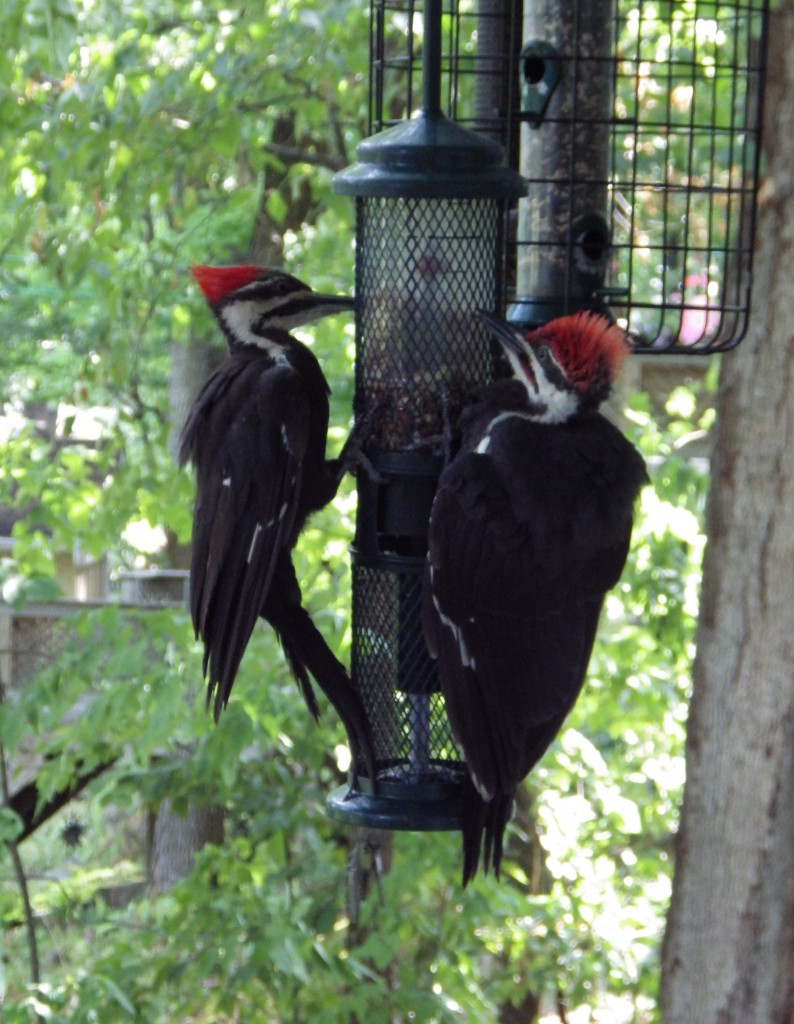
When selecting bird feeders to attract woodpeckers to your yard, consider features like tail props and perches that aid in seed drainage and cleanliness. Woodpeckers, with their unique feeding habits, benefit from specialized feeders that cater to their needs. Here are some key features to look for in bird feeders:
| Feature | Description | Example |
|---|---|---|
| Tail Props | Support for woodpeckers’ tail feathers to stabilize them while feeding | EcoTough Double Tail Prop Suet Feeder |
| Perches with Seed Drainage | Perches designed to drain seed hulls, preventing clutter and attracting ground-feeding birds | Angled Perches |
| Angled Perches | Help blow away empty seed hulls to maintain a clean feeding area | Angled Perches |
| EcoClean Antimicrobial Protection | Removable screens treated to protect bird health | Feeders with EcoClean Antimicrobial Protection |
| Pole Mounting Capability | Stable feeders suitable for pole mounting, providing accessibility for woodpeckers | Feeders suitable for pole mounting |
Suet: The Key to Woodpecker Attraction

For successful attraction of woodpeckers to your yard, understanding the significance of suet as a high-energy food source is crucial. Woodpeckers are naturally drawn to suet because it closely resembles the insects they typically feed on, providing them with essential nutrients for their diet. Here are some key points to consider when using suet to attract woodpeckers:
- Nutrient-Rich: Suet is a high-fat, high-calorie food source that offers woodpeckers the energy they need, especially during colder months when insects are scarce.
- Feeder Accessibility: Providing suet in feeders designed specifically for woodpeckers makes it easier for these birds to access and enjoy the suet.
- Year-Round Option: Offering suet throughout the year ensures woodpeckers have a consistent and reliable food source, helping to maintain their presence in your yard.
Tips for Setting Up Bird Feeders
Consider placing suet feeders in a quiet, shaded area to effectively attract woodpeckers to your yard. When setting up bird feeders, opt for a mix of nuts, seeds, and fruits to cater to the diverse dietary needs of woodpeckers. Hang the feeders at various heights to accommodate the feeding preferences of different woodpecker species. Additionally, offering options like Bark Butter or suet dough can entice woodpeckers with a spreadable food source.
To create a welcoming environment for woodpeckers, it is crucial to regularly clean and maintain the feeders. Unclean feeders can harbor harmful bacteria and mold, posing a health risk to the woodpeckers frequenting your yard. By ensuring the feeders are well-kept, you provide a safe and healthy feeding space for these fascinating birds.
Creating a Woodpecker-Friendly Environment
To create an environment that attracts and supports woodpeckers in your yard, focus on planting native trees, installing various suet feeders, providing natural nesting sites, avoiding pesticide use, and adding a water source for drinking and bathing. When setting up your yard to be woodpecker-friendly, consider the following:
- Native Trees: Birds, like woodpeckers, are drawn to native trees such as oak, hickory, and pine, which provide natural food sources like insects and nuts.
- Suet Feeders: Woodpeckers have high-energy needs, so having a variety of suet feeders available throughout the year ensures a stable food source.
- Natural Nesting Sites: Dead trees or snags offer ideal nesting and foraging spots for woodpeckers, attracting them to your yard for breeding and feeding.
Importance of Water Sources

Woodpeckers are significantly drawn to yards with accessible water sources, such as birdbaths, ponds, or dripping water features. Providing a clean and reliable water source is crucial for attracting woodpeckers, as they rely on water for drinking and bathing. These water sources serve as essential hubs for woodpeckers to quench their thirst and maintain their plumage. Woodpeckers may frequent water sources multiple times a day, especially in hot weather or when food is scarce.
To enhance the appeal of your water source, consider incorporating a mister or dripper into your birdbath. The movement and sound created by these additions can make the water feature more enticing to woodpeckers. It is essential to keep the water sources clean and fresh to ensure woodpeckers continue to visit your yard for their hydration and bathing needs. By providing a welcoming water source, you can increase the chances of woodpeckers gracing your yard with their presence.
Monitoring and Enjoying Woodpecker Visits

Setting up a comfortable viewing area with binoculars or a camera allows you to observe woodpecker visits from a distance. This setup minimizes disturbances, providing you with the opportunity to witness these fascinating birds in their natural habitat. To enhance your experience further, consider the following:
- Monitor Behavior: Take note of woodpecker behavior and feeding preferences. Understanding their habits can help tailor your feeding options, making your yard more attractive to them.
- Keep a Birding Journal: Keeping a birding journal can be a rewarding way to track different woodpecker species that visit your yard. Note any interesting behaviors or patterns you observe.
- Install a Bird Feeder: Consider installing a bird feeder with a clear view from your home. This allows you to watch woodpeckers up close without causing them any distress.