
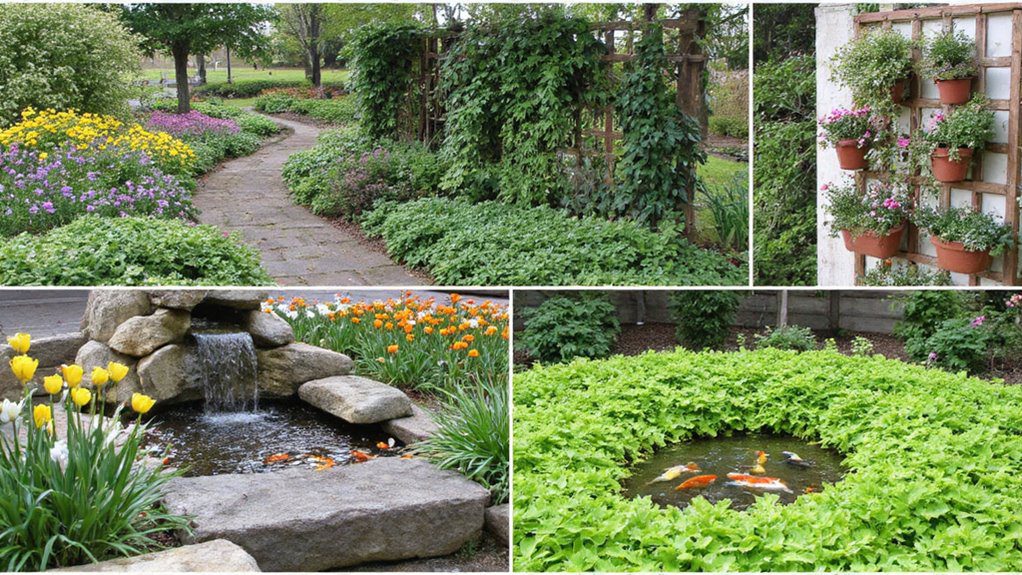
When I redesign a garden, I focus on blending form and function sustainably. Vertical gardens maximize limited space, while colorful native flower beds boost biodiversity and require less water. Thoughtful seating areas crafted from natural materials invite comfort without compromising the environment. But the real challenge lies in balancing aesthetics with ecological benefits—how do you create a space that’s both visually striking and supportive of local wildlife? Let’s explore some ideas that tackle this balance.
Incorporate Vertical Gardens for Space Efficiency
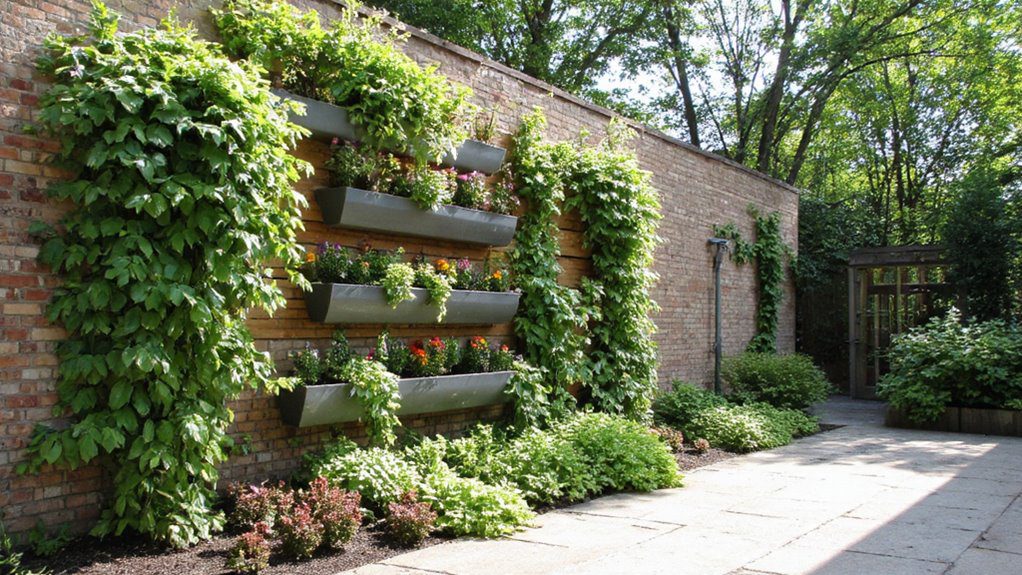
Although many gardeners assume vertical gardens always maximize space, they don’t inherently guarantee space efficiency.
I’ve found that without strategic planning, vertical installations can overwhelm small areas or limit access.
To truly optimize space sustainably, I recommend integrating modular systems with appropriate plant selections, ensuring light, air, and maintenance accessibility—balancing aesthetics with function for a thriving, efficient garden.
Use Colorful Flower Beds to Create Visual Interest

When you thoughtfully arrange colorful flower beds, you transform your garden into a dynamic visual experience that supports ecological balance.
Selecting native, pollinator-friendly species ensures sustainability while enhancing aesthetics.
By varying bloom times and hues, you maintain continuous interest and habitat diversity.
This deliberate layering of colors not only beautifies but also fosters a resilient, thriving ecosystem within your garden space.
Design a Relaxing Seating Area With Natural Materials
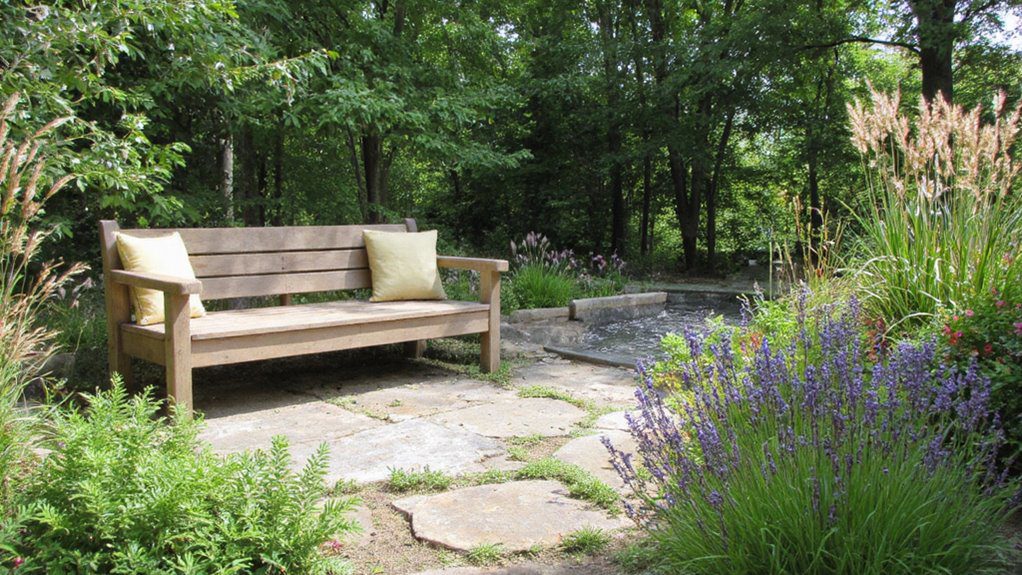
Bringing vibrant flower beds to life sets the stage for a seating area that complements the natural beauty of your garden.
I choose sustainably sourced wood and stone for durability and eco-friendliness. Natural textures create a calming atmosphere while blending seamlessly with plants.
Prioritizing breathable fabrics and organic cushions enhances comfort without compromising environmental responsibility, crafting a truly relaxing, sustainable retreat.
Add Pathways to Guide Movement and Enhance Structure

Since garden pathways define how we experience outdoor spaces, I focus on creating clear routes that both guide movement and reinforce the garden’s structure.
I choose permeable, eco-friendly materials like gravel or reclaimed stone to minimize runoff.
Careful alignment ensures functional flow while complementing plantings, enhancing visual harmony.
Thoughtful pathways support sustainable use and invite exploration without disrupting natural growth patterns.
Include Water Features for a Soothing Ambiance
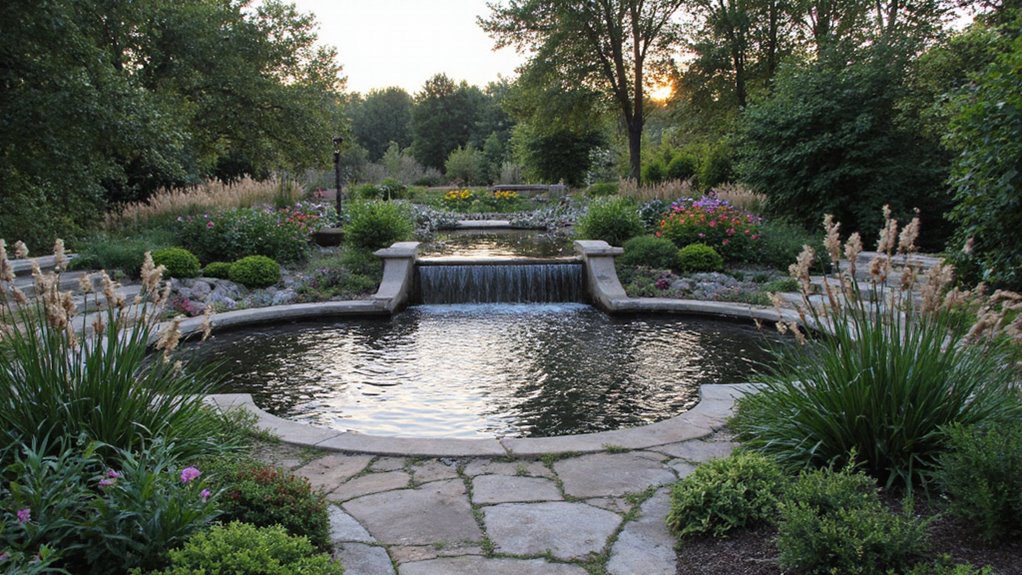
Pathways set the stage for how we move through a garden, but adding water features introduces a dynamic element that engages both sight and sound.
I recommend incorporating recirculating systems to conserve water and selecting natural materials to blend seamlessly.
These features not only create a calming ambiance but also support local wildlife, making your garden both beautiful and ecologically responsible.
Mix Different Plant Heights for Depth and Texture

When you mix different plant heights, you introduce depth and texture that transform a flat garden into a layered, engaging space.
I select varied species with contrasting forms and foliage to create visual interest and support biodiversity.
This approach promotes sustainable growth patterns, improves microclimates, and enhances soil health, making the garden both beautiful and ecologically resilient.
Utilize Raised Garden Beds for Easier Maintenance
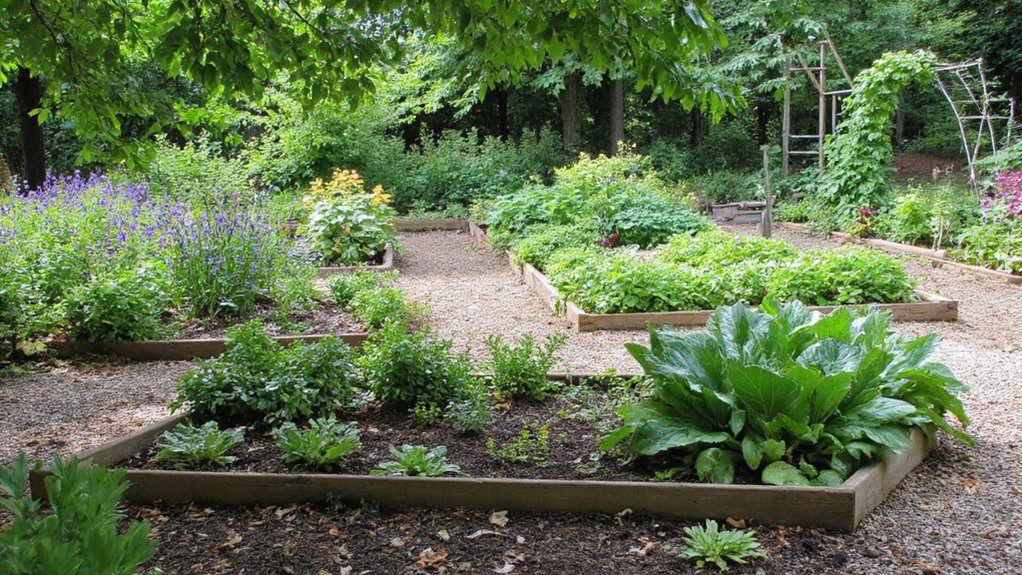
Although raised garden beds might seem like extra work at first, I find they significantly simplify ongoing maintenance.
They improve soil drainage, reduce weed growth, and keep pathways clear, making gardening more efficient.
Plus, their defined structure enhances visual appeal while promoting sustainable practices by conserving water and minimizing soil compaction, ultimately creating a manageable, eco-friendly garden space.
Integrate Edible Plants for a Functional Garden
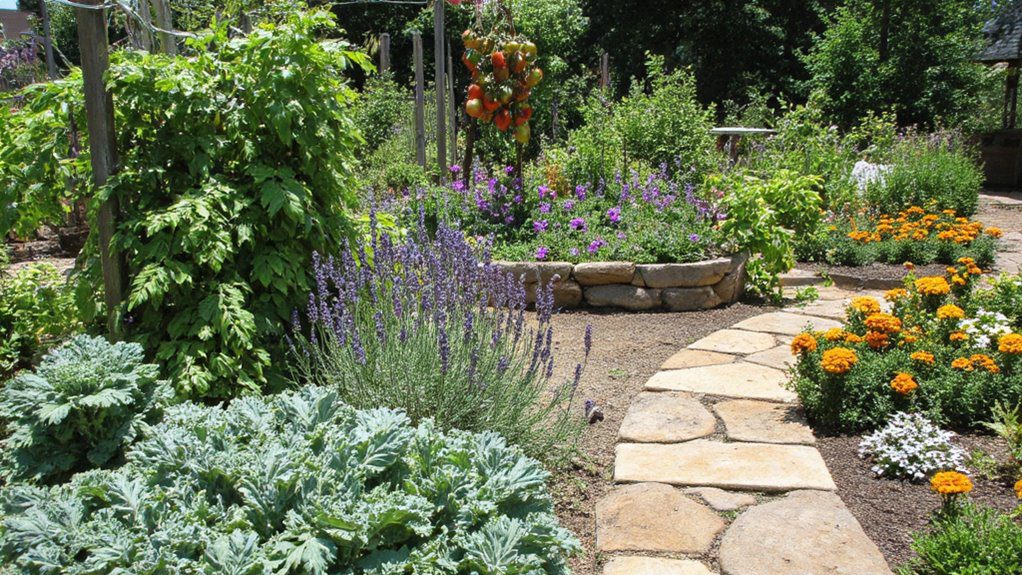
Since I value both beauty and practicality in my garden, I integrate edible plants to create a space that’s not only visually appealing but also productive.
Choosing herbs, vegetables, and fruit-bearing plants enhances biodiversity and supports sustainable practices.
Strategically placing these plants ensures efficient use of sunlight and soil nutrients, blending functionality with design for a thriving, eco-friendly garden environment.
Employ Outdoor Lighting to Extend Usability
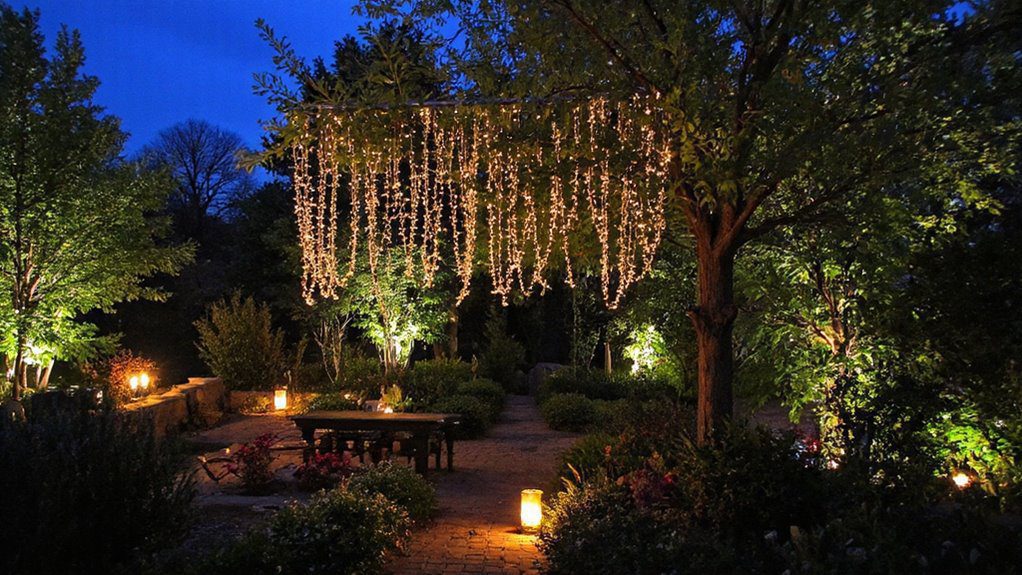
By incorporating outdoor lighting, I can transform my garden into a versatile space that remains functional well beyond daylight hours.
I choose energy-efficient LED fixtures with solar power to minimize environmental impact.
Strategically placed lights enhance pathways and highlight textures, creating ambiance while ensuring safety.
This sustainable approach optimizes usability without compromising the garden’s natural beauty or ecological balance.
Create Themed Garden Zones for Variety
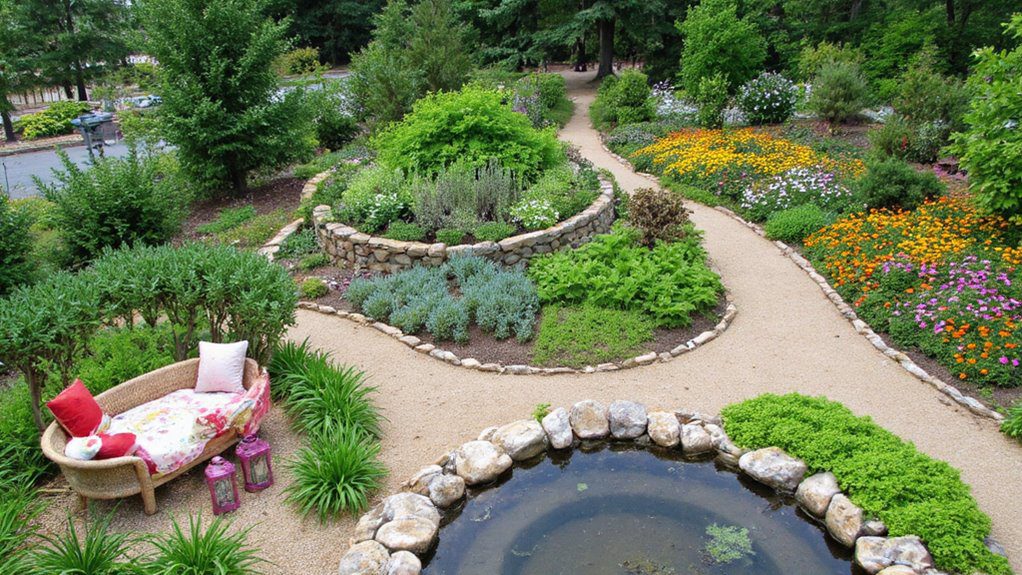
Dividing my garden into three distinct themed zones adds both visual interest and functional diversity.
I carefully select plants and materials that suit each theme, ensuring ecological balance and sustainability. This approach creates varied microclimates and habitats, enhancing biodiversity.
Add Decorative Elements Like Sculptures or Garden Art
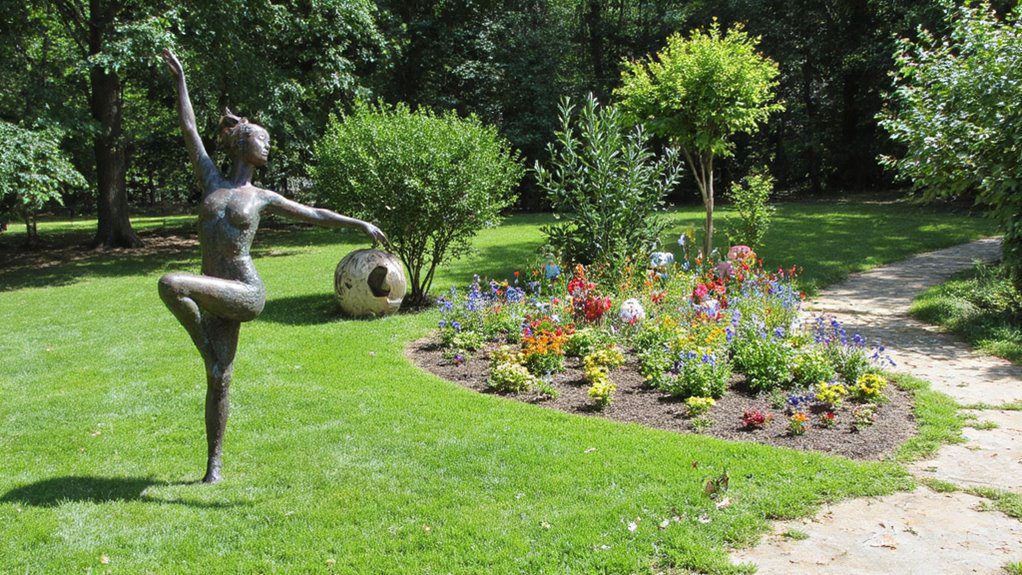
Enhancing each themed zone with carefully chosen decorative elements like sculptures or garden art adds depth and personality to the space.
I prioritize sustainable materials—recycled metals or reclaimed wood—to minimize environmental impact.
Each piece complements the garden’s aesthetic while withstanding weather conditions, ensuring longevity.
Thoughtful placement creates focal points, guiding the eye and enriching the overall sensory experience without disrupting natural harmony.