
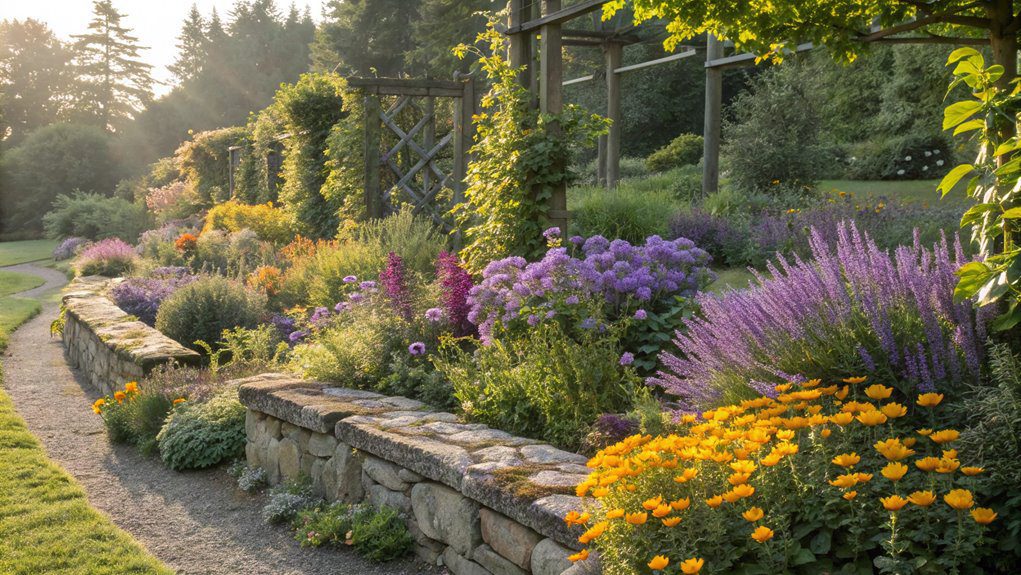
When designing garden borders, I love incorporating curved edges to soften hard lines and create a sense of depth. Using natural stone edging adds classic elegance, while modern metal options offer durability with style. For a budget-friendly solution, plastic or rubber materials are easy to install and flexible. Mixing plant clusters creates drama and visual cohesion, and breaking up long gardens with screens introduces inviting spaces. Stick around to discover even more creative and effective ideas!
Curved Borders for Small Gardens

When designing a small garden, I find that incorporating curved borders can transform the space into a captivating oasis.
Curves not only enhance the garden layout but also create depth and mystery. Using planting techniques that emphasize these curves, like single-species borders, can unify the design.
Plus, they soften hard edges, making my garden feel more expansive and inviting.
Structured Look With Bricks and Pavers

While I appreciate the organic flow of nature in my garden, I also love the structured look that bricks and pavers can bring to the design.
Using classic brick patterns like herringbone or soldier course adds elegance, while diverse paver colors offer modern versatility.
Mixing these materials creates depth, enhancing both functionality and visual appeal, transforming my garden into a stunning outdoor retreat.
Natural Stone Edging for Timeless Elegance

After creating a structured look with bricks and pavers, I find that natural stone edging brings a timeless elegance to my garden.
Its diverse shapes and colors enhance my garden aesthetics, while effectively retaining mulch and gravel.
The durable, low-maintenance stones create seamless barriers between my lawn and planting beds, offering creative flexibility for unique landscaping designs that last for years. Additionally, natural stone edging, with its rustic, timeless appearance, helps enhance drainage and prevents soil erosion.
Modern Appeal of Metal Edging

Metal edging captivates me with its modern appeal, offering a sleek and contemporary solution for defining garden spaces.
Its sleek aesthetics blend seamlessly with various designs, while the functional design ensures durability and minimal maintenance.
I love how it withstands weather, resists trimmers, and can be creatively shaped.
Plus, it enhances curb appeal, making my garden look polished and organized effortlessly. Additionally, its various styles allow for customization, ensuring it fits perfectly with any garden aesthetic.
Budget-Friendly Plastic and Rubber Options
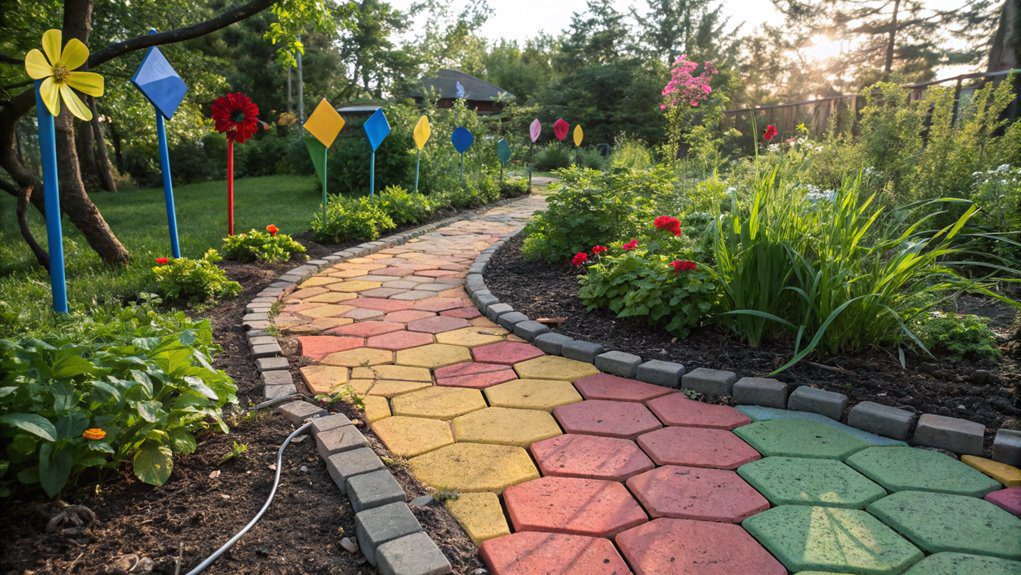
When you're looking to enhance your garden without breaking the bank, budget-friendly plastic and rubber edging options provide a practical and stylish solution.
I love how plastic edging is flexible and easy to install, while rubber edging, made from recycled tires, offers durability and eco-friendliness.
Both are affordable options that enhance aesthetics and are sustainable choices for any garden layout.
Wood Chip Mulch for Functional Borders

Wood chip mulch offers a natural, functional solution for creating distinct borders in your garden while enriching the soil.
The mulch benefits include moisture retention, which reduces watering needs, and weed suppression, keeping your plants healthy.
By applying a 2-4 inch layer, I've noticed improved soil quality as the chips decompose, releasing essential nutrients for thriving plants. Additionally, using wood chip mulch can help prevent compaction in the soil, promoting better drainage for healthier root systems.
It's a win-win!
Layering Plants for Visual Impact

After establishing functional borders with wood chip mulch, it's time to focus on the visual dynamics in your garden through strategic layering of plants.
By employing layering techniques, I create visual harmony, using low ground covers as a base, midground plants for texture, and tall backgrounds for structure.
Overlapping masses and varying shapes enhance interest while ensuring no gaps disrupt the flow of my design. Additionally, incorporating organic matter can enhance soil fertility and support healthy plant growth, contributing to the overall success of your layered garden design.
Color Schemes That Enhance Your Border

To create striking garden borders, I always start with an understanding of color theory, as it plays a crucial role in achieving the visual impact I desire.
I explore color psychology and symbolism, choosing complementary hues for contrast or analogous shades for harmony.
Integrating warm and cool colors adds excitement, while incorporating white enhances visibility, ensuring my borders captivate throughout the seasons.
Incorporating Ornamental Grasses
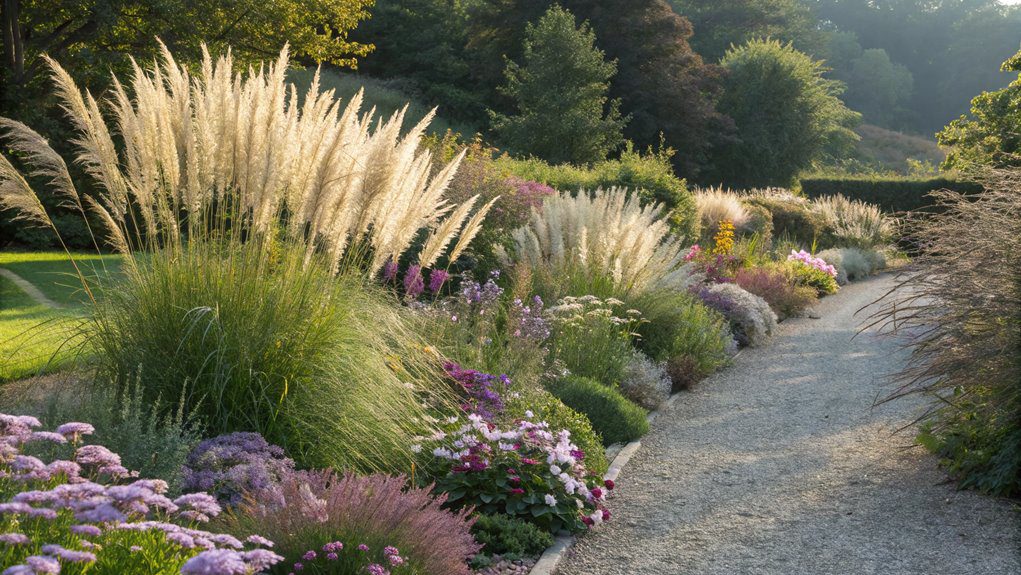
While I love experimenting with various plants in my garden borders, incorporating ornamental grasses has become one of my favorite strategies for adding dimension and texture.
I select a mix of tall, medium, and short grasses, ensuring they thrive in my soil conditions. Grouping them creates stunning garden textures, while their seasonal variety keeps my borders visually interesting year-round.
Mixing Block and Matrix Planting Styles

In my quest for a visually striking garden, I've discovered that mixing block and matrix planting styles can elevate the design to new heights.
By embracing block integration, I enhance yields and reduce weeding, while matrix benefits provide a dense backdrop with diverse species.
This synergy creates a naturalistic look, balancing complexity and coherence, ultimately enriching my garden's aesthetic and functionality.
Seasonal Interest With Diverse Plant Selection
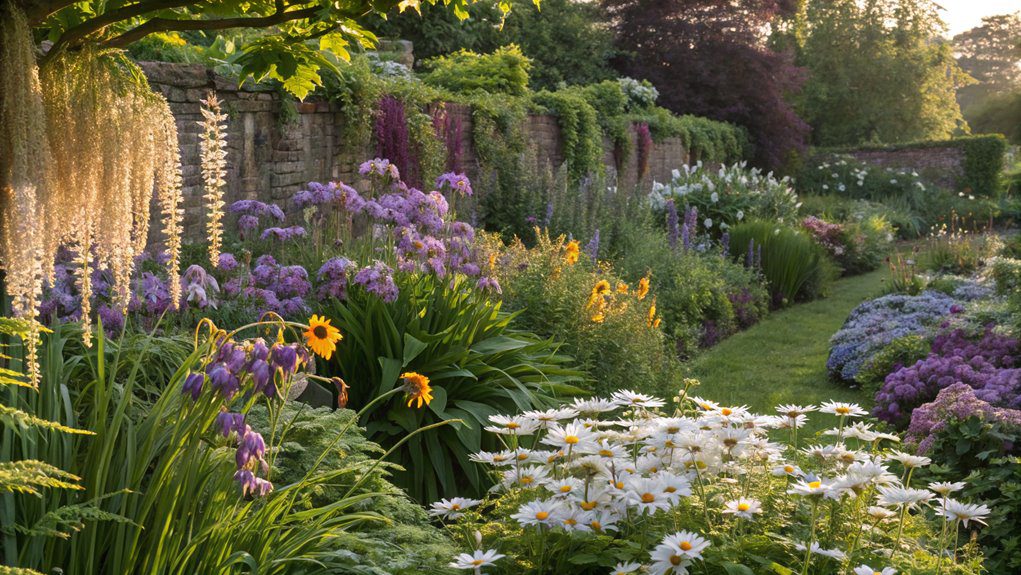
Creating a garden that captivates the eye year-round requires thoughtful planning and a diverse selection of plants.
I focus on perennial selection, ensuring blooms vary throughout the seasons. By incorporating evergreens and plants with unique textures, I enhance visual appeal during seasonal transitions.
This approach not only provides color but also structure, keeping my garden lively and engaging no matter the time of year.
Edging Materials That Minimize Maintenance

When considering how to edge my garden beds, I've found that the right materials can make all the difference in minimizing maintenance and enhancing aesthetics.
For sustainable landscaping, I love metal and composite edging for their durability, while rubber edging is perfect for playful spaces.
These options create low maintenance gardens, allowing me to enjoy my outdoor oasis without constant upkeep or worry.
Creative Use of Repurposed Materials

Choosing the right edging materials can be a game-changer in crafting a garden that not only looks good but also tells a story.
I love using upcycled furniture like old chairs as planters, while broken tiles create stunning mosaic edging.
These elements not only add character but also emphasize sustainability, allowing my garden to flourish with creativity and charm.
Breaking up Long Gardens With Screens

To transform a long garden into a series of inviting spaces, I often turn to screens that not only divide but also enhance the overall aesthetic.
Living screens, like climbing plants on trellises, provide lush privacy, while structural screens, such as slatted fencing, filter light and wind.
Together, they create depth, intrigue, and a harmonious flow throughout the garden, making every area feel purposeful.
Grouping Plants for Cohesion and Drama

While crafting a garden that captivates the senses, I find that grouping plants thoughtfully can create an undeniable sense of cohesion and drama.
By varying plant heights and using color contrast, I ensure visual interest. I cluster similar species in odd-numbered groups, allowing for airiness and density.
This approach creates layers, while also preventing stronger plants from overshadowing the weaker ones, ensuring a vibrant display.