

If you're facing an ant invasion, I've got 15 DIY indoor ant repellent ideas that really work! You can whip up mixtures like vinegar and water spray, or a simple baking soda and sugar bait. Try a dish soap and vinegar solution to disrupt their scent trails or opt for the refreshing lemon and orange juice repellent. Each method uses natural ingredients, making it safe for your home. Stick around, and I'll share more effective recipes to keep those ants away!
Vinegar and Water Spray

When I first discovered the power of vinegar as an ant repellent, I was amazed at how simple and effective it could be.
The vinegar benefits include repelling ants without harming them, making it safe for kids and pets. Mixing equal parts vinegar and water enhances spray effectiveness.
I spray it around entry points and food areas to keep those pesky ants away!
Baking Soda and Sugar Bait
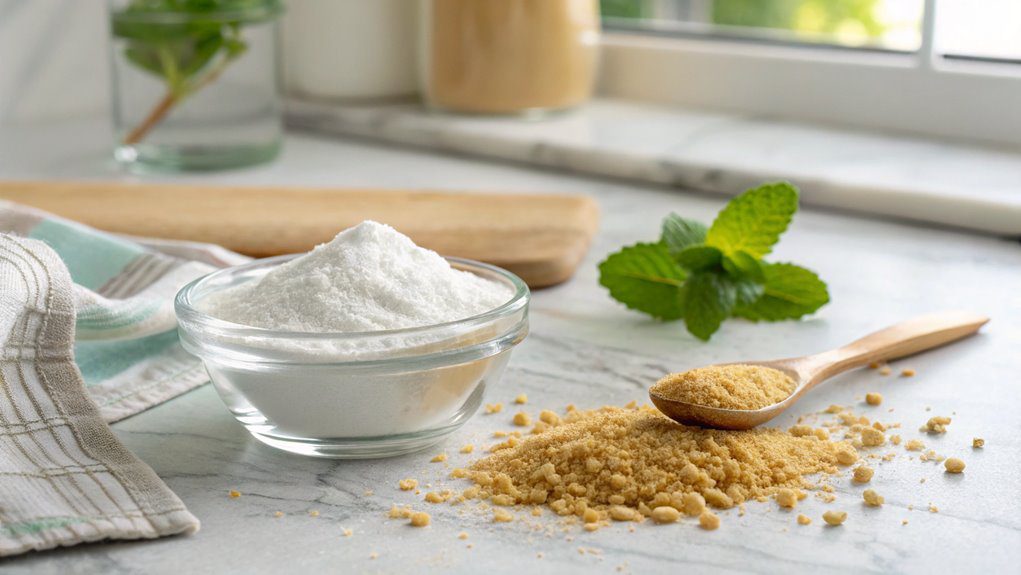
If you're tired of ants invading your space, baking soda and sugar bait can be a game-changer.
Mixing equal parts of both attracts various ant species, enhancing bait effectiveness. When ingested, the baking soda causes gas buildup, leading to their demise.
Just place the mixture near ant trails, refresh it regularly, and watch your pesky invaders disappear!
Dish Soap and Vinegar Solution
A simple yet effective solution for tackling ant infestations in your home is a dish soap and vinegar mixture.
By mixing one tablespoon of Dawn dish soap with half a cup of white vinegar and a cup of warm water, you disrupt ant behavior and scent trails.
This natural deterrent is effective, safe around pets, and works almost instantly to eliminate pesky ants.
[DIRECTIONS]:
Lemon and Orange Juice Repellent

After tackling ants with a dish soap and vinegar solution, you might want to explore another natural option: lemon and orange juice.
The citrus efficacy of these juices is impressive! Simply mix lemon juice with water and spray it around entry points.
You can also use orange peels to deter ants. These natural repellents are safe, eco-friendly, and keep your home ant-free!
Tea Tree Oil and Vinegar Mix

While exploring natural ant repellents, I found that a tea tree oil and vinegar mix packs a powerful punch against pesky invaders.
Simply combine equal parts of white distilled vinegar and water, then add 1-10 drops of tea tree oil.
Spray it in areas where ants roam, and watch how these natural remedies disrupt their pheromone trails and repel them effectively!
Peppermint Oil Spray
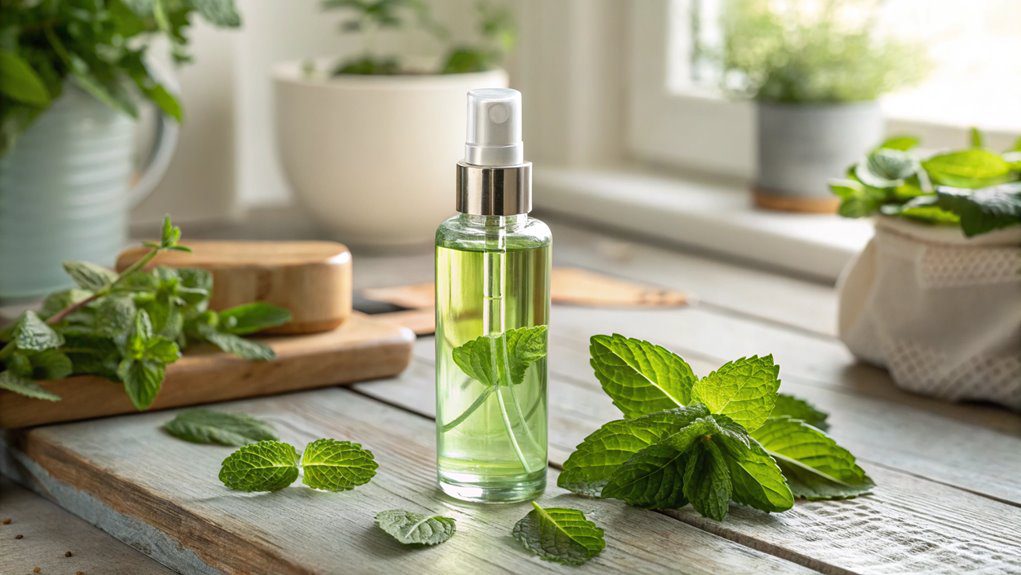
Building on the effectiveness of natural solutions like the tea tree oil and vinegar mix, peppermint oil spray is another powerful option for repelling ants.
Its peppermint oil benefits include disrupting ants' pheromone trails, altering their foraging behavior, and creating an unpleasant environment.
For best ant repellent effectiveness, mix water, dish soap, and peppermint oil, and spray around entry points regularly.
Cinnamon Oil Deterrent

Cinnamon oil stands out as a powerful deterrent against ants, thanks to its unique properties that disrupt their communication.
The cinnamon oil benefits include repelling ants effectively, especially when applied around entry points.
For best results, I recommend a diluted solution of 1-20%. Just a few drops can create an ant exclusion zone, making cinnamon oil application both practical and efficient.
Lavender Oil and Vinegar Combo
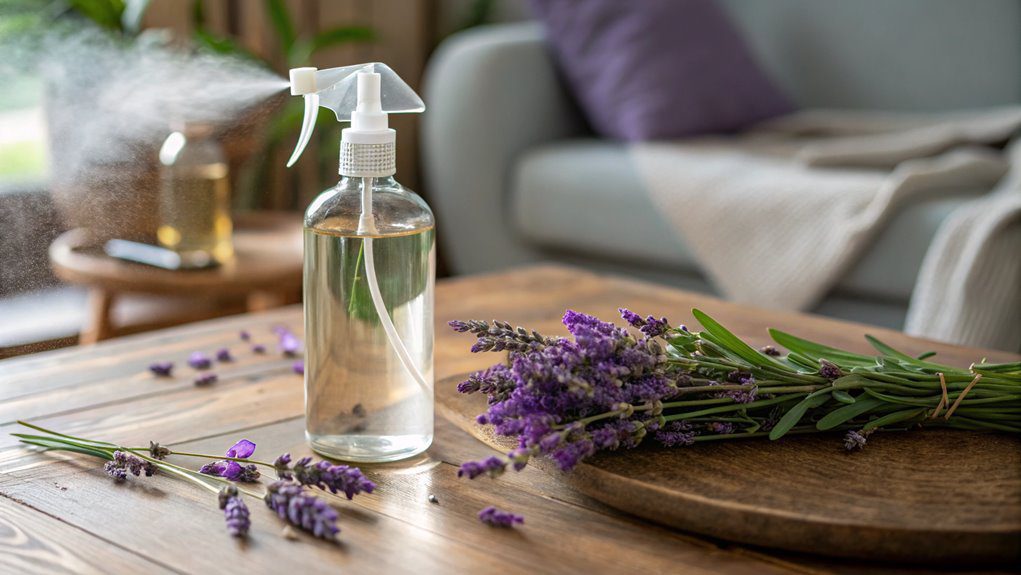
After exploring the benefits of cinnamon oil, it's time to look at another effective option: the lavender oil and vinegar combo.
This mixture not only harnesses lavender benefits for its pleasant scent but also utilizes vinegar's repellent properties.
Simply mix equal parts vinegar and water, add lavender oil, and spray it around entry points to deter ants naturally and safely.
Diatomaceous Earth Barrier
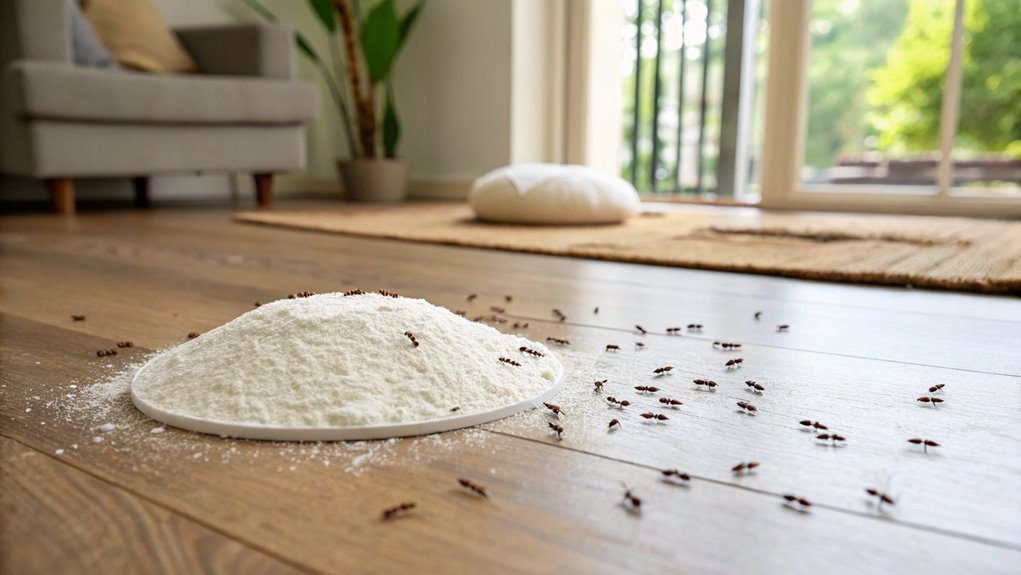
One effective strategy I've found for keeping ants at bay is using a diatomaceous earth barrier.
This natural substance works by sticking to the ants' exoskeletons, causing dehydration and eventually death.
For optimal results, I focus on proper diatomaceous earth application along ant trails and entry points.
It's a safe, non-toxic way to enhance ant infestation prevention in my home.
Cornmeal Disguise
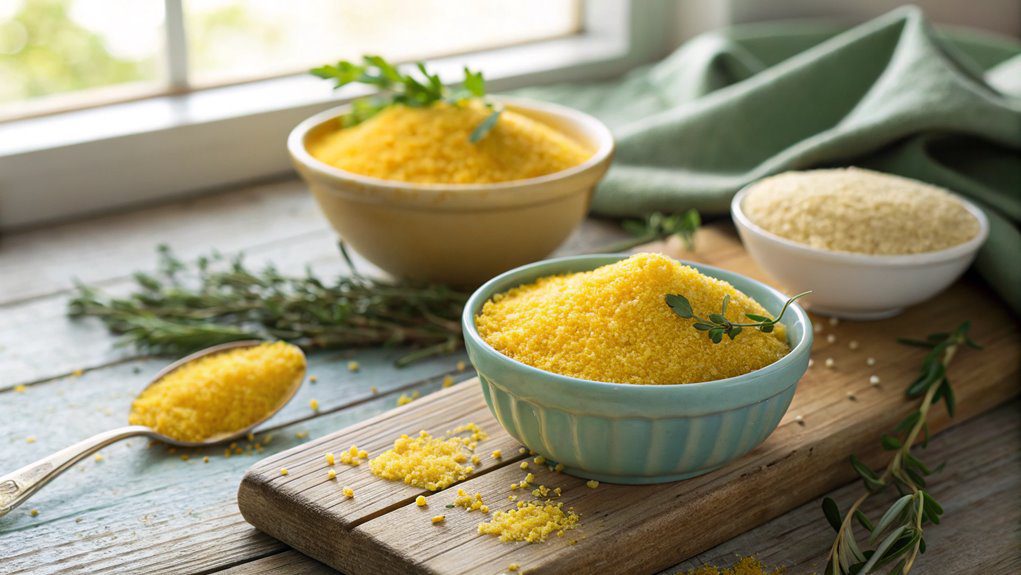
While many people think of cornmeal as just a common pantry staple, I've discovered it can cleverly serve as a tool in my ant control arsenal.
Its high carbohydrate content attracts ants, making it a useful bait when mixed with boric acid. Understanding ant behavior helps me position this combo effectively, ensuring I keep those pesky invaders at bay.
Cornmeal uses extend beyond cooking!
Chalk and Powder Line

Chalk and powder lines can be a surprisingly handy tool in the battle against indoor ants.
While their effectiveness comparison shows limited results, applying them around entry points can disrupt ant trails.
I recommend using a thick, consistent line for the best results.
Remember to reapply regularly, and consider talcum powder as a substitute for chalk to enhance your application techniques.
Ground Pepper Repellent
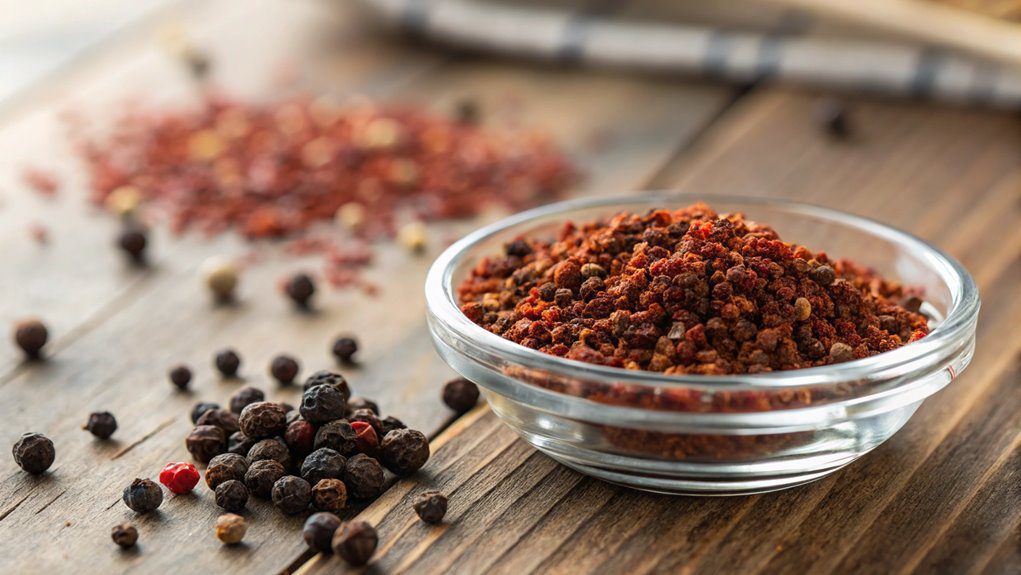
Ground pepper can be an effective and natural way to keep ants at bay in your home.
For a simple pepper mixture preparation, mix one teaspoon of ground black pepper with a cup of water, let it sit overnight, then spray it on ant trails.
This disrupts ant pheromones, making it hard for them to find food and ultimately deterring them from invading your space.
Bay Leaves Placement
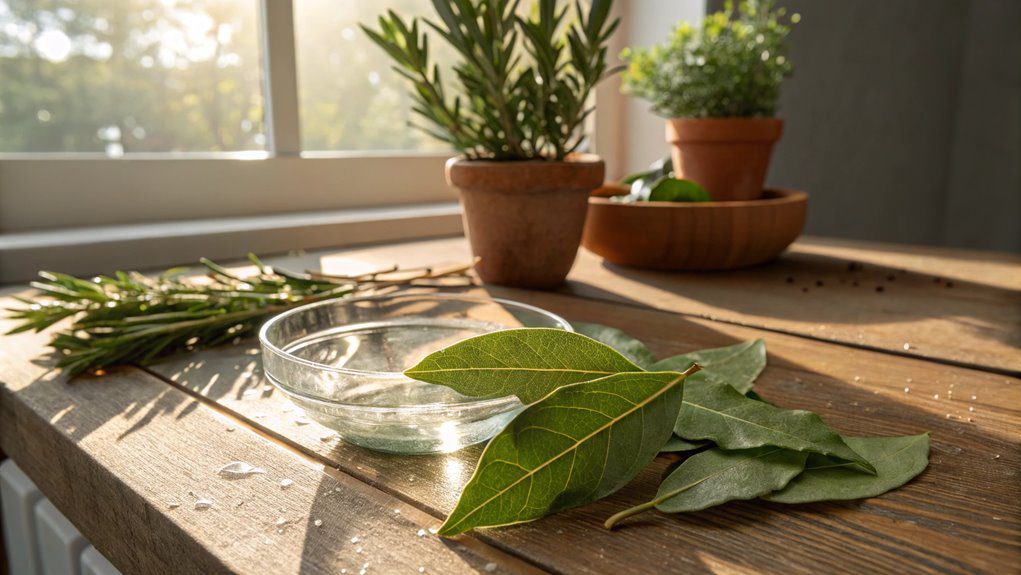
After exploring how ground pepper can disrupt ant trails, let's look at another natural option: bay leaves.
The benefits of bay leaves include their ability to repel ants when placed strategically. I cut dried bay leaves into small pieces and scatter them in corners and cracks, especially in kitchens and pantries.
Just remember to replace them once the scent fades for optimal effectiveness!
Boric Acid and Sugar Bait
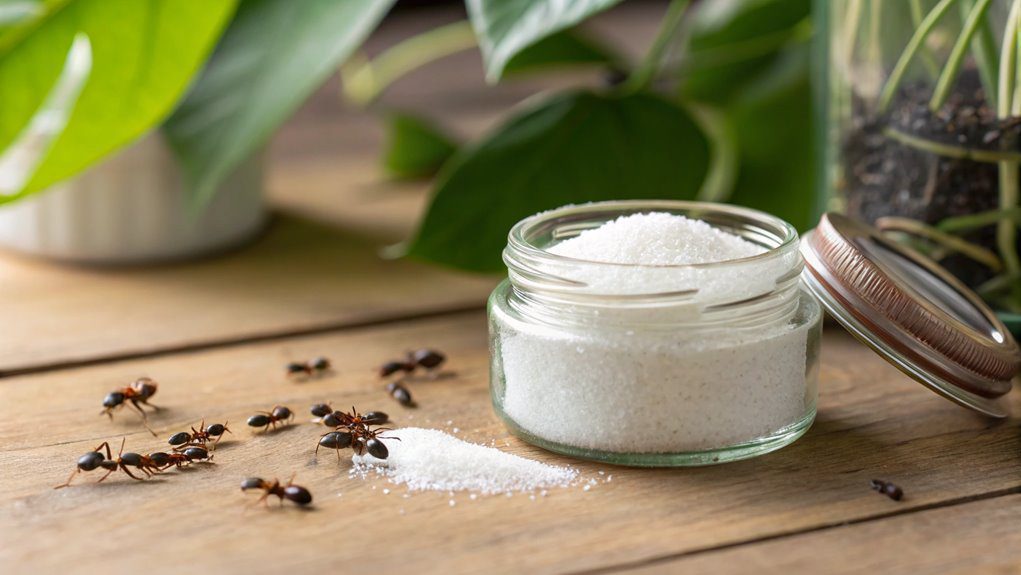
When it comes to tackling ant infestations, one of my go-to methods is using a boric acid and sugar bait.
I mix 1 part boric acid with 3 parts sugar and warm water, then place the bait in small containers near high ant activity areas.
Remember, effective ant species identification is key to targeting the right types.
Regularly refresh the bait for optimal results!
Essential Oils With Water Spray

While the boric acid and sugar bait method works wonders, I've found that using essential oils with water sprays can be just as effective for repelling ants.
The essential oil benefits, like peppermint and tea tree oils, disrupt ant navigation and communication.
Just mix 10-15 drops with water and a dispersant, and you've got a powerful natural pest control solution to spray along their trails!