

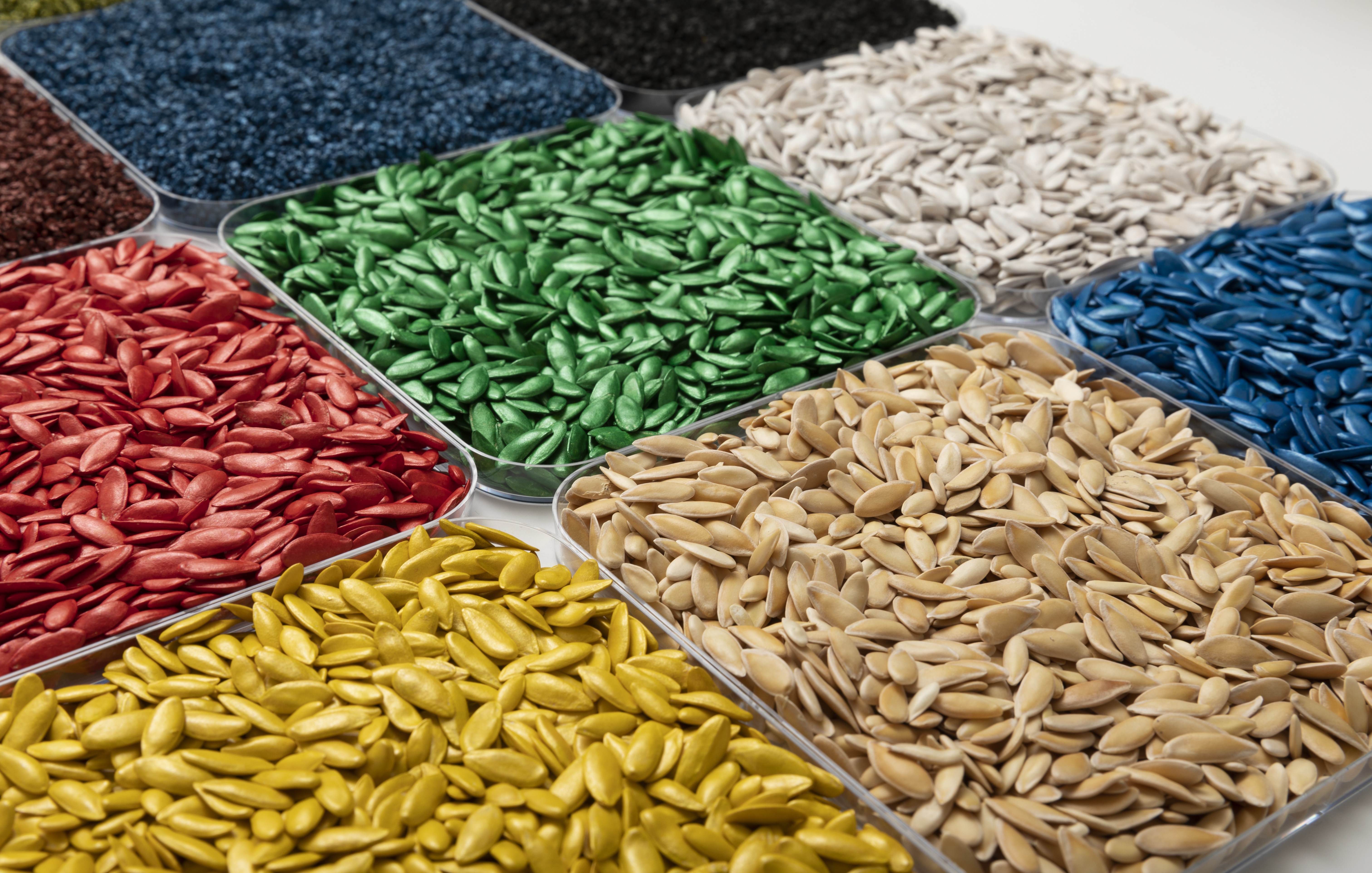
You might wonder why seeds are often coated in bright colors. These colors aren’t just for show; they serve critical practical purposes in farming. The colored coatings on seeds are primarily used to differentiate various treatments and genetic modifications, which helps in managing crops more efficiently. For instance, green might indicate a seed that’s been treated to resist herbicides, while purple could signify resistance to specific pests. This color coding ensures the correct application of seeds in the field, enhancing productivity and operational efficiency. Each hue acts as a non-verbal cue that these seeds are treated and should not be eaten. As you explore further, you’ll understand more about the innovative strategies behind these colors.
Seed Treatments Overview
Seed treatments, which involve the application of protective coatings like fungicides and insecticides to seeds, significantly boost germination success and shield them from diseases and pests.
The color coding on these treated seeds isn’t just for show; it plays a critical role in seed management. For instance, pink or blue hues not only distinguish different types of treatments but also signal specific genetic traits, making it easier for you, as a farmer, to manage your crops effectively.
Integrating practices like sustainable farming can also enhance pollinator health, crucial for the pollination of many crops.
The protection provided by these treatments typically lasts about 4 to 5 weeks post-planting, offering a strategic advantage over older methods like in-furrow treatments.
Investing in such treatments is essential for establishing robust plants that can thrive in diverse environmental conditions and yield high productivity.

Safety and Regulations
Often, I find myself meticulously scrutinizing the regulations surrounding seed treatments. The EPA governs these under the Federal Seed Act and FIFRA, ensuring that all treated seeds are labeled with details of the treatments applied. This is crucial as it delineates seeds meant solely for planting from those safe for consumption.
Furthermore, the vibrant colors on these seeds act as a non-verbal alert, indicating they shouldn’t be eaten. Incorporating organic gardening practices, such as using organic seed treatments, aligns with sustainable agriculture and reduces environmental impact.
Regulations also prohibit the use of certain substances in seed treatments on consumable products, safeguarding both consumer health and the environment. Impressively, treated seeds introduce only 10% of active ingredients into the ecosystem, a stark reduction compared to traditional methods, thus minimizing ecological impact while maintaining effectiveness against pests and diseases for about 4 to 5 weeks post-planting.
Seed Color Coding
Numerous seeds come coated in a palette of vibrant colors, each signifying distinct genetic traits and chemical treatments. For instance, green often marks Round-Up Ready seeds, genetically modified for glyphosate resistance, whereas purple typically identifies Liberty Link seeds, engineered for glufosinate tolerance.
This color-coding system is a practical tool that simplifies seed management for farmers, helping them quickly distinguish between different treatments post-packaging. Additionally, the application of fertilizers tailored to specific crops can further enhance growth characteristics such as increased density and resilience, as observed in grass.
Moreover, the bright colors act as visual warnings, preventing the accidental sale or use of these seeds for consumption. This method not only enhances operational efficiency but also elevates the aesthetic appeal of the seeds, which can positively influence farmers’ attitudes towards modern agricultural practices.

Impact of Misinformation
Misinformation frequently shapes public opinion on genetically modified organisms (GMOs) inaccurately, fostering widespread fear and confusion.
Fear-based advertising, using images like harmful crop dusters, distorts our understanding of biotechnology’s role in agriculture. This not only creates a stigma around GMOs but also impacts policy-making, often to the detriment of agricultural innovation.
Take, for instance, campaigns against Measure 92 in Oregon, which played on public fears and contradicted scientific consensus to sway opinion.
This gap between scientific facts and public sentiment can hinder the adoption of technologies designed to protect the seed, thereby limiting economic growth and advancements in farming practices.
It’s crucial we bridge this divide with effective science communication to truly appreciate the benefits of seed treatments and genetic engineering.
Educational Importance
Understanding the educational importance of the colored coatings on seeds can significantly enhance both the efficiency and safety of modern agriculture. Here’s why it’s crucial:
- Identification System: Colored coatings help distinguish seeds with specific genetic traits or treatments, aiding in precise planting strategies.
- Safety Indicator: The bright colors serve as a visual warning that seeds are treated with chemicals and aren’t safe for consumption.
- Regulatory Compliance: Color differentiation helps prevent the accidental sale or planting of treated seeds for food production, ensuring adherence to agricultural regulations.
- Management Efficiency: The use of distinct colors supports better organization and tracking of seeds in the field, thus optimizing the planting process.
These aspects underscore the key role color coding plays in educating and guiding farmers on seed use.
Economic Factors
Economic considerations play a pivotal role in the decision-making process for farmers purchasing treated seeds. The higher cost of these seeds means that farmers need to accurately predict their seed requirements to avoid unnecessary expenses and maximize their investment’s efficiency.
Depending on the seed, treatments can significantly enhance crop yield potential, justifying the initial higher cost for those aiming for optimal production. Uniform seed size, often a result of these treatments, facilitates better planting techniques and minimizes the risk of uneven crop emergence. This, in turn, improves economic outcomes.
Viewing this as a long-term investment, farmers recognize that healthier plants and higher yields from treated seeds can substantially boost profitability.
Visual Appeal

While economic factors certainly influence farmers’ choices regarding seed purchases, the visual characteristics of treated seeds also play a significant role. The vibrant colors not only make the seeds more attractive but also serve practical purposes in agriculture.
Here’s how:
- Easy Identification: Colors like pink, blue, and green indicate specific genetic traits, making it easier to manage and categorize seeds.
- Simplification of Processes: Color coding, such as green for Round-Up Ready and purple for Liberty Link, streamlines the planting process.
- Market Appeal: The aesthetic quality of colored seeds can influence purchasing decisions by signaling innovation and quality.
- Non-impact on Crop Appearance: The coloration is temporary and doesn’t affect the aesthetics of the harvested crops, ensuring market standards are met.