

Yes, you can compost rice, but I’d advise against it due to significant drawbacks. Cooked rice decomposes quickly, tipping the nitrogen balance in your compost and can lead to odor problems and unwanted bacterial growth. It clumps together, which impairs airflow and creates anaerobic conditions, potentially releasing methane—a potent greenhouse gas. Uncooked rice also presents issues, as it attracts pests and may harbor harmful bacteria. Balancing your compost with appropriate brown and green materials generally requires more nuanced management when including rice. Interested in smarter, more efficient composting practices? There’s more to uncover on optimizing your composting technique.
Understanding Rice Composting
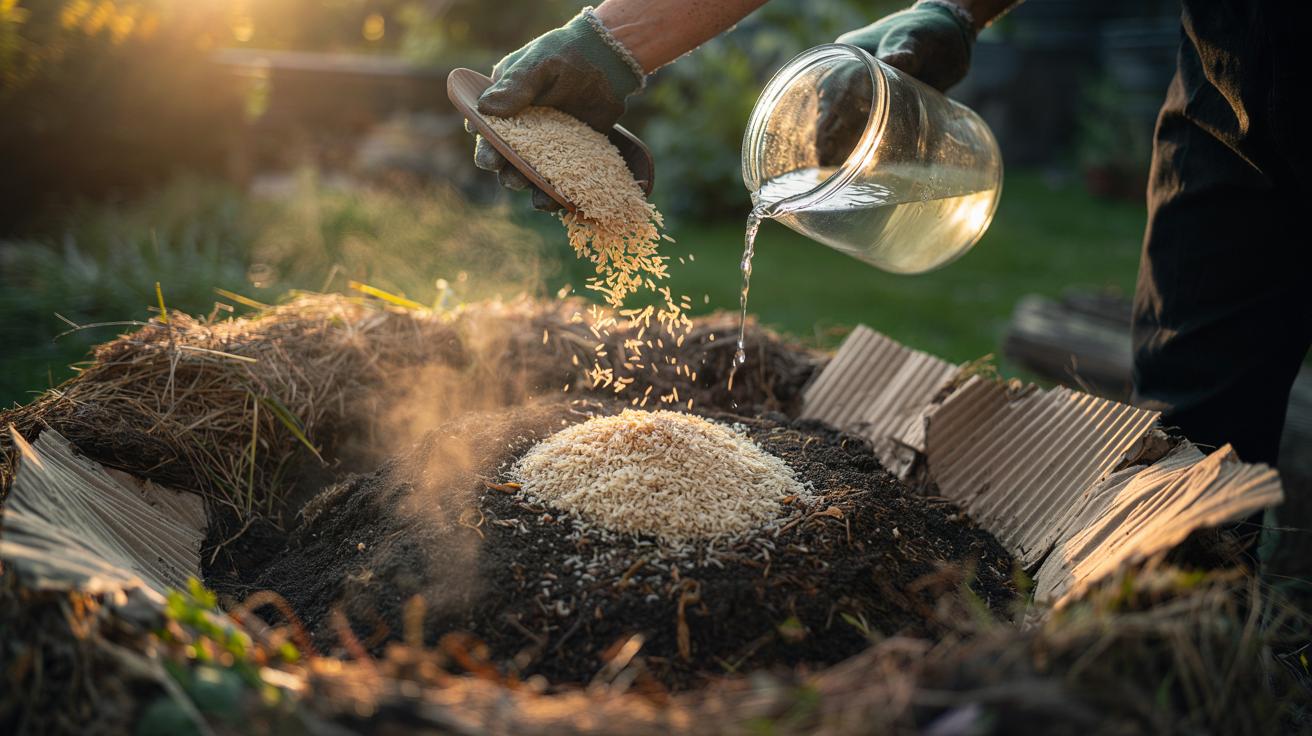
Composting rice, whether raw or cooked, offers a unique addition to your compost bin but requires specific considerations for optimal decomposition.
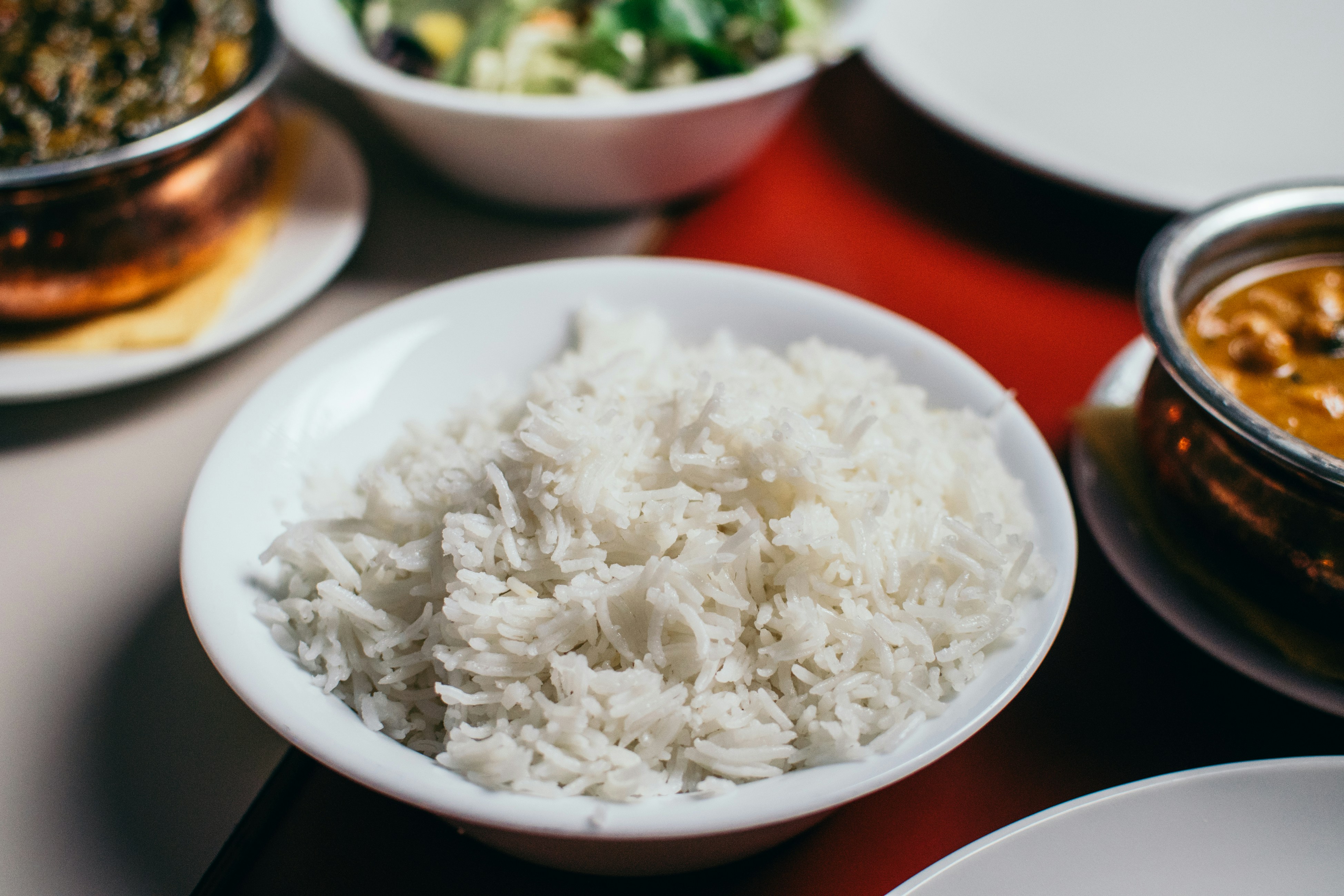
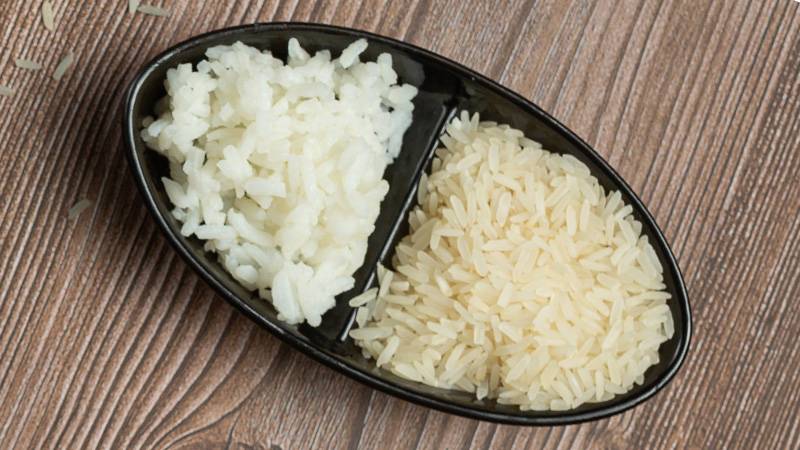
When you’re rice composting, understanding the nature of the rice is crucial. Cooked rice, due to its moist nature, decomposes rapidly, much like nitrogen-rich green materials. This can accelerate the composting process but needs careful monitoring to avoid excessive moisture.
On the other hand, raw rice behaves more like carbon-rich brown materials, breaking down more slowly. To prevent issues such as clumping and ensure balanced decomposition, it’s essential to maintain a proper ratio of greens and browns.
Regularly turning the compost pile and monitoring its temperature can also optimize conditions for the effective breakdown of rice. Additionally, integrating worm castings into the mix can enhance microbial activity and nutrient content, further boosting the composting process.
Risks of Composting Rice
Why consider the risks when composting rice? Well, adding rice to your compost isn’t as straightforward as it may seem. Both uncooked and cooked rice introduce significant challenges.
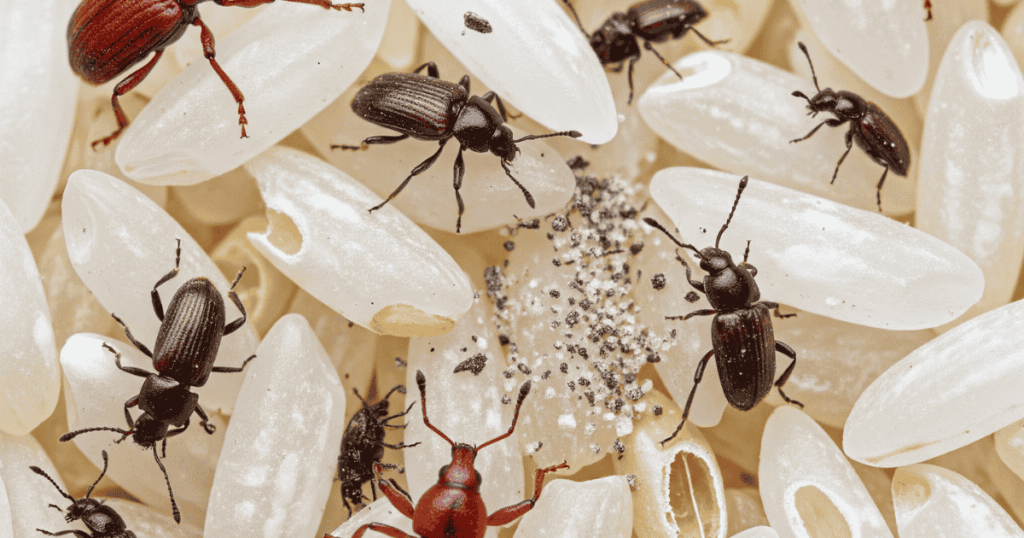
Uncooked rice can attract pests and harmful bacteria, jeopardizing the health and quality of your compost. On the other hand, cooked rice, though it decomposes quickly, can foster the growth of unwanted microorganisms if not balanced correctly with other materials.
Moreover, rice tends to clump, obstructing airflow within the compost pile and potentially creating anaerobic conditions that emit unpleasant odors. Additionally, rice in compost might increase weed seed germination if not fully broken down.
These factors can disrupt the delicate carbon-to-nitrogen balance, essential for effective composting.
Ideal Conditions for Composting
Creating the ideal conditions for composting rice is essential to its successful decomposition and the overall health of your compost pile. To achieve this, a few key steps are crucial:
- Balance Your Greens and Browns: Maintain a balanced mix of nitrogen-rich greens and carbon-rich browns to foster effective decomposition. This balance is vital as it enhances nutrient retention and creates a rich soil amendment, crucial for any composting process.
- Monitor Temperature: Aim for a composting temperature around 160°F to speed up the breakdown process and keep pests at bay.
- Manage Moisture and Aeration: Ensure your compost is damp but not soggy, and regularly turn the pile to enhance aeration and prevent rice from clumping.
Proper aeration helps alleviate any imbalance in the compost, which is vital for maintaining an effective decomposition process.
Alternatives to Rice in Compost

Exploring alternatives to rice in your compost is an effective strategy to enhance decomposition and maintain a balanced nutrient profile. Instead of rice, consider high-nitrogen materials like grass clippings or kitchen vegetable scraps. These accelerate decomposition significantly.
You can also incorporate shredded leaves or cardboard, which serve as excellent carbon sources, helping to keep your compost’s nutrient balance in check.
Additionally, using coffee grounds as substitutes for rice in your compost mix enriches the soil with essential nutrients and improves its structure.
Fruit and vegetable peels are other robust options, providing necessary moisture and nutrients without the risk of attracting pests.
Lastly, consider adding eggshells; they contribute calcium, boosting soil health and making them a beneficial alternative in composting organic waste.
Impact on Compost Quality
Including rice in your compost might seem like a resourceful way to reduce waste, but it often compromises the quality of the finished product.
When composting rice, several issues arise that affect the overall quality:
- Imbalance of Nutrients: Cooked rice can disrupt the nitrogen and carbon balance, necessitating a careful mix with brown materials to prevent a soggy compost pile.
- Excess Moisture: Decomposing rice releases additional moisture, fostering anaerobic conditions that not only slow the process but also produce unpleasant odors.
- Clumping and Air Flow Issues: The presence of rice often leads to clumps in the compost, which hinder air circulation and decelerate the composting process, reducing its efficiency and effectiveness.
Pest Attraction Concerns
While the impact on compost quality is significant, another concern when adding rice to your compost is the attraction of pests. Uncooked rice, in particular, poses a risk as it can harbor bacteria and offer a hearty meal for rodents and insects.
Even cooked rice, which decomposes faster, isn’t free from pest attraction concerns if it’s not managed correctly within your compost heap. The addition of rice can also cause clumping, fostering anaerobic conditions that are particularly inviting to unwanted visitors.
To mitigate these issues, regularly turning your compost pile is crucial as it helps aerate the material, reducing clumping and thus, the likelihood of attracting pests. Moreover, using a closed bin for composting can significantly shield your pile from pests.
Odor Issues With Rice
Adding cooked rice to your compost pile requires careful management to avoid odor issues. When rice starts decomposing, especially if it’s clumped together, you’re facing some real stink risks. This is because as rice breaks down, it can release methane gas in those low-oxygen pockets it creates.
Here’s what you need to keep in mind:
- Mix rice thoroughly: Ensure it’s evenly distributed with other compost materials to promote balanced decomposition and aeration.
- Manage moisture levels: Too much dampness from rice can throw off your compost’s balance, leading to stronger odors.
- Turn your pile regularly: This helps prevent anaerobic conditions that can exacerbate odor issues, keeping the air flowing and odors in check.
Bacterial Growth in Compost
When considering the addition of cooked rice to your compost pile, it’s important to be aware of the potential for increased bacterial growth.
The high moisture content and nutrient density of cooked rice create an ideal environment that encourages bacteria to thrive. This can lead to anaerobic conditions if the compost isn’t properly aerated, resulting in foul odors and a surge in harmful bacteria.
Moreover, overly moist compost that includes rice might foster the proliferation of pathogens, potentially compromising the quality of your finished compost.
To mitigate these risks, it’s crucial to regularly monitor and manage the temperature and aeration of your compost, especially when adding food scraps like rice.
Composting Best Practices

Many gardeners overlook the importance of employing a closed bin design for composting rice; however, this strategy is crucial in preventing pest issues that can arise from open compost piles, which often attract rodents and other animals.
When I’m composting, I follow a few key composting best practices to ensure a healthy, efficient composting process:
- Monitor and turn compost regularly to maintain aeration and prevent odors or clumping, which can attract pests.
- Balance greens and browns to optimize decomposition; remember, rice is a carbon source.
- Add hydrated white lime to neutralize acids and deter vermin, speeding up the decomposition.
These steps help me maintain a robust composting system, minimizing any potential problems and maximizing benefits.
Hot vs. Cold Composting

After discussing the importance of closed bin designs in composting rice to minimize pest issues, let’s explore the different techniques of composting, specifically hot versus cold composting.
Hot composting, which maintains a temperature around 160°F, accelerates the decomposition of materials like cooked rice. This high heat is crucial as it helps kill off pathogens and pests, offering a safer method for composting food scraps.
Conversely, cold composting operates at ambient temperatures and is less labor-intensive since it requires minimal turning and monitoring. However, it may attract pests if not managed properly.
While both methods can effectively compost rice, hot composting is generally recommended for its faster decomposition and better pest control, particularly if you’re dealing with food scraps.
Compost Bin Management
To effectively manage your compost bin, it’s critical to monitor the temperature regularly, aiming to maintain it around 160°F to promote rapid decomposition and deter pests.
Managing your compost bin requires attention to several key practices:
- Even Distribution: Ensure that rice and other materials are spread evenly to avoid clumping and the development of anaerobic spots which cause foul odors.
- Regular Turning: It’s essential to turn the pile frequently to maintain aeration, helping to prevent material compaction and ensuring that decomposition remains aerobic.
- Balanced Material Ratio: Maintain a healthy balance between green and brown materials in your compost bin. This balance is crucial for supporting microbial activity and speeding up the composting process.

Educating on Compost Materials
Having covered how to manage your compost bin effectively, let’s now explore the specifics of what materials you can compost, focusing particularly on the inclusion of rice.
Both raw and cooked rice are technically compostable. However, raw rice poses risks as it can attract pests and cultivate bacteria.
On the other hand, cooked rice decomposes quickly, behaving like other nitrogen-rich materials such as composting coffee grounds.
To maintain a healthy compost, it’s crucial to balance these nitrogen-rich elements with carbon-rich materials.
Avoid mixing rice with meats or oils to prevent odors and pests.
Regular monitoring and turning of your compost pile are essential, especially when adding materials like rice that have specific challenges associated with them.
Summary of Composting Challenges
In discussing the challenges of composting rice, it’s clear that managing this ingredient requires careful consideration. When rice, especially uncooked, is added to your compost heap, it can attract unwanted pests and potentially harmful bacteria. Ensuring that these risks are mitigated is crucial for a healthy compost process.
Here are some key points to consider:
- Pest Attraction: Rice can draw pests such as rodents and insects, which may lead to contamination.
- Balance Disruption: Rice can upset the crucial green-to-brown ratio in your compost heap.
- Aeration Needs: Regular turning and proper aeration are essential to prevent rice from clumping and slowing down the decomposition.