
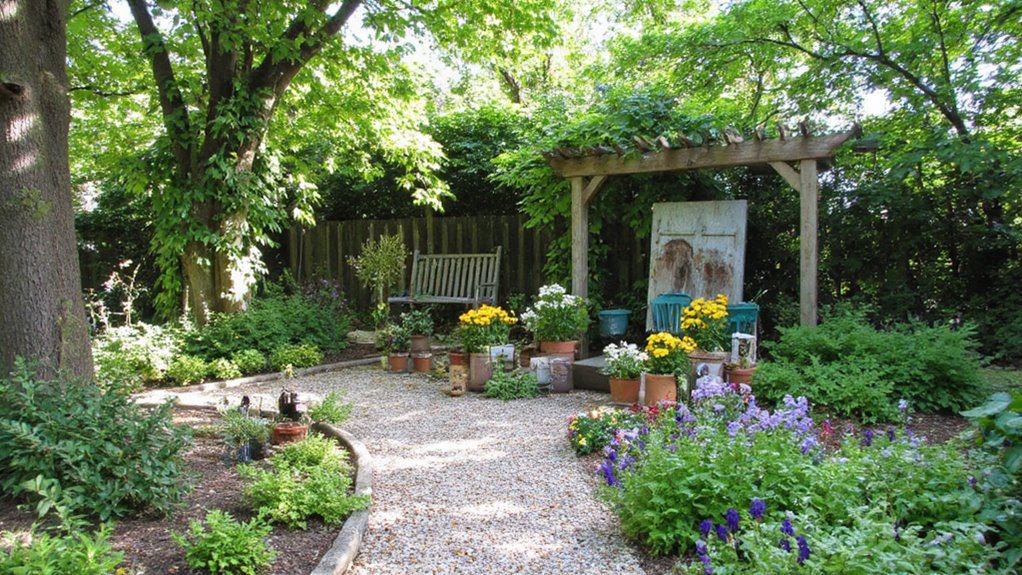
When space and budget are tight, crafting a small garden can feel challenging, but it doesn’t have to be. I’ve found that with a few smart choices—like repurposing items and focusing on efficient watering—you can create a thriving green space without overspending. There are simple techniques to maximize every inch and nurture plants effectively that many overlook. Let me share some strategies that might change how you approach your garden project.
Utilize Vertical Gardening Techniques
When it comes to small garden design, I don’t recommend relying on vertical gardening techniques.
While they save space, vertical gardens often demand complex installations and maintenance that can strain a tight budget.
Instead, I focus on maximizing horizontal layouts with compact, layered planting, ensuring both practicality and aesthetic appeal without the hidden costs vertical setups sometimes entail.
Repurpose Household Items as Planters
Although some might doubt their practicality, repurposing household items as planters can add unique charm and character to a small garden without breaking the bank.
I love transforming old teapots, wooden crates, or tin cans into creative containers. They offer texture and personality, making each plant stand out.
Plus, it’s eco-friendly and budget-conscious, perfect for small spaces seeking style and sustainability.
Start Seeds Indoors to Save Money
Repurposing household items as planters not only breathes new life into old objects but also sets the stage for a more hands-on approach to gardening.
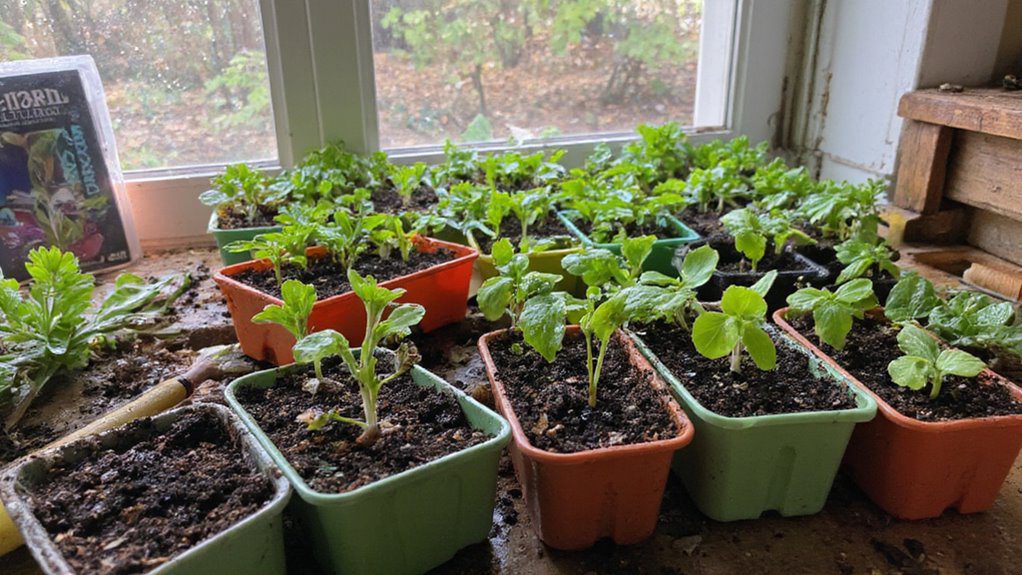
Starting seeds indoors is a smart, budget-friendly method to nurture healthy plants before transplanting. It reduces costs on seedlings and extends your growing season, allowing you to control conditions for optimal germination and growth.
Create a DIY Compost Bin

Since I’m passionate about sustainable gardening, I’ve found that creating a DIY compost bin not only cuts down on waste but also enriches my soil naturally.
I built mine from repurposed wooden pallets, ensuring proper ventilation and drainage. Regularly turning the compost accelerates decomposition, yielding nutrient-rich humus that boosts plant growth while saving money on fertilizers—a simple, eco-friendly solution for any budget garden.
Use Mulch to Retain Soil Moisture
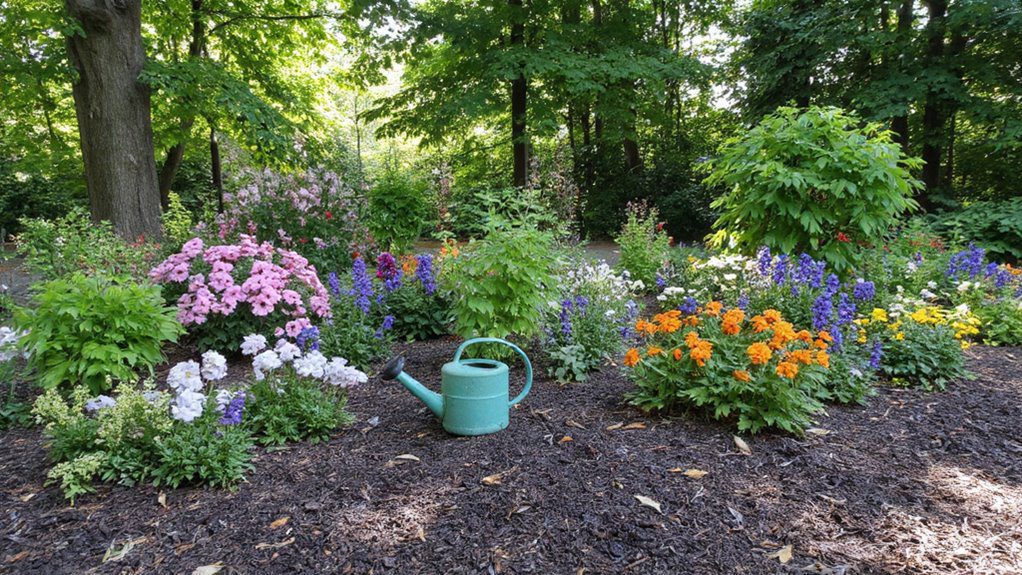
When I apply mulch around my plants, I immediately notice how it helps keep the soil moist by reducing evaporation.
Mulch acts as a protective barrier, maintaining consistent soil temperature and preventing dryness. It also suppresses weeds, which compete for water.
Using organic mulch like shredded leaves or bark enhances soil fertility as it decomposes, making it a cost-effective, efficient method to nurture a small garden.
Opt for Native and Drought-Tolerant Plants
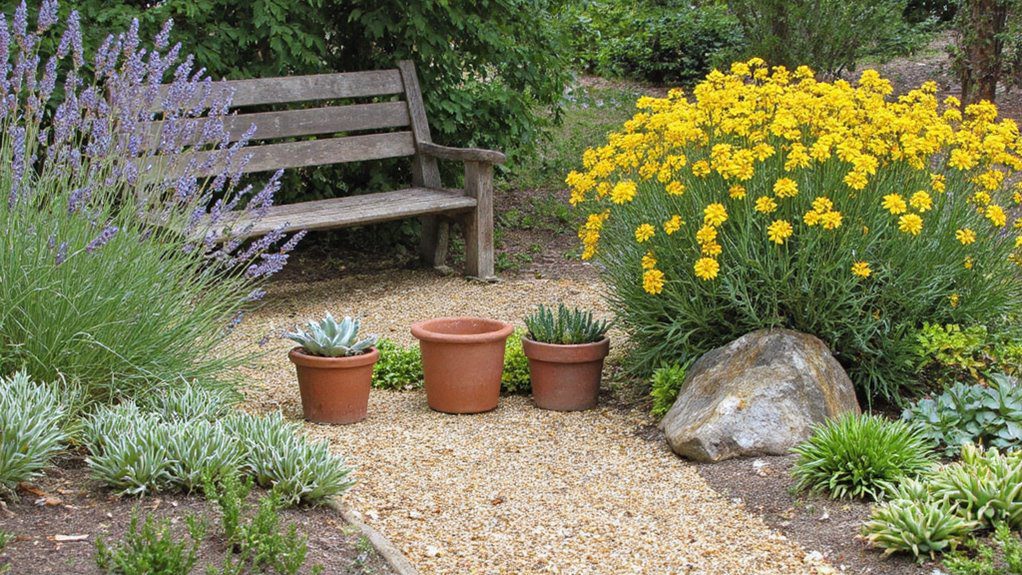
Although choosing plants might seem straightforward, opting for native and drought-tolerant varieties can transform your small garden into a sustainable, low-maintenance oasis.
These plants thrive naturally in your climate, reducing water usage and upkeep. Their resilience enhances garden health while adding authentic beauty.
Selecting them smartly ensures your budget stretches further without sacrificing style or sustainability.
Build Raised Garden Beds From Pallets

If you’re looking to maximize space and add structure to your small garden, building raised garden beds from pallets can be a practical and budget-friendly solution.
Pallets provide sturdy, reusable wood that’s easy to assemble into beds. Just ensure the wood is untreated, then sand and seal it for durability.
This method creates neat, elevated planting areas, improving soil drainage and accessibility.
Incorporate Container Gardening on Balconies
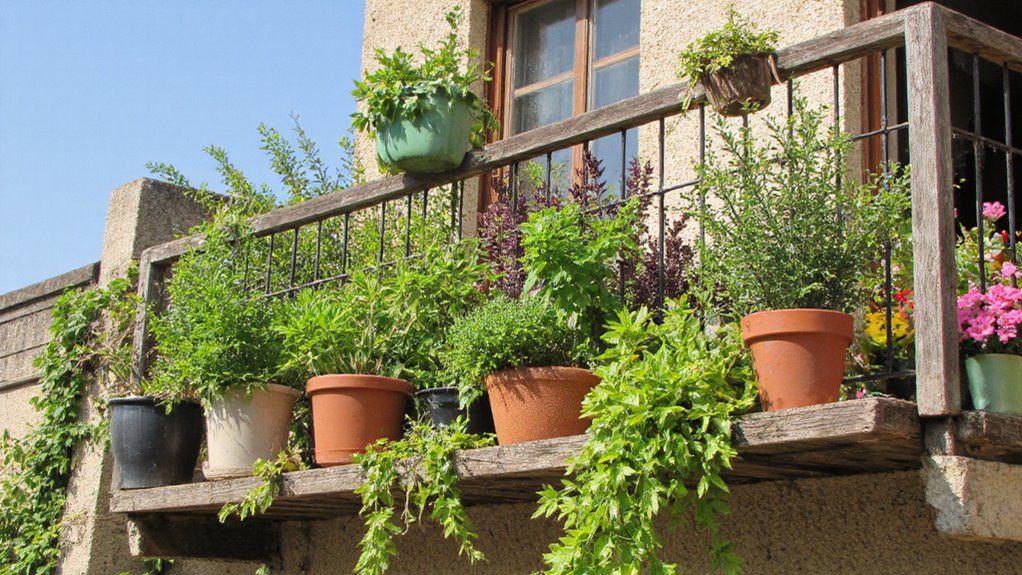
Since space is often limited on balconies, incorporating container gardening allows you to cultivate a variety of plants without requiring a traditional garden plot.
I choose lightweight, stylish containers to optimize space and ensure proper drainage.
Carefully selecting plants suited for container life, like herbs and compact flowers, keeps maintenance manageable while enhancing the balcony’s aesthetic with vibrant greenery and texture.
Propagate Plants From Cuttings

Propagating plants from cuttings offers a cost-effective way to expand your garden while preserving the characteristics of your favorite varieties.
I carefully select healthy stems, trim them just below a node, and place them in water or moist soil to root.
This hands-on method requires patience but yields beautiful, genetically identical plants that enrich your garden without extra expense.
Design a Herb Garden With Kitchen Scraps
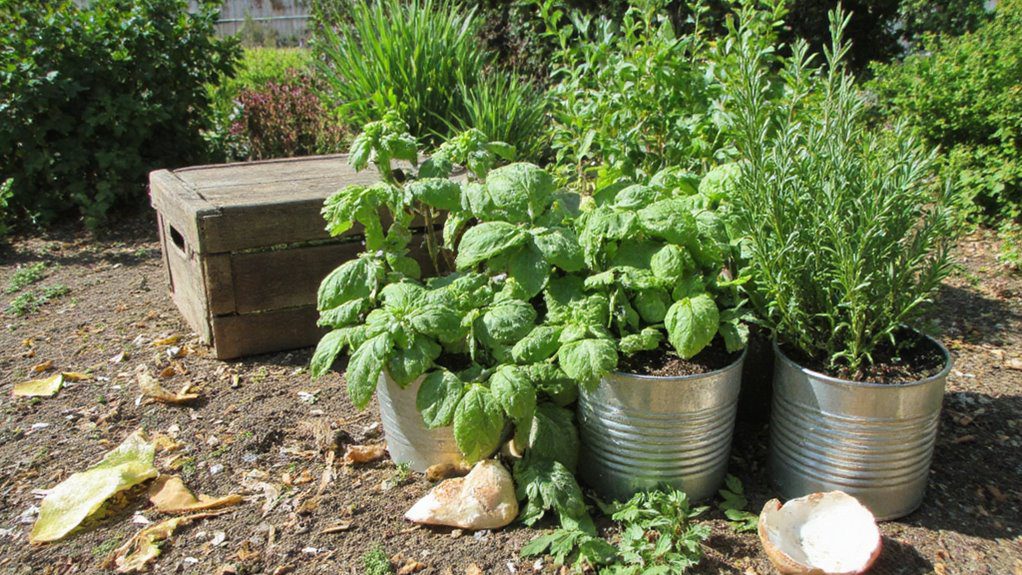
While many might overlook kitchen scraps, I’ve found they offer a surprisingly efficient way to design a thriving herb garden on a budget.
By regrowing herbs like basil or green onions from their roots or stems, you save money and reduce waste.
It’s a simple, sustainable method that brings fresh flavors directly to your kitchen without extra expense or complex tools.
Implement Drip Irrigation Systems for Efficiency

After establishing your herb garden from kitchen scraps, the next step is to ensure your plants receive consistent, efficient watering without wasting resources.
Implementing a drip irrigation system delivers water directly to the roots, reducing evaporation and runoff.
It’s an affordable, low-maintenance solution that saves both water and time, promoting healthier growth while keeping your budget intact.