
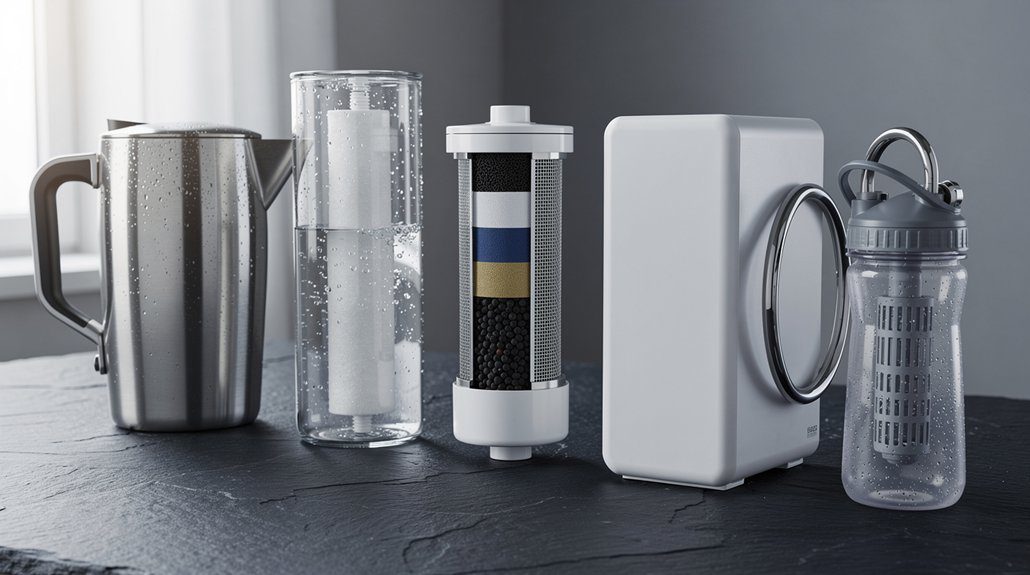
For reliable microplastic removal in 2026, pick a tech that matches your use: pitchers like Aquagear and Clearly Filtered trap particles while preserving minerals and targeting PFAS/lead; LifeStraw Go gives a membrane-based travel option that blocks microplastics and pathogens; AquaTru and Bluevua RO systems use reverse osmosis for the finest particulate removal and remineralization. Consider pore size, certified test results, flow rate and filter lifespan—keep going to see specs, costs and maintenance tips.
| Aquagear Water Filter Pitcher – Lead Chlorine PFOA/PFOS Microplastics Filter 10 Cup 120 Gallon Filter Life – Filter Media Made in USA | 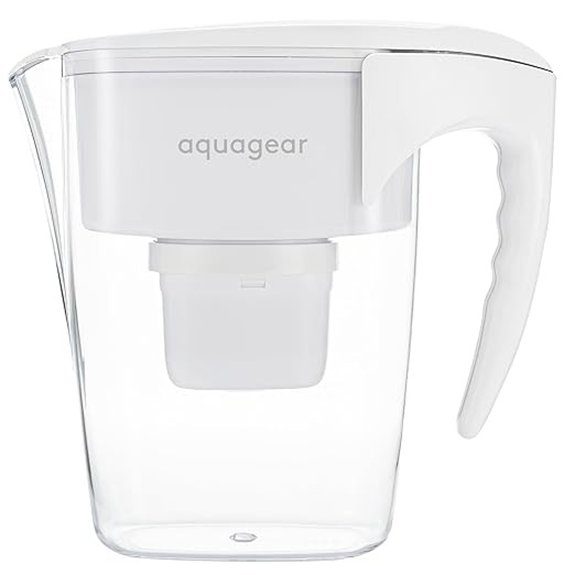 | Most Efficient Pitcher | Microplastics Removal: Third‑party tested to filter microplastics | Filtration Type / Technology: Pitcher filter media (made in USA) | Removes Lead: Tested to filter lead | VIEW LATEST PRICE | Read Our Analysis |
| Clearly Filtered No.1 Filtered Water Pitcher/Updated Model/Targets 365+ Contaminants e.g. Fluoride Chlorine PFAS Microplastics Lead Arsenic BPA/BPS Free (Pitcher Includes 1 Filter) | 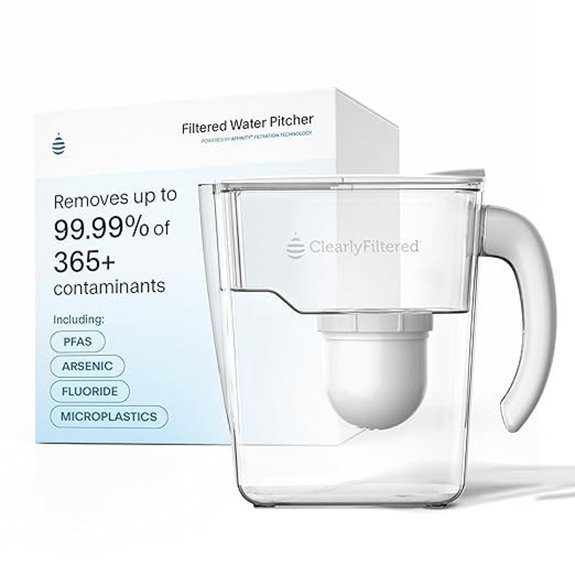 | Most Comprehensive Removal | Microplastics Removal: Targets microplastics (third‑party tested) | Filtration Type / Technology: Affinity Filtration (proprietary cartridge) | Removes Lead: Targets lead (listed among 365+ contaminants) | VIEW LATEST PRICE | Read Our Analysis |
| LifeStraw Go Series — Insulated Stainless Steel Water Filter Bottle for Travel and Everyday Use Removes Bacteria Parasites and Microplastics Improves Taste 1L Aegan Sea | 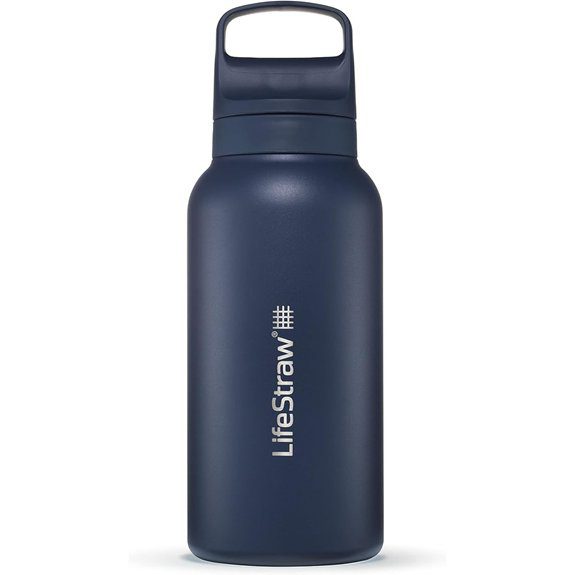 | Best for Travel | Microplastics Removal: Membrane microfilter removes 99.999% microplastics | Filtration Type / Technology: 2‑stage membrane microfilter + carbon | Removes Lead: Protects against bacteria/parasites; carbon reduces chlorine/organics (lead not primary claim but product line targets heavy contaminants) — listed performance includes broad contaminant removal (implied heavy metal reduction) | VIEW LATEST PRICE | Read Our Analysis |
| AquaTru Classic Countertop Water Purifier | Certified 4-Stage Reverse Osmosis System Removes 84 Contaminants Including Forever Chemicals Lead Fluoride & Microplastics | No Plumbing Required | 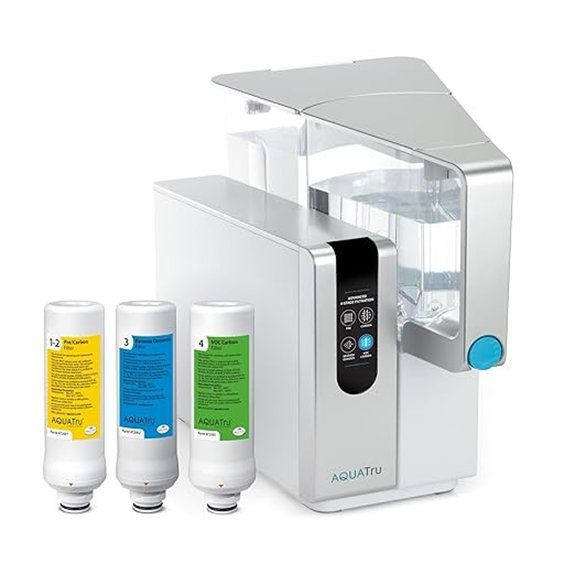 | Premium RO Performance | Microplastics Removal: RO system removes microplastics | Filtration Type / Technology: 4‑stage ultra reverse osmosis | Removes Lead: RO certified to remove lead | VIEW LATEST PRICE | Read Our Analysis |
| Bluevua RO100ROPOT Countertop Reverse Osmosis Water Filter System Portable RO Filtration with Remineralization No Installation WQA Certified – ROPOT 5-Stage RO | 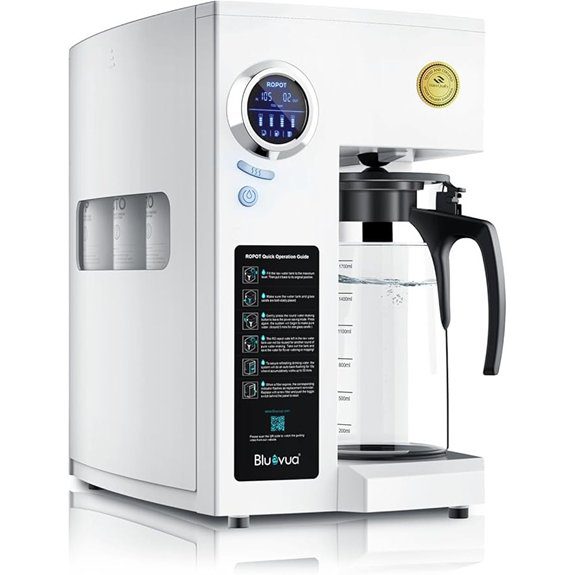 | Best for Mineral Balance | Microplastics Removal: 5‑stage RO removes contaminants including microplastics | Filtration Type / Technology: 5‑stage reverse osmosis with remineralization | Removes Lead: RO removes up to 99.9% contaminants including heavy metals (lead) | VIEW LATEST PRICE | Read Our Analysis |
More Details on Our Top Picks
Aquagear Water Filter Pitcher – Lead Chlorine PFOA/PFOS Microplastics Filter 10 Cup 120 Gallon Filter Life – Filter Media Made in USA
If you’re worried about microplastics and heavy metals in your tap water, the Aquagear pitcher is a strong choice—its third-party-tested filter targets microplastics, lead, chlorine, PFOA and PFOS while leaving beneficial minerals like calcium and magnesium intact. You get a 10-cup pitcher with filters that last 120 gallons—about three times longer than standard options—so you’ll change cartridges less often. Aquagear removes roughly 20× more contaminants than typical pitchers and uses filter media made in the USA in an ISO 9000 facility. When a filter’s spent, you’ll use the included postage-paid recycling return to keep it out of landfills.
- Microplastics Removal:Third‑party tested to filter microplastics
- Filtration Type / Technology:Pitcher filter media (made in USA)
- Removes Lead:Tested to filter lead
- Portable / Countertop or Bottle Form Factor:10‑cup countertop pitcher (portable countertop)
- Filter Lifespan / Capacity Indicated:120 gallons per filter
- Reduces Chlorine / Improves Taste:Removes chlorine (improves taste)
- Additional Feature:Retains healthy minerals
- Additional Feature:Filter media made USA
- Additional Feature:Postage-paid recycling
Clearly Filtered No.1 Filtered Water Pitcher/Updated Model/Targets 365+ Contaminants e.g. Fluoride Chlorine PFAS Microplastics Lead Arsenic BPA/BPS Free (Pitcher Includes 1 Filter)
For households and travelers who want a straightforward, cartridge-based solution that specifically strips microplastics plus a long list of other contaminants, the Clearly Filtered No.1 pitcher is a strong pick. You get an updated 2024 model that targets 365+ contaminants—fluoride, chlorine, PFAS, lead, arsenic, pharmaceuticals and more—while preserving beneficial minerals. The BPA/BPS-free Tritan pitcher holds 80 oz, uses Affinity Filtration Technology, and delivers about 100 gallons (≈4 months) per filter. Independent NSF/ANSI testing backs performance. It’s manual countertop use, reduces single-use bottles, and includes one filter, priming kit, and a 30-day satisfaction guarantee.
- Microplastics Removal:Targets microplastics (third‑party tested)
- Filtration Type / Technology:Affinity Filtration (proprietary cartridge)
- Removes Lead:Targets lead (listed among 365+ contaminants)
- Portable / Countertop or Bottle Form Factor:80 fl oz countertop pitcher (portable)
- Filter Lifespan / Capacity Indicated:100 gallons per filter (~4 months)
- Reduces Chlorine / Improves Taste:Removes chlorine; improves flavor and odor
- Additional Feature:Medical-grade Tritan plastic
- Additional Feature:Targets 365+ contaminants
- Additional Feature:NSF/ANSI standards certified
LifeStraw Go Series — Insulated Stainless Steel Water Filter Bottle for Travel and Everyday Use Removes Bacteria Parasites and Microplastics Improves Taste 1L Aegan Sea
Frequent travelers and everyday commuters who want reliable microplastic removal will appreciate the LifeStraw Go Series insulated stainless steel bottle, which pairs a membrane microfilter with activated carbon to block 99.999% of microplastics while improving taste. You get a 1 L, double-wall vacuum insulated stainless steel bottle that keeps water cool and is BPA-free. The membrane removes bacteria, parasites and particulates; the carbon reduces chlorine and odors. The membrane lasts up to 4,000 L; the carbon about 100 L. It’s travel-ready, replaces thousands of single-use bottles, and includes manufacturer warranty and five-year EU spare part support.
- Microplastics Removal:Membrane microfilter removes 99.999% microplastics
- Filtration Type / Technology:2‑stage membrane microfilter + carbon
- Removes Lead:Protects against bacteria/parasites; carbon reduces chlorine/organics (lead not primary claim but product line targets heavy contaminants) — listed performance includes broad contaminant removal (implied heavy metal reduction)
- Portable / Countertop or Bottle Form Factor:1 L insulated portable bottle
- Filter Lifespan / Capacity Indicated:Membrane up to 1,000 gallons; carbon ~26 gallons
- Reduces Chlorine / Improves Taste:Carbon filter reduces chlorine and odors; improves taste
- Additional Feature:2-stage filtration system
- Additional Feature:Insulated stainless steel
- Additional Feature:Donate-to-children program
AquaTru Classic Countertop Water Purifier | Certified 4-Stage Reverse Osmosis System Removes 84 Contaminants Including Forever Chemicals Lead Fluoride & Microplastics | No Plumbing Required
Home kitchens that want a plug-and-play solution to cut microplastics (plus PFAS, lead, fluoride and other contaminants) will find the AquaTru Classic countertop purifier a strong choice. You get a certified 4-stage ultra reverse-osmosis system that IAMPO tested to NSF standards, removing 84 contaminants including PFOA/PFOS, lead, fluoride, chlorine and microplastics. It sits on your counter—no plumbing—fills a 1-gallon tank and runs on a plug-in cord. Filters last six months to two years depending on use, each set replacing up to 4,500 plastic bottles. The plastic-bodied unit measures 14″ x 12″ x 14″ and supports feed water up to 500 ppm TDS.
- Microplastics Removal:RO system removes microplastics
- Filtration Type / Technology:4‑stage ultra reverse osmosis
- Removes Lead:RO certified to remove lead
- Portable / Countertop or Bottle Form Factor:Countertop purifier (plug‑in, no plumbing)
- Filter Lifespan / Capacity Indicated:Filter life varies by stage — typically 6 months to 2 years
- Reduces Chlorine / Improves Taste:Removes chlorine as part of RO stages
- Additional Feature:4-stage ultra RO
- Additional Feature:No plumbing required
- Additional Feature:IAMPO/NSF independent certified
Bluevua RO100ROPOT Countertop Reverse Osmosis Water Filter System Portable RO Filtration with Remineralization No Installation WQA Certified – ROPOT 5-Stage RO
If you want a no-install, portable RO system that still delivers bottled-quality water, the Bluevua RO100ROPOT is a smart pick—its 5-stage reverse osmosis with remineralization removes up to 99.9% of contaminants, including microplastics, while restoring essential minerals for better taste. You’ll plug it in (corded electric) and get a steady 0.26 L/min flow into a 1.7 L borosilicate glass carafe, avoiding plastic contact. It handles feed TDS up to 1000 ppm, uses a 2:1 pure-to-drain ratio, and shows filter life on a display. WQA certified, climate-conscious, and portable with a one-year warranty.
- Microplastics Removal:5‑stage RO removes contaminants including microplastics
- Filtration Type / Technology:5‑stage reverse osmosis with remineralization
- Removes Lead:RO removes up to 99.9% contaminants including heavy metals (lead)
- Portable / Countertop or Bottle Form Factor:Countertop portable RO unit (no installation)
- Filter Lifespan / Capacity Indicated:Typical filter lifespan 12–24 months (filters included)
- Reduces Chlorine / Improves Taste:RO and remineralization produce bottled‑quality taste (reduces chlorine)
- Additional Feature:Remineralization stage included
- Additional Feature:Glass borosilicate carafe
- Additional Feature:Pure-to-drain 2:1 ratio
Factors to Consider When Choosing a Water Filter for Microplastics
When choosing a water filter for microplastics, you should compare filtration technology and pore size rating to ensure it captures particles at the right scale. Check for third-party certifications and consider how flow rate affects removal efficiency. Also factor in filter lifespan so you know how often replacements are needed and what ongoing cost to expect.
Filtration Technology Type
Although ease of use matters, the core choice is the filtration technology: different membranes and media remove microplastics by distinct mechanisms, and those differences determine how small a particle you’ll capture, how quickly filters clog, and how often you’ll need replacements. You should weigh mechanical membrane options: microfiltration and ultrafiltration physically sieve particles (UF captures smaller fragments). Carbon block and depth filters trap and adsorb particles but struggle with very fine (<1 µm) debris. Reverse osmosis gives the highest removal, rejecting down to nanometers and removing >99% of particulates and dissolved solids. Combination systems—sediment prefilter plus fine membrane or RO—boost removal, reduce fouling, and extend service life. Finally, evaluate vendors by pore ratings and independent particle‑removal testing, not broad claims.
Pore Size Rating
Because pore size directly controls what particles a filter can physically catch, you should pick a rating that matches the smallest microplastics you want removed. Microplastics span down from millimeters to sub-micron fragments; if you need to catch fibers and fragments down to about 1 μm, choose filters rated ≤1 μm, and for finer removal look for 0.1 μm options. Prefer absolute ratings when you want guaranteed performance—a true 1 μm absolute rating retains ≥99.9% of ≥1 μm particles—while nominal ratings may only capture a portion. For portable or gravity systems, membrane microfilters or ceramic elements rated ≤1 μm work well. Remember sub-micron pores increase backpressure and reduce flow and lifespan, so balance removal goals with flow rate and maintenance frequency.
Third-Party Certifications
If you want confidence that a filter actually removes microplastics, rely on third-party lab certifications and detailed test reports rather than marketing claims. Look for reports that quantify removal by particle size and percent reduction (for example ≥1 µm and 0.1–1 µm), not vague “microplastics” labels. Prefer testing to recognized standards or published protocols (ASTM, ISO particle-count methods) that state removal efficiency by size. Verify independent testing used real-world water matrices—tap, bottled, or environmental samples—and lists limits of detection so reductions are meaningful. Check that certificates come from accredited labs (ISO/IEC 17025) and include full methods, dates, and sample conditions rather than simple badges. When available, review endurance testing showing sustained removal over the filter’s rated lifespan.
Flow Rate Impact
Keep an eye on flow rate because it directly affects how well a filter catches microplastics: smaller pore-size membranes (≤0.1 µm) slow water down, so higher removal efficiency usually means lower liters-per-minute. You’ll see flow measured in L/min or GPM; systems targeting high microplastic removal often run under ~0.5 L/min to allow adequate capture. Faster flow raises the chance that irregular or near-cutoff particles slip through, lowering effectiveness. To balance speed and performance, look for multi-stage designs that use a coarse prefilter to trap larger debris and keep the fine membrane flowing. Also monitor output: a significant drop from the baseline L/min indicates loading and signals you need to replace filters to preserve microplastic removal efficiency.
Filter Lifespan
Flow rate and replacement schedule are tightly linked, so once you’ve considered how speed affects capture, the next thing to check is how long the filter will actually maintain that performance. You’ll want filters with longer rated lifespans (gallons or months) because fewer changes lower cumulative exposure if efficiency holds. Check the rated capacity—100–1,000+ gallons—and note that performance can fall as media clogs or saturates. Verify whether manufacturers list separate intervals for stages (membrane vs. carbon) and ensure the microplastic-capturing stage has a clear replacement schedule. High daily use or turbid source water will shorten life, so adjust expectations. Finally, prioritize units with third-party data showing removal efficiency across the full lifespan, not just initial results.
Maintenance And Disposal
Maintaining and disposing of filters correctly matters as much as picking one — you’ll need to replace cartridges on schedule, follow priming and flushing steps, and clean prefilters and housings so microplastic capture doesn’t drop off or bacteria build up. Check rated lifespan and removal capacity (gallons or months) so you swap cartridges before efficiency declines. Follow manufacturer priming/flushing to avoid clogging and microbial growth that reduces capture. Inspect and clean prefilters, strainers, housings, and pitcher reservoirs to remove trapped fibers and debris that can bypass or foul the main element. Use recycling or take-back programs, or follow local guidelines when disposing of microplastic-laden media to prevent landfill leakage. Include replacement, cleaning supplies, and any service costs when evaluating long-term value.