

You’ll want filters that tackle Florida’s chlorine, occasional PFAS, and variable TDS or hardness. Pick ZeroWater’s 22‑cup dispenser for near‑total demineralization and a TDS meter, Waterdrop 10UA under‑sink for NSF‑rated carbon performance and long cartridge life, CuZn UC‑200 for drill‑free PFAS/lead reduction without stripping minerals, and Bluevua ROPOT countertop RO for heavy dissolved solids with remineralization. Keep your water source and flow needs in mind — more details follow.
| ZeroWater 22-Cup 5-Stage Water Filter Dispenser | 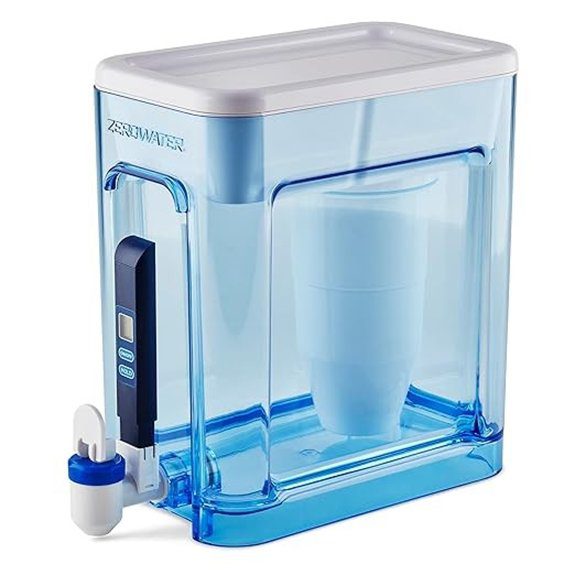 | Best for TDS Removal | Application: Countertop drinking water dispenser | Filtration stages / method: 5-stage ion-exchange filtration | Contaminant reduction focus: Reduces TDS, lead, chromium, mercury, PFOA/PFOS | VIEW LATEST PRICE | Read Our Analysis |
| Waterdrop 10UA Under-Sink Water Filter System | 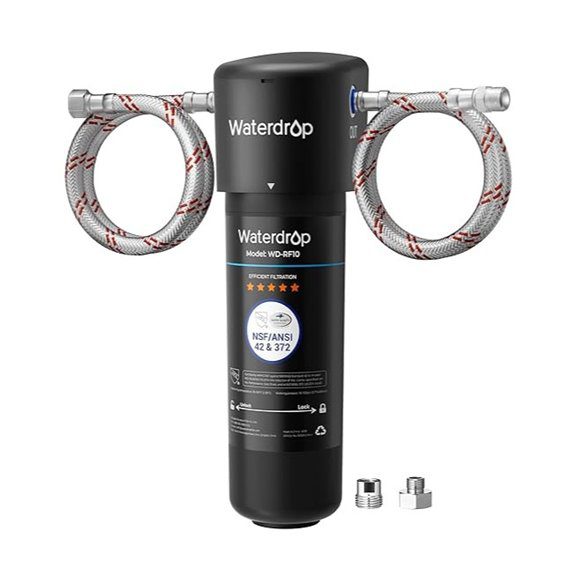 | Best Under-Sink Pick | Application: Under-sink direct-connect system (kitchen faucet) | Filtration stages / method: Multi-stage (carbon + specialty media) activated-carbon-based filtration | Contaminant reduction focus: Reduces PFAS/PFOA/PFOS, lead, chlorine, taste/odor | VIEW LATEST PRICE | Read Our Analysis |
| CuZn Under-Sink Water Filter Reduces PFAS Lead | 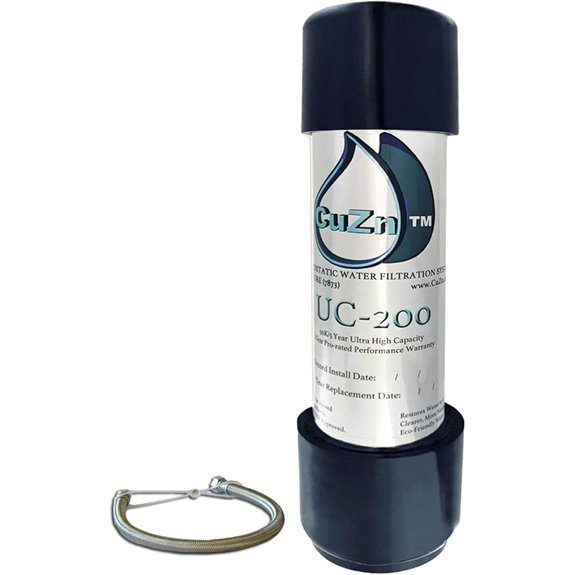 | Longest Lifespan Value | Application: Under-sink/inline sink faucet connection | Filtration stages / method: 3-stage (sediment + KDF-55 + coconut-shell carbon) | Contaminant reduction focus: Reduces PFAS/PFOA/PFOS, lead, chlorine; improves taste | VIEW LATEST PRICE | Read Our Analysis |
| Bluevua ROPOT Countertop Reverse Osmosis Water Filter System | 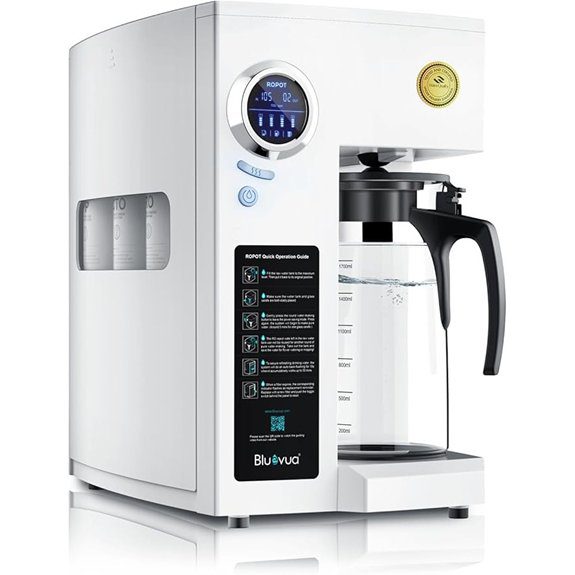 | Premium RO Option | Application: Countertop portable RO system (plug-in) | Filtration stages / method: 5-stage reverse osmosis with remineralization | Contaminant reduction focus: Removes up to 99.9% of contaminants (RO targets broad range incl. PFAS/lead) | VIEW LATEST PRICE | Read Our Analysis |
More Details on Our Top Picks
ZeroWater 22-Cup 5-Stage Water Filter Dispenser
If you live in Florida and want near-total removal of dissolved minerals and contaminants, the ZeroWater 22-Cup 5-Stage dispenser is a strong choice—especially if you need large, ready-to-drink batches for a family or frequent guests. You get a 22-cup BPA-free countertop unit with an ergonomic handle, 5-stage ion-exchange filter, and a built-in TDS meter that gives instant readouts. It’s IAPMO certified to reduce lead, chromium, mercury, and PFOA/PFOS, and the meter signals filter changes at 006. The dispenser saves hundreds of single-use bottles yearly, uses corded power for the meter, and fits standard ZeroWater replacement filters.
- Application:Countertop drinking water dispenser
- Filtration stages / method:5-stage ion-exchange filtration
- Contaminant reduction focus:Reduces TDS, lead, chromium, mercury, PFOA/PFOS
- Retains or restores minerals:Not specified (ion-exchange focus; aims for very low TDS)
- Installation type / ease:No plumbing — countertop pitcher/dispenser (plug for TDS meter)
- Certifications / testing:IAPMO certified for lead, chromium, mercury, PFOA/PFOS
- Additional Feature:Built-in TDS meter
- Additional Feature:Ready‑read change indicator
- Additional Feature:Countertop pitcher capacity
Waterdrop 10UA Under-Sink Water Filter System
Choose the Waterdrop 10UA when you want a compact, certified under-sink filter that cuts PFAS, lead, chlorine, and bad taste while keeping beneficial minerals — ideal for Florida households on municipal water seeking easy installation and year-long cartridge life. You’ll get NSF/ANSI 42 and 372 certifications, coconut-shell activated carbon, and a twist-and-lock cartridge rated for about 8,000–11,000 gallons or up to 12 months. It connects to standard 3/8 or 1/2 feed valves with included fittings, installs in minutes, and supports upgraded UF or MZ filters. Note: municipal cold water only, one-year warranty, and refrigerate spare filters up to 30 days.
- Application:Under-sink direct-connect system (kitchen faucet)
- Filtration stages / method:Multi-stage (carbon + specialty media) activated-carbon-based filtration
- Contaminant reduction focus:Reduces PFAS/PFOA/PFOS, lead, chlorine, taste/odor
- Retains or restores minerals:Retains beneficial dissolved minerals (calcium, magnesium, etc.)
- Installation type / ease:Under-sink hard‑plumbed install (twist-and-lock, push-to-connect)
- Certifications / testing:NSF/ANSI 42 and 372 certified
- Additional Feature:Twist‑and‑lock cartridge
- Additional Feature:3/8–1/2 connection included
- Additional Feature:Retains beneficial minerals
CuZn Under-Sink Water Filter Reduces PFAS Lead
For Florida homes worried about PFAS and lead, the CuZn UC-200 under-sink filter gives you long-lasting protection with a simple, drill-free install and a five-year cartridge life—so you’ll cut replacement hassle and costs while keeping beneficial minerals in your tap water. You get a 3-stage system: micro-sediment membranes, KDF-55, and coconut-shell carbon, independently tested to reduce PFAS (PFOA/PFOS), lead, chlorine, and improve taste without lowering TDS. The inline faucet connection fits tight spaces, includes all parts, and a how-to video for DIY setup. With strong warranty support and low annual cost, it’s a practical choice.
- Application:Under-sink/inline sink faucet connection
- Filtration stages / method:3-stage (sediment + KDF-55 + coconut-shell carbon)
- Contaminant reduction focus:Reduces PFAS/PFOA/PFOS, lead, chlorine; improves taste
- Retains or restores minerals:Retains beneficial minerals (does not reduce TDS)
- Installation type / ease:Inline direct-connect under-sink (DIY, no drilling)
- Certifications / testing:NSF/ANSI 42 and 372 certified components/materials; independently tested
- Additional Feature:5‑year filter life
- Additional Feature:Inline no‑drill install
- Additional Feature:KDF-55 + coconut carbon
Bluevua ROPOT Countertop Reverse Osmosis Water Filter System
Perfect for renters and anyone who wants bottled-quality water without plumbing, the Bluevua RO100ROPOT countertop RO system delivers up to 99.9% contaminant removal and adds minerals back for better taste. You’ll plug it in—no installation—and get five-stage RO with remineralization, a glass 1,700 ml carafe, and a 2:1 pure-to-drain ratio. It handles feed water up to 1,000 ppm TDS, runs at 0.26 L/min, and uses a power-saving standby mode. Filters last 12–24 months with a life monitor and WQA certification; ClimatePartner backing and reduced plastic waste make it a solid portable choice.
- Application:Countertop portable RO system (plug-in)
- Filtration stages / method:5-stage reverse osmosis with remineralization
- Contaminant reduction focus:Removes up to 99.9% of contaminants (RO targets broad range incl. PFAS/lead)
- Retains or restores minerals:Remineralization stage restores essential minerals after RO
- Installation type / ease:Countertop plug-in — no plumbing required (portable)
- Certifications / testing:WQA certified (and other certifications noted)
- Additional Feature:Glass carafe included
- Additional Feature:Remineralization stage
- Additional Feature:Portable plug‑in operation
Factors to Consider When Choosing a Water Filter for Florida Water
When choosing a filter for Florida water, you’ll first want to identify your water source type—well, municipal, or stormwater—since that shapes likely contaminants. Match your contaminant targets (like chlorine, VOCs, bacteria, or hardness) to the filtration technology choice—activated carbon, reverse osmosis, UV, or ion exchange. Also check certified performance standards and ensure the unit meets your flow rate needs for household use.
Water Source Type
Start by pinning down your water source—municipal or private well—as that determines the most likely contaminants and the filter types you’ll need. If you get municipal water, it’s usually treated for microbes, so you’ll focus on removing disinfectants (chlorine/chloramine), improving taste and odor, and targeting trace contaminants like lead or PFAS. Well users should expect higher risks of bacteria, iron, manganese, sediment, and hardness, sometimes requiring shock chlorination. Check recent CCRs for city water or lab well-test results to match filter performance to measured issues (chlorine, chloramine, PFAS, nitrate, iron, TDS). Account for seasonal and regional variation—coastal salinity or inland hardness—and decide point-of-entry versus point-of-use systems based on whole-house needs.
Contaminant Targets
Now that you’ve identified whether your source is municipal or a well, the next step is to match filters to the specific contaminants present. Test for common Florida constituents first—TDS, chloride, sulfate, nitrate, and occasional lead or PFAS—using local water quality reports or a certified lab. If TDS is high (tens to hundreds ppm in groundwater), choose systems that remove dissolved minerals rather than carbon-only units. For municipal chlorine or chloramine, pick catalytic activated carbon media sized for flow and service life. For PFAS/PFOA/PFOS, prioritize adsorptive media or RO membranes with verified removal data (NSF/ANSI or third-party). If water is corrosive or plumbing is old, include lead-reduction capability and monitor influent pH and lead regularly.
Filtration Technology Choice
Pick a filtration approach that matches what your water actually contains: test for TDS, chloramine, iron, fluoride, PFAS, and lead, then choose technologies that remove those specific contaminants without over-treating. If TDS and dissolved metals dominate, go with reverse osmosis or ion-exchange to cut salts and heavy metals to very low levels. If chloramine, taste or many PFAS are the issue, prioritize activated catalytic carbon with adequate contact time and carbon mass. For sediment, rust, or particulate, add a 1–5 micron mechanical prefilter to protect finer media or membranes. If you want to keep beneficial minerals while targeting lead and chlorine, pick selective media blends like KDF/carbon or certified adsorptive cartridges instead of full demineralizing systems.
Certified Performance Standards
After you’ve matched filtration technologies to your water’s contaminants, verify the system’s claimed removals with third‑party certifications so you know it will perform under your local conditions. Check for NSF/ANSI 53 for health risks (lead, PFAS), 42 for taste/odor, and 372 for low‑lead materials. Confirm independent lab certification showing tested reduction levels and flow rates—manufacturer labels alone aren’t enough. Note certified capacity and service life (gallons or months) at specified influent contaminant levels so you know when performance drops. Review the tested influent conditions (TDS, pressure, temperature, contaminant concentrations) and ensure they meet or exceed your local water parameters. Prefer systems with specific certified claims (lead, PFAS, chlorine) and keep the documentation for reference.
Flow Rate Needs
Frequently, flow rate is the feature you’ll notice first when a filter can’t keep up with your kitchen tasks, so pick a system that matches how you actually use water: aim for at least 0.75 gpm for a single under‑sink faucet, 1.0–2.5 gpm if you serve multiple fixtures or appliances, and avoid countertop/portable RO units if you need continuous high-volume dispensing. Check specs at your household pressure since lower municipal pressure cuts delivered gpm; manufacturers often publish performance at 60 psi. Know that filter design affects flow: sediment prefilters and finer pores or RO membranes slow output compared with simple carbon cartridges. When sizing, include peak uses (ice makers, pot fillers) and confirm replacement cartridges maintain rated flow to prevent unexpected pressure drops.
Installation Requirements
Because installation affects cost and long‑term convenience, you should check plumbing, temperature/pressure limits, and electrical needs before buying a system. Decide if you want an under‑sink hard‑plumbed unit or a countertop/portable model—hard‑plumbed systems may need basic tools or a plumber. Verify inlet water temperature and pressure limits (many under‑sink units accept cold municipal water only, max ~100°F, tested near 60 psi). Confirm supply line sizes (common 3/8″ or 1/2″) and whether adapters or shutoff valves are required for your faucet or feed valve. Check cartridge access and connection types—twist‑lock or push‑to‑connect make swaps faster without cutting lines. If the filter has pumps, meters, or readouts, plan for a nearby outlet and GFCI protection.
Maintenance And Lifespan
Though filter ratings tell you how long a system should last, real-world lifespan depends on your water quality and usage, so match the rated months or gallons to your household demand. Check rated life—typical under-sink carbon filters run 6–12 months or 8,000–11,000 gallons; long-life cartridges can last years. Monitor TDS and flow: rising TDS or sudden flow drops mean the media is exhausted and needs replacement. Follow manufacturer maintenance: replace cartridges on schedule, sanitize housings periodically, and inspect O‑rings to prevent bacterial growth and leaks. Keep replacement cartridges on hand and plan disposal or recycling per local rules to avoid downtime. In high-turbidity or high-chlorine systems, add pre‑treatment to extend filter life.
Budget And Sustainability
When choosing a filter for Florida water, balance upfront price against recurring costs and environmental impact so you get reliable treatment without surprises. Set a realistic budget: pitchers cost <$50, under‑sink systems $100–400, RO units $500+. Add annual replacement costs ($20–$200) and local water testing ($20–$100) into ownership math. Divide lifetime cartridge cost by capacity to find cost‑per‑gallon—longer‑life cartridges (6–60 months) usually cut annual cost and waste versus frequent swaps. Account for energy and disposal: electric and RO systems use power and RO can waste 1–4+ gallons per gallon produced. Favor systems that reduce single‑use plastic and offer recyclable or biodegradable components. Finally, check warranty and certifications to avoid premature replacement and unexpected expense.