
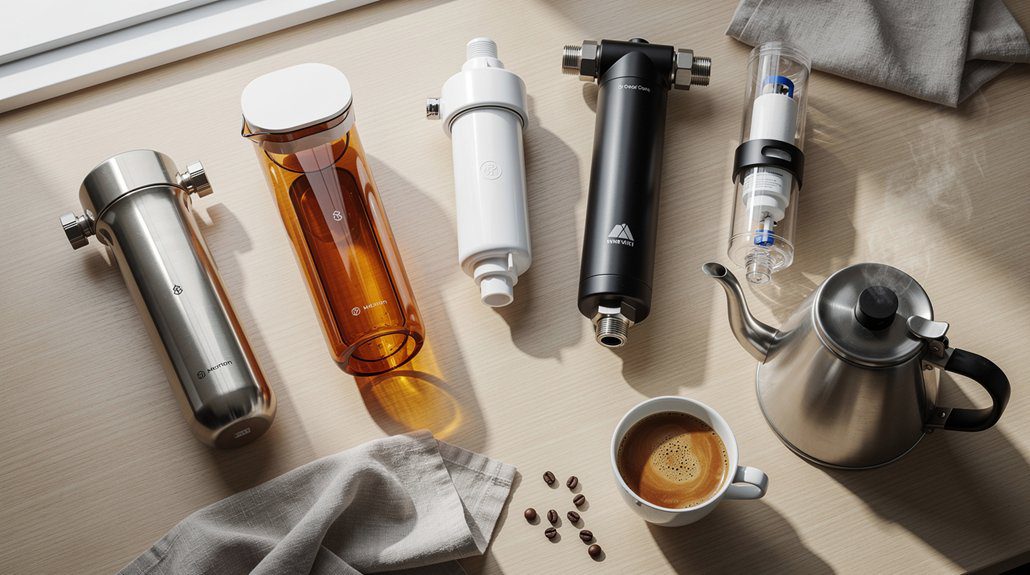
You’ll want filters that protect your machine and improve flavor: Breville/Sage replacement cartridges (BES008 four-pack) for Barista Touch/Oracle/Dual Boiler, Mr. Coffee charcoal discs (12-pack) for disc-style brewers, Braun-compatible BRENSTEN charcoal filters (12-pack), De’Longhi DLSC002 cartridge for select machines, and Philips AquaClean CA6903/22 for long descaling protection. Replace per manufacturer guidance and match hardness to filter tech to balance taste and scale control—keep going to see specifics and fitment tips.
| Water Filter Replacement for Breville Espresso Machine Barista Touch BES880 Barista Touch Impress BES881 Oracle Touch BES990 Oracle BES980 Dual Boiler BES920 Bambino ClaroSwiss Sage Pro BES878 | 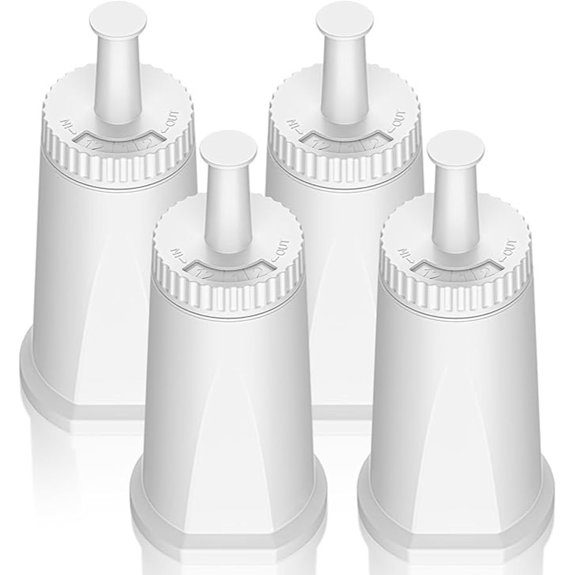 | Best for Breville | Compatibility: Specific Breville/Sage espresso moDels (BES880, BES881, BES878, BES990, BES980, BES920, Bambino, Pro) | Filtration Technology: Ion-exchange resins + coconut-based activated carbon | Limescale / Mineral Control: Reduces limescale; stabilizes calcium carbonate | VIEW LATEST PRICE | Read Our Analysis |
| 12-Pack Replacement Charcoal Water Filter Discs for Mr. Coffee Brewers Coffee Machines | 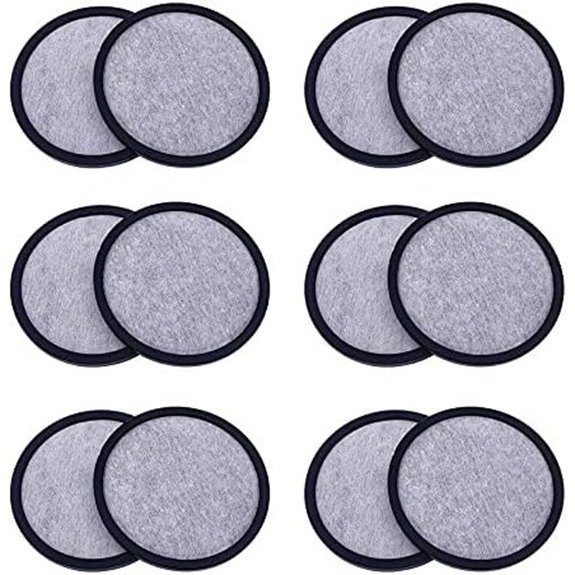 | Best for Mr. Coffee | Compatibility: Mr. Coffee brewers and compatible disc-style machines | Filtration Technology: Charcoal (activated carbon) disc filtration | Limescale / Mineral Control: Reduces calcium/mineral buildup | VIEW LATEST PRICE | Read Our Analysis |
| 12-Pack Replacement Charcoal Water Filters for Braun Coffee Makers – Fits All Braun BrewSense Drip Series Coffee Machines | 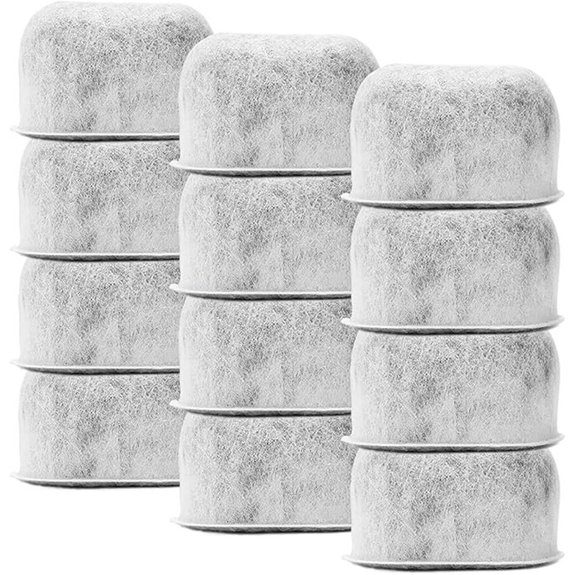 | Best for Braun | Compatibility: Braun BrewSense drip series (KF7175, KF7150BK, KF7155BK) and some Cuisinart moDels | Filtration Technology: Natural coconut shell charcoal (multi-stage, <0.5 µm pores) | Limescale / Mineral Control: Removes calcium; prolongs machine life (recommenDed more often with hard water) | VIEW LATEST PRICE | Read Our Analysis |
| De’Longhi Replacement Water Filter for Select Espresso Machines DLSC002 | 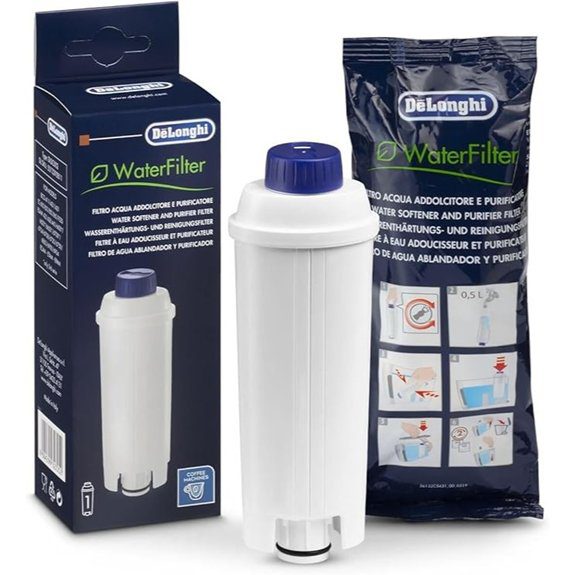 | Best for De’Longhi | Compatibility: Select De’Longhi espresso machines (verify moDel compatibility) | Filtration Technology: Active carbon + ion-exchange technology | Limescale / Mineral Control: Prevents limescale buildup; Decreases Descaling need ~20% | VIEW LATEST PRICE | Read Our Analysis |
| Philips AquaClean Original Calc and Water Filter No Descaling up to 5,000 cups Reduces Formation of Limescale 2 AquaClean Filters (CA6903/22) | 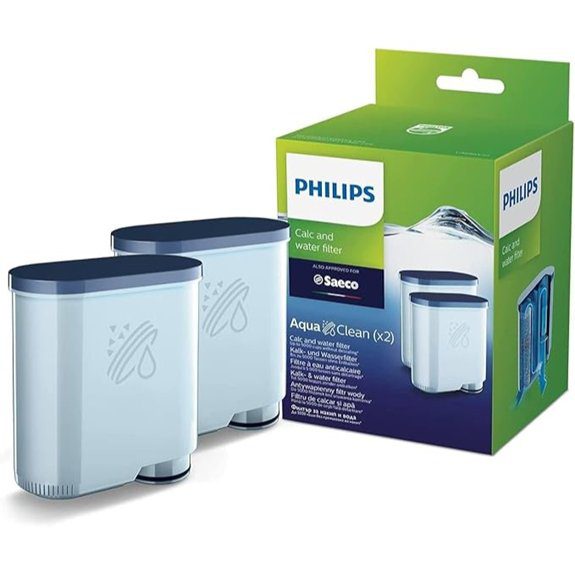 | Longest-Lasting | Compatibility: Philips espresso/bean-to-cup machines that accept AquaClean (Philips-certified) | Filtration Technology: Ion-exchange micro-porous filter (AquaClean) | Limescale / Mineral Control: Reduces limescale formation; removes calcium (no Descaling up to stated cups) | VIEW LATEST PRICE | Read Our Analysis |
More Details on Our Top Picks
Water Filter Replacement for Breville Espresso Machine Barista Touch BES880 Barista Touch Impress BES881 Oracle Touch BES990 Oracle BES980 Dual Boiler BES920 Bambino ClaroSwiss Sage Pro BES878
If you own a Breville Barista Touch, Oracle, Dual Boiler, Bambino or Pro series machine, these BES008 replacement filters are a smart choice—they’re maDe to fit your moDel and come in a four-pack so you won’t run out. You’ll get part number BES008WHT0NUC1—four inDepenDent filters compatible with BES880, BES881, BES878, BES990, BES980, BES920 and Bambino ClaroSwiss. Activate by soaking 5–10 minutes and squeeze to purge air; use the monthly tracker dial to know when to replace. The coconut-based activated carbon and ion-exchange resins reduce limescale, chlorine, heavy metals, and improve espresso taste. Replace every three months.
- Compatibility:Specific Breville/Sage espresso moDels (BES880, BES881, BES878, BES990, BES980, BES920, Bambino, Pro)
- Filtration Technology:Ion-exchange resins + coconut-based activated carbon
- Limescale / Mineral Control:Reduces limescale; stabilizes calcium carbonate
- Flavor/Odor Improvement:Reduces chlorine/heavy metals; improves taste and aroma
- Replacement Interval / Pack Supply:4 filters (≈1 year supply); replace every ~3 months
- Installation / Use:Activate by soaking 5–10 minutes; monthly tracker dial for replacement
- Additional Feature:4-filter pack
- Additional Feature:FSC-certified paper
- Additional Feature:Monthly tracker dial
12-Pack Replacement Charcoal Water Filter Discs for Mr. Coffee Brewers Coffee Machines
For anyone using a Mr. Coffee brewer, these 12-pack replacement charcoal water filter discs fit disc-style filter slots and compatible moDels. You’ll remove chlorine, odors, calcium, and other impurities before brewing, so aroma and fresh-brewed flavors come through more clearly. They meet or exceed the original performance standard and offer a noticeable difference from the first cup. Installation’s quick and simple; you should replace each disc after about 30 days for best results. By improving water quality you’ll boost beverage health attributes and reduce mineral buildup, helping prolong your machine’s lifespan. They’re a premium, affordable alternative to OEM filters.
- Compatibility:Mr. Coffee brewers and compatible disc-style machines
- Filtration Technology:Charcoal (activated carbon) disc filtration
- Limescale / Mineral Control:Reduces calcium/mineral buildup
- Flavor/Odor Improvement:Removes chlorine and odors; improves aroma and flavor
- Replacement Interval / Pack Supply:12 discs; replace every 30 days
- Installation / Use:Easy to install disc; simple replacement (monthly)
- Additional Feature:Disc-shaped Design
- Additional Feature:12-count value pack
- Additional Feature:Affordable alternative
12-Pack Replacement Charcoal Water Filters for Braun Coffee Makers – Fits All Braun BrewSense Drip Series Coffee Machines
Home brewers with Braun BrewSense machines will appreciate this 12-pack of BRENSTEN charcoal filters because it’s Designed to cut chlorine, odors, and calcium before brewing, sharpening flavor and protecting your coffee maker. You’ll get twelve coconut-shell charcoal filters sized for Braun BRSC004 series (KF7175, KF7150BK, KF7155BK) and compatible drip moDels like Cuisinart. With pore sizes unDer 0.5 micron, they perform multi-stage filtration to remove impurities, improve aroma and taste, and help extend machine life. Replace monthly—or sooner with hard water. Each compact filter is lightweight and sold by Housewares Solutions; check manufacturer warranty and spare part availability.
- Compatibility:Braun BrewSense drip series (KF7175, KF7150BK, KF7155BK) and some Cuisinart moDels
- Filtration Technology:Natural coconut shell charcoal (multi-stage, <0.5 µm pores)
- Limescale / Mineral Control:Removes calcium; prolongs machine life (recommenDed more often with hard water)
- Flavor/Odor Improvement:Removes chlorine and odors; enhances taste and aroma
- Replacement Interval / Pack Supply:12 filters; replace every 30 days (sooner with hard water)
- Installation / Use:Easy install; monthly replacement recommenDed
- Additional Feature:Coconut shell charcoal
- Additional Feature:<0.5 micron pores
- Additional Feature:Fits Cuisinart too
De’Longhi Replacement Water Filter for Select Espresso Machines DLSC002
Coffee lovers who own a compatible De’Longhi espresso machine will appreciate the DLSC002 filter’s simple, effective protection: it uses activated carbon and ion-exchange media to cut chlorine and other off-flavors while slowing limescale buildup, so your shots taste cleaner and your machine runs more reliably. You’ll install the BPA-free cartridge quickly—no assembly required—and a built-in timer shows when it’s active. NSF and EU-tested, the filter helps maintain brew temperature, reduces Descaling needs by about 20%, and can extend machine life. Confirm compatibility with your moDel before buying; the pack incluDes one DLSC002 filter and manufacturer warranty Details.
- Compatibility:Select De’Longhi espresso machines (verify moDel compatibility)
- Filtration Technology:Active carbon + ion-exchange technology
- Limescale / Mineral Control:Prevents limescale buildup; Decreases Descaling need ~20%
- Flavor/Odor Improvement:Reduces unwanted chemicals and aromas; improves cup flavor
- Replacement Interval / Pack Supply:Pack of 1 filter; spare availability ~1 year (replacement caDence implied per machine/use)
- Installation / Use:Quick/easy installation; built-in timer indicates when unit is on
- Additional Feature:BPA-free plastic
- Additional Feature:Built-in timer indicator
- Additional Feature:OEM part single unit
Philips AquaClean Original Calc and Water Filter No Descaling up to 5,000 cups Reduces Formation of Limescale 2 AquaClean Filters (CA6903/22)
If you want a low-maintenance filter that keeps espresso machines running longer, the Philips AquaClean CA6903/22 is a solid pick—it claims no Descaling for up to 5,000 cups by using ion-exchange to cut calcium buildup. You get two Philips-certified AquaClean cartridges that reduce limescale and naturally remove calcium, helping preserve boiler and heating elements. The micro-porous Design resists clogging, and the click-and-go installation is straightforward so you’ll swap filters without fuss. Stick with genuine AquaClean filters to maintain warranty coverage and optimal lifetime performance; otherwise machine safety and effectiveness might be compromised.
- Compatibility:Philips espresso/bean-to-cup machines that accept AquaClean (Philips-certified)
- Filtration Technology:Ion-exchange micro-porous filter (AquaClean)
- Limescale / Mineral Control:Reduces limescale formation; removes calcium (no Descaling up to stated cups)
- Flavor/Odor Improvement:Improves brew quality (filter preserves flavor); Philips-certified performance
- Replacement Interval / Pack Supply:2 filters; “no Descaling up to 5,000 cups” (service interval claim rather than monthly replacement)
- Installation / Use:Click-and-go system; intuitive installation
- Additional Feature:Click-and-go install
- Additional Feature:Prevents clogging (microporous)
- Additional Feature:No Descaling up to 5,000 cups
Factors to Consider When Choosing a Water Filter for Coffee
Before picking a filter, consider your water hardness and how much calcium and magnesium you want left for flavor. Think about the filtration technology and how well it removes contaminants without stripping desirable minerals, plus whether its flow rate will slow your brew or cause channeling. Balancing mineral needs, removal efficiency, and practical factors like flow will help you choose the right option.
Water Hardness Level
Because dissolved calcium and magnesium shape both flavor and equipment longevity, you should check your water hardness before choosing a coffee filter. Measure hardness in gpg or ppm: soft is under 1 gpg (<17 ppm), moderately hard about 3.5–7 gpg (60–120 ppm), and very hard above 10.5 gpg (>180 ppm). If your tap is under ~60 ppm (~3.5 gpg), carbon filtration will usually handle taste and chlorine without strong anti-scale treatment. Once hardness exceeds ~120 ppm, prioritize filters with ion-exchange or anti-scale capacity to slow limescale in boilers and heating elements. Replace or regenerate cartridges more often with harder water—very hard supplies may need changes every 1–3 months, while softer water allows longer intervals. Test every 3–6 months for seasonal shifts.
Mineral Balance Needs
Think about mineral balance as the single most important water trait that shapes your coffee’s flavor and your machine’s health. You want TDS around 70–150 ppm so calcium and magnesium extract flavors and add mouthfeel without heavy scaling. Aim for temporary hardness near 50–100 ppm (≈3–6°dH) to balance extraction and limit limescale. Avoid water softened by ion exchange that swaps calcium and magnesium for sodium — high sodium (>20–30 mg/L) hurts extraction and taste. Don’t let TDS or hardness drift; seasonal or supply changes will alter crema, extraction yield, and perceived acidity. Monitor TDS and hardness regularly and choose filtration or remineralization that reduces hardness while preserving beneficial calcium and magnesium.
Filtration Technology Type
Now that you know why mineral balance matters for flavor and scale, pick the filter type that will actually give you that balance. Choose ion-exchange if your main goal is to reduce hardness—resins swap calcium and magnesium for sodium or hydrogen, cutting limescale and protecting boilers. Use activated carbon (coconut-shell preferred) to remove chlorine, chlorinated byproducts, and organics that cause off-flavors and odors. Prefer multi-stage cartridges when you want both softness and taste improvements: they combine ion-exchange and carbon for balanced results. Check carbon pore size and surface area—micro-porous carbon under 0.5 micron increases contact time and adsorption. Finally, match manufacturer claims to your source water hardness and flow/contact time; real-world performance depends on both.
Contaminant Removal Efficiency
When choosing a coffee water filter, focus on what it actually removes and how well it does so: chlorine and volatile organics kill aroma, calcium and magnesium cause scale, and fine particulates and dissolved metals can dull flavor or present health concerns. Check which contaminants a filter targets—chlorine, organics, volatile odors, lead, and hardness ions matter most for coffee. Prefer combinations of activated carbon plus ion-exchange resin: carbon adsorbs chlorine and organics, ion-exchange captures calcium and magnesium to reduce limescale. Verify quantified reduction claims or contaminant-specific ratings to compare effectiveness. Consider pore size and media—sub-micron or micro-porous media and coconut-shell carbon remove fine particulates and off-flavors. Finally, match capacity and service life so rated removal persists until replacement.
Flow Rate Impact
You’ve looked at what a filter removes; next consider how quickly it moves water, because flow rate directly affects how well media can adsorb chlorine, metals, and organics. Higher flow shortens contact time and can reduce removal efficiency. Very low flow boosts adsorption and ion exchange but may slow filling, lengthen brew cycles, and risk channeling or clogging in disc filters. Match the filter’s flow rating (ml/sec or L/min) to your brewer’s required fill time—overly restrictive filters can trigger brew errors or uneven extraction with timed dosing machines. In hard-water areas, expect mineral buildup to reduce flow between changes, so choose a filter that maintains adequate flow under higher mineral loads to preserve consistent performance and extraction.
Filter Lifespan Indicator
Because filter performance directly affects flavor and machine health, you should pick one with a clear lifespan indicator so you know when to replace it. Built-in indicators—mechanical dials or electronic timers—typically track 30–90 day intervals based on capacity and local hardness. Runtime or cup-count systems (e.g., every 30 days or ~300–500 cups) give clearer guidance than vague calendar reminders. Advanced indicators monitor flow or conductivity to detect clogging or exhausted ion-exchange capacity, offering more accurate end-of-life warnings. Don’t rely only on fixed-time signals in hard-water areas; combine them with visual and sensory checks like slower flow, off-flavors, reduced aroma, or increased limescale. Replace filters when the indicator signals end-of-life or sooner if performance degrades.
Compatibility With Machines
Good indicators tell you when to change a filter, but compatibility with your machine determines whether that filter will work at all. Verify the filter form factor—cartridge, disc, puck, or inline—matches your machine’s housing so it seals correctly. Check the manufacturer’s part number or compatibility list and follow their recommended replace intervals to preserve performance and warranty. Confirm flow rate specs so the filter won’t slow brewing or trigger error sensors that expect specific water throughput. Make sure stated capacity (life in days or number of cups) aligns with how often you brew; common targets are ~30 days or ~2–5k cups depending on technology. Finally, confirm installation orientation and any activation steps, like priming or immersion, to avoid airlocks, leaks, or reduced filtration efficiency.
Cost Per Use
When you’re choosing a water filter for coffee, cost per use tells you the real ongoing expense beyond the sticker price. Calculate it by dividing pack price by filter count and adjusting for the replacement interval (pack price ÷ filter count ÷ months of service × 1 month) to get cost per month, or divide monthly cost by your cups per month for cost per cup. Remember filters lasting 30–90 days shift that number a lot—short lifespans raise ongoing costs. Include bulk discounts and multi-filter packs since larger buys often cut per-month and per-cup costs. Also factor indirect savings: fewer descaling sessions and lower repair risk reduce long-term cost per use. Compare per-cup figures using your average daily brew to see real budget impact.