

You’ll want a system that reliably cuts lead without killing flow or forcing frequent swaps. For 2026, consider Waterdrop 10UA for quick DIY install and year‑long cartridges; CuZn UC-200 for low‑maintenance, 5‑year service life; Frizzlife SK99 for fine 0.5 µm particulate capture with strong flow; and iSpring RCC7AK RO for the highest dissolved‑lead reduction plus remineralization. Keep certifications, cartridge life, and plumbing fit in mind — more details follow if you want them.


More Details on Our Top Picks
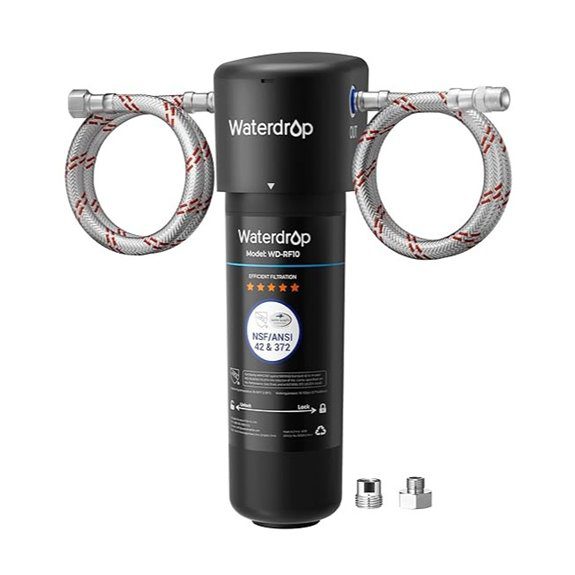
Waterdrop 10UA Under Sink Water Filter System Reduces PFAS PFOA/PFOS Lead Chlorine Bad Taste & Odor Under Counter Water Filter Direct Connect to Kitchen Faucet NSF/ANSI 42 Certified 1 Year
If you want a compact, NSF-certified under-sink filter that specifically tackles lead plus PFAS/PFOA/PFOS and common taste/odor issues while keeping beneficial minerals, the Waterdrop 10UA is a strong choice — it installs in minutes on a standard 3/8″ or 1/2″ feed, runs on municipal cold water, and offers up to a year (8,000–11,000 gallons) of service before a quick twist-and-lock cartridge swap. You’ll get NSF/ANSI 42 and 372 approval, coconut-shell activated carbon, and tested flow rates suitable for kitchen use. It connects directly to faucets, includes fittings, and accepts WD-RF10 replacements.
- Lead reduction:Reduces lead (listed)
- NSF/ANSI certification:NSF/ANSI 42 & 372
- Under‑sink installation:Under-sink / under-counter direct-connect
- Retains beneficial minerals:Retains dissolved minerals (calcium, potassium, sodium, magnesium)
- DIY installation / consumer serviceable:Twist-and-lock cartridge, push-to-connect fittings; three‑minute install
- Replacement filter availability / maintenance:Replacement WD‑RF10 available; 12‑month service life; upgrades compatible
- Additional Feature:Reduces PFAS/PFOA/PFOS
- Additional Feature:Twist-and-lock cartridge
- Additional Feature:3/8–1/2 convertor included
CuZn Under Sink Water Filter for Sink Faucet 5 Year Filter Life NSF/ANSI 42 & 372 Certified Reduces PFAs PFOS Lead Chlorine Inline Faucet Connection Improves Tap Water Taste
Choose the CuZn UC-200 when you want a low-maintenance under-sink filter that lasts—its 5-year cartridge life and inline faucet connection make it ideal for busy households or renters who want long-term lead and PFAS reduction without frequent replacements or complex installs. You install it directly under most sinks with included parts and no drilling; a how-to video guides the simple DIY fit. Its three-stage system (micro-sediment membrane, KDF-55, coconut shell carbon) reduces PFAs, PFOA/PFOS, lead, and chlorine while keeping beneficial minerals. NSF/ANSI 42 and 372 certified, it improves taste, costs less per year, and includes CuZn support.
- Lead reduction:Reduces lead (listed)
- NSF/ANSI certification:NSF/ANSI 42 & 372 (components/materials)
- Under‑sink installation:Under-sink inline direct connect for sink faucet
- Retains beneficial minerals:Purifies while retaining beneficial minerals
- DIY installation / consumer serviceable:Simple DIY inline installation; all parts included; how-to video
- Replacement filter availability / maintenance:5‑year filter life (long‑life cartridge); after‑sale support for issues
- Additional Feature:5-year filter life
- Additional Feature:3-stage KDF+carbon
- Additional Feature:Minimal space inline design
Frizzlife Under Sink Water Filter System NSF/ANSI 53&42&372 Certified 8 Layer 0.5 Micron Water Filtration Reduce Chloramine PFOA/PFOS Lead Chlorine Bad Taste & Odor Under Counter SK99-NEW
Homeowners who want lab-grade lead reduction without sacrificing flow will like the Frizzlife SK99: its 0.5‑micron, 8‑layer filter (NSF/ANSI 42, 53, 372 certified) captures lead and other contaminants while still filling a cup in about three seconds, and the twist‑in cartridges make replacements quick and mess‑free. You’ll get certified reduction of chlorine, lead, taste/odor and particulates without stripping beneficial minerals; it also targets chloramine and PFOA/PFOS. Installation is DIY under 15 minutes, and you can feed your fridge with the IMC-2 kit. Durable housings, a pressure regulator, 24/7 USA support and replaceable cores cut waste.
- Lead reduction:Reduces lead (certified/listed)
- NSF/ANSI certification:IAPMO certified to NSF/ANSI 42, 53, 372
- Under‑sink installation:Under-counter under-sink system (compact footprint)
- Retains beneficial minerals:Retains beneficial minerals (explicitly stated)
- DIY installation / consumer serviceable:DIY install under 15 minutes; twist‑in filter replacement
- Replacement filter availability / maintenance:Replacement cartridges (M3001, M3002, M3003; sets available); twist‑in cores
- Additional Feature:0.5 micron precision
- Additional Feature:8-layer compound cartridge
- Additional Feature:Refrigerator ice-maker compatible
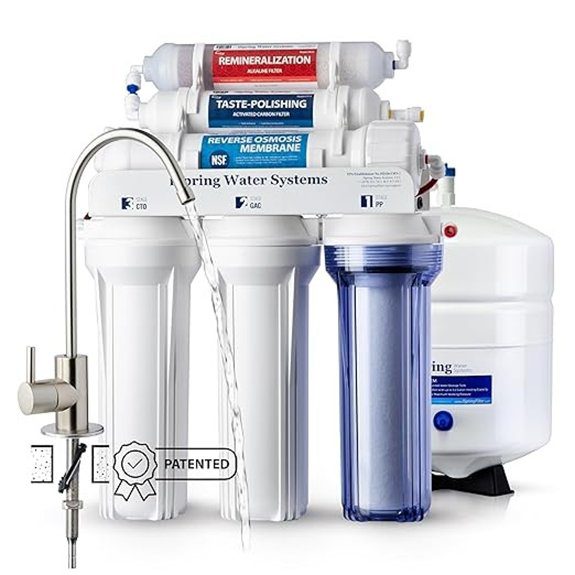
iSpring RCC7AK NSF Certified 75 GPD Alkaline 6-Stage Reverse Osmosis System pH+ Remineralization RO Water Filter System Under Sink Patented Top-Mounted Faucet Design for Easy Installation
The iSpring RCC7AK is ideal for households that need strong lead reduction plus mineral-balanced drinking water—its NSF/ANSI 58-certified 6-stage RO with pH+ remineralization cuts lead by over 98.9% while restoring healthy minerals and pH. You’ll get a 75 GPD system with a brushed nickel faucet, storage tank, and extra tool set. The patented top-mounted faucet fastener lets you install from above; transparent first-stage housing helps you monitor buildup. It drops TDS, PFAS, chlorine, fluoride and many contaminants, and needs no power. Replacement filter options and lifetime technical support back a one-year limited warranty.
- Lead reduction:Reduces lead (>98.9% listed)
- NSF/ANSI certification:NSF/ANSI 58 (full-system) and other NSF-listed claims
- Under‑sink installation:Under-sink reverse‑osmosis system
- Retains beneficial minerals:pH+ remineralization stage restores/maintains minerals
- DIY installation / consumer serviceable:DIY-friendly quick-fit connections; top-mounted faucet design for easier install; videos/manual
- Replacement filter availability / maintenance:Multiple replacement filter sets (F4AK, F9K, F19K75, F28K75); scheduled maintenance intervals
- Additional Feature:75 GPD RO capacity
- Additional Feature:pH+ remineralization stage
- Additional Feature:Transparent prefilter housing
Factors to Consider When Choosing an Under Sink Water Filter for Lead
When choosing an under-sink filter for lead, you’ll want to check the lead reduction ratings and the specific filtration technology used. Make sure the system has credible certification and third-party testing, and consider filter lifespan and capacity so you’re not replacing cartridges too often. Also weigh how the filter’s flow rate affects water pressure and your everyday use.
Lead Reduction Ratings
Although certifications and percent‑removal numbers can look similar, you should focus on NSF/ANSI 53 or 58 ratings and the test conditions behind them to know how well an under‑sink filter will cut lead in your tap water. Check whether the certification reports percent removal (for example >90% or >98%) or gives influent/effluent concentrations showing reduction below the EPA action level (15 ppb) or lower. Match the lab challenge conditions—lead concentration, flow rate, and rated capacity—to your expected use, since performance depends on those parameters. Notice the filter’s lead reduction capacity (gallons or months) because certified removal applies only up to that point. Systems that pair prefiltration with media or RO typically deliver more consistent lead removal than single‑stage carbon units.
Filtration Technology Type
Now that you’ve looked at ratings and test conditions, pick the filtration technology that fits your water chemistry and usage. If your source has particulate or particulate-bound lead, choose solid block activated carbon (0.5–1 µm) or a multi-stage system with catalytic carbon/KDF formulated for heavy metals; loose granular carbon alone won’t reliably remove lead. For dissolved lead ions, ion exchange or mixed-bed resins swap problematic ions for safer ones and work well combined with carbon stages. Reverse osmosis offers the highest single-method removal—typically 90–98%—when maintained and run at proper pressure. Finally, confirm manufacturer removal claims and capacity under realistic municipal conditions and favor systems certified to NSF/ANSI standards for lead reduction.
Certification And Testing
Because certifications and test reports show how a filter performs under real conditions, you should prioritize verified lead‑reduction claims from accredited programs like NSF/ANSI 53 or 58 (or equivalent lab testing). Look for reports that list percent reduction and validated capacity for lead (for example, >90%–99% reduction) and specify test conditions such as influent lead concentration and flow rate. Make sure the certification covers the entire device or the specific cartridge you’ll install, since some approvals apply only to stages. Review independent third‑party data showing performance across realistic water chemistries (pH, chlorine, TDS). Finally, confirm the standard and scope—NSF protocol used, influent lead species, and whether long‑term challenge tests were included—to verify durable, real‑world lead removal.
Filter Lifespan Capacity
Start by checking the filter’s rated service life—usually given in months or gallons—since that rating tells you how long the cartridge will maintain certified lead reduction before you need to replace it. Verify the manufacturer specifies lead-reduction capacity over the full rated lifespan; some only guarantee removal for an early portion. Divide the gallon rating by your household’s daily water use to estimate replacement intervals so you won’t unexpectedly lose protection. Account for source water quality: higher lead levels or heavy sediment will shorten effective life, so prefer higher-capacity cartridges or add a prefilter. Finally, factor replacement filter cost and availability to calculate your annual maintenance expense and choose a balance of longevity, performance, and total cost of ownership.
Flow Rate Impact
When choosing an under-sink lead filter, pay close attention to flow rate because it directly affects how long water contacts the media and therefore how well lead gets removed. You’ll find certified filters rated around 0.5–1.5 gpm to balance throughput and contact time; exceeding a filter’s tested flow can undermine its certified lead reduction. Match your household’s peak demand to the filter’s maximum flow and pressure range so performance holds up under real use. Expect flow to decline as the cartridge loads with particulates and adsorbed contaminants—monitor output and replace cartridges per manufacturer intervals or sooner if flow drops noticeably. Finally, confirm your supply plumbing (line diameter, fittings, inlet pressure) can consistently deliver the rated flow.
Installation Compatibility
If your under-sink lead filter doesn’t physically fit or connect to your plumbing, it won’t protect your water no matter how good its media is. Check inlet/outlet sizes (commonly 3/8″ or 1/2″) against your shutoff valve and faucet fittings, or confirm adapters exist. Verify cabinet depth, clearance, and tank dimensions so the housing won’t obstruct plumbing or drawers. Confirm the system suits municipal cold tap water and your pressure/temperature (typical max ~60–70 psi, temp up to ~100°F). Match installation style—inline, direct-connect, or RO with tank—to your setup and whether you need a dedicated faucet hole. If you prefer DIY, pick push-to-connect fittings and twist-lock cartridges for quicker installs and easier changes.
Maintenance And Cost
Because lead-removal performance falls as cartridges saturate, you’ll need a clear maintenance plan and budget before buying an under-sink system. Replacement frequency ranges widely—6 to 60 months—so track gallons and swap cartridges per manufacturer lifespan to keep lead reduction reliable. Expect annual consumable costs from under $20 for long-life catalytic/KDF-carbon combos up to $100+ for high-performance or RO membrane replacements; compute cost-per-gallon by dividing replacement price by rated capacity. Include prefilters in your calculations: they raise part count and cadence but protect lead media and extend service life. Schedule routine inspections of fittings and O-rings, quarterly leak checks, and sanitizing housings when you change cartridges. Add initial unit cost, any plumber or tool fees, and RO water-waste impacts to total ownership.
Mineral Retention Performance
Although many under-sink lead filters focus on contaminant removal, you’ll want to prioritize how much of the “good” minerals—calcium, magnesium and other dissolved ions—stay in your water. Effective lead filters using activated carbon with ion exchange or KDF target lead while preserving those minerals, so they’re a strong choice if you value taste and health benefits. Reverse osmosis strips most dissolved solids, often lowering TDS by over 90% unless a remineralization stage is added. Carbon-block and KDF multi-stage systems balance substantial lead reduction with mineral retention. If minerals matter, choose units that explicitly state they retain beneficial ions or include remineralization, and verify independent certifications and performance data that report both lead removal and post-treatment mineral concentrations.