

You’ll get five reliable hose timers that suit seedlings to soaker beds: the programmable RAINPOINT for precise short runs, battery‑free Orbit 62034 for simple, rugged use, TiFFCOFiO’s digital unit with rotary programming, the Insoma model with long runs, metal inlet and IP55 protection, and RESTMO’s 3‑dial brass‑fitted analog timer for heavy use. Each balances flexibility, weatherproofing and easy controls so you can set schedules confidently — keep going and you’ll find detailed features, pros and installation tips.
| RAINPOINT Programmable Outdoor Sprinkler Timer (1 Outlet) | 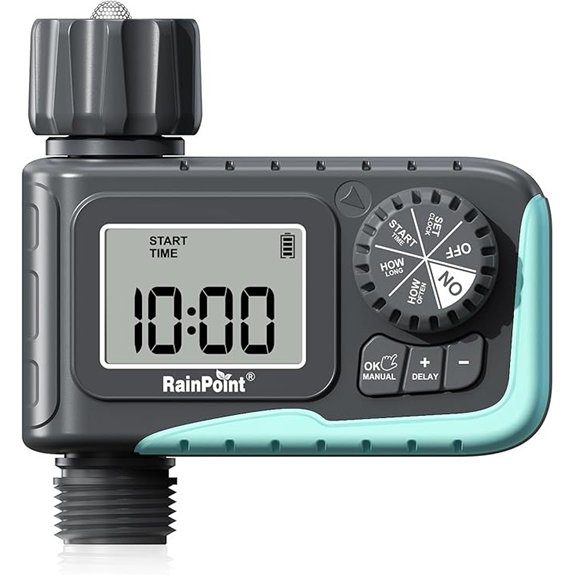 | Best Budget Programmable | Programmable Schedule: Start time, duration (1 min–3 hr 59 min), frequency (1 hr–12 hr or 1–7 days) | Manual/On‑Demand Watering: Manual mode (1 min–8 hr) without interrupting schedule | Rain Delay / Pause Schedule: Rain Delay (24, 48, 72 hours) | VIEW LATEST PRICE | Read Our Analysis |
| Orbit 62034 Mechanical Water Timer for Lawn and Garden Watering | 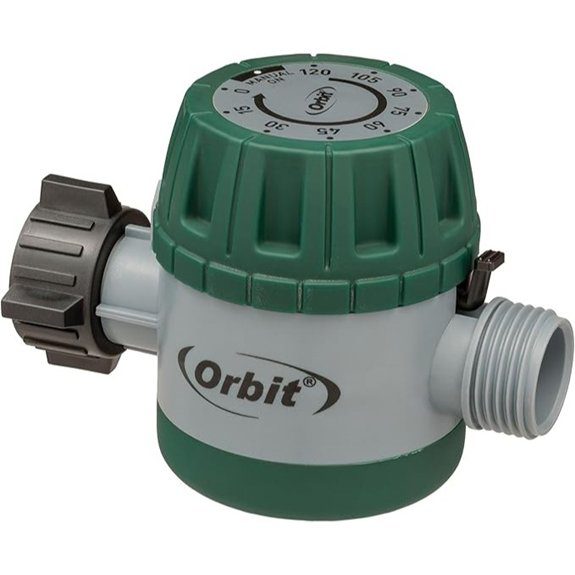 | No-Battery Classic | Programmable Schedule: Mechanical duration timer (15–120 minutes) and repeat mechanical operation | Manual/On‑Demand Watering: Manual watering option (use faucet without removing timer) | Rain Delay / Pause Schedule: (Mechanical) can be paused/overridden manually (no electronic rain delay) | VIEW LATEST PRICE | Read Our Analysis |
| TiFFCOFiO Digital Outdoor Sprinkler Timer (1 Pack) | 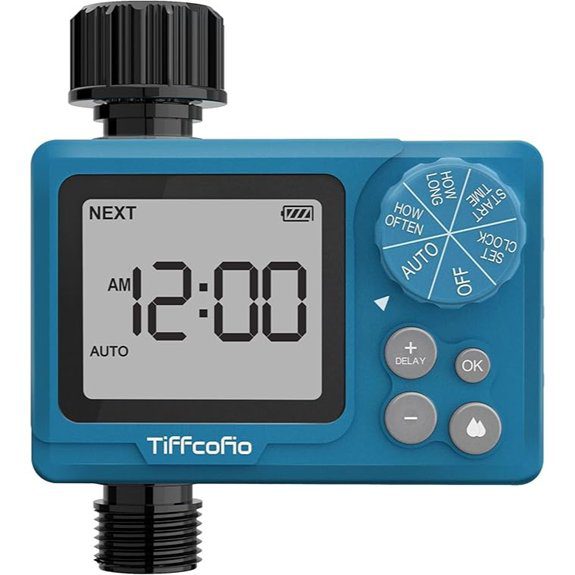 | Easy Digital Pick | Programmable Schedule: Start time, duration, frequency via rotary knob | Manual/On‑Demand Watering: Manual mode for on‑demand watering | Rain Delay / Pause Schedule: Rain delay selectable (24h, 48h, 72h) | VIEW LATEST PRICE | Read Our Analysis |
| Outdoor Garden Hose Water Timer with Rain Delay | 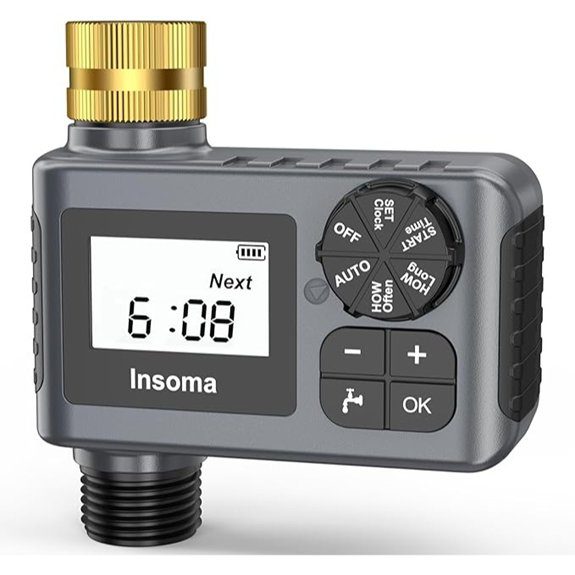 | Most Durable & Waterproof | Programmable Schedule: Clock, start time, duration (1 min–23h59min), frequency (1 min–23h59min or 1–7 days) | Manual/On‑Demand Watering: MANUAL mode (1 min–23h59min) | Rain Delay / Pause Schedule: RAIN DELAY (1–7 days) with automatic resume | VIEW LATEST PRICE | Read Our Analysis |
| RESTMO 3-Dial Analog Garden Hose Sprinkler Timer | 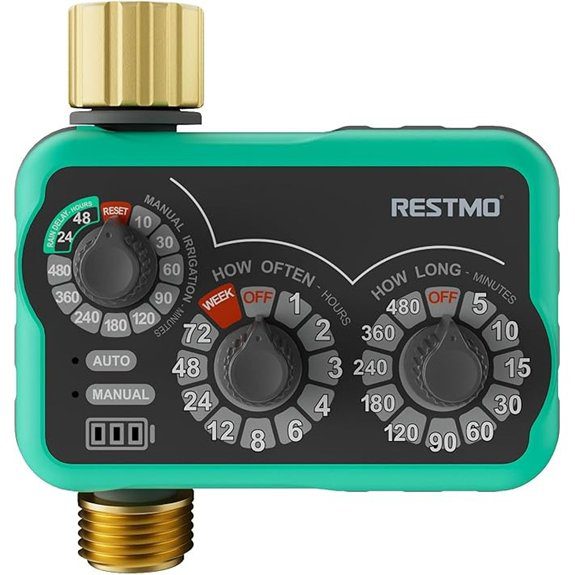 | Heavy-Duty Brass Choice | Programmable Schedule: HOW OFTEN (1 hr–72 hrs or weekly) and HOW LONG (up to 480 min) | Manual/On‑Demand Watering: MANUAL dial for instant watering (doesn’t interrupt program) | Rain Delay / Pause Schedule: DELAY dial for rain delay suspension | VIEW LATEST PRICE | Read Our Analysis |
More Details on Our Top Picks
RAINPOINT Programmable Outdoor Sprinkler Timer (1 Outlet)
If you want a simple, single-outlet solution that takes the guesswork out of watering small lawns or garden beds, the RAINPOINT Programmable Outdoor Sprinkler Timer is a smart pick — it gives you programmable start times, flexible run durations (1 minute to 3 hours 59 minutes), and rain-delay options so your beds get water on schedule without you babysitting the hose. You’ll set frequency from hourly (1–12 hours) or daily (1–7 days), choose Automatic or Manual (1 minute–8 hours), and pause with 24/48/72-hour Rain Delay. The large LCD shows time and battery; it runs on 2 AA cells.
- Programmable Schedule:Start time, duration (1 min–3 hr 59 min), frequency (1 hr–12 hr or 1–7 days)
- Manual/On‑Demand Watering:Manual mode (1 min–8 hr) without interrupting schedule
- Rain Delay / Pause Schedule:Rain Delay (24, 48, 72 hours)
- Outdoor Weather Resistance / Durability:Outdoor‑rated plastic housing (intended for garden/lawn use)
- Battery or No‑Battery Power:Powered by 2 × AA alkaline batteries (not included)
- Hose/Faucet Connection Material or Inlet Type:Plastic inlet/outlet (plastic housing)
- Additional Feature:Big LCD status display
- Additional Feature:Start-time programmable schedules
- Additional Feature:1‑outlet single valve
Orbit 62034 Mechanical Water Timer for Lawn and Garden Watering
Choose the Orbit 62034 Mechanical Water Timer when you want a simple, battery-free solution for routine lawn and garden watering; its oversized dial makes it easy to set even with wet or gloved hands, and the mechanical design runs for 15 to 120 minutes without batteries. You’ll get a plastic, lightweight hose timer (8 x 10 x 3 inches, 159 g) that supports manual watering and works with sprinklers, drip systems, and general garden use. It’s ideal for homeowners and contractors who want reliable, sustainable watering without fuss. Colors may vary; Amazon offers a 30-day return guarantee.
- Programmable Schedule:Mechanical duration timer (15–120 minutes) and repeat mechanical operation
- Manual/On‑Demand Watering:Manual watering option (use faucet without removing timer)
- Rain Delay / Pause Schedule:(Mechanical) can be paused/overridden manually (no electronic rain delay)
- Outdoor Weather Resistance / Durability:Plastic construction, oversized dial usable with wet/gloved hands (suitable for outdoor use)
- Battery or No‑Battery Power:Mechanical — no batteries required
- Hose/Faucet Connection Material or Inlet Type:Plastic construction connections
- Additional Feature:No batteries required
- Additional Feature:Oversized wet-glove dial
- Additional Feature:Simple mechanical timing
TiFFCOFiO Digital Outdoor Sprinkler Timer (1 Pack)
Perfect for gardeners who want simple programmable control, the TiFFCOFiO Digital Outdoor Sprinkler Timer lets you set start times, watering duration, and frequency with a straightforward rotary knob—and includes a 24/48/72-hour rain delay to avoid overwatering after storms. You’ll appreciate the digital programming, manual mode for on-demand watering, and compact 2 x 4 x 3.5-inch blue plastic housing that’s waterproof and dustproof for outdoor use. It automates irrigation when you travel and reduces guesswork. Model WM1002 weighs 0.5 pounds, offers four settings, and carries a warranty; customers rate it 4.4/5 from 662 reviews.
- Programmable Schedule:Start time, duration, frequency via rotary knob
- Manual/On‑Demand Watering:Manual mode for on‑demand watering
- Rain Delay / Pause Schedule:Rain delay selectable (24h, 48h, 72h)
- Outdoor Weather Resistance / Durability:Weatherproof structure (waterproof, dustproof)
- Battery or No‑Battery Power:Digital — battery powered (implied; programmable digital unit)
- Hose/Faucet Connection Material or Inlet Type:Plastic construction connections
- Additional Feature:Rotary-knob programming
- Additional Feature:Weatherproof/dustproof housing
- Additional Feature:Compact blue design
Outdoor Garden Hose Water Timer with Rain Delay
For gardeners who want hands-off watering but still protect their plants from unexpected rain, the Outdoor Garden Hose Water Timer with Rain Delay offers programmable schedules plus a one- to seven-day rain pause so your irrigation won’t run during wet spells. You’ll program clock, start time, frequency (1 minute–23h59 or 1–7 days) and duration (1 minute–23h59). AUTO runs schedules, MANUAL runs immediately, and RAIN DELAY pauses cycles; a child lock prevents accidental changes. The larger LCD, metal inlet, built-in filter, IP55 waterproofing, and double-AA power (6+ months) make it rugged for outdoor use. Brand: Insoma, model SGW05-TT-JU.
- Programmable Schedule:Clock, start time, duration (1 min–23h59min), frequency (1 min–23h59min or 1–7 days)
- Manual/On‑Demand Watering:MANUAL mode (1 min–23h59min)
- Rain Delay / Pause Schedule:RAIN DELAY (1–7 days) with automatic resume
- Outdoor Weather Resistance / Durability:IP55 waterproof rating, upgraded seal ring, durable housing
- Battery or No‑Battery Power:Powered by 2 × AA alkaline batteries (not included); ~6+ months runtime
- Hose/Faucet Connection Material or Inlet Type:Upgraded pure brass inlet (brass inlet + black housing)
- Additional Feature:Brass inlet construction
- Additional Feature:IP55 waterproof rating
- Additional Feature:Built-in metal filter
RESTMO 3-Dial Analog Garden Hose Sprinkler Timer
If you want simple, reliable automatic watering while you’re away, the RESTMO 3-Dial Analog timer makes it easy to set how often and how long your hose runs with three clearly labeled dials—HOW OFTEN (1–72 hours or weekly), HOW LONG (up to 480 minutes), and MANUAL for instant watering—plus a rain DELAY to pause cycles during wet weather. You’ll control garden beds, lawns, pots, and new plantings with rugged, weatherproof construction. Solid brass inlet and outlet fittings resist rust and cracking for leak-free performance. Operate dials with wet hands or gloves. It runs on 2 AA batteries; package includes timer and manual.
- Programmable Schedule:HOW OFTEN (1 hr–72 hrs or weekly) and HOW LONG (up to 480 min)
- Manual/On‑Demand Watering:MANUAL dial for instant watering (doesn’t interrupt program)
- Rain Delay / Pause Schedule:DELAY dial for rain delay suspension
- Outdoor Weather Resistance / Durability:Weatherproof construction, rubber seal for waterproof protection, brass fittings
- Battery or No‑Battery Power:Powered by 2 × AA alkaline batteries (not included)
- Hose/Faucet Connection Material or Inlet Type:100% solid brass inlet and brass outlet fittings
- Additional Feature:100% brass fittings
- Additional Feature:Three independent dials
- Additional Feature:Delay dial for rain
Factors to Consider When Choosing a Timer for Garden Hose
When choosing a hose timer, you’ll want to check how flexible the watering schedule is and whether it handles the duration and interval options your plants need. Consider the power source—battery, solar, or plug-in—since that affects reliability and maintenance. Also look for rain-delay features to avoid wasting water and programmable ranges that match your garden’s demands.
Watering Schedule Flexibility
Although smart timers can automate watering, you’ll want one that gives flexible start times and multiple daily starts so you can water seedlings in the morning and established beds in the evening. Pick a timer that lets you set several start events per day and adjust durations from a few minutes for seedlings to hours for deep-rooted plants. Confirm the frequency options cover what you need—hourly repeats for soaker hoses, daily runs, or multi-day/weekly cycles for established beds. Choose units with rain-delay or suspend features that pause schedules for 24–72 hours (or custom days) to avoid overwatering after storms. For seasonal shifts, prefer fine-grained frequency and duration controls or programmable presets to simplify changes.
Power Source Type
Consider how you’ll power the timer, since battery, mechanical, AC, and solar options each trade off convenience, runtime, and features. If you want flexible placement away from outlets, choose battery models (usually two AA); they’re easy to install and often display remaining power, but you’ll replace cells periodically. Mechanical timers need no power, so you skip battery upkeep, yet they limit programming complexity and duration choices. Plug-in AC timers give steady power for advanced features, big displays, and wireless connectivity, but they demand a nearby outdoor-rated outlet and proper weatherproofing. Solar or hybrid units can trickle-charge batteries to extend life, though they rely on adequate sun and often still use backup batteries for reliability. Match power type to your schedule complexity and site constraints.
Programmed Duration Range
Many timers let you tailor run lengths precisely, so pick one whose minimum and maximum durations match your plants’ needs—from 1–15 minute increments for seedlings and pots to 30 minutes or more for lawns and deep-rooted shrubs. You’ll want a timer with a fine minimum increment—1-minute steps if you’re managing delicate seedlings or containers—and a maximum that supports deep-soak sessions; some units run continuously for 8+ hours for soaker hoses. Check whether the timer lets you stack multiple cycles per day, because several short cycles can simulate slow irrigation better than one long burst. Also verify manual mode allows extended watering without disturbing scheduled programs, and avoid models locked into coarse 15–30 minute steps.
Frequency And Intervals
Often you’ll want a timer that lets you control how often and precisely watering happens, from hourly repeats for new transplants to once-every-few-days for established beds. Choose a timer with the minimum and maximum frequency you need — for example, hourly up to every seven days — so you can do frequent short runs or infrequent deep soaks. Match interval granularity to plant type: use hourly or multiple-times-per-day settings for new beds, daily-to-weekly for established shrubs and lawns. Prefer units that offer both fixed intervals (every N hours) and calendar-based scheduling (specific weekdays) for seasonal flexibility. Make sure it supports multiple start times or staggered cycles to split volumes, reduce runoff, and improve absorption.
Rain Delay Capability
When you want to skip watering after a downpour, a rain-delay feature lets your timer pause scheduled runs for a set period (typically 24–72 hours) so you don’t have to turn the system off manually. Choose a timer with adjustable rain-delay durations — common options are 24, 48, or 72 hours — so you can prevent overwatering and conserve water during wet stretches. Prefer models that automatically resume your original schedule when the delay ends to avoid reprogramming. Check whether the unit offers fine-grained control (for example, 1–7 days) or only fixed presets, and match that granularity to your local weather patterns. Remember rain delay complements, not replaces, manual suspension or moisture-based sensors.
Build Material Quality
Durability matters: pick timers with metal inlet/outlet fittings (brass is best) and housings rated for outdoor use (IP55 or better) so you don’t get cracks, leaks, or shorted electronics from sun, heat, or splashes. Choose weather-resistant plastics or treated metals with UV- and corrosion-resistant coatings to prevent brittleness and rust over time. Check mechanical parts—reinforced threads, robust dials, and reliable O‑rings—so repeated hookups don’t lead to failures or leaks. Prefer units with internal filters and replaceable seals or serviceable parts; these protect valves from sediment and let you renew wear items instead of replacing the whole timer. Prioritize construction that resists heat deformation and water intrusion to maximize lifespan and reduce maintenance.
Installation And Fit
Measure before you buy: make sure the timer’s inlet and outlet threads match your hose and faucet (3/4‑inch garden hose thread is most common) and that the connector material and type—brass vs. plastic, quick‑connect vs. threaded—suit your durability and pressure needs. Also check the timer’s overall dimensions and clearance at the spigot so it won’t hit walls, awnings, or other fittings when attached. Confirm the inlet material resists deformation from pressure and temperature changes. Verify the battery compartment and seals for outdoor installation to prevent water ingress. Finally, ensure compatibility with common adapters, backflow preventers, or inline filters you already use or plan to add, so installation stays straightforward and leak‑free.
Display And Controls
How easily can you read and operate the timer from across the yard? Pick a model with a large, high-contrast LCD or readable dial that stays visible in bright sun so you can check time and battery without squinting. Choose intuitive controls—oversized dials or clearly labeled buttons—that work with wet or gloved hands to avoid fumbling outdoors. Make sure the display shows current time, next start, duration, frequency, and battery level so you can verify the schedule at a glance. Prefer a dedicated manual/run button or a separate manual mode for on-demand watering without disrupting programs. For heavy outdoor exposure, get sealed buttons, a child-lock option, and a battery cover gasket to prevent moisture and accidental changes.