
You’ll want oils that protect at mowing temps, help cold starts, and resist breakdown; top picks for 2026 are STP 10W‑30 synthetic blend, Pennzoil 10W‑30 conventional, Briggs & Stratton SAE‑30 with fuel treatment, John Deere Turf‑Gard 10W‑30 OEM two‑quart, and Briggs & Stratton 100005 SAE‑30 (six‑pack). Choose 10W‑30 for variable climates and SAE‑30 for consistently warm areas, follow your manual, and stick to gasoline‑engine oils — keep going and you’ll find detailed fit, benefits, and seasonal tips.
| STP SAE 10W-30 4-Cycle Small Engine Oil | 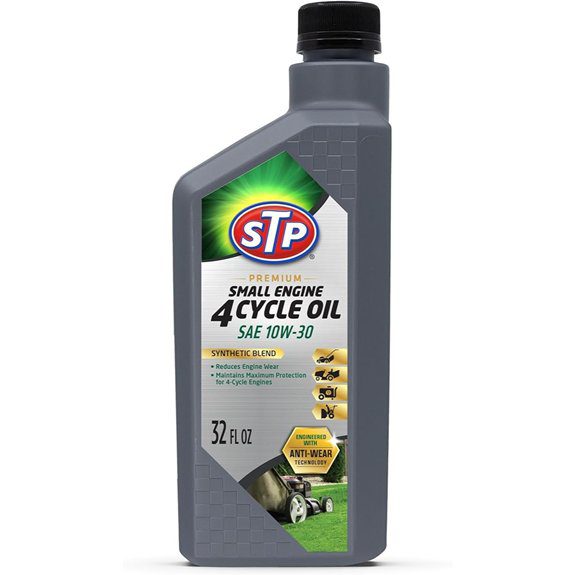 | All-Season Performer | Viscosity: SAE 10W-30 | Intended Use: Small engines (lawnmowers, tractors, generators, snow blowers) | Container Type: Can/bottle (32 fl oz) | VIEW LATEST PRICE | Read Our Analysis |
| Pennzoil 10W-30 Motor Oil 1 Quart | 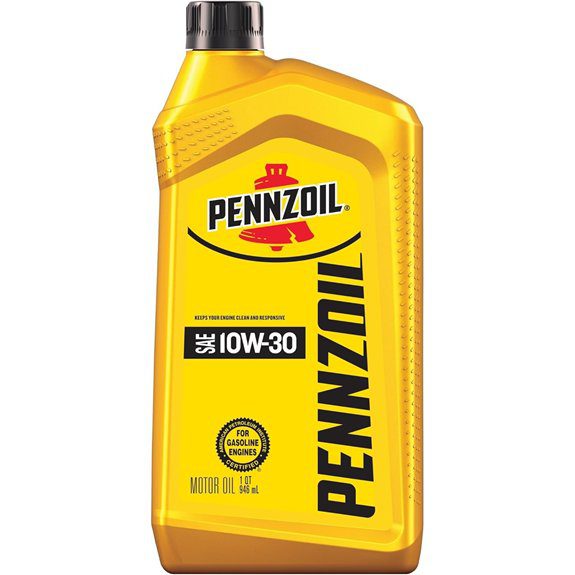 | Automotive Crossover | Viscosity: 10W-30 | Intended Use: Car/SUV/light truck gasoline engines (also suitable for some UTVs) | Container Type: Bottle (1 quart / 32 fl oz) | VIEW LATEST PRICE | Read Our Analysis |
| Briggs & Stratton SAE 30 Engine Oil & Fuel Treatment | 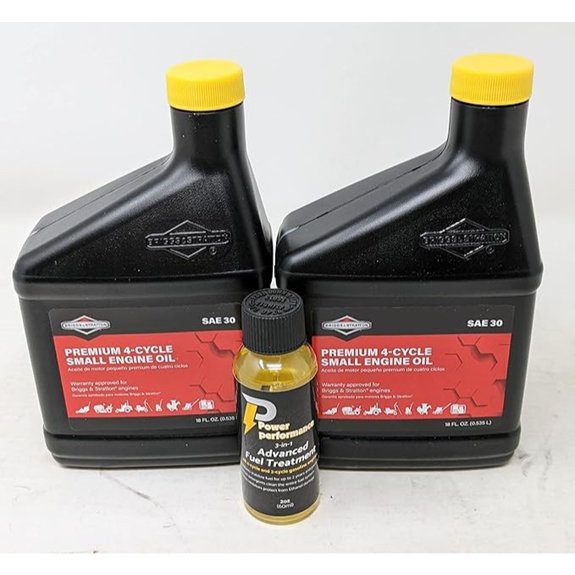 | Complete Maintenance Kit | Viscosity: SAE 30 | Intended Use: Small engines/ATV and general engine lubrication | Container Type: Bottle (18 fl oz each) | VIEW LATEST PRICE | Read Our Analysis |
| John Deere Turf-Gard SAE 10W-30 Oil Two Quarts – TY22029 | 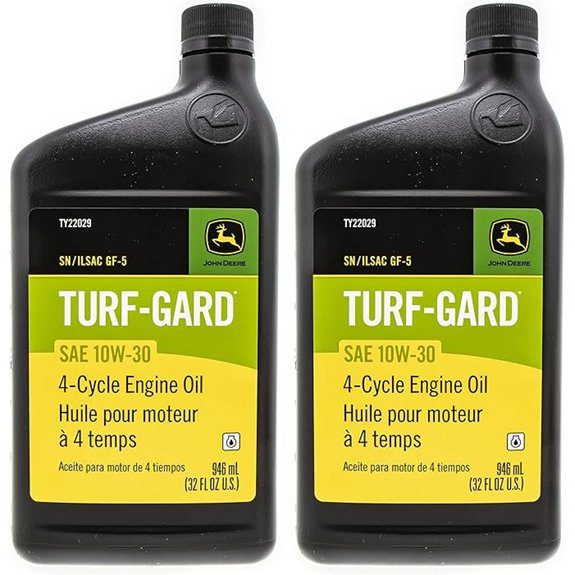 | OEM Recommended | Viscosity: SAE 10W-30 | Intended Use: Gas 4-cycle lawn and utility equipment engines | Container Type: Bottle (two quarts total) | VIEW LATEST PRICE | Read Our Analysis |
| Briggs and Stratton 100005 SAE 30W Engine Oil 18oz (Pack of 6) | 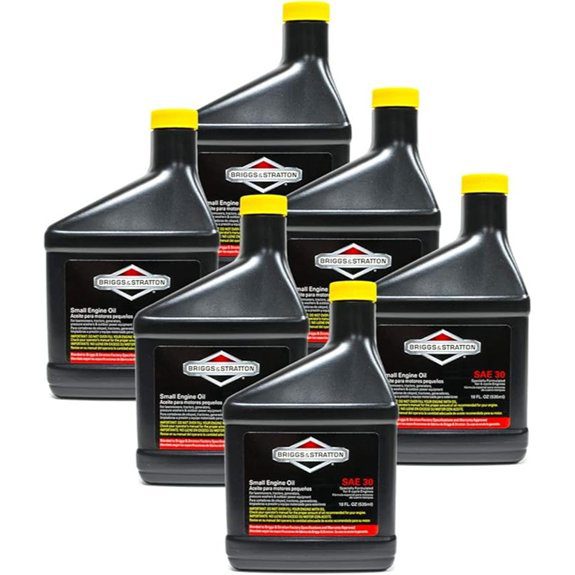 | Bulk Small-Engine Pack | Viscosity: SAE 30W | Intended Use: Small engines (lawn mowers, generators) | Container Type: Bottle (18 fl oz each, pack of 6) | VIEW LATEST PRICE | Read Our Analysis |
More Details on Our Top Picks
STP SAE 10W-30 4-Cycle Small Engine Oil
If you want an all‑season oil that eases cold starts and protects small engines, choose STP SAE 10W‑30 — a 32‑oz synthetic blend made specifically for lawnmowers, tractors, generators and other four‑stroke outdoor equipment. You’ll get 10W‑30 viscosity in a premium synthetic blend that aids cold starts, resists thermal breakdown, and cuts oil consumption with a viscosity index improver. It includes anti‑wear additives, detergents to control carbon buildup, and corrosion inhibitors for seasonal storage. Packaged in a 32 fl oz can (MFG P/N 18588, UPC 071153185883), it’s ideal for routine oil changes—follow your owner’s manual.
- Viscosity:SAE 10W-30
- Intended Use:Small engines (lawnmowers, tractors, generators, snow blowers)
- Container Type:Can/bottle (32 fl oz)
- Brand / Manufacturer:STP
- Engine Type (4-stroke):4-cycle (four-stroke) engines
- Unit Volume Info Provided:32.0 fluid ounces (1 bottle)
- Additional Feature:All-weather synthetic blend
- Additional Feature:Anti-wear technology
- Additional Feature:Corrosion inhibitor for storage
Pennzoil 10W-30 Motor Oil 1 Quart
Choose Pennzoil 10W-30 Motor Oil when you want a reliable, conventional oil that fits many small engines and keeps them running clean; its 10W-30 viscosity works well for typical lawn mower, UTV, and light-gasoline applications. You’ll get a 1-quart bottle (0.95 L) of Pennzoil conventional oil that’s compatible with engine seals and other conventional oils. It helps prevent dirt, sludge, and contaminants from forming performance-robbing deposits and provides proven wear protection. Warranty options exist for qualifying vehicles. Use it where the manufacturer recommends 10W-30 and follow service intervals to maintain responsiveness and longevity in your equipment.
- Viscosity:10W-30
- Intended Use:Car/SUV/light truck gasoline engines (also suitable for some UTVs)
- Container Type:Bottle (1 quart / 32 fl oz)
- Brand / Manufacturer:Pennzoil
- Engine Type (4-stroke):4-cycle gasoline engines (automotive/UTV)
- Unit Volume Info Provided:32.0 fluid ounces (1 quart / 0.95 L)
- Additional Feature:Limited warranty available
- Additional Feature:Compatible with engine seals
- Additional Feature:Keeps engines clean/responsive
Briggs & Stratton SAE 30 Engine Oil & Fuel Treatment
Briggs & Stratton’s SAE 30 Engine Oil and Fuel Treatment is ideal for owners of ATVs and small-engine mowers who want a simple, proven maintenance combo: two 18 fl oz SAE 30 oil bottles for proper lubrication plus a 2 fl oz 3‑in‑1 fuel treatment that treats up to 10 gallons of gasoline. You get OEM-branded SAE 30 lubricant (part 100005, two bottles) and a Power Performance 3‑n‑1 fuel treatment (part 31001) in one pack. Use the SAE 30 for standard small-engine lubrication and add the fuel treatment to stabilize fuel, clean injectors, and improve performance. Check the 30-day seller return policy and consult Briggs & Stratton for warranty details.
- Viscosity:SAE 30
- Intended Use:Small engines/ATV and general engine lubrication
- Container Type:Bottle (18 fl oz each)
- Brand / Manufacturer:Briggs & Stratton
- Engine Type (4-stroke):Four-stroke / small engine use
- Unit Volume Info Provided:18 fl oz per engine oil bottle (pack of 2)
- Additional Feature:Includes fuel treatment
- Additional Feature:2-pack SAE 30 bottles
- Additional Feature:Fuel treatment treats 10 gallons
John Deere Turf-Gard SAE 10W-30 Oil Two Quarts – TY22029
For homeowners and pros who need reliable, OEM-formulated protection for four-stroke gas engines, John Deere Turf-Gard SAE 10W-30 (TY22029) delivers the right viscosity and warranty-backed fit for many mowers and utility machines. You’ll get authentic John Deere two-quart bottles (total 1,892 mL) labeled TY22029, designed specifically for gas, four-cycle engines. This SAE 10W-30 oil suits lawn and utility equipment and carries manufacturer warranty details on the listing. Purchase confidence is bolstered by Amazon’s voluntary 30-day return guarantee and available customer reviews. Use it when your owner’s manual specifies 10W-30 to maintain OEM performance and coverage.
- Viscosity:SAE 10W-30
- Intended Use:Gas 4-cycle lawn and utility equipment engines
- Container Type:Bottle (two quarts total)
- Brand / Manufacturer:John Deere
- Engine Type (4-stroke):4-cycle (four-stroke) gas engines
- Unit Volume Info Provided:2 quarts total (1,892 mL)
- Additional Feature:OEM John Deere product
- Additional Feature:Sold as two-quart pack
- Additional Feature:For gas engines only
Briggs and Stratton 100005 SAE 30W Engine Oil 18oz (Pack of 6)
If you want a simple, reliable oil for seasonal lawn mower maintenance, the 100005 SAE 30W bottles are a great fit. You get six 18 oz bottles (108 fl oz total) of Briggs & Stratton SAE 30W formulated for four-stroke small engines. You’ll use it in lawn mowers, generators, and similar equipment that call for SAE 30W viscosity. Bottles are convenient for single-change jobs and storage. The product listing notes customer reviews, category placement, a voluntary 30-day return policy, and manufacturer warranty details on the product page. It’s a straightforward choice for routine small-engine lubrication.
- Viscosity:SAE 30W
- Intended Use:Small engines (lawn mowers, generators)
- Container Type:Bottle (18 fl oz each, pack of 6)
- Brand / Manufacturer:Briggs & Stratton
- Engine Type (4-stroke):Four-stroke small engines
- Unit Volume Info Provided:18 fl oz per bottle (pack of 6; total 108 fl oz)
- Additional Feature:Pack of six bottles
- Additional Feature:Total 108 fl oz
- Additional Feature:Small-engine focused formulation
Factors to Consider When Choosing Oil for Lawn Mower
When choosing oil for your lawn mower, you should check the engine viscosity grade and match it to the seasonal temperature range you’ll be operating in. Decide between synthetic and conventional oil based on performance needs and cost, and always follow the manufacturer’s specifications. Also look for anti‑wear additives to protect internal components and extend engine life.
Engine Viscosity Grade
Pick the viscosity grade your mower’s manual recommends—commonly SAE 30 for consistently warm climates or 10W‑30 if you need multi‑temperature performance—to ensure proper lubrication at operating temperatures. You’ll see two numbers in multigrade oils: the first plus “W” (like 10W) shows low‑temperature starting viscosity; lower W ratings flow better for easier cold starts. The second number (30) denotes high‑temperature viscosity and the oil’s film strength when the engine’s hot; higher numbers give thicker protection under heat and load. Using oil that’s too thin at operating temperature raises wear, while oil that’s too thick when cold causes hard starting and poor circulation. For storage and variable climates, choose a multigrade such as 10W‑30 to balance cold starts and hot‑running protection.
Seasonal Temperature Range
After you’ve matched viscosity to your mower’s recommendations, think about the seasonal temperature range where you’ll be running it. Use the SAE cold-start number (the “W” rating) to ensure oil flows at your lowest expected temperature — lower W numbers mean better cold starting and lubrication. If mornings are cold but afternoons get hot, choose a multigrade like 5W-30 or 10W-30 so oil flows on start-up and still protects at operating temperature. In consistently warm areas where temps rarely drop below about 40°F (4°C), SAE 30 single-grade can be acceptable. When overnight or winter temps fall below freezing, pick a lower W rating (for example 5W-30 instead of 10W-30) to reduce start-up wear. Always follow your engine manufacturer’s viscosity range.
Synthetic Vs Conventional
Although cost matters, you’ll also want to weigh performance differences between synthetic, synthetic-blend, and conventional oils before deciding. If you mow in cold climates, synthetics or 10W-rated blends keep viscosity lower for easier cold starts and quicker oil circulation. Full synthetics resist thermal and oxidative breakdown better, so they often let you stretch intervals if your engine’s guidelines allow it. Conventional oil is cheaper and fine for small engines running at steady, warm temps, but it can thicken in cold weather and break down faster under high heat. Synthetic blends balance cost and performance, offering improved high-temperature stability, reduced consumption, and better wear protection than straight conventional. Consider operating extremes and cost trade-offs when choosing oil type.
Manufacturer Specifications
Because your mower’s manufacturer tested the engine, you should follow the owner’s manual for oil viscosity (SAE 30, 10W‑30), API classification, and whether to use conventional, blend, or full synthetic to ensure proper lubrication and keep your warranty intact. Check the manual for seasonal or temperature guidance — use multi‑grade oils like 10W‑30 for variable climates and SAE 30 for consistently warm conditions. Confirm the recommended oil type so you meet performance and protection specs. Note the specified oil capacity and change intervals, and measure accordingly when you service the unit. Also observe manufacturer instructions on additives, fuel treatments, or storage procedures to avoid voiding coverage and to prolong engine life. Follow those specs precisely.
Anti‑Wear Additives
Think about anti‑wear additives as your mower engine’s hidden armor: compounds like ZDDP bond to metal surfaces to form a protective phosphate film that cuts metal‑to‑metal contact and prevents scuffing and scoring. You’ll want oil with balanced ZDDP levels—small‑engine formulas often carry more anti‑wear chemistry than passenger‑car oils to protect flat‑tappet and valve‑train parts without creating excessive deposits. Match additive strength to base‑oil viscosity: thinner oils depend more on additive film strength, while thicker oils give greater hydrodynamic separation. Remember additives deplete or shear under thermal stress, so stick to recommended oil‑change intervals to keep protection effective. Some anti‑wear chemistries also curb corrosion and oxidation, which helps during seasonal storage and high‑temperature operation.
Detergent And Dispersants
While anti‑wear additives form a protective film on metal surfaces, detergents and dispersants keep that film from getting buried under sludge and acidic combustion byproducts. You want oil with effective detergents to neutralize acids and keep surfaces clean so corrosion and wear stay minimal. Dispersants suspend soot, varnish, and sludge so contaminants don’t agglomerate and form deposits on rings, valves, or bearings. That preserves compression and makes starting more reliable, especially after high‑temperature runs or long idle/storage periods. Stronger additive packages typically let you extend oil change intervals, but those chemicals deplete with heat and contaminant loading. Follow the mower manufacturer’s recommended oil change schedule to ensure detergents and dispersants keep working as intended.
Fuel And Oil Compatibility
When picking oil for your mower, match the viscosity and chemistry to the engine and fuel—use the grade your manual recommends (commonly 10W-30 or SAE 30) and steer clear of diesel-formulated oils or two-stroke premix, both of which can harm small four-stroke engines. Use conventional or synthetic oils labeled for gasoline engines; diesel additives can attack seals and upset combustion. Never pour two-stroke premix into a four-stroke crankcase—that oil is fuel-mixed and causes smoking, fouling, and poor lubrication. If you run ethanol-blended gasoline (E10+), pick an oil with stronger detergents and corrosion inhibitors to combat fuel dilution and moisture attraction. Don’t mix oils of very different bases or viscosities unless necessary; if you do, follow the lighter grade’s cold-start guidance and change oil sooner.
Storage And Corrosion Protection
After you’ve matched the right oil to your engine and fuel, you’ll want to focus on how oil choices and storage steps protect the mower during idle months. Drain or change oil before long-term storage to remove contaminants and reduce acid-related corrosion risk inside the crankcase. Add a corrosion inhibitor or stabilizing additive labeled for engine storage to protect metal surfaces and seals. Fog the cylinders with a light oil spray before storage and periodically to coat rings and walls, preventing rust and seizure. Store the mower upright in a clean, dry, temperature-controlled area and, if possible, elevate it off concrete to minimize moisture exposure and condensation. Also stabilize fuel or run the carburetor dry to avoid varnish and fuel-system corrosion.