

For filling a pool from well water in 2026, choose a purpose-built hose pre-filter to remove iron, sediment, and minerals quickly; the PoolPure Garden Hose Pre-Filter is fast and easy to hook up, while the H&G Iron Filter Garden Hose targets high-iron wells and lasts through long fills. Check your water’s iron and mineral levels, hose fittings, and filter lifespan so you don’t clog or slow the fill — keep reading to get the full comparison and buying tips.
| PoolPure Garden Hose Pre-Filter for Pools & Spas | 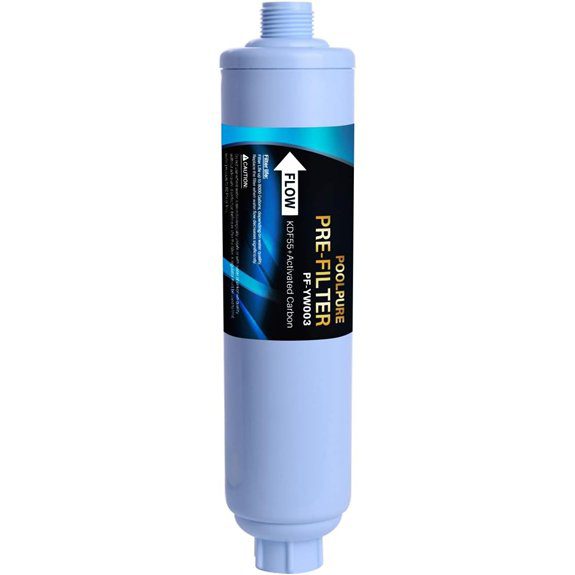 | Best for Chlorine & Taste | Purpose: Filter water for filling pools/spas and remove chlorine, VOCs, heavy metals, sediments, rust, taste/odor | Connection Type: Standard 3/4″ garden hose thread (GHT) | Installation: Direct attach to hose; no professional/tools required (attach hose and turn on) | VIEW LATEST PRICE | Read Our Analysis |
| H&G Iron Filter Garden Hose for Well Water | 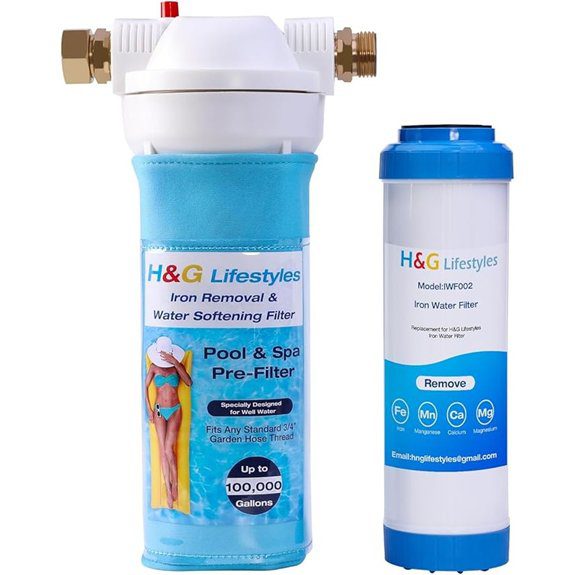 | Best for Well Water | Purpose: Remove iron and heavy metals to prevent staining/discoloration when filling pools/hot tubs | Connection Type: Standard 3/4″ garden hose brass connector (GHT) | Installation: Direct attach to hose; no tools or complex installation required | VIEW LATEST PRICE | Read Our Analysis |
More Details on Our Top Picks
PoolPure Garden Hose Pre-Filter for Pools & Spas
If you’re looking for a simple, budget-friendly pre-filter to improve tap or municipal water before filling a small pool or spa, the POOLPURE Garden Hose End Pre-Filter is a handy pick—you screw it onto any standard 3/4″ garden hose and its activated carbon media cuts chlorine, bad tastes, odors, sediments, and some VOCs while retaining beneficial minerals. You’ll get up to 8,000 gallons or about three to four months of service depending on water quality. It’s PVC, needs no assembly, fits common hoses, isn’t rated for well water, and includes a lifetime defect warranty and six-month returns.
- Purpose:Filter water for filling pools/spas and remove chlorine, VOCs, heavy metals, sediments, rust, taste/odor
- Connection Type:Standard 3/4″ garden hose thread (GHT)
- Installation:Direct attach to hose; no professional/tools required (attach hose and turn on)
- Target Use Cases:Filling above-ground pools, kiddie pools, spas, hot tubs, ponds, pet baths, car washes, watering gardens
- Filtration Media / Mechanism:Activated carbon media (removes chlorine, VOCs, taste/odor, organic contaminants, some metals/sediment)
- Service Capacity / Lifespan:Up to ~8,000 gallons; typical lifespan up to 3–4 months (depending on water quality)
- Additional Feature:Activated carbon media
- Additional Feature:NSF external testing
- Additional Feature:Lifetime warranty (within service life)
H&G Iron Filter Garden Hose for Well Water
Choose the H&G Iron Filter Garden Hose when you need a simple, tool-free way to stop iron and rust from turning your pool or hot tub water yellow or brown. You’ll attach its standard 3/4″ GHT brass connector directly to any garden hose—no tools required—and run well or municipal water through iron-removal resin that captures iron and heavy metals. Expect clearer water, fewer stains, and less buildup on pool and hot tub surfaces. The unit treats up to 20,000 gallons per season, so it’s sturdy and long-lasting for fills, top-offs, and other outdoor uses, reducing maintenance and replacement frequency.
- Purpose:Remove iron and heavy metals to prevent staining/discoloration when filling pools/hot tubs
- Connection Type:Standard 3/4″ garden hose brass connector (GHT)
- Installation:Direct attach to hose; no tools or complex installation required
- Target Use Cases:Filling pools, topping off hot tubs, general garden hose/outdoor water uses
- Filtration Media / Mechanism:Iron-removal resin (targets iron and other heavy metals)
- Service Capacity / Lifespan:Up to ~20,000 gallons; season-long use (multiple fills/top-offs)
- Additional Feature:Iron-removal resin
- Additional Feature:Brass 3/4″ connector
- Additional Feature:Up to 20,000 gallons
Factors to Consider When Choosing a Hose Filter for Filling Pool With Well Water
Before you pick a hose filter, test your well water to know the source characteristics and measure iron and other mineral levels. Choose a filtration media that targets those contaminants while keeping an eye on how the filter’s micron rating and media affect flow rate. Also confirm the filter’s connection types and pressure ratings match your hose and filler setup.
Water Source Analysis
When you’re sizing a hose filter for filling your pool with well water, start by testing the water for iron (both ferrous and ferric), manganese, hydrogen sulfide, TDS, pH, hardness, and turbidity so you know which contaminants and concentrations the filter must target. Measure iron in ppm to classify staining risk and whether simple filtration, sequestration, or stronger treatment is needed. Check hardness and pH because scale, precipitation, and extreme pH shorten media life or disable certain resins and carbon. Sample seasonally and after heavy pumping or rain to capture peak loads and estimate realistic service intervals. Also evaluate microbial indicators (coliforms, E. coli) and any volatile compounds—biological or chemical issues often require disinfection or specialized treatment beyond typical hose filters.
Iron And Mineral Levels
Because well water chemistry directly controls what a hose filter must remove, you’ll need precise measures of dissolved iron (ferrous and ferric), manganese, hardness, and TDS to pick the right media and size the unit. Test for iron above ~0.3 ppm—those levels cause staining and often need specialized iron-removal media. Identify whether iron is soluble (ferrous/clear-water) or particulate; soluble iron typically requires ion-exchange or catalytic media, while particulate iron can be stopped with sediment/mechanical filtration. Check manganese and hardness because high levels foul iron media, shorten life, and raise regeneration or replacement frequency. Estimate seasonal gallons to size filter capacity (iron media often rated from a few thousand up to ~20,000 gallons). Monitor influent iron trends and select a unit rated for peak concentrations and flow to prevent breakthrough.
Filtration Media Type
If your well water contains dissolved iron, manganese, organics, or sediments, pick a hose filter whose media matches those specific contaminants and your seasonal volume. Choose ion-exchange resin if dissolved iron or heavy metals dominate—you’ll get selective removal and service capacities measured in thousands of gallons before replacement or regeneration. For mixed iron species consider oxidation media (manganese greensand or catalytic carbon) to convert dissolved metals to filterable particles, but watch pH and need for oxidant pretreatment. Use activated carbon for tastes, odors, chlorine, and VOCs, knowing it won’t remove most inorganic metals unless blended with other media. Multi-media cartridges layer sediment, carbon, and ion-exchange/catalytic elements to treat particulates, organics, and metals; always check service capacity, replacement interval, and compatibility with your water chemistry.
Flow Rate Impact
While faster fills get your pool ready sooner, higher flow rates cut the contact time water spends in the filter and can lower removal of iron, manganese, and fine sediment. You’ll typically see garden-hose flows of 5–12 GPM; check the filter’s recommended maximum GPM to keep rated performance. If your pump or source pushes water faster than recommended, add a pressure regulator or run multiple filters in parallel to avoid sacrificing removal efficiency. You can also use a flow-restricted nozzle or partially close the spigot to increase residence time through the media, though fills will take longer. Finally, calculate seasonal fill gallons against the cartridge’s stated service capacity so your chosen filter handles the volume at your expected fill rate.
Connection Compatibility
A proper connection keeps the filtered water flowing and prevents leaks, so after you’ve checked flow rate, confirm the filter’s fittings match your hose and spigot. Verify the filter uses a standard 3/4″ garden hose thread (GHT) or matches your hose to avoid adapters. Check connector materials—brass resists corrosion, plastics can crack— and ensure coupling designs prevent cross-threading. Confirm whether you need adapters, quick-connects, or pressure-rated couplings and choose parts rated for typical garden pressures (40–80 psi). For inline or pre-filter setups, match flow direction and male/female orientations to avoid backflow. If you’re attaching pumps, odd-diameter hoses, or threaded spigots, measure thread type and OD and pick compatible adapters that preserve flow and prevent leaks or pressure drops.
Filter Capacity Lifespan
Because filter capacity determines how much of your well water will be treated before performance drops, you should check service capacity in gallons and expected lifespan in months against the pool volume you plan to fill. Compare rated capacities (e.g., 8,000–20,000 gal) to your pool’s required gallons so you won’t need a mid-job replacement. Factor local water quality: higher iron, sediment, or contaminants will exhaust media faster and cut usable capacity. Verify whether the manufacturer’s capacity assumes specific contaminant ppm and scale your expectations if your well is worse. Prefer a unit with a 20–30% safety margin over your calculated need. Note typical lifespans—carbon pre-filters last a few months; iron-resin options can be season-long—align choice with filling frequency.
Maintenance Requirements
When you pick a hose filter, consider how much hands-on upkeep it’ll need so you don’t get surprised mid-fill: check the media type and rated service capacity to estimate cartridge or resin replacement frequency, inspect and clean inlet screens to prevent sediment clogging, and keep spare cartridges stored properly so you can swap them without delaying the job. Know typical lifespans — often 2–4 months for carbon or season-long for specialty resins — and schedule changes before performance drops. Regularly clean pre-filters and inlet screens to maintain flow and extend media life. Log cumulative gallons filtered or elapsed time between fills so you replace media on time. Store spare cartridges or resin units per manufacturer instructions (cool, dry) to avoid damage and downtime.
Cost Versus Value
Although a low sticker price can be tempting, you should weigh upfront cost against treated gallons, replacement-media expenses, and the value of reduced labor and downstream chemical or staining problems. Compare cost-per-gallon: a pricier unit treating 15,000–20,000 gallons often beats a cheap cartridge rated for 2,000–4,000 gallons. Add recurring costs—annual replacement cartridges or media—and divide by gallons treated to get true cost-per-gallon. Factor lifespan and your time: longer-lasting resin or filters cut maintenance trips and downtime. Match media to contaminants; specialized iron or manganese media cost more but can avoid staining and extra chemicals. Finally, include indirect savings like reduced backwashing, lower chemical use, and avoided surface repair when judging total value, not just sticker price.