
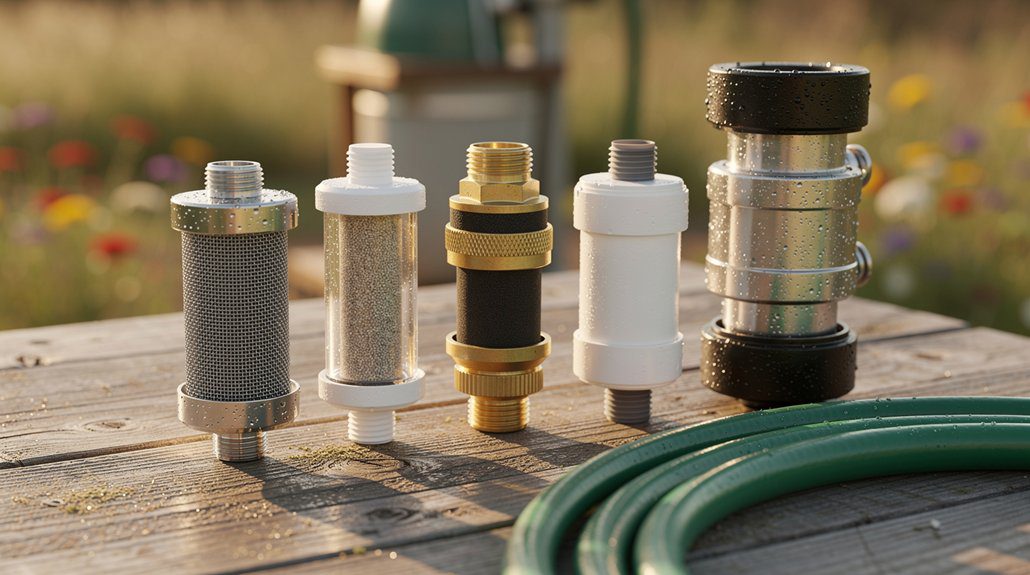
You’ll want high‑flow, durable hose filters that handle iron, chlorine, sediment and odors from well water without choking your fills. Pick Camco TastePURE for GAC+KDF chlorine and metal reduction, H&G Iron for heavy iron removal, VENUSFILTER for quick hot‑tub fills with coconut carbon, M MINGLE for interchangeable 40/100‑mesh screens, and STYDDI for a stainless 100‑mesh inspection unit. Check fittings, pressure rating and spare screens — keep going and you’ll find detailed picks and maintenance tips.
| Camco TastePURE RV Inline Water Filter (40043) | 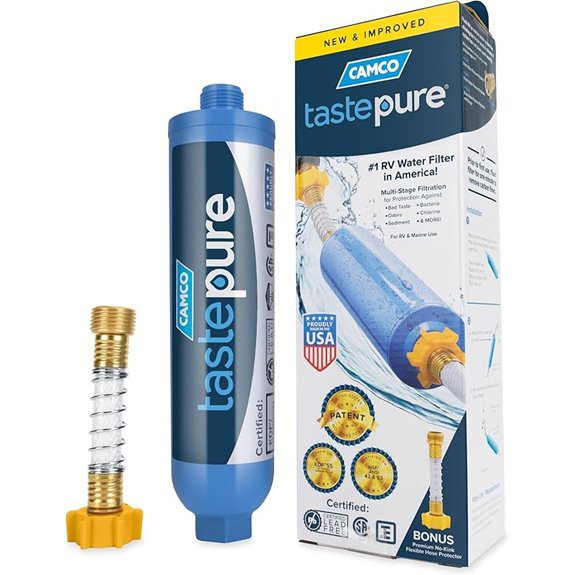 | Best for RVs & Travel | Connection Thread: Standard garden hose threads (inline adapters included) | Intended Use / Applications: RVs, boats, camping, pets, gardening, car washes/detailing | Sediment / Debris Protection: 20-micron internal sediment filter | VIEW LATEST PRICE | Read Our Analysis |
| Garden Hose Filter for Hot Tub Pool Spa | 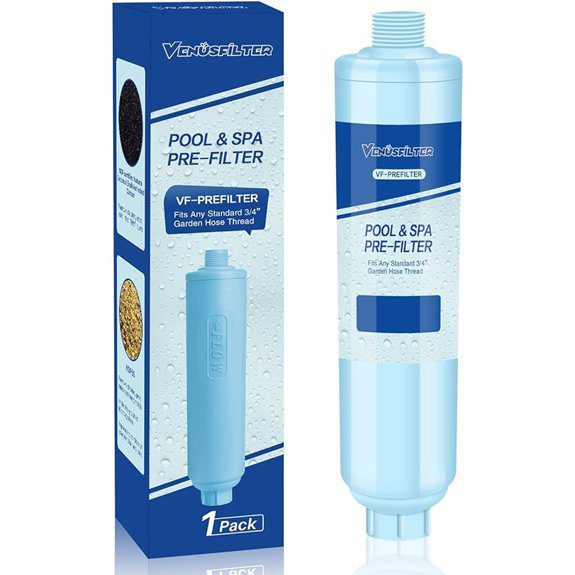 | Best for Pools & Spas | Connection Thread: Standard 3/4″ garden hose thread | Intended Use / Applications: Filling hot tubs, pools, spas, ponds, gardening, car washing, pet water | Sediment / Debris Protection: Reduces sediment (multi-stage carbon/KDF) | VIEW LATEST PRICE | Read Our Analysis |
| H&G Iron Filter Garden Hose for Well Water | 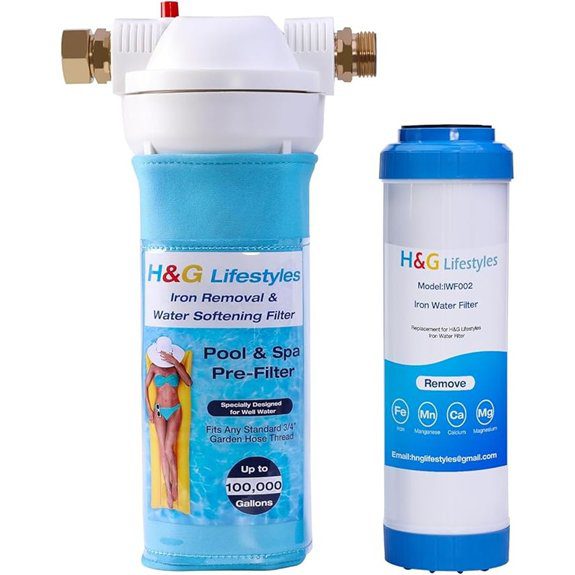 | Best for Iron Removal | Connection Thread: Standard 3/4″ GHT brass connector | Intended Use / Applications: Filling pools/hot tubs, garden hose uses, well water treatment | Sediment / Debris Protection: Removes iron and particulate from well water (resin) | VIEW LATEST PRICE | Read Our Analysis |
| M MINGLE Garden Hose Inline Water Filter (40/100 Mesh) | 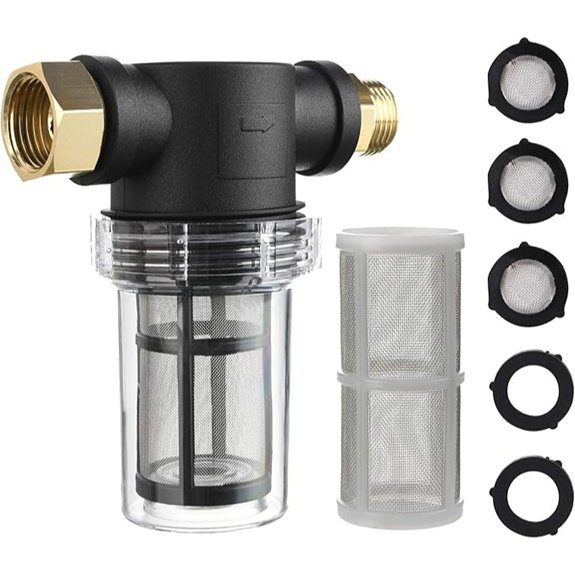 | Best for Pressure Washers | Connection Thread: 3/4″ GHT male and female threads | Intended Use / Applications: Pressure washer inlet, garden hose, home spigot protection | Sediment / Debris Protection: 40 mesh screen (plus optional 100 mesh) | VIEW LATEST PRICE | Read Our Analysis |
| STYDDI Inline Garden Hose Water Sediment Filter | 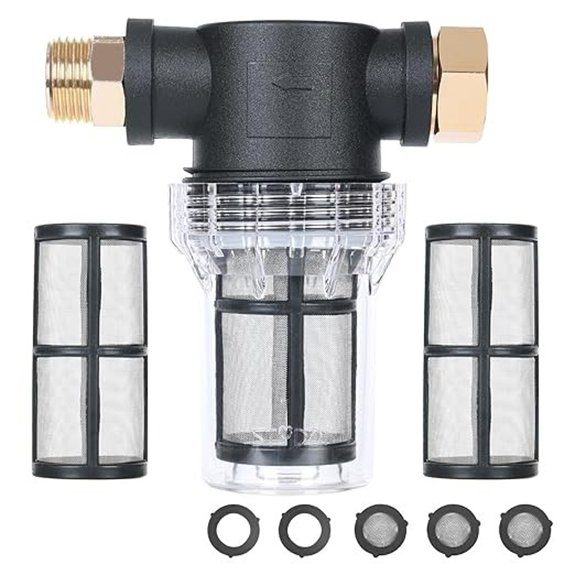 | Best for Sediment Protection | Connection Thread: Standard garden hose connectors (metal/aluminum fittings) | Intended Use / Applications: Protecting watering tools, pressure washers, pumps, washing machines, outdoor spigots | Sediment / Debris Protection: 100 mesh stainless steel screen | VIEW LATEST PRICE | Read Our Analysis |
More Details on Our Top Picks
Camco TastePURE RV Inline Water Filter (40043)
If you need a portable, easy-to-install filter that improves taste and controls bacteria while you’re on the road or working outdoors, the Camco TastePURE RV Inline Filter (40043) is a strong choice — its Hex-Flow GAC + KDF media and 20‑micron sediment barrier cut chlorine, odor and particulates while the wide-body high-flow design keeps water pressure up for RVs, boats, gardening and other hose-mounted uses. You’ll get NSF/ANSI 42 and 53 tested performance, CSA lead-free certification, and a patented, made-in-USA build. It includes an adapter and flexible hose protector, suits standard hoses, and carries a one-year limited warranty.
- Connection Thread:Standard garden hose threads (inline adapters included)
- Intended Use / Applications:RVs, boats, camping, pets, gardening, car washes/detailing
- Sediment / Debris Protection:20-micron internal sediment filter
- Reduces Chlorine / Taste / Odor:Reduces chlorine, bad taste, odor (GAC + KDF)
- Durable Materials / Construction:Wide-body design, included flexible hose protector; made in USA
- Replacement / Service Life Guidance:Limited 1-year warranty; media longevity implied by design (no explicit gallon rating)
- Additional Feature:Hex-Flow 6-step filtration
- Additional Feature:NSF/ANSI 42 & 53 certified
- Additional Feature:Flexible hose protector
Garden Hose Filter for Hot Tub Pool Spa
Homeowners filling a hot tub, pool, or spa who want to cut chlorine, sediment, heavy metals and odors at the hose will appreciate this VENUSFILTER garden hose filter, which attaches to any standard 3/4″ garden hose and uses coconut-shell activated carbon plus KDF multi-stage media to deliver cleaner, better-tasting water. You’ll install it in seconds—no assembly—and run water 30 seconds first to clear loose carbon. NSF-tested performance targets chlorine, bad taste, odors, sediment and metals, filtering up to 8,000 gallons. Replace roughly every three months depending on use. It’s durable, lightweight, and backed by manufacturer warranty options.
- Connection Thread:Standard 3/4″ garden hose thread
- Intended Use / Applications:Filling hot tubs, pools, spas, ponds, gardening, car washing, pet water
- Sediment / Debris Protection:Reduces sediment (multi-stage carbon/KDF)
- Reduces Chlorine / Taste / Odor:Reduces chlorine, bad taste, odors (coconut carbon + KDF)
- Durable Materials / Construction:Carbon media housing rated for durability; passed cracking tests
- Replacement / Service Life Guidance:Filters up to ~8,000 gallons; replace ≈ every 3 months (usage dependent)
- Additional Feature:Coconut-shell activated carbon
- Additional Feature:Filters up to 8,000 gallons
- Additional Feature:Run 30s first-use flush
H&G Iron Filter Garden Hose for Well Water
Choose the H&G Iron Filter Garden Hose if you rely on well water and want to prevent yellow or rusty staining when filling pools, hot tubs, or watering sensitive plants. You’ll attach the filter directly to any standard 3/4″ GHT hose—no tools needed—and its brass connector holds securely. Inside, iron-removal resin strips iron and heavy metals, producing clearer water and reducing staining, buildup, and maintenance on pool and hot tub surfaces. With up to 20,000 gallons of capacity, it handles seasonal fills and top-offs. It’s durable, simple to use, and works with both well and municipal water for versatile outdoor filtration.
- Connection Thread:Standard 3/4″ GHT brass connector
- Intended Use / Applications:Filling pools/hot tubs, garden hose uses, well water treatment
- Sediment / Debris Protection:Removes iron and particulate from well water (resin)
- Reduces Chlorine / Taste / Odor:Not primary; removes heavy metals/iron (improves clarity—implied taste/odor benefit)
- Durable Materials / Construction:Brass connector and durable resin media
- Replacement / Service Life Guidance:Capacity up to 20,000 gallons (season-long use)
- Additional Feature:Iron-removal resin
- Additional Feature:Up to 20,000-gallon capacity
- Additional Feature:Brass 3/4″ connector
M MINGLE Garden Hose Inline Water Filter (40/100 Mesh)
For anyone feeding a pressure washer or garden hose from a well, the M MINGLE inline filter gives quick, effective sediment protection with its screw-on 3/4″ GHT fittings and interchangeable 40- and 100-mesh screens. You’ll connect it to a pressure washer inlet, standard garden hose, or spigot to trap sand and debris before they reach pumps, wands, guns, water brooms, or undercarriage cleaners. The kit includes the inline unit (40 mesh installed), an extra 100-mesh screen, two hose washers, and three filter washers. Note the 80 PSI maximum working pressure for typical garden-hose use.
- Connection Thread:3/4″ GHT male and female threads
- Intended Use / Applications:Pressure washer inlet, garden hose, home spigot protection
- Sediment / Debris Protection:40 mesh screen (plus optional 100 mesh)
- Reduces Chlorine / Taste / Odor:Primarily sediment protection (does not claim chlorine/taste reduction)
- Durable Materials / Construction:Metal hose washers, replaceable mesh screens; max 80 PSI rating
- Replacement / Service Life Guidance:Replaceable screens included (40 mesh installed, 100 mesh spare); maintenance implied
- Additional Feature:Includes 100-mesh spare
- Additional Feature:40/100 mesh selectable
- Additional Feature:80 PSI max pressure
STYDDI Inline Garden Hose Water Sediment Filter
If you rely on a private well and want to keep sediment out of hoses and outdoor equipment, the STYDDI inline sediment filter is a smart, low-maintenance choice. You’ll stop dirt, sediment and large debris from reaching pressure washers, pumps, washing machines, spigots and garden tools. A stainless steel 100-mesh screen captures finer particles than common 40-mesh filters, and the stainless construction resists corrosion for longer service life. The clear plastic top lets you inspect buildup, while aluminum connectors boost durability. The kit includes two replacement 100-mesh screens plus three metal hose washers and two spare washers for routine upkeep.
- Connection Thread:Standard garden hose connectors (metal/aluminum fittings)
- Intended Use / Applications:Protecting watering tools, pressure washers, pumps, washing machines, outdoor spigots
- Sediment / Debris Protection:100 mesh stainless steel screen
- Reduces Chlorine / Taste / Odor:Primarily sediment removal (does not claim chlorine/taste reduction)
- Durable Materials / Construction:Aluminum connectors, stainless steel screen, clear plastic top
- Replacement / Service Life Guidance:Includes two extra 100 mesh replacement screens; maintenance/replacement recommended
- Additional Feature:Clear top for visibility
- Additional Feature:Aluminum connector fittings
- Additional Feature:Includes extra 100-mesh screens
Factors to Consider When Choosing a Garden Hose Filter for Well Water
Before you pick a garden hose filter for well water, test your source so you know what’s actually in it. Consider which contaminants you need removed, the filtration media that targets them, and whether the unit will maintain adequate flow rate and pressure. Finally, check that the filter’s connections and size match your hose and fittings.
Water Source Testing
Because well water quality varies widely, you’ll need lab-grade or reliable home testing to know what your garden hose filter must handle. Test iron (ferrous and ferric), manganese, and hydrogen sulfide: iron commonly ranges 0.1–5+ ppm and determines whether a sediment-only filter will do or you need an iron-removal resin. Measure TDS and hardness since values above ~300 ppm TDS or ~120 ppm hardness can foul media and shorten life. Check turbidity and particle size—coarse sand needs coarser prefiltration (40–100 mesh or ~20–200 µm) while fine silt requires finer micron ratings. If biological contamination is suspected, test for coliforms and chlorine-resistant bacteria because carbon media can support growth unless paired with KDF or disinfected. Use certified lab baselines to size capacity and replacement intervals.
Target Contaminants Removed
When choosing a garden-hose filter for well water, start by matching the unit to the contaminants you actually need to remove: dissolved iron (ferrous and ferric), manganese, and hydrogen sulfide require oxidizing or catalytic media; fine suspended solids and sediment call for appropriately rated mesh or micron screens; and dissolved organics, chlorine, or certain heavy metals need activated carbon, KDF, or specialty resins. Test your well first so you know concentrations—iron often causes staining at trace to several ppm; manganese and H2S commonly co-occur. For particulates, pick mesh/micron ratings (100 mesh ≈149 µm down to 20–40 µm) that yield the clarity you want. If bacteria or algae are suspected, plan separate disinfection; standard hose filters aren’t a reliable biological barrier.
Filtration Media Type
Choose filter media based on the contaminants your well actually contains and the service life you need: ion-exchange resins tackle dissolved iron and manganese, activated carbon removes chlorine, organics, and odors, KDF (copper‑zinc) provides redox reduction of chlorine and certain metals while inhibiting biological growth, and mechanical meshes or micron-rated screens stop suspended sediment—many hose filters combine these in stages, so match media performance and rated capacity (gallons/months) to your water test results. You’ll pick ion‑exchange if dissolved iron/manganese stain fixtures; choose coconut‑shell or granular carbon for taste, odor, and organic removal; add KDF when chlorine, bacteria control, or metal reduction’s needed and to extend carbon life. Specify mesh/micron for sediment loading and replace media per rated gallons or months.
Flow Rate And Pressure
Balancing flow rate and pressure is key to getting the performance you expect from a garden‑hose filter on well water: check the filter’s maximum operating pressure (typically 80–100 PSI) and its rated GPM or pressure‑drop curve so you don’t starve downstream tools or risk damage. You’ll compare stated GPMs or curves because coarser screens or media usually deliver higher flow while fine media reduces it. Remember filters load with sediment — heavy buildup can cut GPM substantially — so capacity and recommended service intervals matter for sustained performance. Match the filter’s GPM to the needs of devices like pressure washers or pumps to ensure adequate volume and pressure. If you need high flow with minimal loss, favor low‑resistance designs and larger inlet/outlet paths.
Connection Compatibility Size
Flow and pressure mean little if the filter won’t hook up properly, so next you should confirm connection compatibility and size before buying. Verify the hose thread size—most filters use standard 3/4″ GHT—so check both male and female fittings on your hose and spigot match that spec. Note whether the filter has male, female, or mixed 3/4″ connectors; that tells you if an adapter or swivel is needed. If connecting to a pressure washer, pump, or specialty fitting, confirm whether it’s tapered NPT or straight GHT to prevent leaks and cross-threading. For tight or angled installations, choose models with swivel or quick-connect options and measure connection clearance. Finally, ensure the filter accepts standard 3/4″ rubber washers and the gasket thickness you plan to use for a watertight seal.
Filter Capacity Life
Because filter life depends on both the media’s rated gallons and what’s actually in your well, you should treat the manufacturer’s capacity number as an estimate rather than a guarantee. Capacity is usually given in gallons (often several thousand) and reflects the total volume the media can treat before performance drops. Higher iron, sediment, or heavy metal levels will exhaust media faster and cut usable gallons. Manufacturers may convert capacity to months or seasons based on average use, but you should track real signs: slower flow, changes in color/taste/odor, or visible sediment breakthrough. To estimate replacement intervals, divide the rated gallons by your typical fill volume and frequency, then adjust based on observed water quality and flow reductions.
Durability And Materials
Knowing when to replace media matters, but the filter’s build determines how well it survives until then. Choose corrosion-resistant parts—stainless steel screens, brass or aluminum fittings, and polycarbonate or ABS housings—to resist minerals and outdoor exposure. Prefer UV- and impact-resistant housings so sunlight, cold, and knocks don’t lead to cracks. Insist on metal GHT connectors rather than plastic threads to avoid stripping and leaks from repeated hookups and pressure cycling. Check quality seals—rubber or silicone washers and O-rings—to prevent seepage and degradation. Verify the maximum working pressure rating (commonly 60–100 PSI) and pick housings rated above your system pressure. Finally, favor filters with replaceable internal elements and available spare screens to extend usable life.
Maintenance And Replacement
When you rely on well water, regular maintenance keeps a garden-hose filter working reliably and prevents damage to your irrigation or watering tools. Check and clean or replace the filter element per the manufacturer—commonly every three months to seasonally depending on water quality and use. Inspect screens and housings monthly for sediment, corrosion, or damage; if flow drops, disconnect and flush by running water through the unit. Keep spare screens or cartridges (100‑mesh or finer) and swap torn or worn mesh immediately to preserve sediment capture. Track cumulative gallons filtered or signs like reduced flow or discoloration to trigger replacement—lifespan varies from a few thousand to tens of thousands of gallons. Before freezing, drain and remove the inline filter and store it dry and clean.