
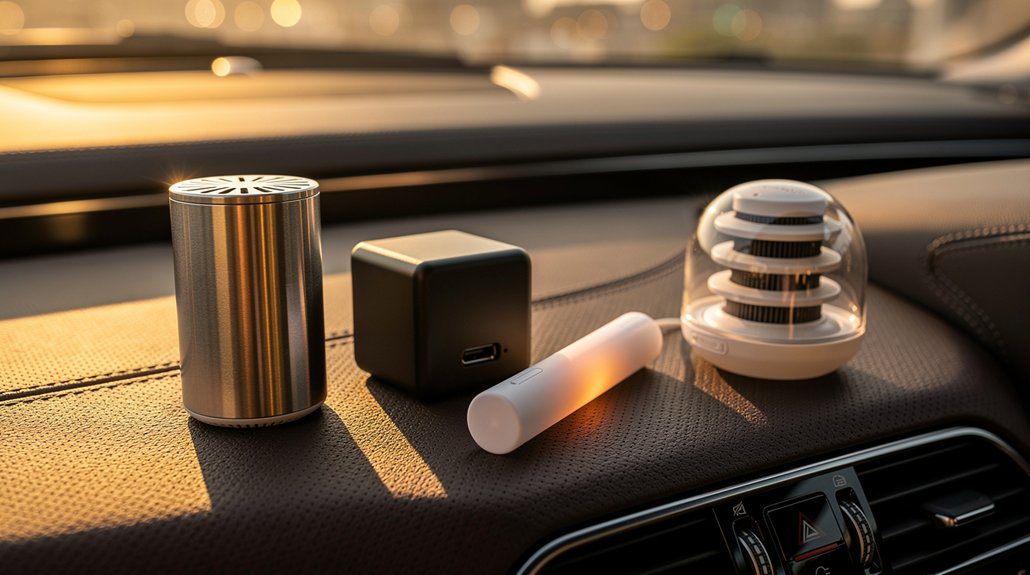
For compact, effective in-car air cleaning, try these four 2026 picks: the Pure Enrichment PureZone Mini — cordless, True HEPA, USB‑C and long runtime; a cup‑holder Portable Car Air Purifier with True H13 HEPA plus aromatherapy; a powerful Car Air Purifier with H13 True HEPA, VOC removal, PM2.5 sensor and auto engine activation; and CLEVAST Bamboo Charcoal bags for low‑maintenance odor and moisture control. Keep going and you’ll see how each matches size, power, filters, cost, and convenience.
| Pure Enrichment PureZone Mini Portable HEPA Air Purifier | 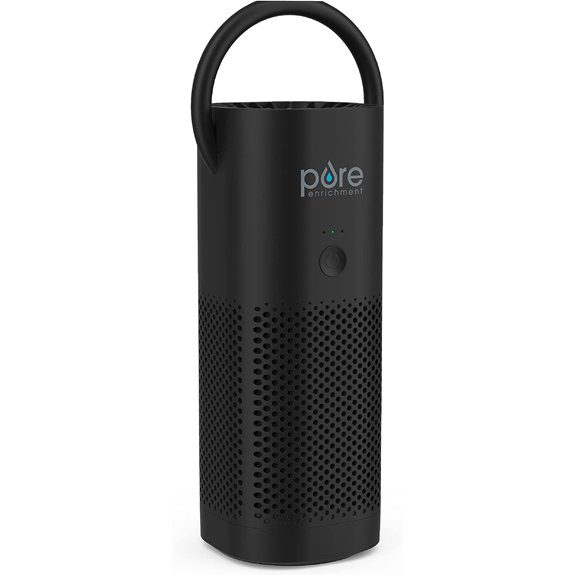 | Best for Portability | Filtration Type: True HEPA + activated carbon pre-filter (2-stage) | Odor Control: Activated carbon removes odors and gases | Portability / Fit for Car Use: Portable, under 1 lb, designed for cars/travel | VIEW LATEST PRICE | Read Our Analysis |
| Portable Car Air Purifier with True HEPA Filter | 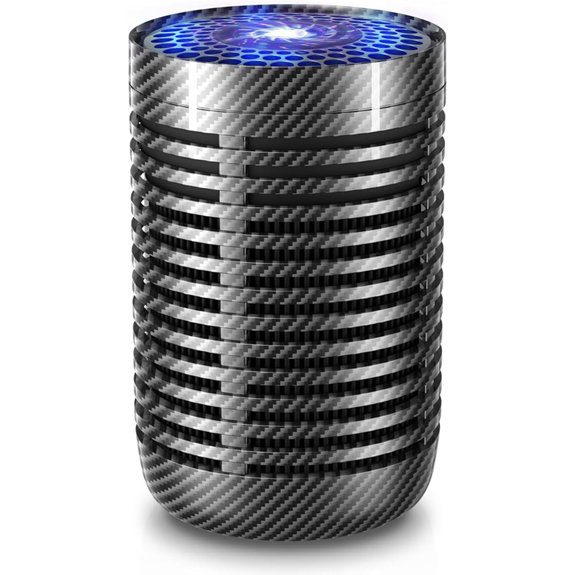 | Best for Fragrance | Filtration Type: True H13 HEPA + carbon (with aromatherapy diffuser) | Odor Control: Carbon + built-in aromatherapy diffuser for fragrance | Portability / Fit for Car Use: Cup-holder shape, compact, portable for car/home/office | VIEW LATEST PRICE | Read Our Analysis |
| Car Air Purifier with H13 True HEPA Filter | 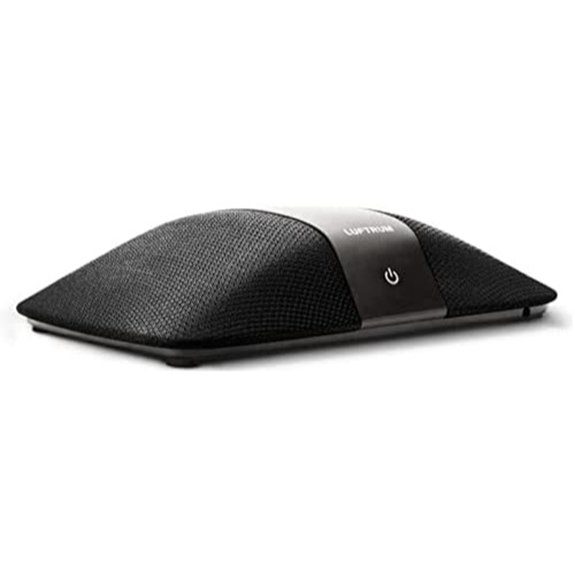 | Best for Performance | Filtration Type: H13 True HEPA (4-stage system including HEPA + gas/adsorbent stages) | Odor Control: Removes odors, VOCs, toluene, formaldehyde (gas adsorption stages) | Portability / Fit for Car Use: Weighs under 1 lb, includes long cord, designed for in-car use | VIEW LATEST PRICE | Read Our Analysis |
| CLEVAST Bamboo Charcoal Air Purifying Bags (Large) | 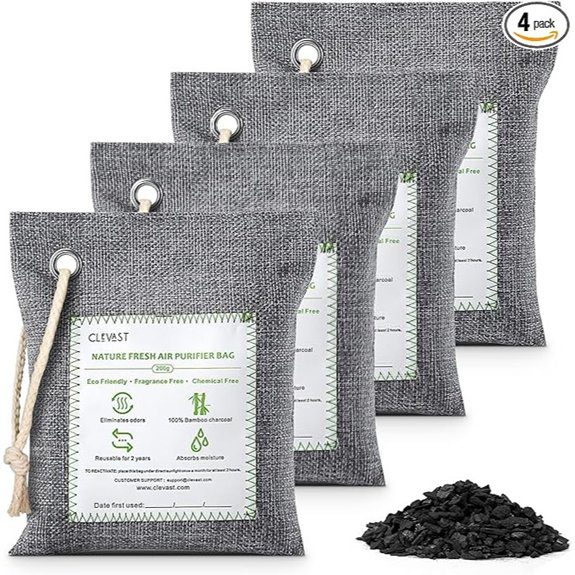 | Natural Odor Eliminator | Filtration Type: Bamboo charcoal adsorption (natural charcoal, no HEPA) | Odor Control: Bamboo charcoal adsorbs odors and moisture | Portability / Fit for Car Use: Small bag with hook, suitable for cars and small enclosed spaces | VIEW LATEST PRICE | Read Our Analysis |
More Details on Our Top Picks
Pure Enrichment PureZone Mini Portable HEPA Air Purifier
If you want a truly portable purifier for tight spaces like your car or a small office, the Pure Enrichment PureZone Mini delivers—it’s cordless, weighs under a pound, and runs up to 12 hours on its rechargeable battery while using a True HEPA plus activated carbon filter to capture 99.97% of common pollutants. You’ll clean about 6 ft² in 12 minutes (AHAM CADR basis). Twist off the base for quick filter changes. USB-C charges in ~4 hours (avoid PD/SCP/SoC quick chargers). Three fan speeds let you prioritize quiet or stronger airflow, and the adjustable handle adds placement flexibility. A two-in-one filter and five-year warranty support you.
- Filtration Type:True HEPA + activated carbon pre-filter (2-stage)
- Odor Control:Activated carbon removes odors and gases
- Portability / Fit for Car Use:Portable, under 1 lb, designed for cars/travel
- Power / Operation:Cordless rechargeable lithium-ion battery (USB-C), up to 12 hrs
- Noise / Quietness:Low-noise personal purifier (three speeds; high doubles as fan)
- Maintenance / Replacement:Twist-off base for quick filter changes; 2-in-1 filter included
- Additional Feature:Adjustable multi-position handle
- Additional Feature:Cordless rechargeable battery
- Additional Feature:5-year manufacturer warranty
Portable Car Air Purifier with True HEPA Filter
For drivers who want fast, effective removal of dust, odors and harmful gases, this portable car air purifier with a True H13 HEPA filter is the best choice—its cup-holder design and quiet, USB‑powered fan fit securely in most vehicles and delivers purified air and dispersed fragrance to both front and rear passengers. You’ll get True H13 filtration plus a built‑in aromatherapy diffuser that accepts essential or perfume oils, removing strong and unusual odors faster than standard fresheners. The carbon‑fiber wrap looks premium, the compact shape won’t block views, and the silent, efficient fan ensures even scent distribution. Replacement filters and a satisfaction buyback complete the package.
- Filtration Type:True H13 HEPA + carbon (with aromatherapy diffuser)
- Odor Control:Carbon + built-in aromatherapy diffuser for fragrance
- Portability / Fit for Car Use:Cup-holder shape, compact, portable for car/home/office
- Power / Operation:USB plug-and-play power (car USB)
- Noise / Quietness:Silent design for minimal disturbance
- Maintenance / Replacement:Replacement HEPA filter available (ASIN provided)
- Additional Feature:Built-in aromatherapy diffuser
- Additional Feature:Cup-holder shaped design
- Additional Feature:Carbon-fiber wrap exterior
Car Air Purifier with H13 True HEPA Filter
Drivers who want hospital-grade particle capture will appreciate this car air purifier with an H13 True HEPA filter, which grabs particles down to 0.1 microns and removes 99.9% of VOCs, odors, toluene, and formaldehyde. You’ll get a 4-stage system with a double-rotating duct and a fan spinning up to 5,300 RPM, filtering cabin air in six minutes and delivering up to ten air changes per hour. It runs virtually silently at 4 W, offers three fan speeds, automatic engine-activated operation, a PM2.5 sensor, CARB and ETL certification, 100% ozone-free performance, and lifetime tech support.
- Filtration Type:H13 True HEPA (4-stage system including HEPA + gas/adsorbent stages)
- Odor Control:Removes odors, VOCs, toluene, formaldehyde (gas adsorption stages)
- Portability / Fit for Car Use:Weighs under 1 lb, includes long cord, designed for in-car use
- Power / Operation:12V car power via long 3M cord, auto on with ignition, 4 W
- Noise / Quietness:Virtually silent operation (fan up to 5,300 RPM but quiet)
- Maintenance / Replacement:Multi-stage filter (replaceable); lifetime technical support
- Additional Feature:Auto on/off with ignition
- Additional Feature:Built-in PM2.5 sensor
- Additional Feature:CARB and ETL certified
CLEVAST Bamboo Charcoal Air Purifying Bags (Large)
Choose CLEVAST Bamboo Charcoal Air Purifying Bags (Large) when you want a chemical-free, low-maintenance way to keep your car—and other small spaces—smelling fresh; the 100% natural bamboo charcoal absorbs odors, moisture, and impurities without fragrances or toxins. You’ll appreciate standard-size charcoal particles that increase surface contact and boost adsorption performance, removing musty smells in enclosed areas. The durable burlap bags include a metal hook so you can hang them in cars, closets, shoes, fridges, gyms, basements, or pet zones. They’re safe around kids and pets, reusable up to two years, and refresh with two hours’ monthly sunlight. Support and refunds are available.
- Filtration Type:Bamboo charcoal adsorption (natural charcoal, no HEPA)
- Odor Control:Bamboo charcoal adsorbs odors and moisture
- Portability / Fit for Car Use:Small bag with hook, suitable for cars and small enclosed spaces
- Power / Operation:Passive (no power) – works via charcoal adsorption
- Noise / Quietness:Silent (passive, no moving parts)
- Maintenance / Replacement:Reusable up to 2 years; refresh monthly in sunlight; no filter swaps
- Additional Feature:100% natural bamboo charcoal
- Additional Feature:Reusable up to 2 years
- Additional Feature:Built-in metal hanging hook
Factors to Consider When Choosing a Car Air Purifier
When choosing a car air purifier, you’ll want to weigh the filtration type, coverage (CADR), and whether the unit’s size suits your cabin. Check power options and portability so it fits your car and charging setup. Also consider noise levels for comfort during drives.
Filtration Type Matters
Because the filter type determines what actually gets removed from your cabin air, pick systems that match the contaminants you worry about most. If you need particle removal—pollen, dust, pet dander, many smoke particles—choose True HEPA (H13/H14); they trap 99.97% of particles at 0.3 microns or better. For odors, VOCs and gases, add an activated carbon/charcoal stage and look for specified removal of formaldehyde, toluene or other target chemicals. Multi-stage designs combine pre-filters (large debris), HEPA (fine particulates) and carbon (gases) to extend life and broaden coverage. Note that effectiveness ties to particle-size ratings and tested airflow metrics; also check replacement intervals and certified filter availability, since media degrade and require periodic swapping for sustained performance.
Coverage And CADR
Although cabin size and airflow often get overlooked, they determine how quickly a purifier cleans your car’s air, so pay attention to coverage (cubic feet or ACH) and CADR (CFM). For cars, coverage should be quoted in cubic feet or air changes per hour; units that provide multiple ACH for a typical 100–300 ft³ cabin will refresh air faster. CADR (in CFM) tells you how many cubic feet of clean air are delivered per minute—higher is better. Match CADR to cabin volume: divide interior volume by CFM to estimate minutes per full air change. Check particle-size CADR or filtration efficiency at PM2.5/0.3 µm, since high CADR for large particles won’t guarantee fine-particle removal. For portable units, verify CADR under realistic, closed-cabin conditions and note speed settings that affect performance.
Portability And Size
A compact, well-mounted purifier makes a big difference in a car’s practicality and safety, so pick one that fits your cup holder or cabin without blocking controls or sightlines. Measure your cup holder diameter and cabin space, and aim for units under about 1 lb with a compact footprint so they sit securely without obstructing vents, controls, or passenger legroom. Check weight and mounting options—adjustable handles, hooks, or cup-holder-compatible designs reduce tipping and shifting while driving. Consider form factor and placement flexibility (upright, on-side, flat) to keep airflow unobstructed and maintain driver sightlines. Finally, prioritize easy maintenance: twist-off or quick-access bases simplify filter changes in tight spaces so upkeep won’t become a hassle.
Power Source Options
Once you’ve picked the right size and mounting style, think about how you’ll power the purifier—your choice affects convenience, runtime, and what features you can actually use. USB-powered models are plug-and-play from a 5V port or adapter and work well if you usually run the engine or accessory power; check compatibility since some need the car on. Battery/cordless units give true portability and can run hours without vehicle power (commonly a few hours up to ~12), but recharge intervals vary. Hardwired or 12V DC units tie into the vehicle for continuous operation and can auto-on with ignition. Finally, compare power profiles and draw: fast-charge compatibility, voltage/current limits, and how higher fan speeds or sensors increase consumption and shorten battery life.
Noise And Comfort
When you’re choosing a car air purifier, pay close attention to noise and comfort because a quiet unit can still be unpleasant if it vibrates, blows directly on passengers, or lacks adjustable fan speeds; aim for verified noise ratings around or below 40 dB, multiple speed settings, and designs that isolate motor vibration to keep operation unobtrusive while still allowing effective air exchange. You should favor models with brushless or low‑RPM motors and acoustic dampening if you’re sound‑sensitive. Choose units with balanced, compact housings to limit vibration transmission to the chassis. Check airflow direction and placement to avoid direct blasts that cause dryness or irritation. Finally, test candidate purifiers in your car at typical driving speeds and on different fan settings to confirm acceptable noise, airflow comfort, and real‑world performance.
Maintenance And Filters
Because filters and upkeep determine long‑term performance and cost, you’ll want to inspect filter type, replacement interval, and ease of maintenance before buying a car air purifier. Choose True HEPA (H13/H14) for particle removal and an activated carbon layer for odors and VOCs. Check replacement intervals—HEPA in cars typically needs swapping every 6–12 months—and factor recurring filter cost into ownership. Favor tool‑free, twist‑off or snap‑in designs to simplify swaps and prevent improper installation. Look for washable pre‑filters to catch large debris and extend HEPA life. Prefer rechargeable units with long runtimes or models that auto-run with ignition to reduce neglect. Finally, verify replacement filter availability, standard sizes or model‑agnostic cartridges, and clear disposal or recycling guidance from the manufacturer.
Additional Features Offered
Although core filtration matters most, the extra features a purifier offers can make daily use far more convenient and effective; look for aromatherapy inserts, automatic ignition- or sensor-based activation, multiple fan speeds and timers, portable power options, and clear indicators for filter, air quality, and battery status. You’ll appreciate aromatherapy diffusers for masking odors, but remember they need refilling and can shorten filter life. Automatic startup tied to ignition or PM2.5 sensors gives hands-free operation and saves power. Multiple fan speeds and timers let you trade noise for faster cleaning and lower energy use. Choose USB or rechargeable models for portability, and verify fast-charging compatibility to avoid issues. Finally, clear filter, air-quality, and battery indicators make maintenance straightforward and keep performance reliable.
Safety And Certifications
If you want a purifier that’s safe and effective in a car’s tight, heat-prone environment, prioritize recognized safety and performance certifications rather than marketing claims. Check for CARB or equivalent ozone-emission compliance so the unit won’t produce irritating ozone. Verify HEPA filtration with third-party proof—H13/H14 ratings or test reports showing capture down to 0.3 µm (or smaller for medical-grade). Look for electrical and safety marks like ETL, UL, or CE to confirm wiring and fire safety for vehicle use. Demand lab-backed VOC/gas removal data (formaldehyde, toluene, overall VOC removal rates) instead of vague claims. Finally, confirm documentation lists safe power/charging specs and includes auto-shutoff or thermal protection to prevent overheating in confined car environments.