

For a Craftsman straight‑shaft trimmer you’ll want THTEN’s 18‑pack snap‑in poly heads for quick, safe swaps near plants; EOPOAYI’s 9″ carbide‑tipped kit for gritty or heavy brush where long wear matters (confirm spline/gearbox match first); and a metal round‑wheel weeding head for precise edge work and close trimming. Check included adapters, fasteners and tools, match spline count and shaft type, and follow safety/torque guidance—keep going and you’ll find fitment and use tips next.
| THTEN Replacement Trimmer Blade Heads for Craftsman (18-Pack) | 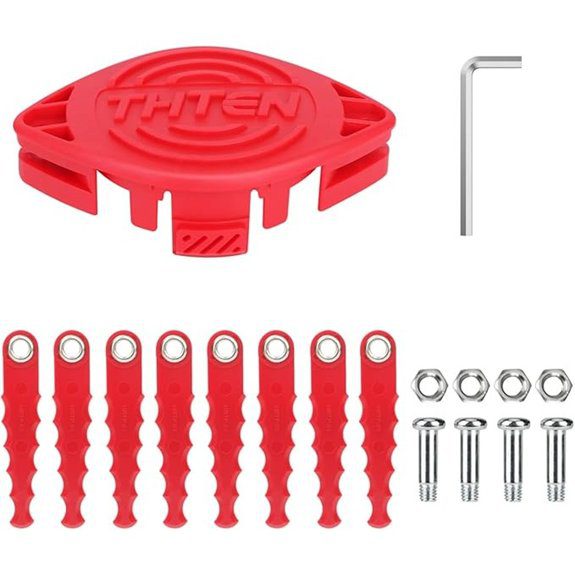 | Best Compatibility | Intended Use: Trimming grass/weeds with string trimmer head (not for edging or hard surfaces) | Compatibility / Fitment: Craftsman string trimmer models (specific Craftsman model list) | Material / Blade Construction: Polycarbonate blades (plastic) | VIEW LATEST PRICE | Read Our Analysis |
| EOPOAYI 9″ Carbide Tipped Brush & Chainsaw Blade | 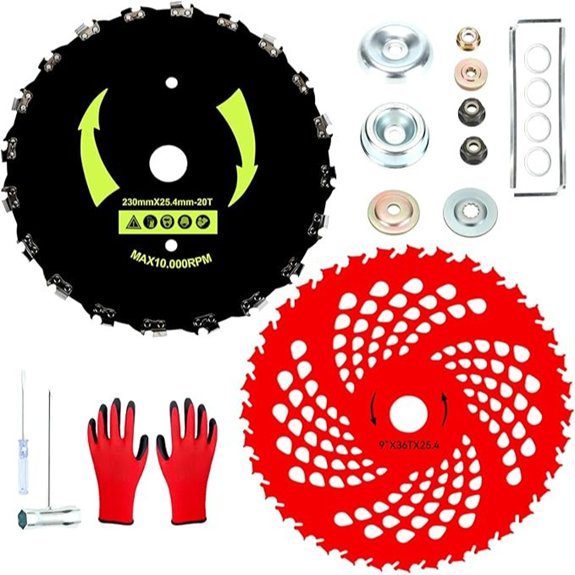 | Professional Power | Intended Use: Cutting thick weeds, brush, small trees, and cropped plant stems with straight-shaft brush/weed trimmer | Compatibility / Fitment: Most straight-shaft gas string trimmers (Echo, Stihl, Oregon, Hitachi, Milwaukee, Ryobi, Craftsman — check gearbox teeth) | Material / Blade Construction: 65Mn steel with carbide-tipped option (metal) | VIEW LATEST PRICE | Read Our Analysis |
| Metal String Trimmer Replacement Blade with Round Wheel | 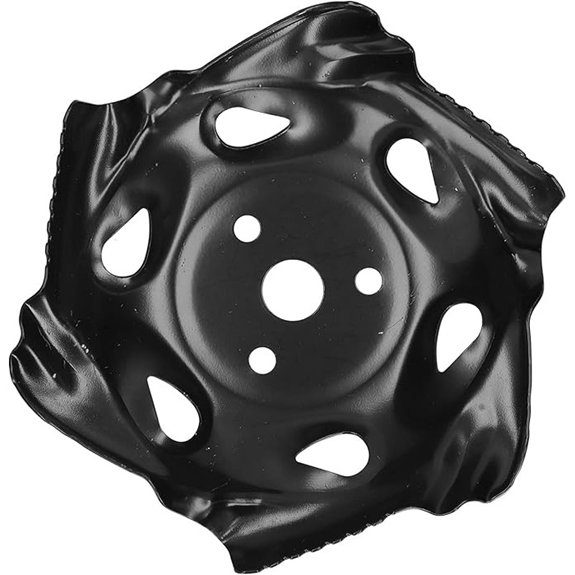 | Precision Finish | Intended Use: Mowing grass and removing weeds with a brush/weed cutter head | Compatibility / Fitment: Generic mower/weed whacker replacement head (connects to compatible mowers/weed whackers) | Material / Blade Construction: Iron (metal) | VIEW LATEST PRICE | Read Our Analysis |
More Details on Our Top Picks
THTEN Replacement Trimmer Blade Heads for Craftsman (18-Pack)
If you want a straightforward, ready-to-install replacement that suits several Craftsman trimmer models, the THTEN 18-pack is a smart pick — it comes with polycarbonate blades and a tool-assisted head so you can swap parts quickly and get back to trimming. You’ll get eight polycarbonate blades, a trimmer head, four set screws, and a wrench — 18 pieces total. Installation’s simple: push the head into the string socket and it locks with side push buttons. Don’t use these blades for edging or against brick, chain, or wooden fences. Contact THTEN for quality issues; they respond within 24 hours.
- Intended Use:Trimming grass/weeds with string trimmer head (not for edging or hard surfaces)
- Compatibility / Fitment:Craftsman string trimmer models (specific Craftsman model list)
- Material / Blade Construction:Polycarbonate blades (plastic)
- Kit Contents / Included Hardware:8 blades, 4 set screws, 1 trimmer head, 1 wrench (total 18 pieces)
- Installation Method / Tools Included:Push-into-socket head with side-lock buttons; wrench tool included for installation/removal
- Durability / Wear Resistance:Polycarbonate design with vendor quality support (suitable for trimming; avoid hard surfaces)
- Additional Feature:Push-button auto-lock
- Additional Feature:Wrench-assisted head removal
- Additional Feature:Includes spare set screws
EOPOAYI 9″ Carbide Tipped Brush & Chainsaw Blade
Choose the EOPOAYI 9″ Carbide Tipped Brush & Chainsaw Blade when you need a heavy-duty upgrade for a straight-shaft, spline-drive gas trimmer—it’s built to chew through thick weeds, brush, and small 4–5″ saplings where line struggles. You’ll get a 36T carbide-tipped blade plus a 20T chainsaw-tooth cutter, universal adapter, hardware, tools, gloves, and instructions for Echo, Stihl, Craftsman and similar models (confirm gearbox teeth). Made from 65Mn steel, it outlasts line and improves cutting efficiency; avoid striking solid objects. Product is 2.9 lb, compact, and supported by EOPOAYI warranty/service channels.
- Intended Use:Cutting thick weeds, brush, small trees, and cropped plant stems with straight-shaft brush/weed trimmer
- Compatibility / Fitment:Most straight-shaft gas string trimmers (Echo, Stihl, Oregon, Hitachi, Milwaukee, Ryobi, Craftsman — check gearbox teeth)
- Material / Blade Construction:65Mn steel with carbide-tipped option (metal)
- Kit Contents / Included Hardware:36T carbide blade, 20T chainsaw-tooth blade, nuts, washers, rider plates, tools, gloves, instructions (multi-piece kit)
- Installation Method / Tools Included:Uses universal adapter and fasteners; includes T-wrench, L-wrenches and screwdriver for installation
- Durability / Wear Resistance:Heavy-duty 65Mn steel with carbide tips for higher durability and wear resistance
- Additional Feature:Carbide-tipped 36T option
- Additional Feature:Includes safety gloves
- Additional Feature:Universal adapter kit
Metal String Trimmer Replacement Blade with Round Wheel
Home gardeners who want a durable, no-fuss upgrade will appreciate this metal string trimmer replacement blade with its round-edged wheel, which lets you trim close to flowers, trees, and furniture without nicking them. You’ll get an iron weeding head (519 g, sleek #111 black) that clips onto your mower easily, needs no assembly, and runs on AC/DC power. The wheel enhances precision and leaves a smooth finish while the hardened, wear-resistant metal handles grass and stubborn weeds efficiently. Backed by Amazon’s 30-day voluntary returns and manufacturer warranty details, it’s a simple, long-lasting accessory for tidy edges.
- Intended Use:Mowing grass and removing weeds with a brush/weed cutter head
- Compatibility / Fitment:Generic mower/weed whacker replacement head (connects to compatible mowers/weed whackers)
- Material / Blade Construction:Iron (metal)
- Kit Contents / Included Hardware:Single replacement head (no assembly required) — includes the replacement blade/head unit
- Installation Method / Tools Included:Simple connection to mower (no assembly required; direct attach)
- Durability / Wear Resistance:Iron construction advertised as excellent hardness and wear resistance
- Additional Feature:Round-edged precision wheel
- Additional Feature:Black corrosion-resistant finish
- Additional Feature:No assembly required
Factors to Consider When Choosing a Blade for a Craftsman Weed Whacker
When choosing a blade for your Craftsman weed whacker, consider the blade material—steel, carbide, or composite—because it affects durability and the types of vegetation you can tackle. Make sure the blade is compatible with your Craftsman model, matches the cutting application (grass, thick brush, or light trimming), and has an appropriate tooth count for the job. Also check how easy it is to install and whether any adapters or special tools are required.
Blade Material Choice
Because blade material dictates how a Craftsman weed whacker performs in different tasks, you should match material to the jobs you do most often: hardened steel for heavy brush and saplings, carbide-tipped for abrasive or gritty conditions, polycarbonate/plastic for delicate trimming, and stainless or coated options for wet or salty environments. Choose hardened steel (often manganese-alloyed or heat-treated) when you need edge retention and toughness for thick weeds. Pick carbide-tipped blades if gritty soil or sand wears edges quickly—tungsten carbide resists abrasion. Use polycarbonate or plastic blades for light, safe trimming near plants and hard objects; they flex or shatter less dangerously. For coastal or wet sites, prefer stainless or corrosion-resistant coatings. Balance Rockwell hardness and edge geometry: harder equals longer life but more brittleness; slightly softer steels resist chipping.
Compatibility With Craftsman
After you’ve picked the right material and edge geometry, make sure the blade actually fits your Craftsman trimmer; a mismatched blade won’t install properly and can damage the gearbox or throw dangerously. First, confirm fit by model number (for example CMCST900 series) or by matching shaft type and spline count. Check whether your unit is straight‑shaft or curved‑shaft—many blades fit only straight‑shaft spline‑drive trimmers. Inspect the attachment method: push‑button snap‑in, bolt‑on with collar nut, or spline/gearbox mount. Match mounting dimensions like shaft diameter, spline count, and thread pitch to the spec sheet. Finally, review manufacturer guidance and intended use—only install blades rated for brush cutting if your Craftsman is approved for that task to ensure safe compatibility.
Cutting Application Type
If you’re cutting fine lawn grass or delicate garden plants, pick a flexible polycarbonate or lightweight metal blade that slices gently without tearing stems; for heavy brush, hardened steel or carbide-tipped blades deliver the impact resistance and edge retention you need, and for precise edging or trimming near furniture and beds, rounded or wheel-style edges give smoother, controlled cuts with less risk of damage. Choose blades based on what you cut most: flexible or thin blades for finely textured weeds, hardened steel or carbide for thick weeds, woody brush, and small saplings up to 4–5″ diameter. For frequent heavy clearing, prioritize abrasion-resistant blades that stay sharp. Never use any blade to strike concrete, rock, or metal to avoid breakage and hazards.
Tooth Count Importance
When you pick a blade, tooth count is one of the simplest factors to change the cut quality and how hard your Craftsman trimmer has to work; more teeth (30–36) give smoother, finer cuts and spread wear across more cutting edges, while fewer teeth (10–20) strip material faster and deliver chunkier, more aggressive cuts. You’ll choose higher tooth counts for fine, uniform mowing and dense vegetation since they increase cutting surface area, lower vibration per tooth, and improve finish while reducing wear on the head and gearbox. Lower tooth counts concentrate force, severing coarse stems and small saplings quickly but raising the risk of tooth damage on hidden hard objects. Match tooth count to vegetation and your trimmer’s torque and gearbox capacity.
Installation Ease Factors
To match the cutting performance you picked with a blade that’s practical to fit, pay attention to how the blade mounts and what tools or adapters you’ll need. Check whether your trimmer uses push‑in, threaded, or spline/adapter mounts so you know if installation needs only hand pressure, a wrench, or removal of a gearbox nut. Confirm the blade and shaft match tooth/spline count and shaft type (straight vs. curved) to avoid forced fits or extra adapters. Prefer blades that include fasteners, washers, or a universal adapter and list tool requirements (T‑wrench, socket, screwdriver). Note head designs with quick‑release or tool‑assisted locks to estimate replacement time. Review instructions and hardware counts to ensure guard compatibility without drilling or grinding.
Durability And Wear
Because a blade’s material and treatment determine how long it stays sharp, you should prioritize hardened steels or carbide-tipped designs over polymer or untreated metal for heavy use. Hardened high‑carbon or alloy steels and carbide tips resist dulling from abrasive plant material and can deliver dozens of hours of cutting, while polycarbonate or plastic blades may need replacement after only a few hours when tackling brush. Choose thicker blades with proper heat treatment to maintain cutting geometry and reduce chipping. Expect abrasive environments—sandy soil, gravel, dirt—to cut blade life by roughly 30–70% versus clean vegetation. Inspect blades regularly and sharpen or replace carbide inserts as needed; keeping edges sharp improves efficiency and reduces stress-related damage.
Safety And Usage Limits
Although a powerful blade can make quick work of thick brush, you must follow strict safety and usage limits to avoid injury and equipment damage. Always wear safety goggles, long pants, heavy gloves, and hearing protection—blades throw debris and make loud noise. Never use blade-equipped trimmers for edging or within a few inches of brick, concrete, metal, or wooden fencing to prevent ricochets and blade damage. Avoid striking rocks, posts, pavement, or metal; contact can chip or shatter blades and send high-velocity fragments toward you or bystanders. Only install blades and adapters that match your trimmer’s drive type and gearbox, and follow torque and fastening instructions to prevent loosening or detachment. Keep people and pets at least 50 feet away and stop the engine before inspecting or changing blades.
Included Accessories
When comparing blade kits for your Craftsman weed whacker, check the included accessories carefully so you don’t end up missing a critical part or tool. Confirm the package contains necessary fasteners—nuts, washers, collar or lock nuts—to secure the blade to your gearbox or spline. Make sure adapter plates, thrust washers, or universal collars match your shaft’s spline count for proper fitment. Note whether installation tools like wrenches, T-keys, screwdrivers, or Allen wrenches are supplied so you won’t need separate tools. Look for protective items—gloves, blade guard washers, or rider plates—that improve safety during installation. Finally, verify clear installation instructions or diagrams showing correct torque and blade orientation to prevent mistakes.