
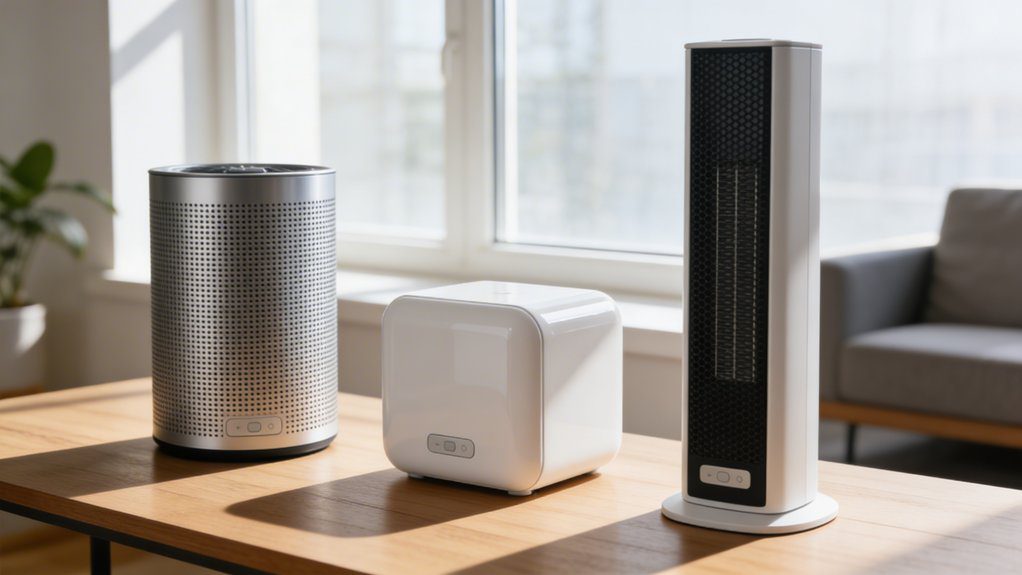
You’ll get true HEPA cleaning, low noise, and low energy with three top picks under $100: the LEVOIT Core Mini-P for bedrooms (AHAM-verified, 25–45 dB, 7 W), the Small Bedroom Air Purifier KJ50 with H13 HEPA and 360° intake (ETL/CE certified, 5 W), and the MEGAWISE H13 HEPA (quiet to 24 dB, ozone-free). They suit dorms and apartments; if you keep going you’ll find details on filters, noise, and upkeep.
| LEVOIT Core Mini-P Air Purifier for Bedroom | 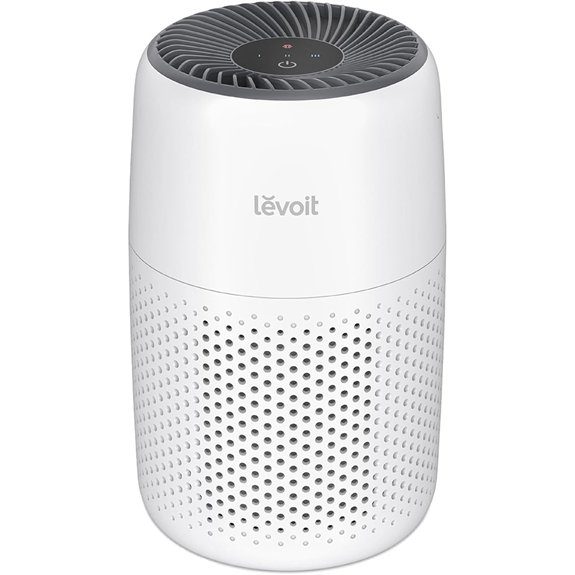 | Best for Small Spaces | Filtration Type: 3-in-1 filter (pre-filter + main filter + activated carbon) | Suitable Room Use: Small bedroom (up to 255 sq ft) | Quiet Operation (Low Noise): 25–45 dB (spec sheet lists 25 dB; body lists 27–45 dB) | VIEW LATEST PRICE | Read Our Analysis |
| Small Bedroom Air Purifier with H13 HEPA Filter | 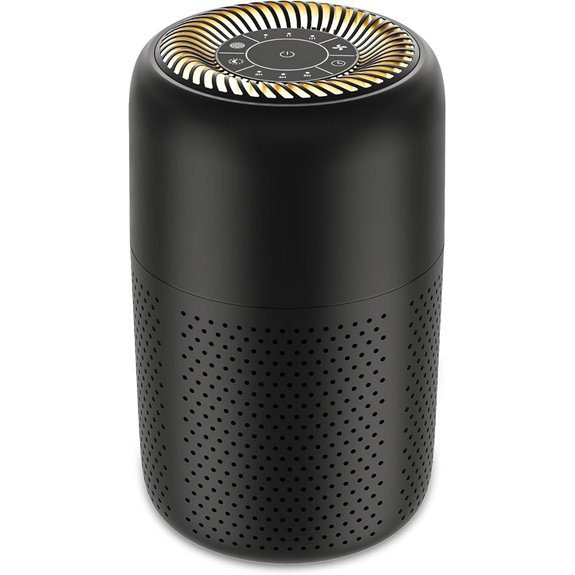 | Best Coverage | Filtration Type: H13 true HEPA filter (360° intake; multi-stage) | Suitable Room Use: Small/medium rooms (bedroom, dorm, apartment; up to 600 sq ft) | Quiet Operation (Low Noise): As low as 20 dB (ultra-quiet sleep mode) | VIEW LATEST PRICE | Read Our Analysis |
| MEGAWISE H13 HEPA Air Purifier for Home | 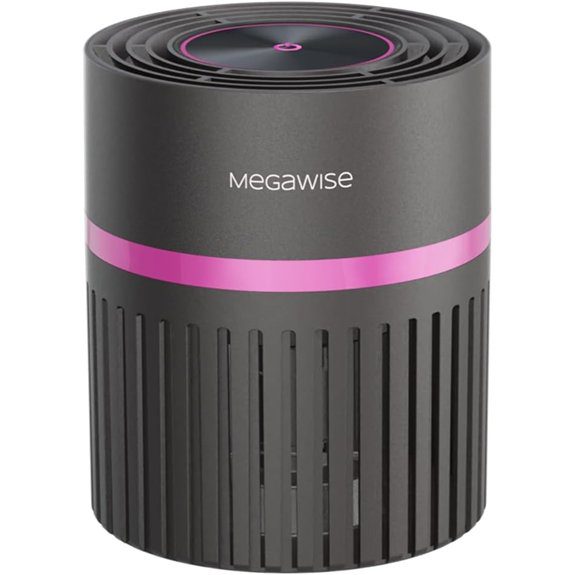 | Quietest Pick | Filtration Type: True H13 HEPA filter (3-stage filtration) | Suitable Room Use: Small rooms (bedrooms, dorms, home offices, living spaces) | Quiet Operation (Low Noise): Whisper-quiet down to 24 dB | VIEW LATEST PRICE | Read Our Analysis |
More Details on Our Top Picks
LEVOIT Core Mini-P Air Purifier for Bedroom
If you want a compact, truly quiet purifier for a small bedroom or dorm, the LEVOIT Core Mini‑P delivers—its AHAM‑verified 255 sq ft coverage, whisper‑quiet 25–45 dB operation, and 3‑in‑1 filter tackle dust, pet dander, smoke, and odors without taking up much space. You’ll appreciate its 6.5 × 10.4 in size, 2.2 lb weight, and 7 W rated power for energy‑efficient overnight use. The washable pre‑filter, HEPA‑grade main filter, and activated carbon layer handle fine particles down to 0.1 μm. Controls are simple touch buttons with sleep mode, aromatherapy pad, and a two‑year warranty for peace of mind.
- Filtration Type:3-in-1 filter (pre-filter + main filter + activated carbon)
- Suitable Room Use:Small bedroom (up to 255 sq ft)
- Quiet Operation (Low Noise):25–45 dB (spec sheet lists 25 dB; body lists 27–45 dB)
- Energy Efficiency / Low Power:Rated power 7 W; ENERGY STAR certified
- Certifications / Safety Standards:AHAM Verified; ETL Certified; ENERGY STAR Certified
- Replacement Filter / Maintenance:Pre-installed 3-in-1 filter; recommends Genuine Levoit replacement filters (Core Mini-RF)
- Additional Feature:Built-in aromatherapy pad
- Additional Feature:Compact/portable size
- Additional Feature:Stored power adapter
Small Bedroom Air Purifier with H13 HEPA Filter
Pick this small bedroom air purifier when you need true HEPA filtration in compact spaces—it’s built for bedrooms, dorms, and apartments up to 600 sq ft and specifically tackles smoke, pet dander, hair, and other common indoor pollutants. You’ll get H13 true HEPA filtration with 360° intake, three fan speeds, three timers, and an ultra-quiet sleep mode down to 20 dB. A night light helps bedside use. Replace the filter every 3–6 months; the filter button turns red when replacement’s due and you hold it three seconds to reset. The KJ50 model (ASIN B0CRKRXHYG) runs at 5 W, ETL/CE/FCC/RoHS certified, with 30-day replacement and one-year warranty.
- Filtration Type:H13 true HEPA filter (360° intake; multi-stage)
- Suitable Room Use:Small/medium rooms (bedroom, dorm, apartment; up to 600 sq ft)
- Quiet Operation (Low Noise):As low as 20 dB (ultra-quiet sleep mode)
- Energy Efficiency / Low Power:Maximum power 5 W; energy-saving design
- Certifications / Safety Standards:ETL, CE, FCC, RoHS
- Replacement Filter / Maintenance:Replace filter every 3–6 months; filter replacement indicator + reset function
- Additional Feature:360° circular intake
- Additional Feature:Night light included
- Additional Feature:Three timer options
MEGAWISE H13 HEPA Air Purifier for Home
You’ll appreciate the MEGAWISE H13 HEPA if you need a compact, budget-friendly purifier that still captures up to 99.97% of airborne particles with its True H13 HEPA and 3-stage filtration—ideal for bedrooms, dorms, and home offices. You’ll find a neutral, modern design that fits varied decor without taking much space. It runs whisper-quiet down to 24 dB, so you can sleep or work undisturbed, and it’s ozone-free. Energy-efficient engineering keeps power use low for continuous operation in small rooms. Plus, 24/7 live chat support helps with setup, troubleshooting, and filter replacements.
- Filtration Type:True H13 HEPA filter (3-stage filtration)
- Suitable Room Use:Small rooms (bedrooms, dorms, home offices, living spaces)
- Quiet Operation (Low Noise):Whisper-quiet down to 24 dB
- Energy Efficiency / Low Power:Energy-efficient design for continuous use (low consumption)
- Certifications / Safety Standards:Ozone-free (safety note) and implied certifications/standards for home use (marketing emphasizes safe, whisper-quiet operation)
- Replacement Filter / Maintenance:True H13 HEPA replacement (3-stage); designed for small-room consistent performance
- Additional Feature:3-stage filtration system
- Additional Feature:Neutral modern design
- Additional Feature:24/7 live chat support
Factors to Consider When Choosing an Air Purifier Under $100
When choosing an air purifier under $100, you’ll want to match the unit’s room coverage area to where you’ll actually use it. Check the filter type and efficiency, plus how loud it is during typical operation and how much energy it uses. Also consider ongoing maintenance and filter replacement costs so you don’t get surprised later.
Room Coverage Area
Room size matters: match a purifier’s rated square footage to your room and factor in ceiling height, since many sub-$100 units cover roughly 100–600 sq ft assuming ~8–9 ft ceilings—taller rooms need higher capacity. Check the rated area and pick a unit rated at or above your room’s floor area. Use CADR or equivalent air-change metrics when available—a higher CADR for your room size cleans air faster. If you sleep or work in the space, aim for 4–6 ACH for allergies or smoke; calculate required CADR or choose a unit sized to meet that target. For open layouts or multiple rooms, either select a purifier rated for the combined area or plan to move the unit between spaces.
Filter Type & Efficiency
Because filters determine what a purifier can actually remove, pick the best available filtration for your needs: true HEPA (H13 or equivalent) captures about 99.97% of particles down to 0.3 µm and is far more effective on fine particulates than vague “HEPA-like” claims. Check the stated particle retention size (for example 0.1–0.3 µm) to see if it targets ultrafine particles like smoke and some viruses versus only dust and pollen. Prefer multi-stage or 3-in-1 systems: a pre-filter for lint/hair, a HEPA/main filter for fine particles, and activated carbon for odors and VOCs. Note replacement intervals (commonly 3–6 months) and factor ongoing filter costs into your under-$100 budget. Choose units with a replacement indicator and easy access for straightforward maintenance.
Noise Level During Use
Often you’ll notice noise first, so check measured decibel (dB) ratings for each fan speed before you buy. Look for models that list sleep-mode noise around 20–27 dB and typical operation 25–45 dB. Remember decibels are logarithmic: a 10 dB jump sounds about twice as loud, so 40 dB will seem much louder than 30 dB. Inspect ratings at both low and high settings—many budget purifiers stay quiet on low (≈20–30 dB) but get noticeably louder on high. If you’ll run the unit overnight, prefer “whisper-quiet” or explicit sleep modes below about 30 dB. Finally, read independent measurements and user tests when possible, since manufacturer dB claims vary with testing conditions and measurement distance.
Energy Usage & Cost
While the sticker price matters, you’ll pay more over time if you ignore energy use — check the rated watts and estimate daily consumption by multiplying watts × hours of use, then convert that to cost with (watts ÷ 1000) × hours per day × your electricity rate ($/kWh). For budget purifiers, low settings often draw about 5–10 W; higher fan speeds can multiply that several times, so note consumption per mode. Use the cost formula to compare monthly running expenses across models rather than just upfront price. Prefer units with ENERGY STAR or similar efficiency certifications because they typically cost less to run. Finally, consider that paying a bit more for an efficient unit can save on electricity over months of continuous use.
Maintenance & Filter Replacement
Maintaining your purifier and keeping up with filter replacements is key to consistent performance and lower long-term costs. Check the filter type and expected lifespan—HEPA/H13 elements usually need replacement every 3–6 months with typical use; combo pre-filter/carbon assemblies can last longer depending on pollutant load. Verify replacement filter cost and availability before buying, since recurring purchases can surpass the unit’s price. Prefer models with a filter replacement indicator or reset function so you change filters on schedule rather than guessing. Confirm whether the unit includes washable or reusable pre-filters to catch hair and large particles and extend the main filter’s life. Finally, choose designs with tool-free access and clear instructions to avoid improper installation that reduces effectiveness.
Safety Features & Certifications
Because safety and verified performance protect both your health and your home, check certifications and built‑in safeguards before buying an air purifier under $100. Look for independent marks like ETL, CE, FCC, RoHS, or ENERGY STAR to confirm electrical, EMC, and energy‑efficiency standards. Verify AHAM or similar third‑party testing so CADR and particle‑removal claims match intended room size. Make sure the unit is ozone‑free or explicitly meets low/zero ozone emissions; avoid ionizers or generators that can exceed health limits. Confirm child‑safe designs, stable bases, secure filter compartments, and automatic shutoff for overheating or tip‑over. Finally, check power specs and overcurrent/thermal protection (fuse, thermal cutoff, or certified adapter) to minimize fire risk during continuous use.