

You’ll want the LEVOIT Core Mini-P as the best air purifier under $100 for 2026 — it’s ENERGY STAR‑efficient, AHAM‑verified, and cleans up to 255 sq ft while capturing particles down to 0.1 µm. It uses a 3‑in‑1 filter (pre‑filter, HEPA‑grade, activated carbon), draws just 7 W, and stays quiet enough for bedrooms with a sleep mode and aroma pad. Keep reading and you’ll find sizing, filter costs, and noise details to help pick the right spot.
| LEVOIT Core Mini-P Air Purifier for Bedroom | 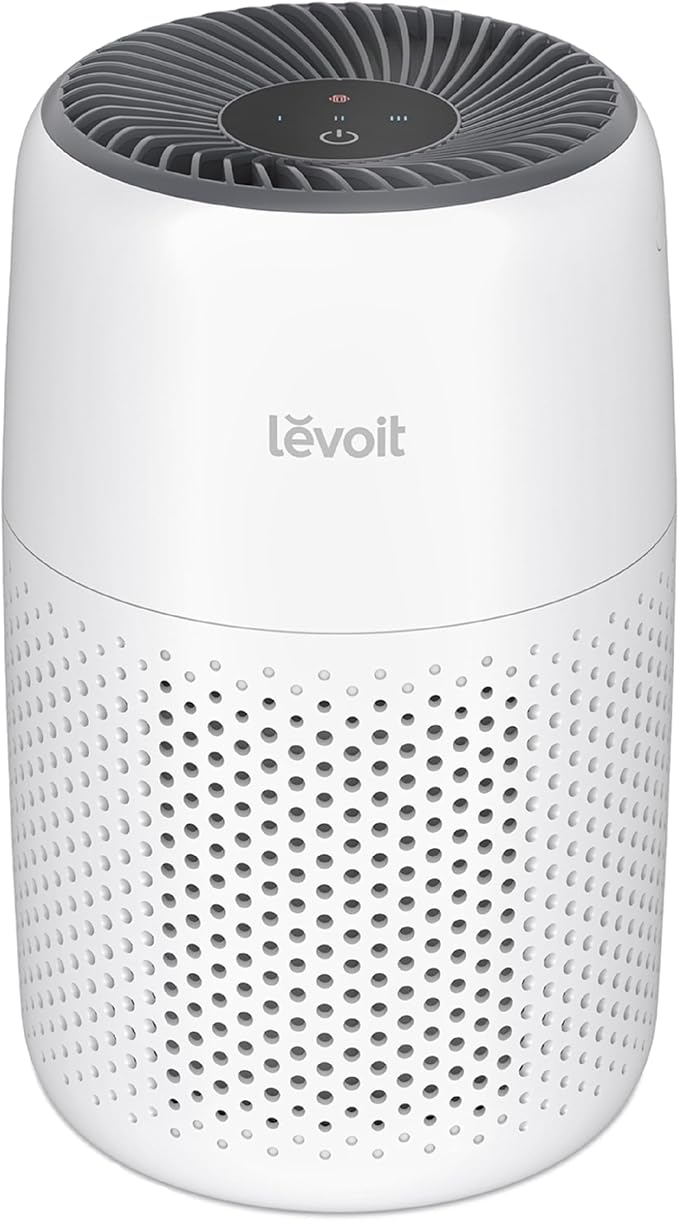 | Best Compact Pick | Model / Name: LEVOIT Core Mini-P (LAP-C161-WUS) | Filter Type: 3-in-1 filter (pre-filter + main filter + activated carbon) | Coverage Area: 255 sq ft | VIEW LATEST PRICE | Read Our Analysis |
More Details on Our Top Picks
LEVOIT Core Mini-P Air Purifier for Bedroom
If you need a compact, whisper-quiet purifier for a bedroom or small office, the LEVOIT Core Mini-P is a great pick—its AHAM-verified CADR and ENERGY STAR efficiency clean up to 255 sq ft while drawing just 7 W, so you’ll get effective filtration without noisy, power-hungry operation. You’ll appreciate its 3-in-1 filter (pre-filter, main HEPA-grade layer, activated carbon) capturing 0.1 µm particles, pet dander, dust, smoke, and odors. Controls are simple touch buttons with sleep mode and aromatherapy pad (2–3 drops only). It’s ETL certified, lightweight, and backed by a two-year warranty. Use genuine Core Mini-RF filters.
- Model / Name:LEVOIT Core Mini-P (LAP-C161-WUS)
- Filter Type:3-in-1 filter (pre-filter + main filter + activated carbon)
- Coverage Area:255 sq ft
- Certifications:AHAM Verified; ETL Certified; ENERGY STAR Certified
- Noise Level:25–45 dB (spec sheet lists 25 dB; body lists 27–45 dB)
- Power / Rating:Rated power 7 W; adapter input 100–240 V, 50/60 Hz
- Additional Feature:Built-in aromatherapy pad
- Additional Feature:ETL & ENERGY STAR certified
- Additional Feature:Compact, ultra-lightweight design
Factors to Consider When Choosing an Air Purifier Under $100
When choosing an air purifier under $100, you’ll want to match the room coverage area to where you’ll use it most. Check the filtration efficiency rating, expected noise level, and energy consumption so the unit works well without costing you comfort or money. Also factor in filter replacement cost to understand the long-term expense.
Room Coverage Area
Because your purifier’s rated floor coverage usually reflects square footage, start by measuring your room (length × width) so you can match that number to the unit’s specification and avoid overestimating performance. For under-$100 units, realistic coverage typically falls between 100–300 sq ft, so pick a model rated at or above the room where it will run most. Don’t forget ceiling height: rooms taller than the standard 8 ft increase volume, and a square-foot rating may underperform. Check CADR numbers for smoke, pollen, and dust—higher CADR relative to room size yields faster cleaning. If you face heavy sources or want quicker clearing, choose a unit sized to provide multiple air changes per hour; aim for about 4–5 ACH for faster results.
Filtration Efficiency Rating
Although budget models can’t match high-end systems in every metric, you should still prioritize true HEPA filtration (capturing at least 99.97% of particles down to 0.3 µm) and check the minimum particle size rating to see how well the unit handles ultrafine particles and smoke. Also look for multi-stage or 3-in-1 setups (pre-filter + HEPA + activated carbon) because combined media remove particles and odors more effectively than single-stage filters. Verify independent test data or AHAM CADR figures rather than relying on vendor claims to gauge real-world performance. Finally, confirm expected filter lifespan and replacement cost in months or operating hours; frequent or pricey replacements can erase the savings of a low upfront price, so factor total ownership cost into your choice.
Noise Level Performance
If you want an air purifier that won’t disturb sleep or conversation, check the decibel (dB) ratings for each fan speed rather than relying on vague claims like “whisper quiet.” Budget models typically run about 25–45 dB, so aim for units that list 25–30 dB on low for bedrooms and note how much louder medium and high settings get—remember perceived loudness roughly doubles every +10 dB. You should prefer manufacturers that publish measured dB numbers instead of subjective labels. Compare low/med/high specs because some units are quiet on low (~25–30 dB) but jump to ~40–50 dB on high. Also look for sleep mode or a lower minimum fan speed so you can keep filtration overnight without constant noise disruption.
Energy Consumption Rate
When comparing budget air purifiers, check the rated power (watts) and fan-speed draw so you can estimate real operating costs—eg, a 7 W unit running 24 hours uses about 0.168 kWh/day (≈5.04 kWh/month), which at $0.15/kWh costs roughly $0.76/month. You should calculate monthly cost by multiplying daily kWh by your rate, and compare models at realistic settings. Look for ENERGY STAR or energy-efficiency ratings to find units that deliver similar clean-air performance with lower draw. Pay attention to power draw at low, medium, and high fan speeds, since higher speeds multiply consumption. Finally, compare CADR per watt: a higher CADR/watt gives more particle removal for each watt used, helping you pick the most efficient option under $100.
Filter Replacement Cost
Because filter costs add up fast, you should factor replacement frequency and per-filter price into your purchase decision. Typical HEPA-style filters in budget purifiers need changing every 3–6 months depending on use and air quality, while carbon or pre-filters may require replacement more often. Check per-filter prices—expect $10–$40 for sub-$100 units—and calculate annual cost by multiplying replacements per year by filter price (for example, $20 filters replaced quarterly ≈ $80/year). Note differences in filter type and lifespan: true HEPA filters usually cost more but last longer and capture smaller particles; basic electrostatic or washable pre-filters cost less or are reusable but are less effective. Also prefer units with common, widely available filter sizes to avoid higher long-term expenses and downtime.
Special Features Available
Beyond ongoing filter costs, you’ll want to weigh the extra features a sub-$100 purifier offers, since they affect usability, effectiveness, and long-term satisfaction. Check whether it uses true HEPA (captures 99.97% of 0.3 µm particles) or a HEPA-type filter; true HEPA gives superior particle removal, while HEPA-type still helps with dust and pollen. Prefer multi-stage filtration—pre-filter plus HEPA/HEPA-type and activated carbon—so both particles and common odors or gases are treated. Match fan speeds and CADR or stated room coverage to your space so the unit can cycle air effectively. Compare noise modes and listed decibel ranges if you need quiet nights. Extras like timers, auto-off, simple controls, and aroma pads add convenience but can raise upkeep and cost.
Build Quality And Size
If you pick a purifier with sturdy materials and thoughtful design, it’ll survive daily use and be easier to live with—look for metal or thick ABS plastic housings, secure seams, and a stable base to reduce cracking, vibration, and tipping. Inspect dimensions and weight so the unit fits your space; compact models under ~12 inches tall and 2–4 lb are simple to move or store. Check for a recessed or covered power connector and easy, tool-free filter access like snap-in or twist-lock to cut wear and simplify maintenance. Make sure controls and displays are tactile and firmly mounted rather than flimsy touch panels. Prioritize a low center of gravity if you’ll place the purifier on small tables or in high-traffic areas.