
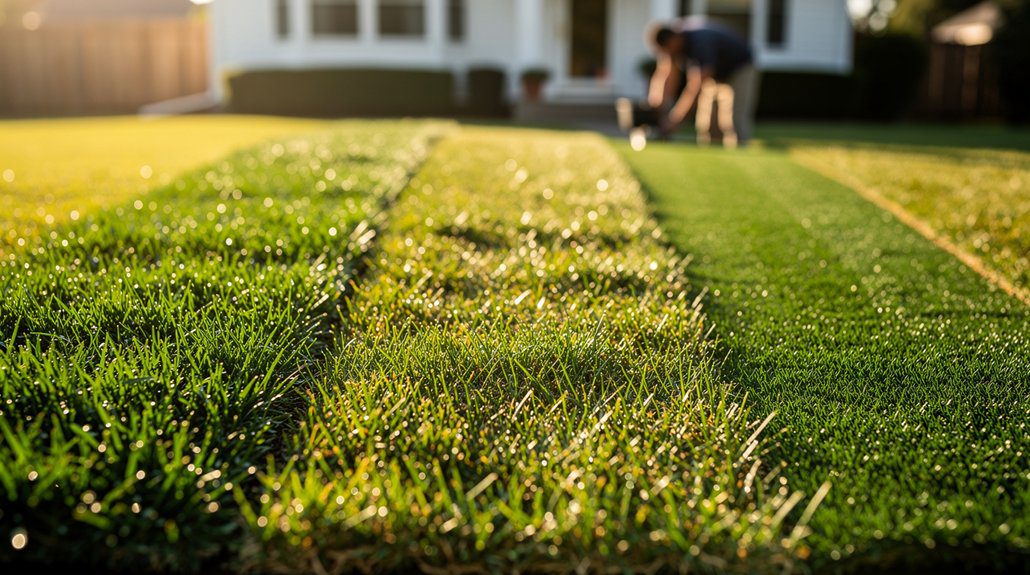
You’ll want a mix of liquid, granular, pre‑emergent, and insect‑control options for healthy Bermuda: Scotts Liquid Turf Builder Plus 2 for quick weed control, Scotts Crabgrass Preventer with Lawn Food for spring barrier protection, Andersons Premium Weed & Feed 24‑0‑16 for deep greening and broadleaf control, Scotts Turf Builder SummerGuard for insect and drought defense, and BioAdvanced 3‑in‑1 for long‑lasting southern weed prevention—keep going and you’ll get timing, rates, and safety tips to apply them right.
| Scotts Liquid Turf Builder Plus 2 Ready-To-Spray | 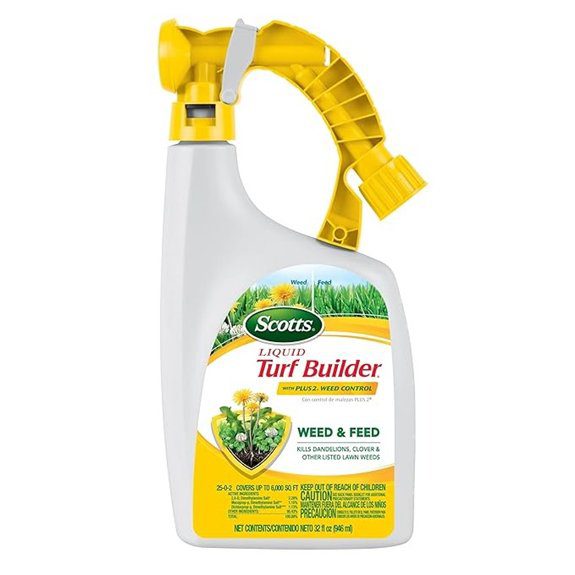 | Quick & Convenient | Product Type: Liquid fertilizer + weed control (hose‑end) | Formulation/Form: Liquid (ready‑to‑spray) | Coverage (area served): Up to 6,000 sq ft (warm) / up to 4,000 sq ft (cool) | VIEW LATEST PRICE | Read Our Analysis |
| Scotts Turf Builder Crabgrass Preventer with Lawn Food | 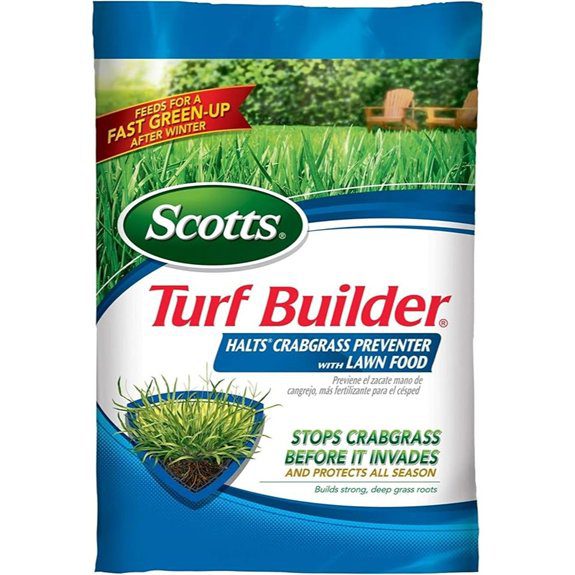 | Best Preventative | Product Type: Granular pre‑emergent fertilizer (crabgrass preventer) | Formulation/Form: Granules | Coverage (area served): 5,000 sq ft per 13.35 lb bag | VIEW LATEST PRICE | Read Our Analysis |
| Andersons Premium Weed & Feed 24-0-16 (18 lb) | 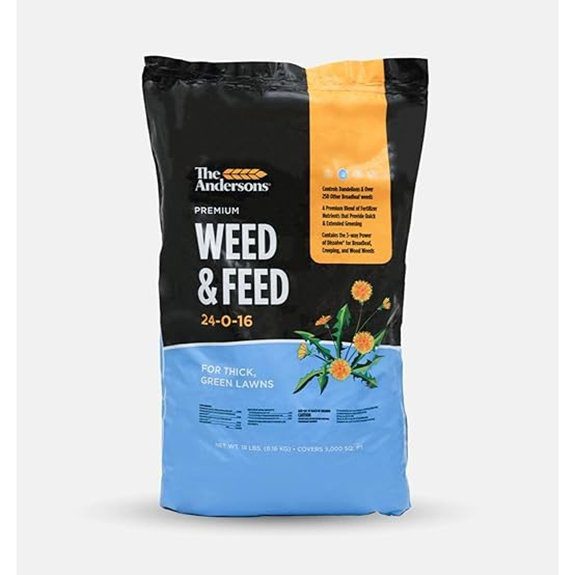 | Professional Strength | Product Type: Granular weed & feed (weed control + fertilizer) | Formulation/Form: Granules | Coverage (area served): Up to 5,000 sq ft (18 lb bag) | VIEW LATEST PRICE | Read Our Analysis |
| Scotts Turf Builder SummerGuard Fertilizer with Insect Control | 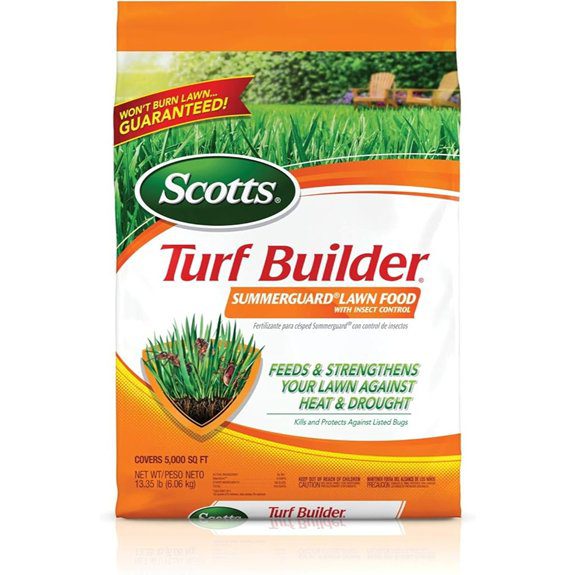 | Pest-Fighting Fertilizer | Product Type: Granular fertilizer + insect control | Formulation/Form: Granules | Coverage (area served): 5,000 sq ft per 13.35 lb bag | VIEW LATEST PRICE | Read Our Analysis |
| BioAdvanced 3-in-1 Weed & Feed for Southern Lawns | 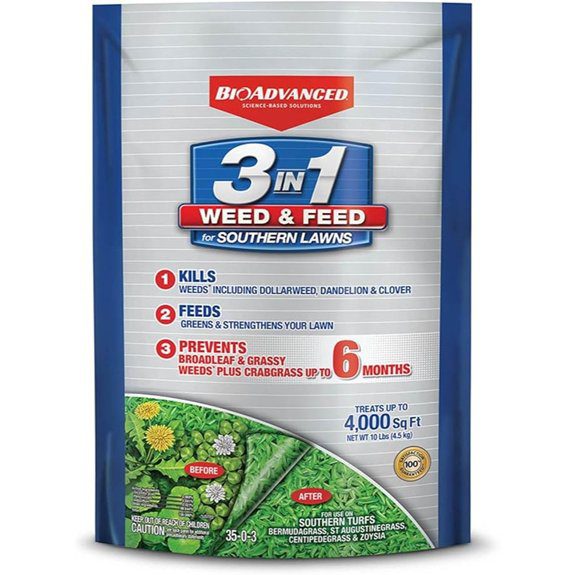 | Southern Specialist | Product Type: Granular weed & feed (fertilizer + weed control) | Formulation/Form: Granules | Coverage (area served): 4,000 sq ft per 10 lb bag | VIEW LATEST PRICE | Read Our Analysis |
More Details on Our Top Picks
Scotts Liquid Turf Builder Plus 2 Ready-To-Spray
If you want a fast, no-fuss solution for Bermuda grass that feeds as it fights weeds, Scotts Liquid Turf Builder Plus 2 Ready‑To‑Spray is a solid pick — it delivers a quick nitrogen boost while knocking out common broadleaf weeds through an easy hose‑end application. You attach the 32 fl. oz. bottle to your hose, spray when weeds are actively growing, and treat up to 6,000 sq. ft. for warm-season lawns (4,000 for cool-season). It targets dandelions, clover, buckhorn, chickweed, ground ivy, oxalis, ragweed, and other listed weeds while fertilizing, so you get simultaneous control and green‑up.
- Product Type:Liquid fertilizer + weed control (hose‑end)
- Formulation/Form:Liquid (ready‑to‑spray)
- Coverage (area served):Up to 6,000 sq ft (warm) / up to 4,000 sq ft (cool)
- Primary Functions:Fertilizes lawn + controls broadleaf weeds
- Target Turf / Suitable Grass Types:Warm‑ and cool‑season lawns (coverage differentiated)
- Application Timing / Instructions:Spray when weeds actively growing; attach hose‑end applicator
- Additional Feature:Hose-end ready-to-spray
- Additional Feature:Quick nitrogen boost
- Additional Feature:Controls broadleaf weeds
Scotts Turf Builder Crabgrass Preventer with Lawn Food
Choose Scotts Turf Builder Halts Crabgrass Preventer with Lawn Food when you want a single product that both stops crabgrass before it sprouts and feeds your Bermuda for a quick green-up. You’ll get a 30-0-4 granular pre-emergent plus fertilizer that creates a barrier to prevent crabgrass, barnyard grass, foxtail, poa annua, chickweed, and oxalis. Apply to a dry, established lawn in early spring before regular 80s temps and before the third or fourth mowing. Water with 1/4–1/2 inch within 2–3 days. One 13.35 lb bag covers 5,000 sq ft; don’t use on dichondra or bentgrass.
- Product Type:Granular pre‑emergent fertilizer (crabgrass preventer)
- Formulation/Form:Granules
- Coverage (area served):5,000 sq ft per 13.35 lb bag
- Primary Functions:Prevents crabgrass (pre‑emergent) + feeds lawn
- Target Turf / Suitable Grass Types:Established bermuda (non‑overseeded), St. Augustine, centipede, bahia, zoysia, tall/fine fescue, Kentucky bluegrass, perennial ryegrass, blends
- Application Timing / Instructions:Apply early spring to dry lawn before weed germination; water in within 2–3 days
- Additional Feature:Pre-emergent crabgrass barrier
- Additional Feature:30-0-4 fertilizer analysis
- Additional Feature:Spreader setting recommendations
Andersons Premium Weed & Feed 24-0-16 (18 lb)
Homeowners who want fast green-up plus reliable broadleaf weed control will like The Andersons Premium Weed & Feed 24-0-16, an 18 lb granular formula that treats up to 5,000 sq ft while delivering both quick- and slow-release nitrogen, iron for deep greening, and an herbicide that knocks back dandelions and over 250 other broadleaf weeds. You’ll get a 24-0-16 NPK blend with sulfur and iron that feeds Bermuda and other common turfgrasses, provides extended greening, and controls existing broadleaf weeds. Don’t use it on dichondra or carpet grass, and note it isn’t sold in NY, FL, CA, or IN.
- Product Type:Granular weed & feed (weed control + fertilizer)
- Formulation/Form:Granules
- Coverage (area served):Up to 5,000 sq ft (18 lb bag)
- Primary Functions:Feeds lawn + kills broadleaf weeds
- Target Turf / Suitable Grass Types:Bahia, bermuda, bluegrass, centipede, fescue, rye, St. Augustine, zoysia
- Application Timing / Instructions:Broadcast granules per label (timing for active weeds / feeding)
- Additional Feature:Iron-enhanced deep greening
- Additional Feature:Quick + slow-release nitrogen
- Additional Feature:Controls 250+ broadleaf weeds
Scotts Turf Builder SummerGuard Fertilizer with Insect Control
For lawns that need both strong summer nutrition and insect protection, Scotts Turf Builder SummerGuard is a smart pick — it feeds with a 20-0-8 formula while killing and preventing ants, chinch bugs, armyworms, ticks and other pests across up to 5,000 sq. ft. You’ll get a 13.35 lb. granular bag that strengthens Bermuda against heat and drought and works on all grass types. Apply to a dry lawn when you first see insect activity, then water in. Use Scotts spreaders (broadcast/rotary 4½, drop 8½). Wait at least one week before using other weed, disease, or insect products.
- Product Type:Granular fertilizer + insect control
- Formulation/Form:Granules
- Coverage (area served):5,000 sq ft per 13.35 lb bag
- Primary Functions:Feeds lawn + kills/controls listed insects
- Target Turf / Suitable Grass Types:All grass types
- Application Timing / Instructions:Apply during summertime when insect activity/damage first observed; apply to dry lawn and water in
- Additional Feature:Built-in insect control
- Additional Feature:Strengthens vs heat/drought
- Additional Feature:Specific spreader settings
BioAdvanced 3-in-1 Weed & Feed for Southern Lawns
If you want a single product that feeds and prevents weeds on warm-season turf, BioAdvanced 3-in-1 Weed & Feed for Southern Lawns is a smart pick—it’s formulated for Bermudagrass, St. Augustine (including Floratam), Zoysia, and Centipedegrass. You’ll control broadleaf and grassy weeds like dandelion, clover, dollarweed, and crabgrass while feeding with a 35-0-3 formula. One granular application covers about 4,000 sq ft and offers up to six months of weed prevention. Apply in spring when weeds are active using a broadcast or drop spreader. Note restricted sales in many states and follow label directions and EPA registration 92564-61.
- Product Type:Granular weed & feed (fertilizer + weed control)
- Formulation/Form:Granules
- Coverage (area served):4,000 sq ft per 10 lb bag
- Primary Functions:Feeds lawn + kills/prevents weeds (southern lawns)
- Target Turf / Suitable Grass Types:Southern grasses — bermuda, St. Augustine (incl. Floratam), zoysia, centipede
- Application Timing / Instructions:Apply in spring when weeds actively growing; use broadcast or drop spreader
- Additional Feature:Up to 6 months prevention
- Additional Feature:Formulated for Southern grasses
- Additional Feature:Contains multiple herbicides (Dicamba, Penoxsulam, Indaziflam)
Factors to Consider When Choosing Bermuda Grass Fertilizer and Weed Killer
When choosing a product for your Bermuda, check that it’s labeled for Bermuda grass so you won’t harm the lawn. You’ll also want to confirm the weed spectrum it controls, the fertilizer N‑P‑K ratio, the ideal application timing, and whether the treatment is granular, liquid, or a spray. Balancing those factors helps you pick an effective, safe program.
Grass Type Compatibility
Picking products that match your bermudagrass is essential: choose fertilizers and weed killers labeled safe for bermuda, timed to its warm-season growth, and formulated (or with modes of action) that target the weeds you face without causing turf injury. Check labels to confirm compatibility—some herbicides and high-N mixes will scorch warm-season turf. Match fertilizer N-release and ratio to growth phase: higher N and slow-release in active spring/summer, avoid aggressive feeding during dormancy. Verify herbicide modes of action are approved for bermuda to prevent phytotoxicity and ensure effectiveness against your common weed types. Observe temperature and seasonal restrictions; many chemistries shouldn’t be applied under extreme heat or turf stress. Finally, confirm pre- or post-emergent choices won’t interfere with overseeding or renovation.
Weed Spectrum Coverage
Because bermudagrass is vulnerable to both broadleaf and grassy invaders, you should choose products that specifically list the problematic species in your lawn and offer the right mode of action—pre-emergents to stop seedlings like crabgrass and foxtail, and post-emergents to knock down established broadleaf weeds such as dandelion, clover, and oxalis. Check labels to confirm control of both categories—crabgrass, foxtail, barnyard grass, plus broadleaf targets like plantain and dollarweed. Note whether the product is pre- or post-emergent, its residual prevention period, and any repeat-application needs for new flushes. Verify turf-safety restrictions too: some herbicides aren’t labeled for bermudagrass or newly seeded/overseeded lawns and can injure desirable turf if misapplied.
Fertilizer NPK Ratio
Choose an NPK that puts nitrogen front and center—look for formulations like 20-0-8 or 24-0-16 so the first number is substantially higher than the others—because bermudagrass thrives on higher nitrogen for rapid, dense growth, while phosphorus can usually be skipped unless a soil test shows a deficiency and potassium should be included at moderate levels to boost stress tolerance. Pick a product with a mix of quick- and slow-release nitrogen or at least some coated/controlled-release to lower burn risk in hot weather. Apply about 1 lb actual N per 1,000 sq ft per application during active growth, repeating every 6–8 weeks as needed. Favor low- or zero-phosphorus blends unless testing proves otherwise.
Application Timing Window
Now that you’ve picked an NPK geared toward high nitrogen and some controlled-release, timing your applications becomes the next priority. Apply pre-emergent crabgrass preventers in early spring before soil temps consistently hit 55–60°F at 1–2 inches—usually just before the third or fourth mowing. After dormancy breaks, fertilize in late spring to jump-start green-up, then use a slow-release product in late spring to early summer to carry you through heat stress. Don’t overload nitrogen during peak summer heat or extended drought, and avoid feeding when temps are in the 90s°F. Use post-emergent broadleaf weed treatments when weeds are actively growing and air temps run about 60–85°F. Finally, put down a potassium-rich fall fertilizer 6–8 weeks before the first hard freeze.
Treatment Formulation Type
When weighing formulation types, think about how you want treatments to work and how much area you’ll cover: granular products give long-lasting, even nutrient release and are easy to spread across large lawns, while liquids (including hose-end and concentrates) act fast and’re better for spot treatments or quick green-up. Choose pre-emergent formulations if you need a soil barrier to stop weed seeds like crabgrass before germination; timing matters because they must go down before the germination window. Use post-emergents to target actively growing broadleaf or grassy weeds, applying while weeds are young. Combination “weed-and-feed” or 3-in-1 products feed and control weeds simultaneously but require correct timing to avoid reduced efficacy or turf injury.
Lawn Coverage Rate
After you’ve picked a formulation, figure out how much product you’ll need so coverage matches your lawn’s square footage — under‑ or over‑applying wastes money and can harm turf. Measure your lawn precisely by dividing it into rectangles and circles, then sum areas so you buy enough product without extra trips. Match product coverage to that area: granular bags often cover about 4,000–5,000 sq ft per 10–13 lb bag, so set your spreader to deliver the labeled pounds per 1,000 sq ft. For liquids or hose‑end mixes, convert the labeled coverage into spray time or dilution so one container treats the whole yard. With pre‑emergents ensure continuous, even coverage so untreated gaps don’t let weeds through.
Environmental Restrictions
Because pesticide rules, turf sensitivities, and local ordinances vary widely, you should check legal and environmental restrictions before buying or applying fertilizers and weed killers for Bermuda grass. Review local and state regulations—many herbicides and pre‑emergents are banned or restricted and may not be sold or applied where you live. Confirm seasonal windows and buffer zones near streams, lakes, wells, or wetlands; some actives are prohibited during rainy seasons or within set distances of water. Read product labels for turf‑specific restrictions—products can be illegal and damaging on overseeded or incompatible grasses. Check HOA, municipal, and school‑ground rules that may require certified applicators or posting after treatment. If you have sandy soils, shallow groundwater, or nearby habitat, prefer low‑leaching, short‑persistence products to limit off‑site impacts.
Safety And Precautions
Regulatory limits and environmental concerns shape what you can buy, but safe handling determines how well those products perform on your Bermuda grass and how much risk they pose. Read and follow label instructions precisely—application rates, timing, and re-entry intervals matter because overapplication or wrong timing can burn Bermuda or damage desirable plants. Wear PPE: gloves, long sleeves, eye protection, and a mask when handling granules or mixing liquids to avoid skin contact and inhalation. Keep children, pets, and livestock off treated areas for the minimum restricted-entry interval and until granules are watered in or sprays fully dry. Don’t apply before heavy rain or to saturated soil to prevent runoff and groundwater contamination; follow water-in requirements. Store products in original containers, out of reach, and dispose of empties per label.