

For 2026 you’ll want granular fungicides that treat 5,000–10,000 sq ft, control brown patch, dollar spot and snow molds, and fit resistance plans: Scotts DiseaseEx, BioAdvanced Fungus Control (10 lb), Syngenta Headway G, Bonide Infuse, and The Andersons Propiconazole DG Pro are top choices. They offer systemic or long‑residual options, rainproof protection and clear turf labeling—calibrate your spreader, follow label rates, and rotate modes of action for longevity; keep going to see product specifics and timing tips.
| Scotts DiseaseEx Lawn Fungicide – Treats 5,000 sq ft | 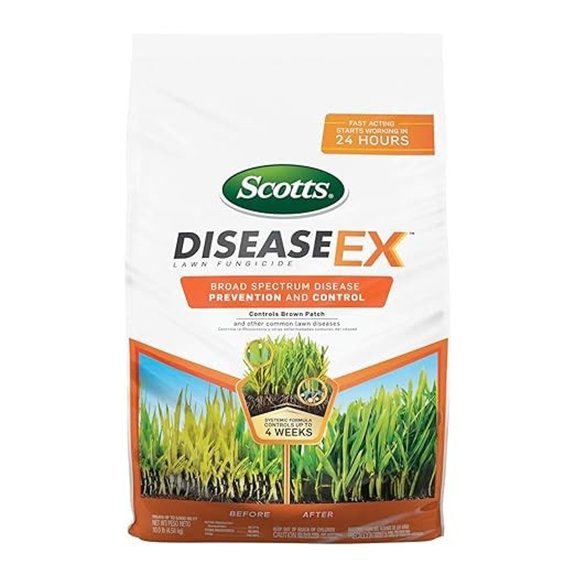 | Reliable Home Defense | Formulation Type: Granules / dry bag | Coverage Area: Treats up to 5,000 sq. ft. | Target Use: Lawn disease control/prevention | VIEW LATEST PRICE | Read Our Analysis |
| BioAdvanced Fungus Control for Lawns Granules 10 lb | 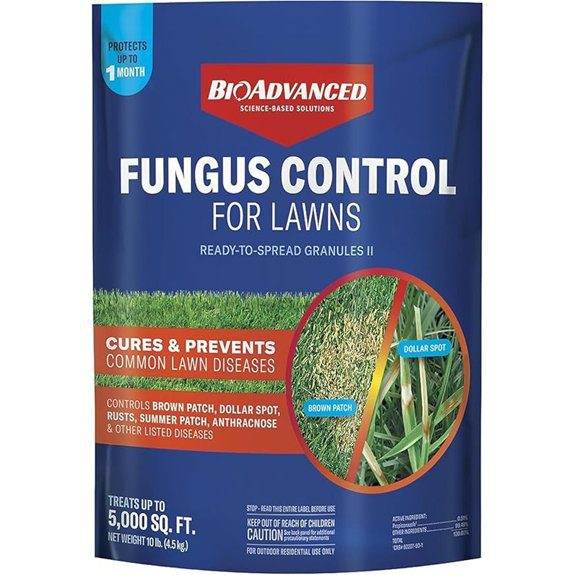 | Science-Backed Protection | Formulation Type: Granules | Coverage Area: Covers 5,000 sq. ft. | Target Use: Cure and prevention of lawn diseases (systemic) | VIEW LATEST PRICE | Read Our Analysis |
| Syngenta Headway G Granular Fungicide | 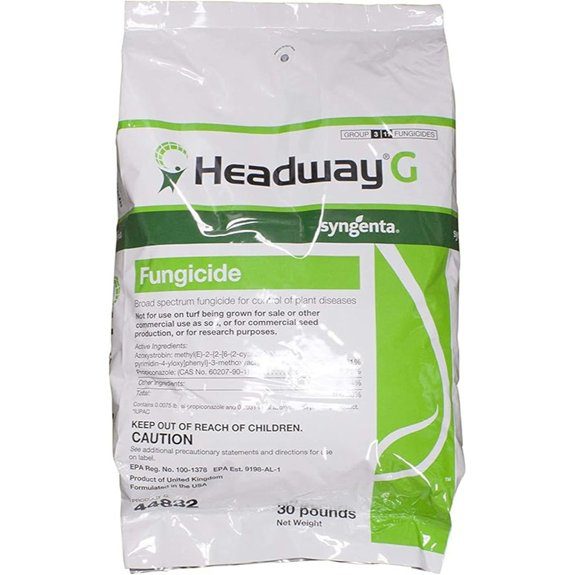 | Professional-Strength Control | Formulation Type: Granules | Coverage Area: Unit count 480 oz (30 lb) — sold for turf (coverage implied larger; product weight listed) | Target Use: Broad-spectrum turf disease control | VIEW LATEST PRICE | Read Our Analysis |
| Bonide Infuse Systemic Fungicide Granules for Lawns | 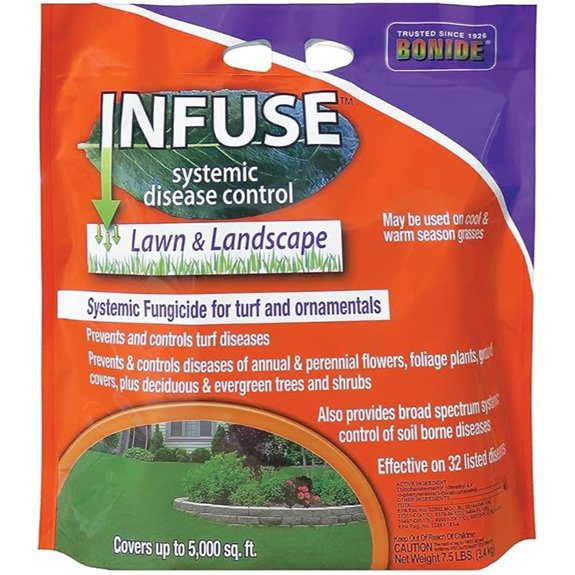 | Versatile Garden Guard | Formulation Type: Granules (ready-to-use) | Coverage Area: Protects up to 5,000 sq. ft. | Target Use: Lawn & landscape disease control (turf and ornamentals) | VIEW LATEST PRICE | Read Our Analysis |
| The Andersons Propiconazole DG Pro Fungicide (25 lb) | 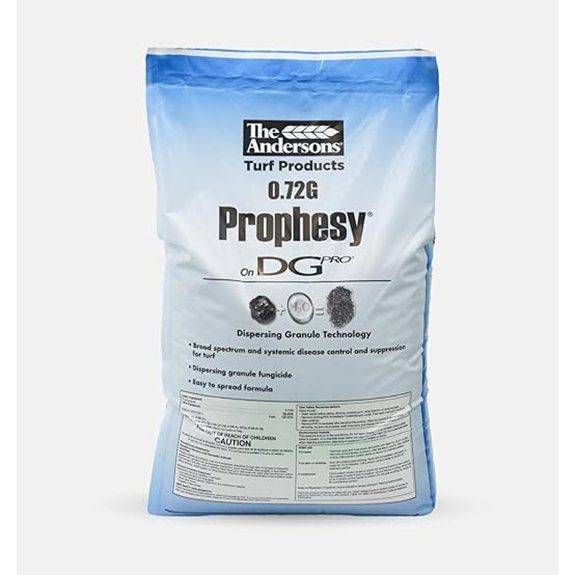 | High-Coverage Pro | Formulation Type: Dry granule (DG Pro) | Coverage Area: Covers up to 10,000 sq. ft. | Target Use: Turf disease control/suppression | VIEW LATEST PRICE | Read Our Analysis |
More Details on Our Top Picks
Scotts DiseaseEx Lawn Fungicide – Treats 5,000 sq ft
If you want fast, broad protection for a medium-sized yard, Scotts DiseaseEx is a smart choice — a single 10 lb. bag treats up to 5,000 sq. ft. and starts working within 24 hours to control and prevent 26 common lawn diseases. You’ll use it to prevent outbreaks or treat early symptoms like brown patch, pythium blight, rusts, snow molds, necrotic ring spot, red thread, powdery mildew, and anthracnose. It continues protecting for up to four weeks, suits all grass types when used as directed, and gives best results applied before symptoms or when weather favors disease development.
- Formulation Type:Granules / dry bag
- Coverage Area:Treats up to 5,000 sq. ft.
- Target Use:Lawn disease control/prevention
- Systemic vs Contact:Not specified as systemic (preventive/curative fungicide)
- Listed Diseases Controlled:Controls 26 listed diseases (e.g., brown patch, pythium, rust, snow mold, necrotic ring spot, powdery mildew, anthracnose)
- Recommended Timing / Performance Duration:Begins working within 24 hours; controls up to 4 weeks; best applied preventatively or at first symptoms
- Additional Feature:Fast acting (24 hrs)
- Additional Feature:4-week protection duration
- Additional Feature:Safe for all grasses
BioAdvanced Fungus Control for Lawns Granules 10 lb
Choose BioAdvanced Fungus Control Granules when you want a low-effort, coverage-focused solution that treats and prevents common turf diseases across up to 5,000 sq ft. You’ll apply a 10 lb bag for spot treatments or season-long protection; the systemic formula’s absorbed by grass so it cures and prevents issues like brown patch, dollar spot, anthracnose, red thread, powdery mildew, fusarium and gray/pink snow mold. Once taken up, it’s rainproof for up to 30 days, so treatments won’t wash off. It’s suitable for all lawn types, but follow label directions carefully for safe, science-based results from BioAdvanced.
- Formulation Type:Granules
- Coverage Area:Covers 5,000 sq. ft.
- Target Use:Cure and prevention of lawn diseases (systemic)
- Systemic vs Contact:Systemic (absorbed by grass)
- Listed Diseases Controlled:Lists multiple diseases (red thread, anthracnose, brown patch, dollar spot, fusarium patch, gray leaf/gray & pink snow mold, powdery mildew, etc.)
- Recommended Timing / Performance Duration:Protection up to 30 days; rainproof once absorbed; for spot or season-long protection
- Additional Feature:Systemic absorption
- Additional Feature:Rainproof after uptake
- Additional Feature:Science-backed brand
Syngenta Headway G Granular Fungicide
Homeowners and turf professionals battling persistent fungal outbreaks will find Syngenta Headway G Granular Fungicide ideal for lawns that need broad-spectrum, long-lasting disease control. You’ll get a granular, highly soluble carrier that dissolves even in heavy dew, so application is reliable. It targets common turf diseases—brown patch, dollar spot, anthracnose, and take-all patch—providing extended control when used per label directions. Packaged as a 480-ounce (30 lb) unit, it’s sold on Amazon under ASIN B00BEYQ8DO and part number 000087. You’ll also have access to a 30-day Amazon return option and manufacturer warranty details online.
- Formulation Type:Granules
- Coverage Area:Unit count 480 oz (30 lb) — sold for turf (coverage implied larger; product weight listed)
- Target Use:Broad-spectrum turf disease control
- Systemic vs Contact:Not explicitly stated as systemic (broad-spectrum granular)
- Listed Diseases Controlled:Lists brown patch, dollar spot, anthracnose, take-all patch (broad-spectrum)
- Recommended Timing / Performance Duration:Long-lasting control (broad-spectrum); highly soluble carrier dissolves quickly (timing/performance emphasized)
- Additional Feature:Highly soluble carrier
- Additional Feature:Broad-spectrum long-lasting
- Additional Feature:Sold on Amazon
Bonide Infuse Systemic Fungicide Granules for Lawns
For lawns that need broad, preventative disease control with minimal fuss, Bonide Infuse Systemic Fungicide Granules for Lawns is a smart choice—its ready-to-use 7.5 lb granules treat up to 5,000 sq ft and work systemically to prevent and stop common turf diseases like dollar spot, brown patch, rust, and snow mold. You can apply under dry or moist conditions across cool- and warm-season grasses and on roses, shrubs, trees, and ornamentals. It’s best used early or at first disease signs, delivering broad-spectrum protection while encouraging turf rooting and improving shrub color for healthier, more resilient landscapes.
- Formulation Type:Granules (ready-to-use)
- Coverage Area:Protects up to 5,000 sq. ft.
- Target Use:Lawn & landscape disease control (turf and ornamentals)
- Systemic vs Contact:Systemic action
- Listed Diseases Controlled:Lists dollar spot, rust, brown patch, powdery mildew, leaf spot, snow mold, and many more
- Recommended Timing / Performance Duration:Preventative and effective at first sign; recommended early-season treatment (timing focus)
- Additional Feature:Use on ornamentals
- Additional Feature:Improves turf rooting
- Additional Feature:Treats under moist leaves
The Andersons Propiconazole DG Pro Fungicide (25 lb)
If you need a professional-grade granular fungicide that delivers broad-spectrum control with long-lasting coverage, the Andersons Propiconazole DG Pro (25 lb) is built for large lawns and turf managers who want reliable prevention and curative options. You’ll apply a 25 lb bag that claims up to 10,000 sq ft coverage; its DG Pro dry granule formulation uses patented DG Technology to increase particle count and improve distribution. Propiconazole acts systemically, giving both preventative and curative control against brown patch, dollar spot, snow mold, and other common turf diseases. Use as recommended for best, long-lasting disease suppression.
- Formulation Type:Dry granule (DG Pro)
- Coverage Area:Covers up to 10,000 sq. ft.
- Target Use:Turf disease control/suppression
- Systemic vs Contact:Systemic (propiconazole active ingredient)
- Listed Diseases Controlled:Controls/suppresses brown patch, dollar spot, snow mold, and other common turf fungal diseases
- Recommended Timing / Performance Duration:Preventative recommended; can be used curatively (implied sustained control)
- Additional Feature:Propiconazole active ingredient
- Additional Feature:Patented DG technology
- Additional Feature:Higher particle count per ft²
Factors to Consider When Choosing Granular Fungicide for Lawn
When choosing a granular fungicide for your lawn, you’ll want to check the active ingredient and whether it targets the specific diseases you’re seeing. Decide if you need a systemic product that moves through the plant or a contact product that stays on the surface, and confirm the coverage per application so you know how much lawn a bag will treat. Also look for rainproofing and residual activity to ensure protection lasts after application.
Active Ingredient Type
Considering active ingredient type helps you pick a granular fungicide that actually works for your lawn: different chemistries determine whether the product acts on contact or moves systemically through grass, how long protection lasts, and which pathogens it will control. You should check whether the active is contact (protects only where granules touch) or systemic (absorbed, offering curative potential). Match chemistry classes—azoles, triazoles, strobilurins, DMIs—to likely pathogens and resistance-management plans. Note label concentration and application rate; higher percentage active often lowers the required rate per 1,000 sq ft and affects residual duration. Consider toxicity, turf safety, and environmental persistence so residual activity suits your turf type and timing. Rotate or mix classes to slow resistance and keep efficacy long term.
Disease Coverage Spectrum
After you’ve matched the active ingredient type to your turf and resistance plan, assess the disease coverage spectrum to make sure the product actually targets the problems you face. Look for granules that list control of both foliar diseases (brown patch, dollar spot, powdery mildew) and soil- or root-associated diseases (take‑all patch, necrotic ring) so one product guards against multiple outbreaks. Ensure the label names the specific pathogens you need—“broad‑spectrum” can be vague. Prefer products offering preventive and curative activity, since some issues need early protection while others respond after symptoms appear. Choose formulations that provide multi‑week protection (typically 3–4 weeks) to cut application frequency during high pressure. Finally, read the label for systemic versus contact action to confirm expected protection.
Systemic Versus Contact
Although both types protect turf, you’ll choose between systemic and contact granules based on how you need protection to work—systemics get absorbed and move through the plant so they can cure early infections and protect new growth, while contact actives stay on surfaces and only protect tissue present at application. Systemic granules give longer residual control and protect tissue that emerges after treatment, so they’re useful for ongoing, internal protection. Contact products act quickly where they land but degrade or wash off sooner and need more precise coverage and repeat treatments. Be mindful of resistance: many systemic chemistries have single-site modes of action and can select for resistant strains faster than multi-site contact actives, so rotate modes and follow label timing.
Application Rate Coverage
When you pick a granular fungicide, the labeled application rate and coverage are your roadmap—use the lb/1,000 sq ft (or lb/acre) to calculate how much product you’ll need, convert package coverage to your lawn’s square footage, and plan for overlap or calibration error so you don’t run short mid-application. Calibrate your spreader with a test swath so delivered lb/1,000 sq ft matches the label. Divide lawn area by bag coverage to know how many bags to buy, factoring overlap and calibration variance. Stay within label limits when adjusting rate for turf type and disease pressure—use higher label rates for severe outbreaks, lower for routine prevention. Track reapplication intervals and protected duration to schedule follow-ups without exceeding seasonal maximums.
Rainproof And Residual
If you want reliable disease control, consider both how quickly a granule becomes rainproof and how long its residual protection lasts—many products bind in about 24 hours once granules dissolve, while systemic actives usually become rainproof faster than contact-only ingredients. You should expect typical residual protection of roughly 2–4 weeks, with some systemic options approaching 30 days. Remember environmental factors—soil moisture, temperature, and heavy rains—can shorten rainfastness and accelerate microbial breakdown, cutting residual life. Apply the labeled rate evenly; underdosing or uneven coverage will reduce protection regardless of rainproof claims. Plan applications around weather forecasts and turf conditions to maximize effectiveness, and reapply on schedule when persistence drops below the interval recommended on the label.
Turf Compatibility Range
Start by confirming the fungicide explicitly lists your turf species and use site, because systemic uptake, labeled rates, and seasonal guidance differ between cool-season grasses (like bluegrass and fescue) and warm-season types (such as bermudagrass or zoysia). Next, verify the product is labeled for turf (not ornamentals only) and specifies safe rates for your mowing height and site—lawns, golf greens, or athletic fields all have different tolerances. Check whether the formulation is systemic or contact and that its mode of action is registered for the diseases common to your grass. Look for seeding, overseeding, or sod-installation restrictions to avoid phytotoxicity or impaired germination. Finally, confirm temperature and seasonal use guidance for your specific turf species.
Safety And Handling
Having confirmed your turf compatibility and label directions, turn next to safety and handling because proper use protects you, your family, and the environment. Always read and follow the product label for dosage, application method, PPE requirements, re-entry intervals, and disposal—it’s your legal and safety guide. Wear recommended PPE: long sleeves, long pants, chemical-resistant gloves, and closed-toe shoes, and avoid inhaling dust when handling granules. Keep granules and treated areas away from children, pets, and water sources; prevent runoff to protect aquatic life and wells. Store granules in their original, tightly closed container in a cool, dry, ventilated spot away from food, feed, and incompatible chemicals. After use, wash skin thoroughly and launder treated clothing separately to remove residues.