
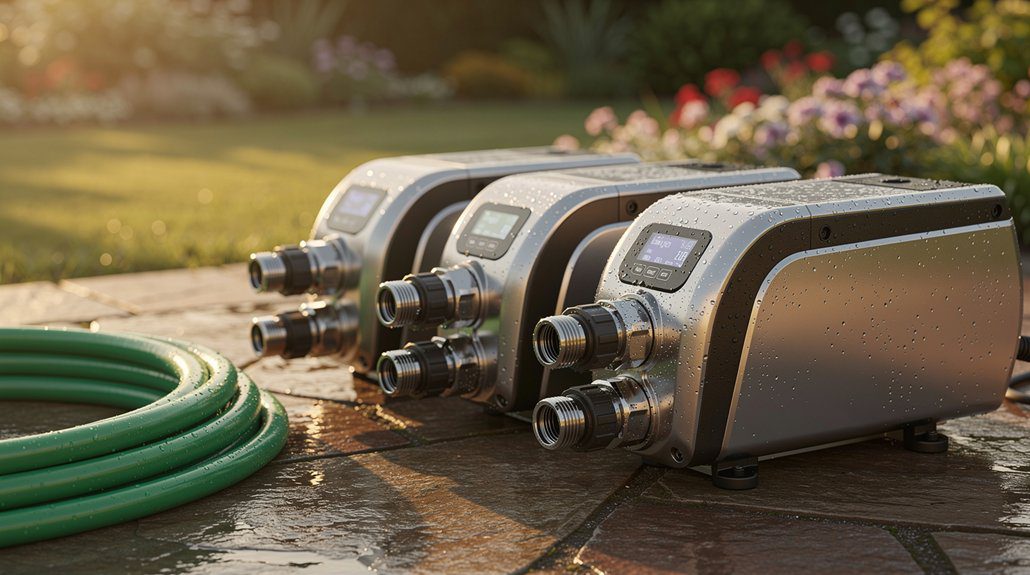
You’ll find five solid garden‑hose boosters: ECO‑WORTHY’s 4.0 GPM 110V diaphragm with adjustable 45–70 PSI, Tdrsuper’s 5.5 GPM 75 PSI (adjustable) copper‑motor booster, a 6 GPM self‑priming diaphragm pump with 70 PSI cutoff and brass fittings, a powerful 1.6HP shallow‑well unit up to ~30 GPM for high demand, and a compact 4.4 GPM wall‑mount shower booster. Pick by needed GPM/PSI, inlet supply, and mounting; keep going to compare specs, noise, and installation tips.
| ECO-WORTHY 33-Series 110V Diaphragm Water Pressure Pump | 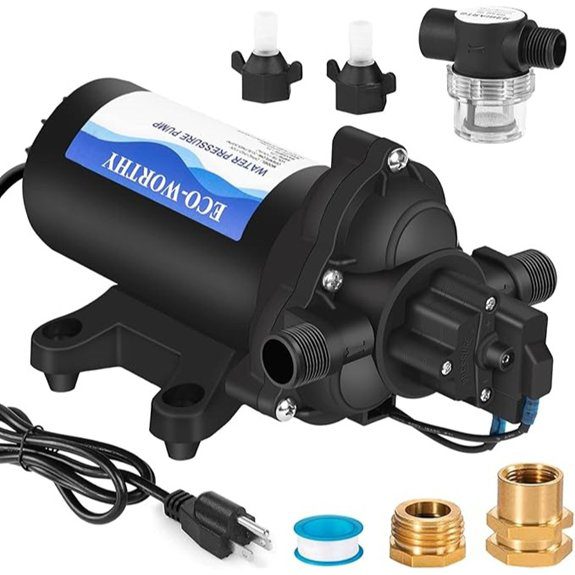 | Best All-Purpose | Power Source: 110V AC (corded electric) | Self-priming / Priming capability: Self-priming up to 9.8 ft vertical | Automatic on/off or pressure control: Smart pressure switch — automatic on/off (adjustable) | VIEW LATEST PRICE | Read Our Analysis |
| Tdrsuper 110V Water Pressure Booster Pump (5.5GPM) | 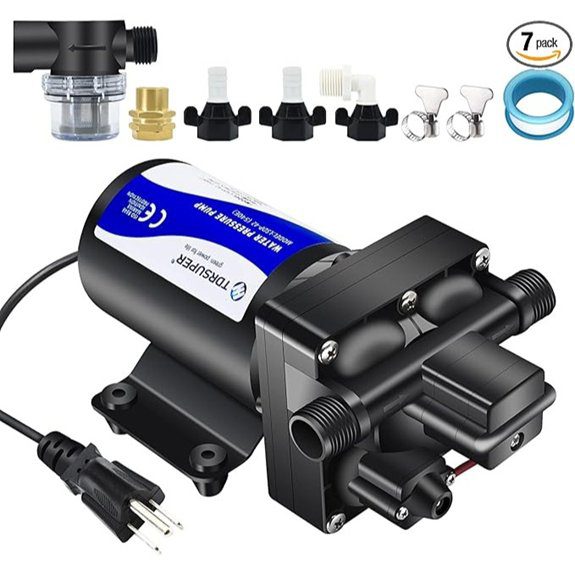 | High-Pressure Performer | Power Source: 110V AC (corded electric) | Self-priming / Priming capability: Self-priming up to 9.8 ft vertical | Automatic on/off or pressure control: Automatic start/stop with pressure switch | VIEW LATEST PRICE | Read Our Analysis |
| 110V Self-Priming Diaphragm Water Pump (6GPM) | 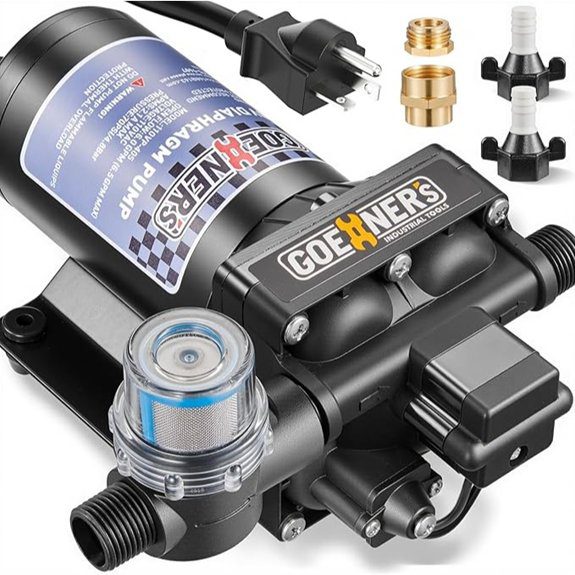 | Flow-Focused Powerhouse | Power Source: 110V AC (corded electric) | Self-priming / Priming capability: Self-priming up to 10 ft vertical (also 155 ft horizontal) | Automatic on/off or pressure control: Built-in pressure switch for automatic stop/start | VIEW LATEST PRICE | Read Our Analysis |
| 110V 1.6HP Portable Water Transfer Shallow Well Pump | 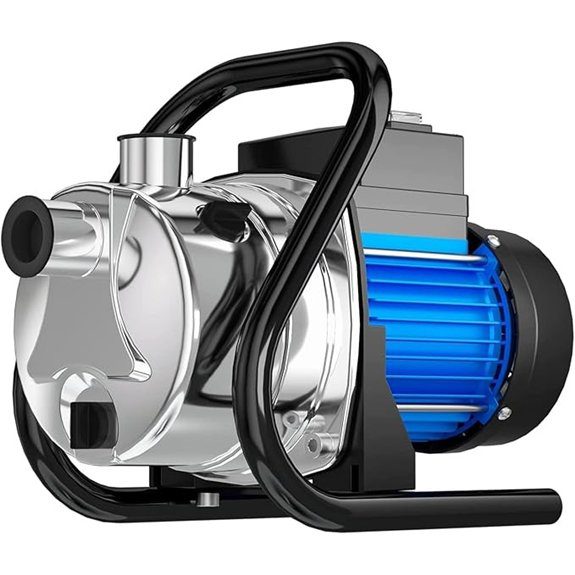 | Heavy-Duty Transfer | Power Source: 110V AC (corded electric) | Self-priming / Priming capability: Self-priming (requires initial water fill) | Automatic on/off or pressure control: Waterproof on/off switch; thermal auto protection (automatic features) | VIEW LATEST PRICE | Read Our Analysis |
| Garden Hose Shower Water Pressure Booster Pump | 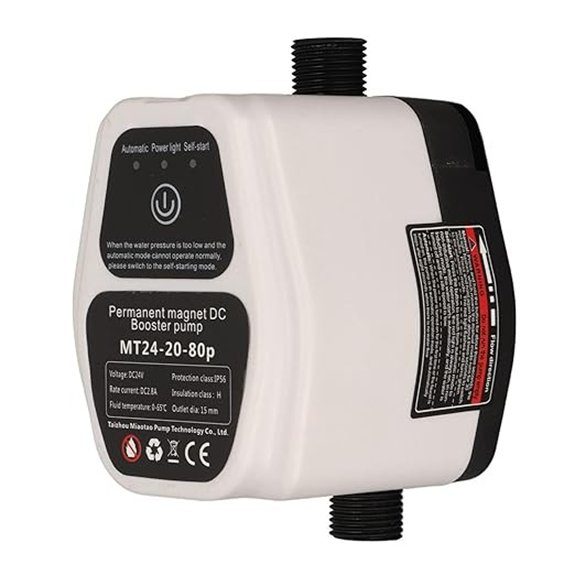 | Compact Shower Booster | Power Source: 24V DC (powered via corded adapter compatible with 100–240V input) | Self-priming / Priming capability: Designed for above-ground/garden use (automatic sensor) — implied priming for low-pressure starts | Automatic on/off or pressure control: Automatic sensor activates with flow (auto operation) | VIEW LATEST PRICE | Read Our Analysis |
More Details on Our Top Picks
ECO-WORTHY 33-Series 110V Diaphragm Water Pressure Pump
If you need a compact, AC‑powered booster that kicks your garden hose system into reliable, automatic pressure without fuss, the ECO‑WORTHY 33‑Series 110V diaphragm pump is a strong choice—its smart pressure switch (adjustable 45–70 PSI) lets the pump start and stop for irrigation or RV water lines, and the 4.0 GPM flow plus self‑priming to about 9.8 ft handles most home sprinkler and hose needs. You’ll plug into 110V AC (1.3A max), get quiet diaphragm operation, thermal overload protection, and garden hose adapters included. It’s metal‑bodied, portable at 6.8 lb, and suited for various fresh water tasks.
- Power Source:110V AC (corded electric)
- Self-priming / Priming capability:Self-priming up to 9.8 ft vertical
- Automatic on/off or pressure control:Smart pressure switch — automatic on/off (adjustable)
- Typical applications:RV, marine, boat, irrigation, sprinkler, faucet, garden
- Overheat/thermal protection:Thermal overload trips above 95°C (203°F)
- Included fittings/accessories:Garden hose adapters included
- Additional Feature:Metal construction finish
- Additional Feature:Garden hose adapters included
- Additional Feature:Quiet operation design
Tdrsuper 110V Water Pressure Booster Pump (5.5GPM)
Choose the Tdrsuper 110V booster pump when you need compact, low‑power pressure support for garden hoses, RVs, or onboard marine systems — it delivers 5.5 GPM with an adjustable factory set of 75 PSI and self-primes up to 9.8 feet while tolerating dry runs. You’ll get a CE‑certified, black diaphragm pump with a pure copper motor, corrosion‑resistant valves, and anti‑vibration iron bracket plus rubber feet for quiet operation. It auto starts/stops with tap use, offers overload and overheat cutoff, and lifts up to 164 feet. Package includes fittings, filter, tools, manual, Teflon tape, and 180‑day warranty.
- Power Source:110V AC (corded electric)
- Self-priming / Priming capability:Self-priming up to 9.8 ft vertical
- Automatic on/off or pressure control:Automatic start/stop with pressure switch
- Typical applications:Kitchen, bathroom, RV, marine/boat, irrigation, sprinkler, garden hose, camper
- Overheat/thermal protection:Overload and overheat protection with motor disconnect
- Included fittings/accessories:Filter with 50-mesh screen, 2× 1/2″ hose fittings, Teflon tape, spanner
- Additional Feature:Pure copper motor
- Additional Feature:CE certified compliance
- Additional Feature:Includes stainless filter
110V Self-Priming Diaphragm Water Pump (6GPM)
For gardeners and RV owners who need steady, pressurized water on demand, the 110V self-priming diaphragm pump delivers a reliable 6 GPM with automatic start/stop at typical home pressures, so you won’t worry about weak flow or manual switching. You’ll get 6 GPM, a max cut-off of 70 PSI, and self-priming lift to 10 ft vertically (155 ft horizontally). The one-piece 4-chamber diaphragm, NSK double ball bearings, and brass connectors keep operation smooth and quiet. It includes hose adaptors, brass fittings, and a strainer, runs on 110V with a 25–30A fuse recommendation, and carries a 3-year warranty.
- Power Source:110V AC (corded electric)
- Self-priming / Priming capability:Self-priming up to 10 ft vertical (also 155 ft horizontal)
- Automatic on/off or pressure control:Built-in pressure switch for automatic stop/start
- Typical applications:Faucets, showers, kitchen, bathroom, car washing, garden watering, irrigation, RV
- Overheat/thermal protection:Recommended fuse and built-in protections (bearing/diaphragm design implies safe operation)
- Included fittings/accessories:2× 1/2″ barbed hose adapters, 2 brass fittings, strainer
- Additional Feature:NSK double bearings
- Additional Feature:One-piece 4-chamber diaphragm
- Additional Feature:3-year factory warranty
110V 1.6HP Portable Water Transfer Shallow Well Pump
Homeowners and hobby farmers who need a lightweight, high-output pump will appreciate the 1.6HP Portable Water Transfer Shallow Well Pump, which delivers up to 1,800 GPH on a 110V supply while weighing just 8 pounds. You’ll get a stainless steel pump head, aluminum motor housing, and a 1.6HP capacitor motor that lifts to 164 feet. It’s self-priming (fill before use), has a waterproof on/off switch, rear cooling vents, and thermal overload protection. Use it for shallow wells, irrigation, pool draining, and transfers—clean water only. Includes adapters, rope, Teflon tape, clamp, and manual.
- Power Source:110V AC (corded electric)
- Self-priming / Priming capability:Self-priming (requires initial water fill)
- Automatic on/off or pressure control:Waterproof on/off switch; thermal auto protection (automatic features)
- Typical applications:Shallow well, garden irrigation, sprinkler boosting, pool draining, pond/tank transfer
- Overheat/thermal protection:Built-in automatic thermal overload protection
- Included fittings/accessories:3 hose adapters, Teflon tape, hose clamp, nylon rope, manual
- Additional Feature:1.6 HP capacitor motor
- Additional Feature:Stainless steel pump head
- Additional Feature:Waterproof on/off switch
Garden Hose Shower Water Pressure Booster Pump
If you want steady shower-like pressure from a garden hose, this wall‑mounted Naroote booster pump is ideal for small outdoor setups because it automatically kicks in when it senses flow and runs only as needed. You’ll get 4.4 GPM and up to a 65‑foot lift from the Narootec6y8a7r1wh-11, powered by a 24V corded supply (100–240V input). The compact, quiet plastic unit mounts above ground, weighs 0.98 kg, and uses AI learning to adapt to pipe conditions and low inlet pressures; an automatic sensor and low‑pressure start improve efficiency. ASIN B0C9VKSRH8.
- Power Source:24V DC (powered via corded adapter compatible with 100–240V input)
- Self-priming / Priming capability:Designed for above-ground/garden use (automatic sensor) — implied priming for low-pressure starts
- Automatic on/off or pressure control:Automatic sensor activates with flow (auto operation)
- Typical applications:Garden hose, shower, above-ground garden/wall-mounted boosting
- Overheat/thermal protection:Quiet/automatic control (specific thermal protection not listed but designed for safe auto operation)
- Included fittings/accessories:Wall-mountable unit (no detailed fittings listed)
- Additional Feature:AI learning control
- Additional Feature:Wall-mountable compact design
- Additional Feature:24V low-voltage output
Factors to Consider When Choosing a Booster Pump for Garden Hose
Before you pick a booster pump, think about how much water you need and the pressure you want so the pump matches your flow rate and pressure requirements. Also check power source options and hose connection compatibility to make sure it will work with your setup. Don’t forget to consider noise and vibration if the pump will run near living areas.
Flow Rate Needs
Flow rate is the single most important spec to match to your intended use, so pick a pump that delivers the gallons-per-minute (GPM) you actually need—typically 2–3 GPM for a shower, 4–6 GPM for lawn sprinklers, and the sum of each fixture’s GPM when multiple outlets run at once. You should size for peak, not just average, demand so flow doesn’t collapse when several outlets run. Check your inlet supply—hose diameter and source flow limit what you’ll actually get; a higher-rated pump won’t help if the supply can’t keep up. Factor in head loss and elevation: long runs or lift reduce effective GPM, so add margin. For variable demand, choose automatic pressure or variable-speed pumps to hold steady flow.
Pressure Requirements
Pressure matters more than most homeowners realize, so start by identifying the outlet pressure your application needs—typical garden hoses and sprinklers run well at 40–60 PSI, while pressure washers often require 100+ PSI. Check your supply pressure with a gauge; if static pressure sits below your target, pick a booster that raises pressure into the required cut-in/cut-out range. Pay attention to cut-in (when the pump starts) and cut-out (when it stops) settings and confirm the pump’s adjustable range—common ranges hover around 45–70 PSI. Factor in pressure losses from hose length, fittings and elevation (about 0.43 PSI lost per foot up). Finally, match flow capacity to pressure: higher pressures at the same flow need more power, so verify pump curves to ensure sufficient GPM at your desired PSI.
Power Source Options
Once you know the pressure and flow you need, pick a power source that can reliably deliver that output in your setup. If you have mains access, AC pumps (110–120V or 220–240V) give continuous high flow and pressure without batteries but need a nearby outlet and can draw 1–8+ amps depending on motor size; plan for grounding and GFCI protection. For portable or off‑grid use, low‑voltage DC pumps (12–24V) run from batteries or solar systems with lower consumption and usually lower peak flow. Battery units maximize mobility but run only minutes to a few hours based on amp‑hours and draw. Hybrid/solar setups reduce grid reliance but require a properly sized solar array, charge controller, correct fusing, wiring gauge, and thermal/overload protection.
Hose Connection Compatibility
Connections matter: make sure the pump’s inlet and outlet physically match your hose ends so you don’t lose flow or leak at the joint. Check thread type and size — common options are 1/2″ NPT, 3/4″ GHT, or 5/8″ barbed — and confirm inner diameters so you don’t introduce restriction. Verify whether the pump uses barbed, NPT, or garden‑hose fittings and whether it requires quick‑connect couplers or supplied clamps; ensure your hose can accept those without cutting. Use adapters rated for the pump’s operating pressure (many small boosters reach 70–85 PSI) to prevent leaks or rupture. Finally, choose durable materials — brass inserts or threaded metal fittings over plastic — if the setup faces outdoor exposure or abrasive hose materials.
Noise And Vibration
Frequently, noise and vibration are the factors you’ll notice first when a booster pump’s running, so pick a unit and installation method that minimizes both. Choose pumps with vibration isolation features—rubber feet, anti‑vibration brackets, or foam pads—to cut transmitted vibration and stop surfaces from amplifying noise. Prefer diaphragm or multi‑chamber designs; they run steadier and quieter than many direct‑drive centrifugal pumps under continuous load. Check for low‑noise motors and sealed or NSK bearings and aim for manufacturer decibel ratings under about 60 dB for residential use. Secure piping and avoid loose fittings or unsupported hoses, using flexible connectors or isolators at inlets/outlets to prevent resonance. Also favor models with thermal and overload protection to prevent motor strain that causes noise spikes and rattling.
Durability And Materials
Because your booster pump will spend long hours exposed to water, sunlight, and temperature swings, pick materials and components that resist corrosion, wear, and heat to ensure years of reliable service. Look for stainless steel or brass fittings and corrosion-resistant coatings on wet-end parts. Inspect diaphragms, seals, and valves for EPDM, Viton, or reinforced materials that withstand repeated cycles, chemicals, and elevated temperatures. Prefer metal motor housings or reinforced plastics with vibration-damping mounts to cut mechanical fatigue. Verify rated operating temperatures and built-in thermal protection (thermal cutoffs around 95°C) to prevent heat damage. Review bearing and motor construction — sealed ball bearings, copper windings — and manufacturer duty-cycle ratings so the pump matches your expected continuous or intermittent use.
Installation And Maintenance
When installing and maintaining a booster pump, plan for safe power, secure mounting, and easy access to controls so you can keep the system reliable and serviceable. Match the pump’s voltage and amperage to your circuit and use a dedicated outlet or breaker sized to the rated current. Mount on a firm, level surface with rubber feet or anti‑vibration pads and secure fastenings to limit noise and movement. Use correct thread‑size fittings, Teflon tape or thread sealant, and fit a screened inlet strainer to block debris. Install an accessible shut‑off valve and pressure relief or bypass if required, and position the pressure switch, electrical connections, and thermal overload for reachability. Every 3–6 months inspect hoses, clean or replace screens, check mounts and wiring, and test safety controls.