
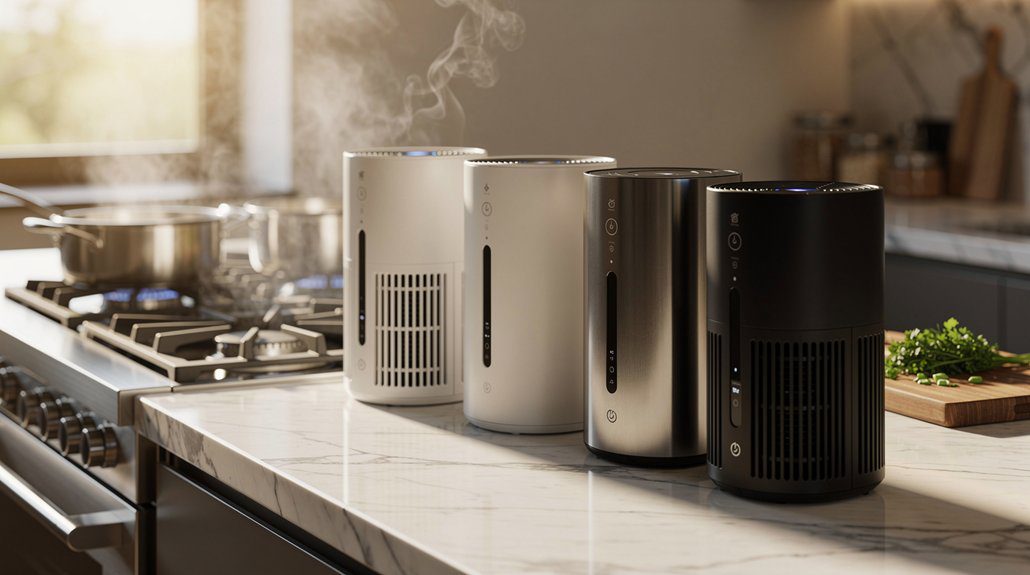
You want an air purifier that actually knocks out cooking smells and smoke—pick from LEVOIT Core300-P, a quiet HEPA-grade unit with strong CADR; a compact H13 HEPA model for small kitchens; MOOKA H13 for big open areas with heavy carbon; Blueair Blue Pure 211i Max for fast whole-room cleaning; or WINIX 5520 with carbon + PlasmaWave and smart sensing. They balance HEPA, hefty carbon beds, and low noise for continuous kitchen use—keep going to see sizing, filters, and upkeep tips.
| LEVOIT Core300-P Air Purifier for Home (White) | 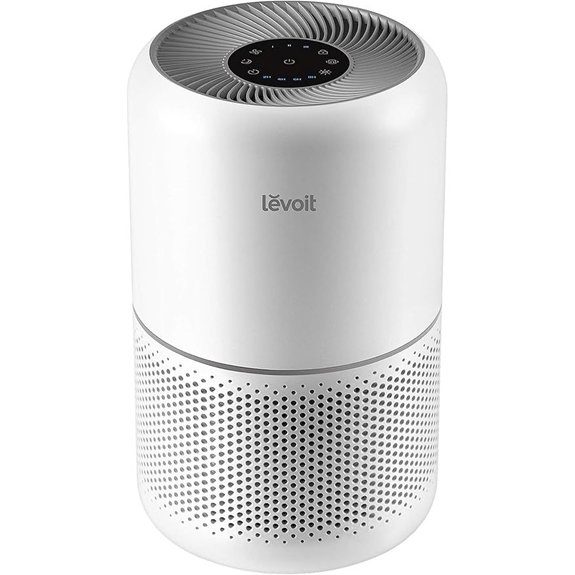 | Compact & Quiet | Coverage: Refreshes air in 222 ft² 4.8×/hr (1,073 ft² 1×/hr) | HEPA Filtration: HEPA-grade (99.97% for 0.1–0.3 μm) | Carbon/odor filter: Optional filter choices include toxin absorber / smoke remover / odor adsorption (carbon-type) | VIEW LATEST PRICE | Read Our Analysis |
| Air Purifier with H13 HEPA Filter for Homes | 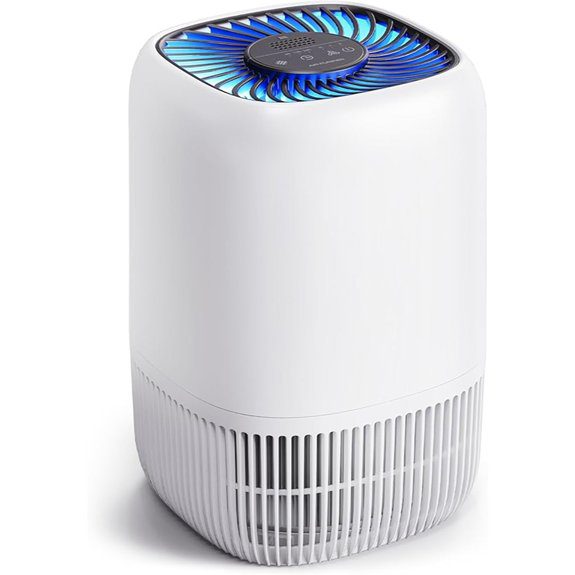 | Desk-Sized Freshness | Coverage: Cleans 250 ft² every 15 minutes; up to 1,076 ft²/hr | HEPA Filtration: H13 True HEPA (99.97% capture) | Carbon/odor filter: Triple-layer filter (includes activated/carbon layer implied for odors) | VIEW LATEST PRICE | Read Our Analysis |
| MOOKA H13 HEPA Air Purifier for Large Rooms | 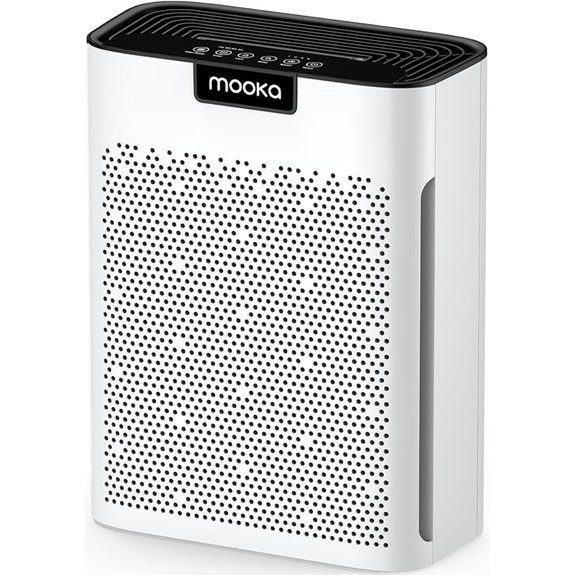 | Best for Big Spaces | Coverage: Cleans up to 2,200 ft² per hour | HEPA Filtration: H13 True HEPA (captures to 0.3 μm) | Carbon/odor filter: Activated carbon pellets for odor absorption | VIEW LATEST PRICE | Read Our Analysis |
| Blueair Blue Pure 211i Max Air Purifier | 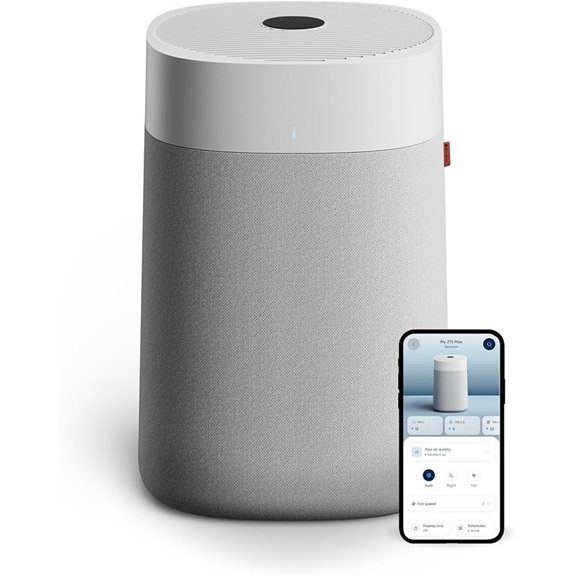 | Premium Smart Performance | Coverage: Cleans up to 3,048 ft² in 60 minutes (various faster-area figures) | HEPA Filtration: HEPASilent (removes ≥99.97% down to 0.1 μm) | Carbon/odor filter: Carbon filter traps light household odors (smoking, pets, cooking) | VIEW LATEST PRICE | Read Our Analysis |
| WINIX 5520 True HEPA Air Purifier for Large Rooms | 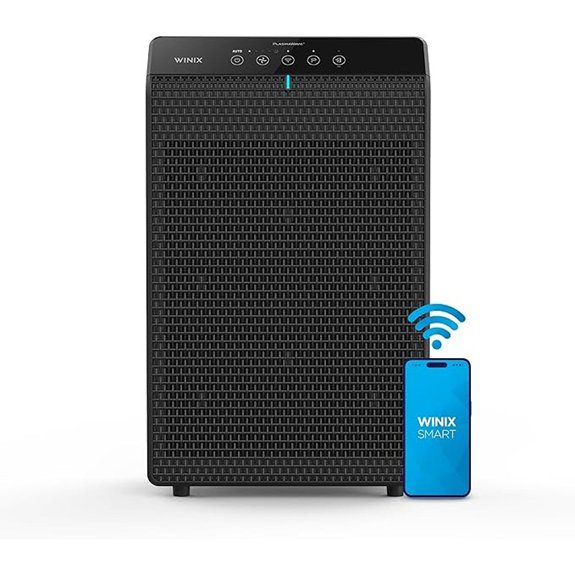 | Smart & Powerful | Coverage: Cleans up to 1,882 ft² in 1 hour (AHAM verified) | HEPA Filtration: True HEPA (captures particles down to 0.01 μm) | Carbon/odor filter: High-deodorization AOC carbon filter for VOCs/odors | VIEW LATEST PRICE | Read Our Analysis |
More Details on Our Top Picks
LEVOIT Core300-P Air Purifier for Home (White)
If you cook frequently in small to medium rooms and want a quiet, reliable way to cut lingering odors and smoke, the LEVOIT Core300-P is a smart pick. You’ll get HEPA-grade filtration that captures 99.97% of 0.1–0.3 μm particulates, backed by AHAM VERIFIDE testing and ETL/CARB compliances. Its 56W motor delivers CADR up to 167 CFM (pollen) and refreshes a 222 ft² room about 4.8 times hourly. Use specialized filters—Smoke Remover or Toxin Absorber—for cooking fumes, and run Sleep Mode at 24 dB overnight. Genuine filters keep performance optimal and protect the unit.
- Coverage:Refreshes air in 222 ft² 4.8×/hr (1,073 ft² 1×/hr)
- HEPA Filtration:HEPA-grade (99.97% for 0.1–0.3 μm)
- Carbon/odor filter:Optional filter choices include toxin absorber / smoke remover / odor adsorption (carbon-type)
- Multiple fan speeds / modes:Multiple fan speeds + Sleep Mode; timer options
- Low-noise / Sleep mode:Sleep Mode ~24 dB (QuietKEAP)
- Timers / auto-off:Timers: 2/4/6/8 hours
- Additional Feature:AHAM VERIFIDE certified
- Additional Feature:56W high-torque motor
- Additional Feature:Display lights off option
Air Purifier with H13 HEPA Filter for Homes
Choose this H13 HEPA air purifier if you want compact, high-efficiency odor control for kitchens and small open rooms—its triple-layer H13 True HEPA filter captures 99.97% of airborne particles while cleaning 250 ft² every 15 minutes, making it ideal for cooks, apartment dwellers, or anyone battling persistent cooking smells. You’ll get 360° surround intake for full-room circulation and lab-tested performance covering up to 1,076 ft² per hour. Run it continuously in odor-prone or dusty spaces. It’s compact (6.69 x 6.69 x 9.84 in), quiet to 22 dB, offers one-tap controls, three speeds, timer, essential oil tray, and multiple safety certifications.
- Coverage:Cleans 250 ft² every 15 minutes; up to 1,076 ft²/hr
- HEPA Filtration:H13 True HEPA (99.97% capture)
- Carbon/odor filter:Triple-layer filter (includes activated/carbon layer implied for odors)
- Multiple fan speeds / modes:Three speeds; one-tap operation; timer
- Low-noise / Sleep mode:Quiet operation down to 22 dB
- Timers / auto-off:Timer (unspecified increments)
- Additional Feature:360° surround intake
- Additional Feature:Built-in essential-oil tray
- Additional Feature:Compact desk footprint
MOOKA H13 HEPA Air Purifier for Large Rooms
For kitchens and open-plan homes where cooking smells and pet dander spread fast, the MOOKA H13 HEPA delivers high-capacity purification that suits large rooms — it cleans up to 2,200 ft² per hour and uses dual-side plus a large front inlet to grab odors and airborne hair more effectively. You’ll get 3-stage filtration: washable pre-filter, H13 True HEPA for 0.3 µm particles, and activated carbon pellets for odors. Four fan speeds and sleep mode down to 20 dB balance performance and quiet. Timers, aromatherapy pad, child lock, CARB/ETL/DOE certifications, and 2-year limited replacement round out support.
- Coverage:Cleans up to 2,200 ft² per hour
- HEPA Filtration:H13 True HEPA (captures to 0.3 μm)
- Carbon/odor filter:Activated carbon pellets for odor absorption
- Multiple fan speeds / modes:4 adjustable fan speeds; Sleep Mode; timers
- Low-noise / Sleep mode:Sleep mode as low as 20 dB
- Timers / auto-off:Timers: 2/4/6/8 hours (auto-off)
- Additional Feature:Washable pre-filter
- Additional Feature:Child lock feature
- Additional Feature:2000-hour filter reminder
Blueair Blue Pure 211i Max Air Purifier
Home cooks who want fast, quiet odor removal will like the Blueair Blue Pure 211i Max, which cleans very large spaces quickly while keeping noise and energy use low. You’ll get HEPASilent dual filtration that removes ≥99.97% of particles down to 0.1 microns and a carbon filter for light cooking odors. It cleans up to 3,048 sq ft in 60 minutes and is AHAM Verifide. Quiet Mark and Energy Star certified, it runs 23–53 dB and meets CARB ozone safety. Use the app, Alexa, or two-button controls; one filter ships installed and a spare pre-filter is included.
- Coverage:Cleans up to 3,048 ft² in 60 minutes (various faster-area figures)
- HEPA Filtration:HEPASilent (removes ≥99.97% down to 0.1 μm)
- Carbon/odor filter:Carbon filter traps light household odors (smoking, pets, cooking)
- Multiple fan speeds / modes:Fan speeds 1–4, auto, night mode; child lock
- Low-noise / Sleep mode:Quiet Mark certified (23–53 dB); night mode
- Timers / auto-off:Scheduling via app and built-in timer/auto modes
- Additional Feature:App with geofencing
- Additional Feature:Advanced PM1/2.5/10 sensor
- Additional Feature:Energy Star Most Efficient
WINIX 5520 True HEPA Air Purifier for Large Rooms
If you need a kitchen-sized workhorse that mutes cooking smells and reacts automatically, the Winix 5520 is a strong pick—its AOC carbon filter and True HEPA combo targets VOCs and odors while smart sensors adjust fan speed in real time. You’ll clear large rooms fast (AHAM: up to 1,882 sq ft/hr) and capture particles down to 0.01 micron, including smoke and allergens. Four-stage filtration includes a washable pre-filter, True HEPA, AOC carbon, and PlasmaWave®. Auto Mode, LED air-quality indicator, Wi‑Fi/Alexa control, ultra-quiet operation (≈27–23.5 dB), Energy Star and UL certifications make it practical for busy kitchens.
- Coverage:Cleans up to 1,882 ft² in 1 hour (AHAM verified)
- HEPA Filtration:True HEPA (captures particles down to 0.01 μm)
- Carbon/odor filter:High-deodorization AOC carbon filter for VOCs/odors
- Multiple fan speeds / modes:Auto Mode with smart speed adjustment; Sleep Mode/light-automated
- Low-noise / Sleep mode:Nearly silent lowest speed (~23.5–27 dB); light-automated Sleep Mode
- Timers / auto-off:Auto Mode with sensor-driven adjustments; Sleep/auto timing features
- Additional Feature:Light-activated Sleep Mode
- Additional Feature:PlasmaWave® technology
- Additional Feature:Wi‑Fi + Alexa control
Factors to Consider When Choosing an Air Purifier for Cooking Odors
When you’re tackling cooking odors, start by identifying the source so you know whether you need grease, smoke, or lingering food-smell removal. Look for models with substantial activated carbon and the right filter combinations (HEPA plus carbon or specialized odor media) and check the air exchange rate to see how quickly it clears smells. Finally, match the unit’s room coverage to your kitchen size for effective, consistent odor control.
Odor Source Identification
Because cooking odors come from different sources and chemistries, you should first pinpoint what’s producing the smell—oil aerosols, burned food, lingering smoke, or aromatic compounds from spices—since each requires different filtration strategies. Identify whether odors stem from oil-based aerosols and smoke (which produce fine PM2.5 and ultrafine particles, plus possible PAHs) or from VOCs released by seasonings and non-combustion reactions. Measure intensity and duration: brief stovetop whiffs may be handled by ventilation, persistent post-frying smells need stronger treatment. Note visible haze or oily residue — that signals both particulate and hydrocarbon removal needs. Check where the source is (pan, oven, grill) and room size or layout; concentrated sources in small volumes raise required CADR and air-change rates.
Activated Carbon Capacity
Having pinpointed the sources and scale of your kitchen odors, you’ll next look at activated carbon capacity — the single most practical filter attribute for adsorbing VOCs and many cooking smells. Check carbon mass (grams or pounds): more carbon generally means longer, more effective VOC removal. For persistent cooking smells aim for several hundred grams (about 200–500 g) or equivalent media to avoid rapid saturation. Also consider pore size distribution and surface area (m²/g); higher surface area and abundant micropores trap common kitchen VOCs better. Some carbon beds use impregnated chemistries (potassium permanganate, ammonia-reactive media) to target formaldehyde and sulfur compounds. Finally, monitor for breakthrough—noticeable lingering odors—and replace or regenerate the carbon per manufacturer guidance to prevent re-emission.
Filter Combination Choices
Which filter mix you pick will make the biggest difference in clearing cooking smells and smoke. Pick a multi-stage system: a pre-filter for grease and large particles, a True HEPA (H13+) for ≥99.97% removal at 0.3 µm, and a high-capacity activated carbon layer for VOCs and odors. Favor thick, granular or pelletized carbon with higher carbon weight over thin mats. For strong gases (formaldehyde, NOx), consider specialized media—potassium-permanganate-impregnated carbon or zeolites. Check that the purifier’s airflow/CADR at the fan speed you’ll use moves air fast enough through the carbon; undersized carbon or insufficient flow defeats adsorption. Prefer replaceable modules that separate pre-filter/HEPA and carbon so you can replace saturated carbon without discarding the HEPA.
Air Exchange Rate
When you pick an air purifier for cooking smells, pay close attention to its air exchange rate (ACH), because that number tells you how quickly the unit can replace the air in your kitchen and directly affects odor removal speed. ACH shows how many times air is replaced per hour; aim for 4–6 ACH for persistent cooking odors, and 8+ ACH for strong, rapid clearing. Calculate ACH from CADR and room volume: ACH = (CADR × 60) / cubic feet. Use the CADR value for smoke/odor-related particulates and choose a unit that reaches your target ACH at the fan speed you’ll actually run. Finally, account for real-world reductions—poor mixing, obstructions, open doors, and HVAC influence mean you should pick a higher nominal ACH than the minimum.
Room Coverage Size
Room size directly determines what purifier you need, so pick a model whose CADR and stated coverage let it cycle your kitchen air at least 4–6 times per hour (or 8+ for very strong odors). For small kitchenette-style spaces (~200–300 ft²), choose a unit that refreshes air every 15–30 minutes (4–8 ACH). If your kitchen is open to living areas, size the purifier for the combined square footage so odors don’t migrate. When you frequently cook pungent foods or produce smoke, opt for a purifier rated for larger areas (or run multiple units) to keep turnover high. Check that the stated coverage assumes continuous operation, and remember higher fan speeds boost effective clean-air delivery for heavier cooking use.
Noise And Operation
Sizing your purifier right is only part of the equation — noise and how the unit operates will determine whether you’ll actually keep it running while cooking. You want a low noise floor (about 20–30 dB) for continuous kitchen-adjacent use so it won’t disrupt conversation or sleep. Check fan speeds and an Auto Mode so the purifier can boost airflow during heavy cooking and quietly taper off afterward. Confirm continuous power consumption at higher speeds to estimate energy cost if you run it often. Prefer timers or scheduling (2–8 hours) to automate high-speed cycles during and after meals, then revert to a maintenance setting. Finally, choose units with sleep or low-brightness display modes to avoid light disturbance in nearby living spaces.
Maintenance And Filter Costs
Because carbon media does the heavy lifting on odors, you’ll need to budget both attention and money for regular upkeep: expect charcoal filters to require swaps every 3–6 months with heavy cooking (6–12 months for lighter use), while HEPA elements follow their own replacement schedules and won’t address smells at all. Plan annual maintenance costs—replacement filters plus occasional pre-filter cleaning—at roughly 20–50% of the purifier’s purchase price, depending on filter type and cooking frequency. Use washable pre-filters or vacuumable mesh screens and clean them every 1–3 months to cut consumable costs and extend primary filter life. Regularly swap filters and inspect for grease; neglect accelerates carbon saturation and sharply reduces odor-removal performance.
Smart Sensors And Controls
When you cook, sensors and smart controls let the purifier react the way you’d expect—boosting airflow during greasy, high-VOC meals and settling back when the air clears. Look for units with VOC or formaldehyde (TVOC) sensors and PM2.5 detection so auto mode can raise fan speed during heavy cooking and cut power when levels normalize, saving energy. Real-time readouts—numeric PM2.5/TVOC or an AQI color scale—help you confirm whether odors persist after ventilation. Use programmable timers, delay-start, and schedules to have the purifier running for typical meal times without manual intervention. Remote options (apps, voice control) and child-lock overrides let you boost ventilation from anywhere, while filter-change indicators keep sensor-calibrated performance reliable.