
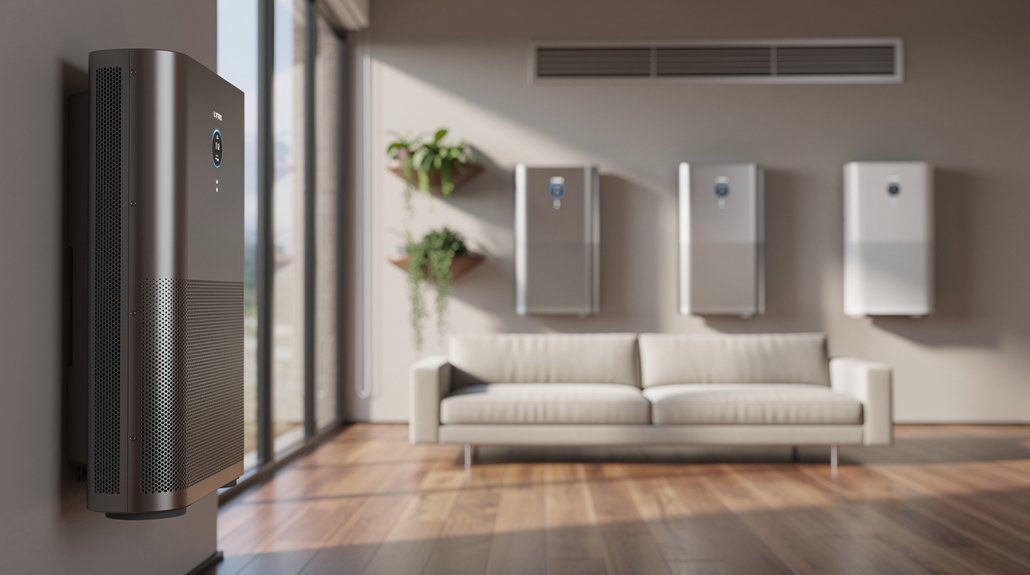
For whole‑house HVAC cleaning in 2026, pick proven duct‑mounted tech that fits your system: i‑Wave‑R for compact needlepoint bipolar ionization, APCO Carbon Cell Matrix for UV‑C plus activated carbon odor/VOC capture, Qualirey 26W for replaceable multi‑lamp UV‑C duct treatment, and REKO R2000 for plug‑and‑play dual‑lamp UV‑C power. Match tonnage, cutouts, and electrical needs, plan lamp/carbon replacements, and follow safety guidance—keep going to see detailed sizing, installation, and maintenance tips.
| i-Wave-R/iWave-R Residential IAQ ION Generator Sold Each | 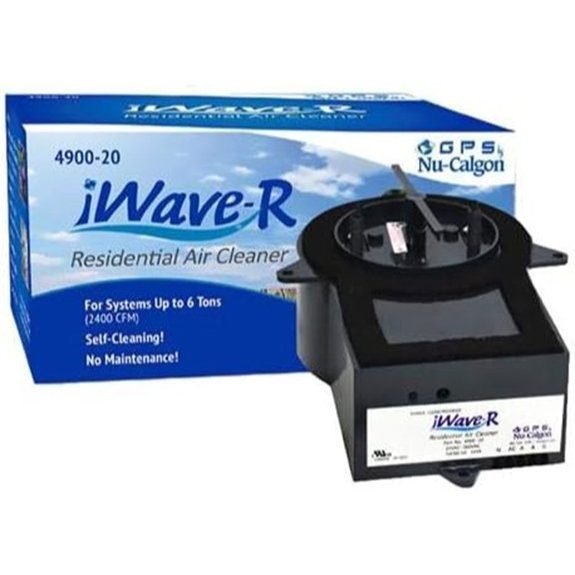 | Portable Ionizer | Installation location: Residential HVAC / inline/portable for HVAC or room systems (described as residential IAQ ion generator; includes mounting magnets) | Power source / electrical: Electric powered (260 V, 60 Hz; plugs to outlet) | Technology type: Bipolar ionization (needlepoint bi-polar ionization) | VIEW LATEST PRICE | Read Our Analysis |
| APCO Carbon Cell Matrix HVAC UV Air Purifier | 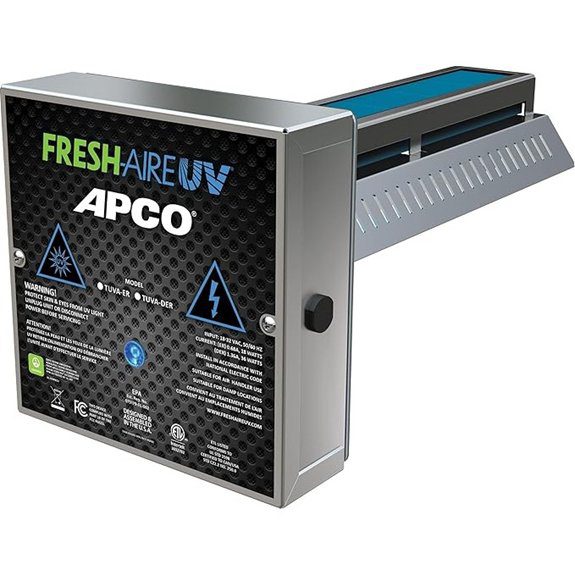 | Whole‑House Defender | Installation location: Inside furnace, air handler or ductwork (HVAC/air handler installation) | Power source / electrical: Low-voltage HVAC power (18–32 VAC, 60 Hz, 16 VA) | Technology type: UV‑C + activated carbon matrix (UV‑catalyzed APCO carbon matrix) | VIEW LATEST PRICE | Read Our Analysis |
| Qualirey 26W HVAC UV-C Duct Air Purifier | 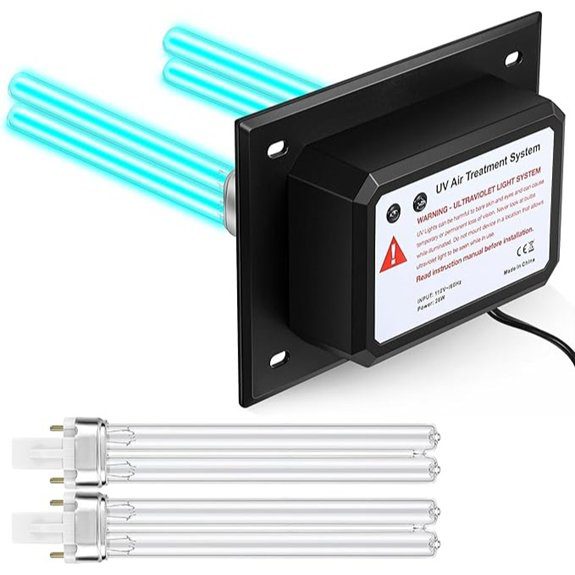 | DIY Duct Solution | Installation location: HVAC duct or furnace installation | Power source / electrical: Line power via cord (26 W UVC bulbs; 4.6 ft power cord) | Technology type: UV‑C germicidal lamps (253.7 nm UVC bulbs) | VIEW LATEST PRICE | Read Our Analysis |
| REKO R2000 UV-C HVAC Duct Air Purifier | 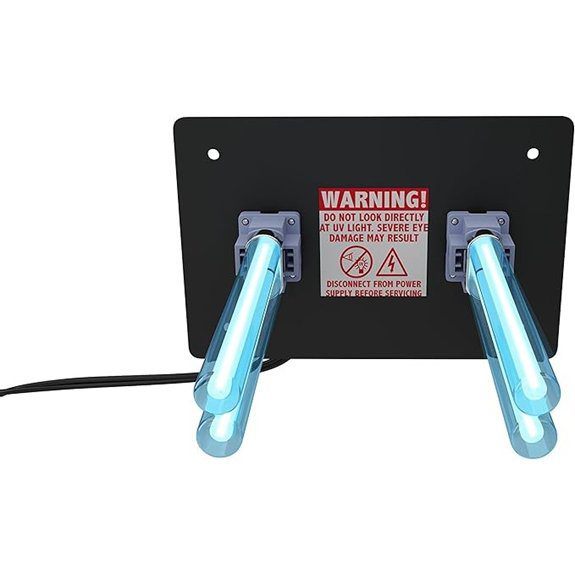 | Pro-Grade UV System | Installation location: HVAC duct mounting (duct/air handler installation) | Power source / electrical: Line power via 120 V plug (120 V, 50/60 Hz; 9–10 ft cord) | Technology type: UV‑C germicidal lamps (253.7 nm dual-lamp UV‑C) | VIEW LATEST PRICE | Read Our Analysis |
More Details on Our Top Picks
i-Wave-R/iWave-R Residential IAQ ION Generator Sold Each
If you want a low-maintenance supplemental purifier for your home HVAC, the i-Wave-R delivers needlepoint bi‑polar ionization in a compact, portable unit—it’s self-cleaning, mounts with included magnets, and runs off household power so you can add it to most residential systems without frequent upkeep. You’ll get a black, 5-pound device that’s marketed as a residential air ionizer and portable IAQ generator. It uses needlepoint bi‑polar ionization, needs electric power (260 V, 60 Hz), and includes mounting magnets. Specs list 1600 W starting wattage; confirm compatibility with your system and manufacturer warranty before installing.
- Installation location:Residential HVAC / inline/portable for HVAC or room systems (described as residential IAQ ion generator; includes mounting magnets)
- Power source / electrical:Electric powered (260 V, 60 Hz; plugs to outlet)
- Technology type:Bipolar ionization (needlepoint bi-polar ionization)
- Intended benefit / purpose:Improve indoor air quality, reduce airborne particulates/allergens/odors (residential IAQ)
- Maintenance / consumables:Low / no maintenance; self‑cleaning (no regular consumable replacement listed)
- Professional installation requirement:DIY/portable installation possible (mounting magnets; residential/portable)
- Additional Feature:Portable magnetic mounting
- Additional Feature:Needlepoint bipolar ionization
- Additional Feature:Self-cleaning, no-maintenance
APCO Carbon Cell Matrix HVAC UV Air Purifier
Choose the APCO Carbon Cell Matrix if you want whole-house air purification that works with your existing HVAC system—its activated carbon matrix captures odors and microbes while a UV‑C lamp catalyzes and self-cleans the cells, giving low‑maintenance, chemical-free reduction of allergens, VOCs and common airborne viruses. You’ll have a complete unit for furnace or air-handler installation; a licensed contractor should install it. It runs on 18–32 VAC and includes a water-resistant shielded UV‑C lamp. Combined with conventional filters, it neutralizes contaminants, reduces biofilm in ducts and coils, improves IAQ, and helps extend HVAC life with proven, NASA‑heritage reliability.
- Installation location:Inside furnace, air handler or ductwork (HVAC/air handler installation)
- Power source / electrical:Low-voltage HVAC power (18–32 VAC, 60 Hz, 16 VA)
- Technology type:UV‑C + activated carbon matrix (UV‑catalyzed APCO carbon matrix)
- Intended benefit / purpose:Neutralize allergens, bacteria, VOCs and odors; whole‑house purification
- Maintenance / consumables:Low maintenance; self‑cleaning carbon cells; includes 1‑year water‑resistant UV‑C lamp
- Professional installation requirement:Must be installed by licensed contractor (installed in air handler/duct)
- Additional Feature:Activated carbon cell matrix
- Additional Feature:UV-catalyzed self-cleaning cells
- Additional Feature:NASA-proven heritage
Qualirey 26W HVAC UV-C Duct Air Purifier
Homeowners or small-business operators with 1–5 ton HVAC systems will find the Qualirey 26W HVAC UV-C Duct Air Purifier a practical choice because it installs directly into ducts or furnaces to curb odors, mold, and airborne contaminants. You’ll get four 253.7 nm UVC bulbs (two spares), two LEDs showing green for normal operation, and a 4.6 ft cord. Install with the provided template by cutting two 1-inch holes, inserting bases, and fastening aluminum strips—about 15 minutes. Replace bulbs every 8–10 months. It’s effective at preventing microbial growth and related symptoms, but avoid direct eye exposure to UVC.
- Installation location:HVAC duct or furnace installation
- Power source / electrical:Line power via cord (26 W UVC bulbs; 4.6 ft power cord)
- Technology type:UV‑C germicidal lamps (253.7 nm UVC bulbs)
- Intended benefit / purpose:Reduce odors, musty smells, mold and airborne pollutants
- Maintenance / consumables:Periodic bulb replacement (recommended every 8–10 months); includes spare bulbs and LED indicators
- Professional installation requirement:DIY friendly (template, holes, quick ~15‑minute install)
- Additional Feature:26W UVC (253.7 nm)
- Additional Feature:Includes two spare bulbs
- Additional Feature:LED operation indicators
REKO R2000 UV-C HVAC Duct Air Purifier
The REKO R2000 is ideal for homeowners wanting a simple plug-and-play UV-C solution that zaps microbes right inside your HVAC ductwork; its dual 253.7 nm lamps and quick 15-minute, two‑hole installation mean you’ll boost system hygiene without hardwiring or major modifications. You’ll plug the 120 V unit into a regular outlet using the 9–10 ft cord, slip the European-made bulbs into the duct via two 1.75-inch holes, and secure with included self-drilling screws. Rated for 1–5 ton systems and EPA‑listed (Est. No. 96373-FL-1), it’s designed in the USA for straightforward residential duct mounting.
- Installation location:HVAC duct mounting (duct/air handler installation)
- Power source / electrical:Line power via 120 V plug (120 V, 50/60 Hz; 9–10 ft cord)
- Technology type:UV‑C germicidal lamps (253.7 nm dual-lamp UV‑C)
- Intended benefit / purpose:Ultraviolet germicidal irradiation to reduce microbes and improve IAQ
- Maintenance / consumables:Periodic bulb replacement (UV‑C lamps); plug‑in lamps manufactured in Europe (bulb life implied)
- Professional installation requirement:DIY friendly / quick install (~15 minutes; template and screws; plug‑in)
- Additional Feature:Dual-lamp configuration
- Additional Feature:Plug-in 120V operation
- Additional Feature:European-made bulbs
Factors to Consider When Choosing an Air Purifier for HVAC System
When choosing an HVAC air purifier, you’ll want to check compatibility with your ductwork and system capacity. Consider the purification technology, UV lamp specifications, and what routine maintenance and power draw will look like. Also factor in installation requirements so you know what’s involved before you buy.
HVAC Compatibility
Although compatibility might seem like a technical detail, you’ll want to confirm several specific factors so the purifier integrates smoothly with your HVAC system. First, match installation type—in-duct, in-air-handler, or coil-adjacent—to your layout so airflow exposure and maintenance access work. Verify physical dimensions, required cutouts, and mounting points fit your ductwork or air handler clearances and that contractors can reach the site. Check electrical requirements—voltage, frequency, plug or hardwire needs—so you don’t face rewiring. Confirm the unit’s coverage rating or compatibility with your system capacity (tons or CFM) to ensure whole-house treatment. Finally, review maintenance intervals and service access for lamp, filter, or cell changes so routine upkeep stays safe and practical.
Purification Technology
Because different technologies target different pollutants, you’ll want to match purifier type to your specific indoor-air issues and system constraints. If particles are your main concern, HEPA filters remove ≥99.97% of particles ≥0.3 µm, so they’re essential for pollen, dust, and many respiratory aerosols in HVAC-supplied air. For microbes and mold on exposed surfaces or in moving air, UV-C germicidal irradiation can inactivate organisms, though its success depends on exposure time and duct placement. To tackle VOCs and odors, activated carbon adsorption works by surface area and bed volume but requires periodic replacement as it exhausts. PCO and UV‑activated carbon can break down gases, though byproducts and efficiency vary with catalyst area and airflow. Bipolar ionization may aggregate particles and reduce some pathogens, but results hinge on ion output, airflow, and potential secondary byproducts.
UV Lamp Specifications
Choosing the right UV lamp means matching wavelength, power, placement, electrical needs, and maintenance to your HVAC system so the lamps deliver a consistent germicidal dose. Pick UV-C near 253.7 nm for proven inactivation of bacteria, viruses, and mold. Match lamp wattage to system size—residential 1–5 ton systems typically use 20–30 W per lamp to achieve sufficient dose. Decide single versus dual-lamp configurations and position lamps to maximize airflow exposure and coil or duct surface irradiation. Verify rated voltage, frequency, and current and confirm cord or plug compatibility so you won’t need unintended hardwiring. Account for lamp life—expect effective output around 8–12 months—and choose units with end-of-life indicators to sustain reliable germicidal performance.
Maintenance Requirements
When you evaluate maintenance requirements, focus on replacement intervals, access, consumable costs, and safety so upkeep stays predictable and affordable. Check lamp and bulb replacement intervals—many UV‑C lamps need swapping every 8–12 months—and prefer systems with LED status indicators that signal service needs. Confirm access and procedures: pick units engineered for straightforward in‑duct removal, simple bulb changes, and clear templates to reduce technician time. Factor annual consumable costs for replacement lamps, carbon media, filters, and specialty parts into your budget. Look for self‑cleaning carbon matrices or UV‑catalyzed regeneration to cut manual cleaning and biofilm removal frequency. Finally, plan periodic inspections by qualified personnel to verify UV shielding, electrical connections, and to prevent exposure risks during maintenance.
Power And Installation
If you’re installing an HVAC air purifier, confirm the electrical specs and physical fit before buying so you don’t face costly rework or unsafe hookups. Check voltage, frequency, and VA/current draw—many duct-mounted UV-C units use 120 V, 50/60 Hz, while some air-handler components need low-voltage 18–32 VAC at roughly 16 VA. Verify starting and running wattage so circuits or transformers won’t trip under load, especially when multiple devices share a circuit. Measure duct dimensions, hole sizes, and clearances; confirm the unit is rated for in-duct versus air-handler placement and aligns with airflow. Decide if hardwiring needs a licensed electrician or if plug-in mounting suffices, and confirm included accessories. Plan safe access and maintenance spacing, GFCI placement, and avoid direct UV exposure.
Coverage And Capacity
After confirming electrical specs and physical fit, you’ll need to match the purifier’s capacity to your HVAC system so it actually treats the full volume of air. Match the purifier’s rated airflow (CFM) or tonnage to your unit—residential systems usually span 1–5 tons—so the device can process the full conditioned volume. Ensure the purifier’s CFM equals or exceeds your furnace/air handler fan output; undersized units only treat part of circulated air. Prefer whole‑house designs sized for your ductwork and tonnage over portables for continuous, system‑wide coverage. Follow manufacturer guidance on required lamps or modules per ton/CFM; larger systems may need multiple modules. Confirm electrical load (voltage, VA/watts) so installation won’t overload HVAC circuits.